Biesdorf Village Church: A Protestant Church in Berlin
Site at a Glance
- Popularity
- Low
- Country
- Germany
- Primary era
- Modern
- Eras represented
- Medieval, Early Modern, Modern
- Civilizations
- German, Holy Roman Empire, Margraviate of Brandenburg
- Site type
- Religious
- Remains
- Church
On this page8 sections
History
Origins and parish
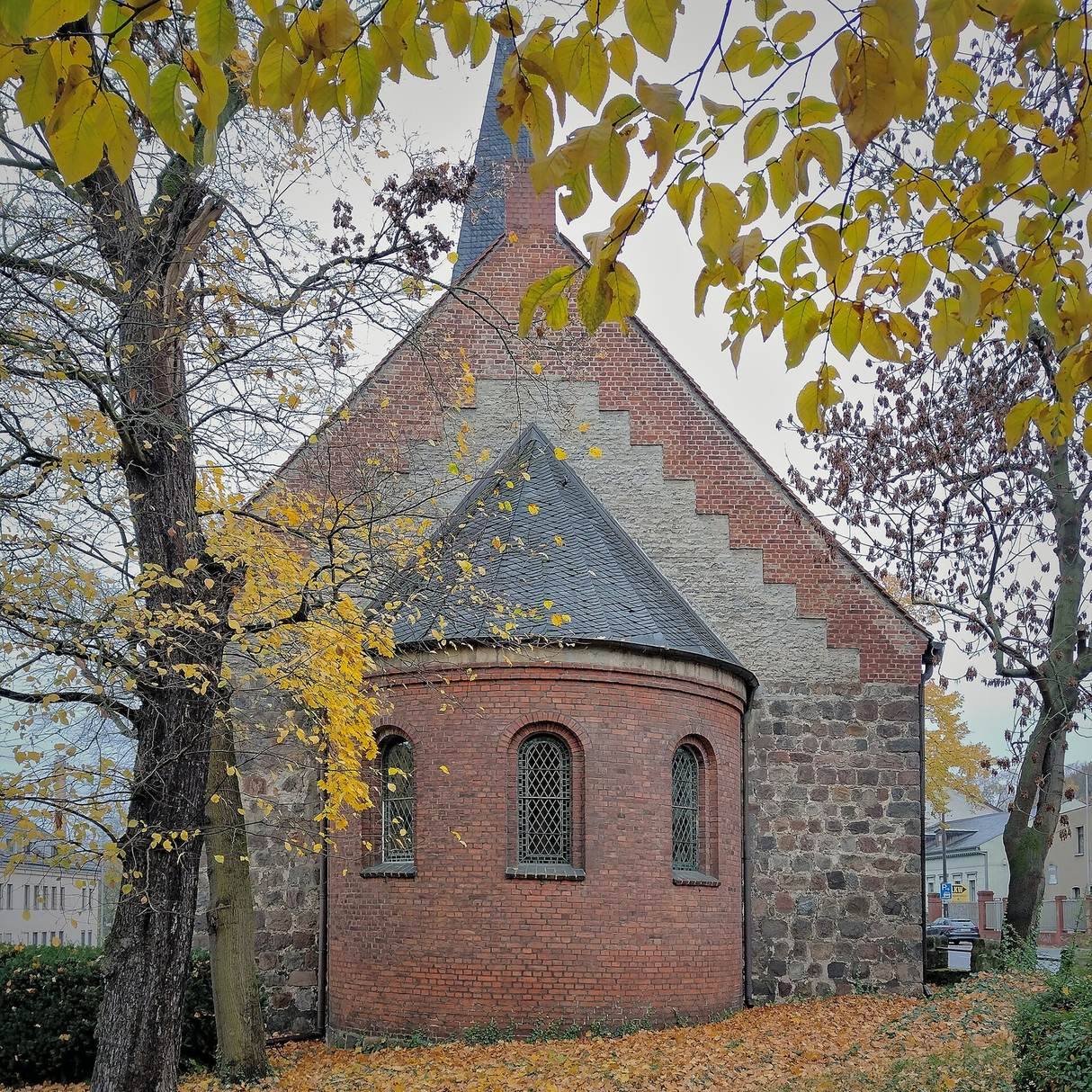
Biesdorf Village Church is a Protestant church in Berlin, Germany, built in the last quarter of the thirteenth century as a hall church with a single, undivided nave. Also known as the Church of Grace, it is among the earliest churches on the Barnim, a historical region and plateau in Brandenburg northeast of Berlin. Biesdorf village itself was established around 1230.
The church and its parish appear in the 1375 Land Book of Charles IV, Holy Roman Emperor and king of Bohemia. The record lists 62 landholding units, with four assigned to the parish and one to the church, and names the church, its pastor, and the local manorial lord, Henning von der Gröben.
Before 1472, church patronage passed to the von Pfuel family, who held Biesdorf until 1665. Kaulsdorf became a daughter church of Biesdorf in 1541, followed by Mahlsdorf in 1692. Both became separate parishes in 1907.
Early modern changes and fire
Renovations and alterations took place in 1682, and a new pulpit followed in 1695. A square tower was built in 1702. In 1720, builders cut seven windows into the church and renewed the choir.
A fire gutted the building in 1754. The church was rebuilt and inaugurated in 1756, with some furnishings saved from the fire. Much of the remaining inventory was lost during the Russian occupation of 1762, part of the Seven Years’ War (1756–1763), a major European conflict. A new rectory was added in 1789.
An organ was in place by 1824, when the church also became the administrative center of a Protestant church district, known as a superintendent’s office.
Remodeling, destruction, and reconstruction
In 1896–1897, the church was remodeled as a Neo-Gothic urban church, using a style that revived medieval Gothic forms. In 1917, all its bronze bells except the smallest, as well as its tin organ pipes, were surrendered for weapons production. The bells were replaced in 1925, but were surrendered again for wartime use in 1942.
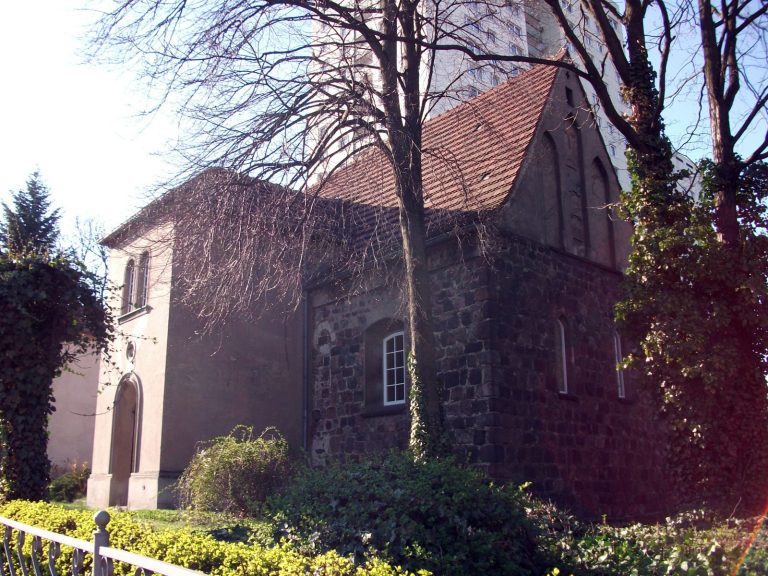
An Allied air raid destroyed the church on 20 January 1944. Reconstruction began in July 1950, using masonry from the ruin and retaining the surviving tower. The church was rededicated in October 1951. Its simpler design gave it a character closer to a village church.
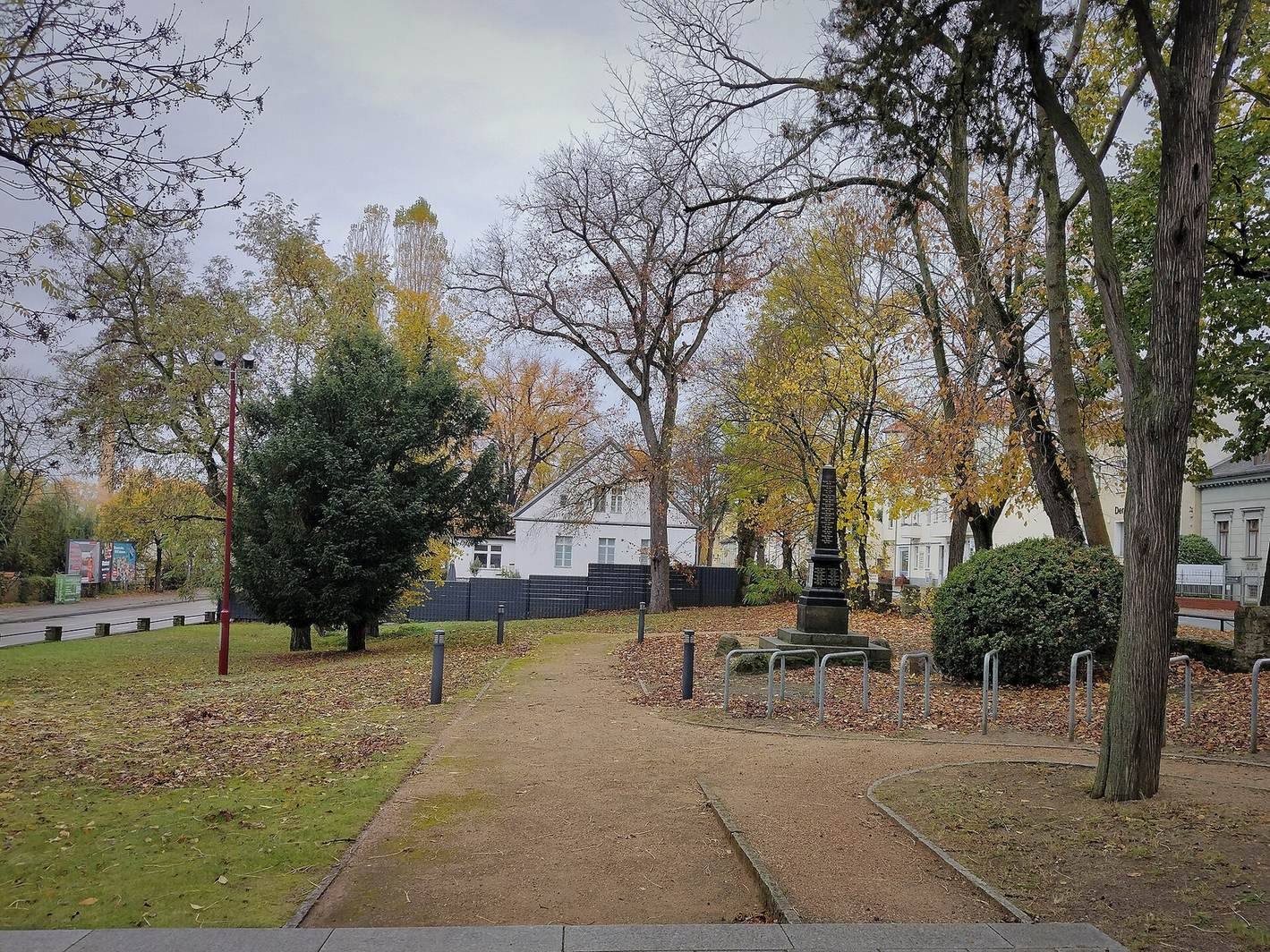
Around 1985, changes to the road layout left the former village green and church on an island amid traffic on the shared route of federal highways B 1 and B 5. Nearly a century earlier, expansion of the R 1 had destroyed much of the former Biesdorf cemetery.
Remains
The church retains a single-nave layout. Its enclosing nave walls are the only parts of the building that survive from the earliest phase; the reconstructed structure also incorporates masonry from the ruin and the tower that survived the 1944 air raid.
Medieval walls and entrances
A blocked round-arched portal remains visible in the western part of the north wall. Two more blocked portals can be made out on the south wall. The western opening probably had a round arch, although its original form is uncertain.
Tower and exterior
The tower built in 1702 was square and plastered, with Baroque forms. The 1896–1897 remodeling added a rectangular tower spanning the full width of the nave. It rises 40 metres and has a pointed roof; its brickwork stands on a base of Rüdersdorf limestone. That remodeling also included a semicircular apse and enlarged windows.
Postwar interior and fittings
The rebuilt church has Expressionist features, reflecting an early twentieth-century movement that emphasized expressive forms. Inside, a dark barrel vault, a curved ceiling shaped like a half-cylinder, spans the space. The altar and pulpit are made of red, hard-fired brick. Three hard-cast iron bells came from Apolda in 1951; the baptismal font dates to 1958, and the windows were renewed in 1978.