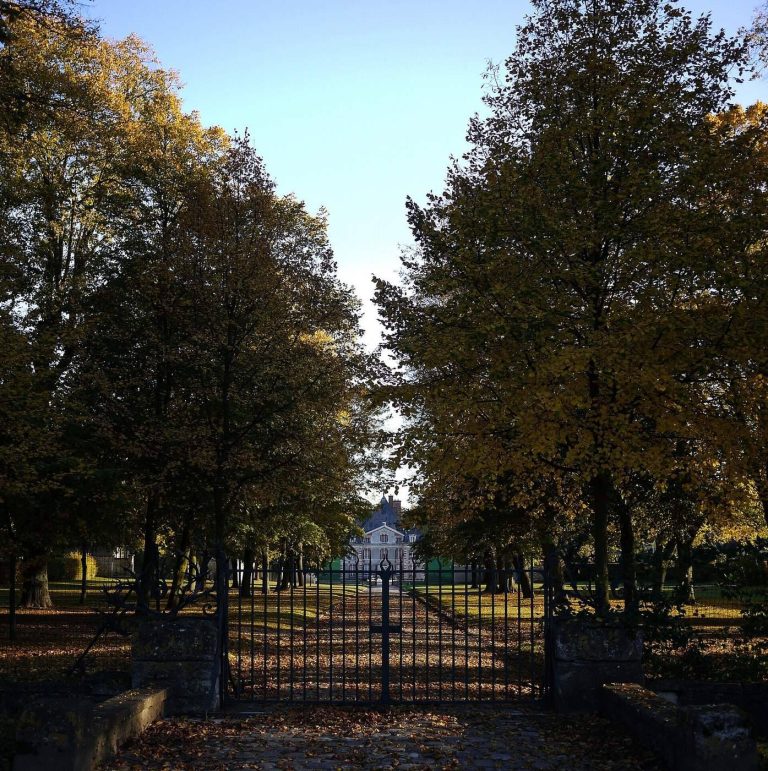
Schloss Rottembourg: A Country Estate and Former Monastery in Montgeron, France
Site at a Glance
- Rating
- 4.3
- Popularity
- Very Low
- Country
- France
- Primary era
- Early Modern
- Eras represented
- Early Modern, Modern
- Civilizations
- French
- Site type
- Domestic
- Remains
- Elite Residence
On this page13 sections
History
Schloss Rottembourg is a former country estate and monastery in Montgeron, France, whose oldest surviving wing was built in the early eighteenth century. It stood beside the traditional road from Paris toward Burgundy, in a district first associated with winegrowers, merchants, and inns before attracting country houses and hunting residences used by Parisian elites.
From country estate to aristocratic residence
The estate originally stretched from the former Grand’rue, now Avenue de la République, to the Yerres River. Its early eighteenth-century park-facing wing was built by an unknown architect and builder. Jean Brongniart, a relative of the chemist and court pharmacist Antoine-Louis Brongniart, was among its early owners.
Jean-Jacques Bérard acquired the property in 1790. His family had gained considerable wealth through the French East India Company, a royal French trading company that operated overseas. During Bérard’s ownership, the house was remodeled in the Louis-seize style, an early French Neoclassical style associated with Louis XVI and marked by restrained classical forms and geometric decoration. The formal French garden was also changed into an English landscape park containing artificial grottoes and ponds.
The Rottembourg and Hoschedé years
General Henri Rottembourg bought the estate in 1823, giving it the name it retains today. A French military general, he lived there until his death in 1857. He sold parts of the property to help finance the construction of Montgeron’s Église Saint-Jacques le Majeur, a school, and the old town hall. The square before the church is now called Place de Rottembourg. Alexander von Hübner, an Austrian diplomat who served as envoy in Paris, later used the estate for a time.
Alphonse Raingo, a Parisian property entrepreneur, purchased Schloss Rottembourg around 1865 as a second residence. His daughter Alice Hoschedé, her husband Ernest Hoschedé, and their children visited frequently. After Raingo died in 1870, Alice inherited the estate. She and Ernest welcomed contemporary artists there, including the French portrait painter Émile Auguste Carolus-Duran.
Édouard Manet visited the Hoschedés in the summer of 1876. During that stay, he painted Jacques Hoschedé in the garden for Child among the Flowers and produced the double portrait Ernest Hoschedé and His Daughter Marthe. Claude Monet stayed with the family intermittently from July to December of the same year. Ernest commissioned four decorative paintings for the salon, Pond at Montgeron, Garden Corner at Montgeron, Turkeys, and The Hunt.
The nature of Monet’s relationship with Alice Hoschedé during this period remains uncertain. They later lived together and married in 1892, but no evidence places the beginning of their relationship at Schloss Rottembourg in 1876. Ernest Hoschedé’s financial difficulties led Alice to sell the estate in 1877, after which it passed through several owners.
Monastery and diocesan complex
After the First World War, Montgeron considered buying Schloss Rottembourg for use as the town hall, but selected another location. The property was sold to the Carmelite order in 1922. The Carmelites, a Catholic religious order traditionally associated with contemplative and monastic life, established a monastery there and added a cloister and chapel.
The monastery was dissolved in 1988. The buildings are now used by the Diocese of Évry-Corbeil-Essonnes. The diocesan house contains administrative offices, parts of the complex provide a residence for elderly diocesan priests, and nuns of the Filles de la Charité du Sacré-Cœur de Jésus, a Catholic women’s religious congregation, also live at the estate. The park has been a classified site since 1982, meaning that it receives formal protection for its landscape, scenic, or heritage value.
Remains
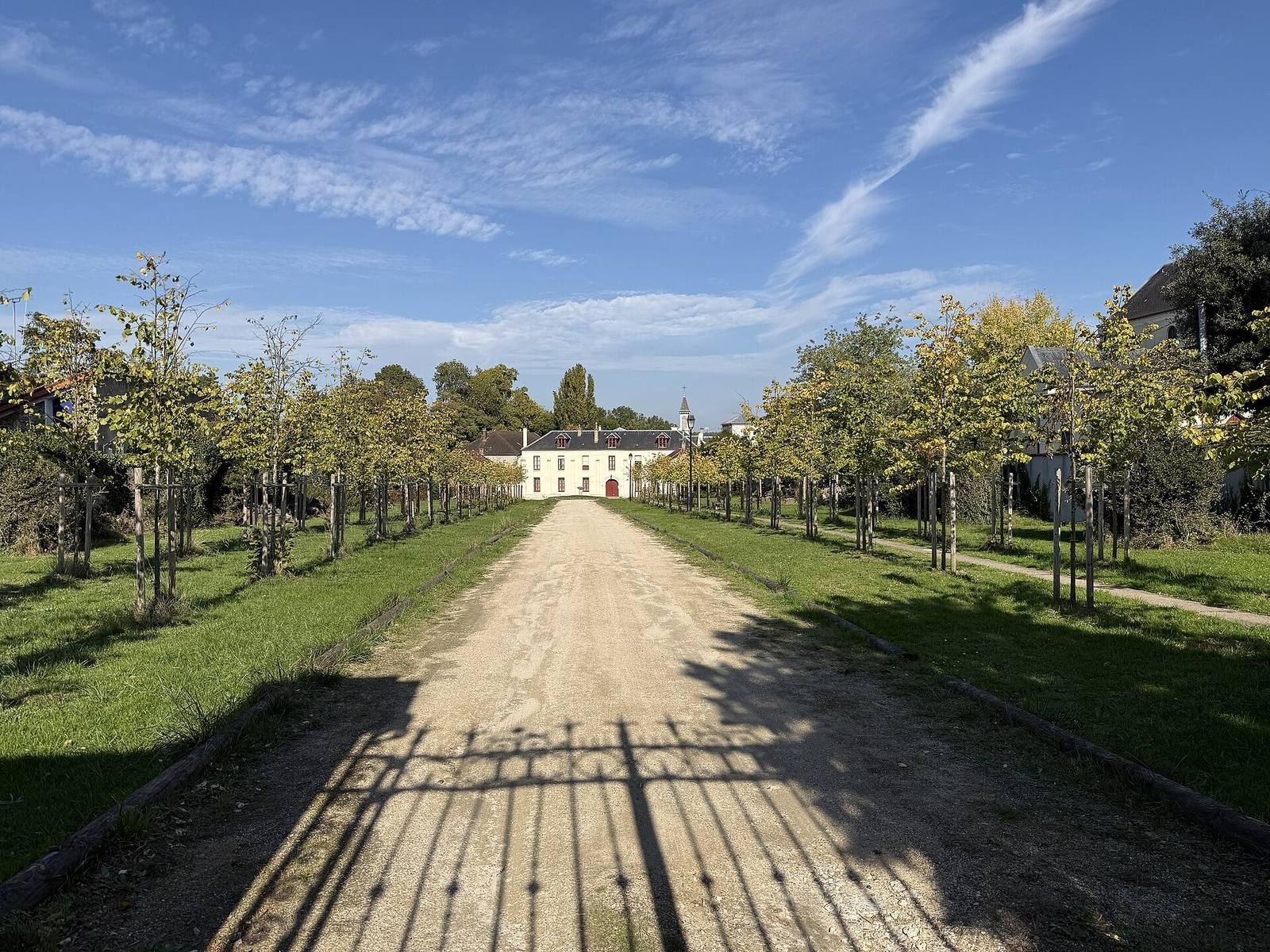
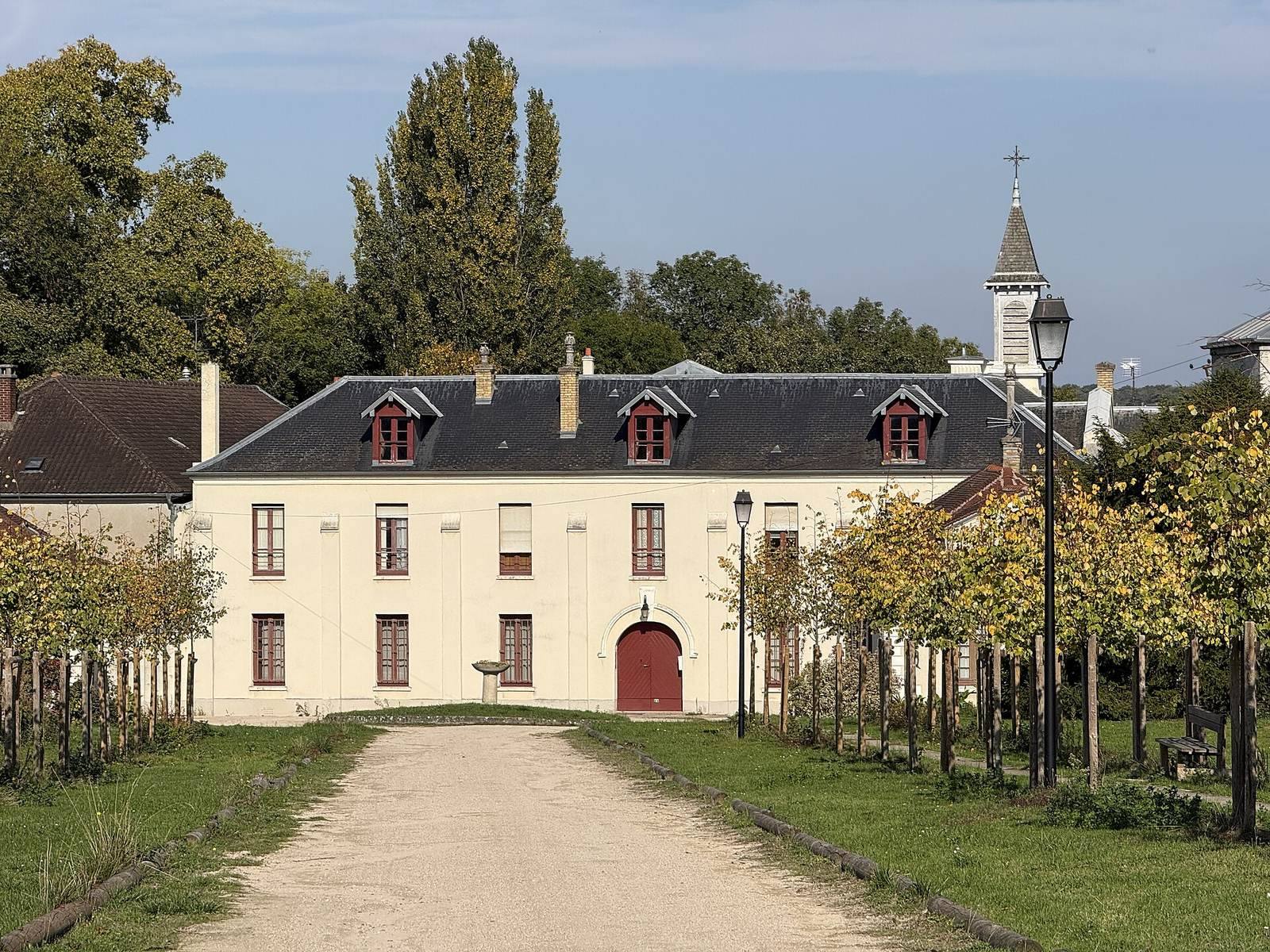
Schloss Rottembourg survives as a reduced estate whose buildings and park occupy only part of the original grounds. The Paris–Marseille railway, constructed between 1846 and 1849, divided the property and left it without its former extension to the Yerres River. The complex combines the early eighteenth-century residence, the redesigned landscape park, later additions made for the monastery, and a war memorial at the entrance on Avenue de la République.
Residence and grounds
Park-facing wing
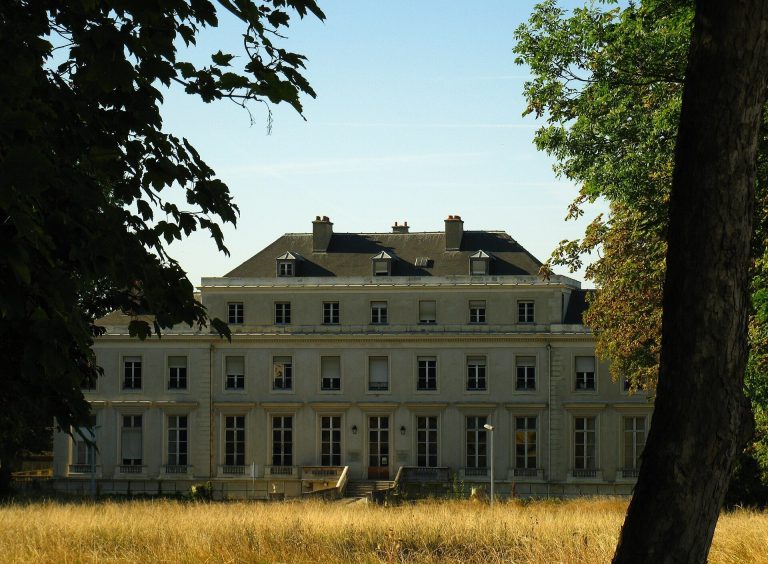
The oldest building section is the wing facing the park. It has a basement and three upper floors. On the garden side, an outside staircase with balustrades rises to the ground floor. A mezzanine beneath a shallow-pitched gable roof is emphasized by a central triangular pediment. The garden facade still appeared reddish when Monet painted Turkeys in 1876.
Landscape park
The grounds were transformed from a formal French garden into an English landscape park. Artificial grottoes and ponds formed part of this redesigned setting. The park and its surroundings appear in three of Monet’s four commissioned works, while Turkeys also includes the garden facade of Schloss Rottembourg. The paintings provide a visual record of the estate during the Hoschedé period.
Carmelite additions
The Carmelite occupation altered the complex by adding a cloister and chapel to the earlier estate buildings. These additions remain part of the architectural group now used by the diocese and its resident religious and clerical communities.
Entrance memorial
A war memorial stands at the entrance on Avenue de la République. It dates from the period after the First World War, when the municipality was considering acquiring the property for use as the town hall.
Artistic record
Monet’s Montgeron paintings
Monet’s four commissioned paintings preserve different views of the estate and its surroundings. Pond at Montgeron and Garden Corner at Montgeron are held by the Hermitage Museum in Saint Petersburg, Turkeys by the Musée d’Orsay in Paris, and The Hunt in a private collection.
Manet and Carolus-Duran
Carolus-Duran painted Alice Hoschedé in the estate’s garden; the portrait is held by the Museum of Fine Arts, Houston. Manet’s Child among the Flowers is held by the National Museum of Western Art in Tokyo, while Ernest Hoschedé and His Daughter Marthe belongs to the Museo Nacional de Bellas Artes in Buenos Aires.