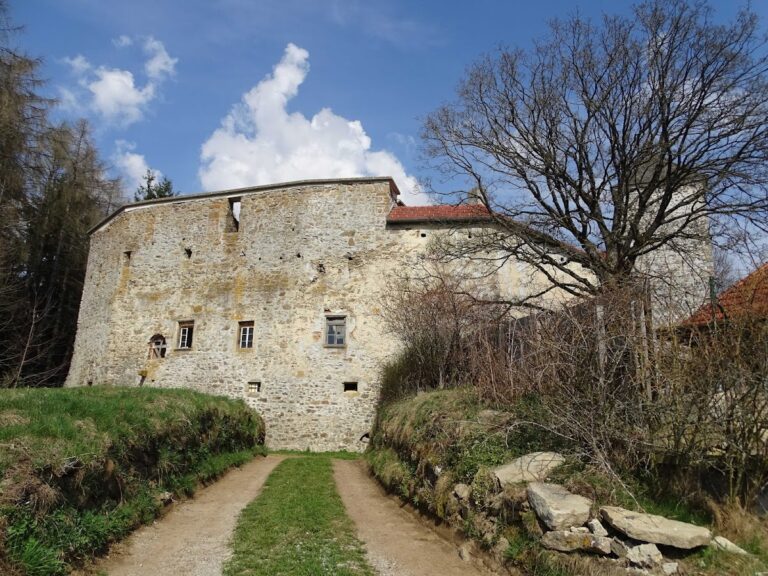
Schloss Riedegg: A Castle Complex in Upper Austria


Site at a Glance
- Rating
- 4.7
- Popularity
- Low
- Country
- Austria
- Primary era
- Early Modern
- External website
- Open
- Eras represented
- Medieval, Early Modern
- Civilizations
- Habsburg, Holy Roman Empire
- Site type
- Domestic
- Remains
- Castle
On this page8 sections
History
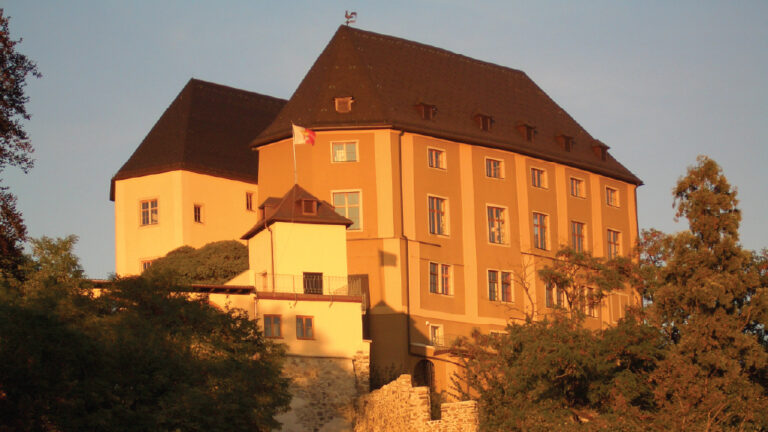
Schloss Riedegg is a castle complex in Austria, in the municipality of Alberndorf in the Mühlviertel of Upper Austria. Its predecessor, Burg Riedegg, was first mentioned around 1150. The present castle took shape mainly through a rebuilding completed in 1609, after the earlier structure had suffered from its vulnerable wooden construction and inadequate living space.
Medieval Origins and Starhemberg Rule
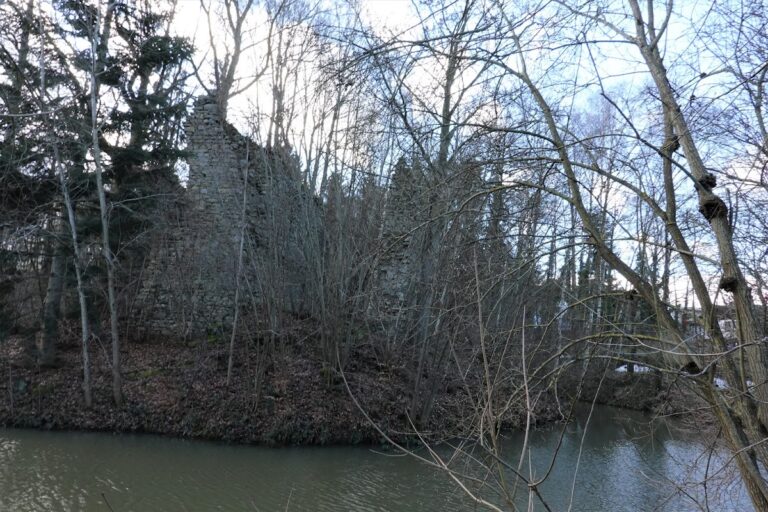
The original castle stood beside the present building. By 1529, when Erasmus von Starhemberg owned the property, it was converted into a palace with the labor of Turkish prisoners. In 1593, ownership passed to Reichard von Starhemberg, another member of the Austrian noble family that held estates and political offices, including lordship over Riedegg.
An inscription states that a fire led Reichard von Starhemberg to rebuild the castle completely in 1609. The earlier wooden building was then left to decay, while the new complex provided more adequate living quarters. Around 1750, the lordship of Riedegg, together with the lordship of Breitenbruck, comprised 385 subjects.
Twentieth-Century Institutional Use
Prince Ernst Rüdiger Starhemberg sold the castle to the Englishman Slater in 1933. Slater transferred it to the Missionaries of Mariannhill in 1936. This Catholic missionary congregation, founded for work in southern Africa, established a monastery at Riedegg and later created an educational center with a secondary school and an African mission museum. The missionaries owned the castle and used it as an educational institution from 1936 to 2015.
The Gallneukirchen Polytechnic School occupied the castle until it moved to the Gallneukirchen school center at the end of the 2018–2019 school year. The school was definitively closed in 2022, and the castle also contained rental apartments. In 2015, an investor group purchased the castle. The apartment leases ended, while the Mariannhill missionaries moved into newly built apartments with lifelong rights of residence. The chapel, African museum, and cemetery remained in their ownership. A medical and therapy center was subsequently established. Schloss Riedegg is protected as a historical monument.
Remains
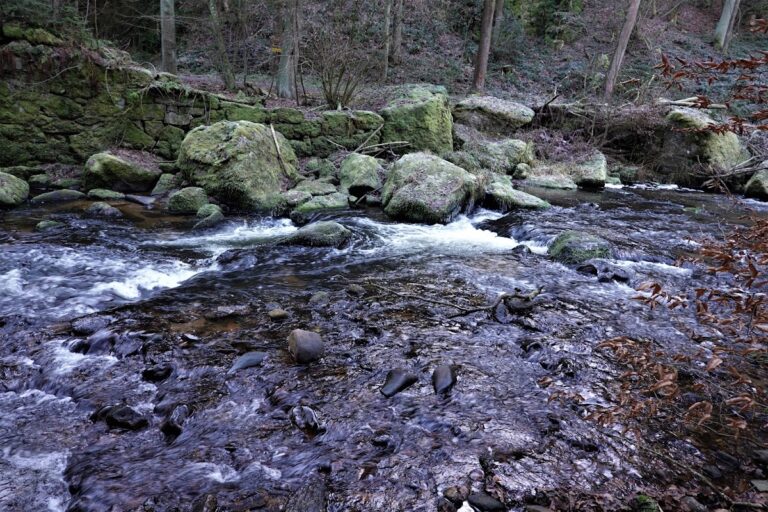
Schloss Riedegg occupies a hill rising prominently above the surrounding plain, with the Große Gusen River, a river in Upper Austria, surrounding it on three sides. The complex consists of two wings arranged around an inner courtyard. A former drawbridge was replaced by a stone bridge, and the buildings include a broad riders’ staircase designed to permit mounted access.
Chapel and Garden Works
Chapel Vaults
The small chapel contains two rooms with relatively well-preserved cross-ribbed vaults dating from the second half of the fourteenth century. These masonry vaults use intersecting ribs as a structural framework for the vaulted surfaces, preserving an architectural element from the medieval history of the complex.
Garden Retaining Wall
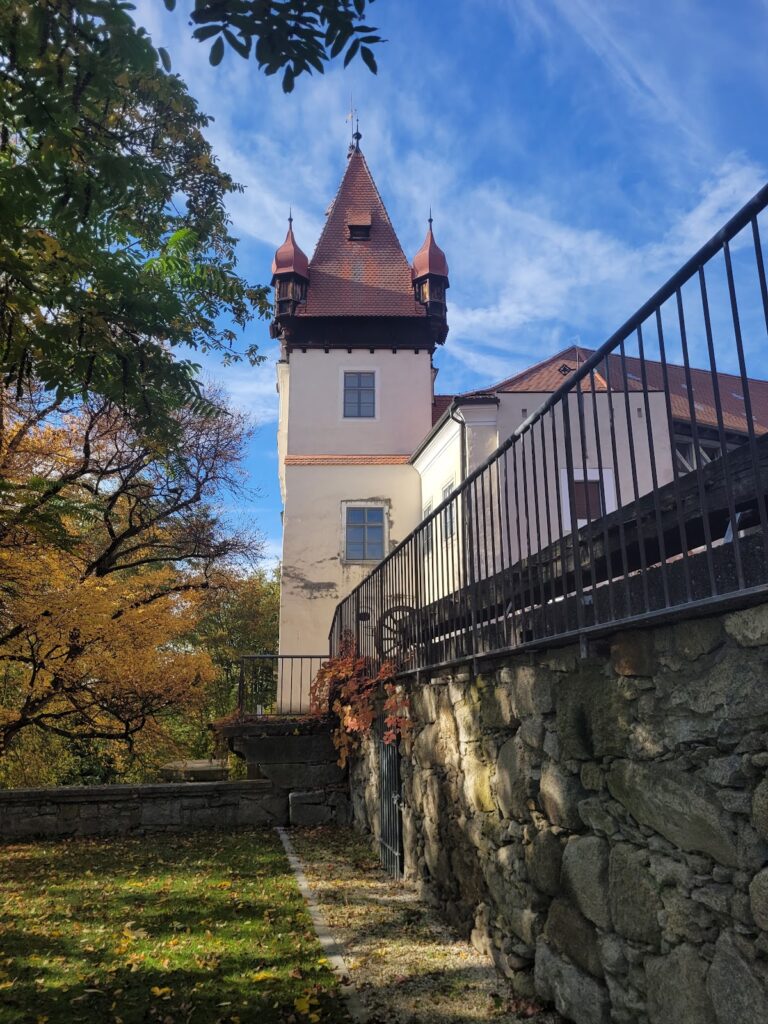
A garden beside the castle is supported by a massive wall built from roughly worked stone blocks. The wall forms part of the surviving arrangement of the grounds and supports the garden next to the castle buildings.
African Museum
Since the renovation of the 1970s, the castle has housed a small African museum with a notable ethnographic collection. It presents the history and cultures of Africa and is described as the only African museum in the Mühlviertel. The collection reflects the educational and missionary uses established at Riedegg during the twentieth century.
Among the objects are stuffed animals from Transvaal and Orange, historical regions of southern Africa. The displays also include household implements associated with the Zulu, a southern African people, as well as weapons such as spears, arrows, and axes. Bracelets, rings, earrings, necklaces, and religious objects form additional parts of the collection.
Nearby sites