Raggnitz Castle: A Noble Residence in Austria
Site at a Glance
- Popularity
- Low
- Country
- Austria
- Primary era
- Early Modern
- Eras represented
- Medieval, Early Modern
- Civilizations
- Habsburg, Holy Roman Empire
- Site type
- Domestic
- Remains
- Castle
On this page8 sections
History
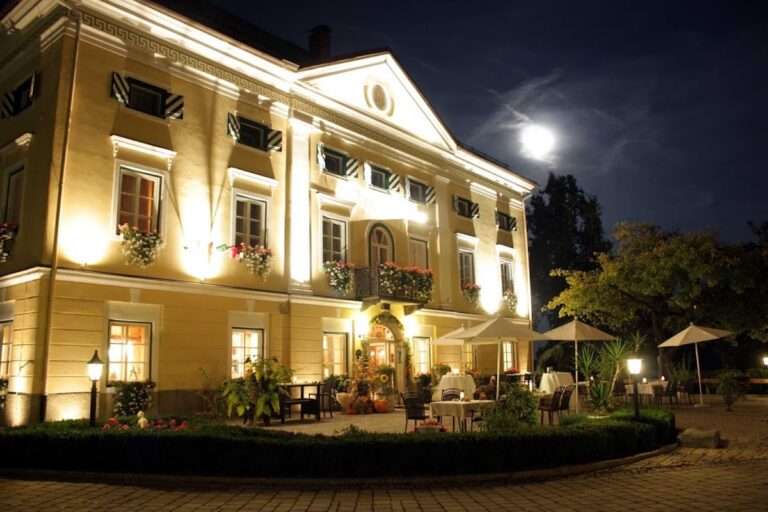
Raggnitz Castle is a medieval noble residence in Austria, on the floor of the upper Drava valley near Lind. It originated in the thirteenth century and later became the seat of the Lords of Lind, who developed an earlier farmstead into a castle-like family residence.
Early records and the Lords of Lind
Raggnitz enters the historical record in 1254, when Philipp von Spanheim, then chosen but not yet consecrated as archbishop of Salzburg, granted a holding at Racknitz to his archer Heinrich. It comprised a farm and associated land, including three acres. The grant followed the transfer in 1252 of several fiefs from Count Albert III of Tyrol to Bernhard, Duke of Carinthia, and Bernhard’s son Philipp. In 1304, Raggnitz and Lind came under the County of Gorizia.
In 1429, Count Johann Meinhard VII of Gorizia and Kirchberg granted Siegmund von Lind the lordship of Lind, including Raggnitz. After the castles of Oberlind and Unterlind fell into ruin, the Lords of Lind chose Raggnitz’s more convenient position on the valley floor as their seat, enlarging the farm into a family residence. In 1613, the resident lord, Adam Jakob von Lind, used the title “von Lind auf Raggnitz und Groppenstein.”
Rebuilding and later ownership
Around 1789, the Lords of Lind sold the castle to industrialist Paul Matthias von Tschabuschnigg. He substantially altered the building and established a family chapel. Its use gradually shifted back toward farming. Ownership passed to Oswald Nichelwitzer in 1822, Josef Zabernig in 1825, and Anton Roßmann in 1839. The Wernisch family has owned the property continuously since 1872 and resides there. The castle is protected as an Austrian monument.
Remains
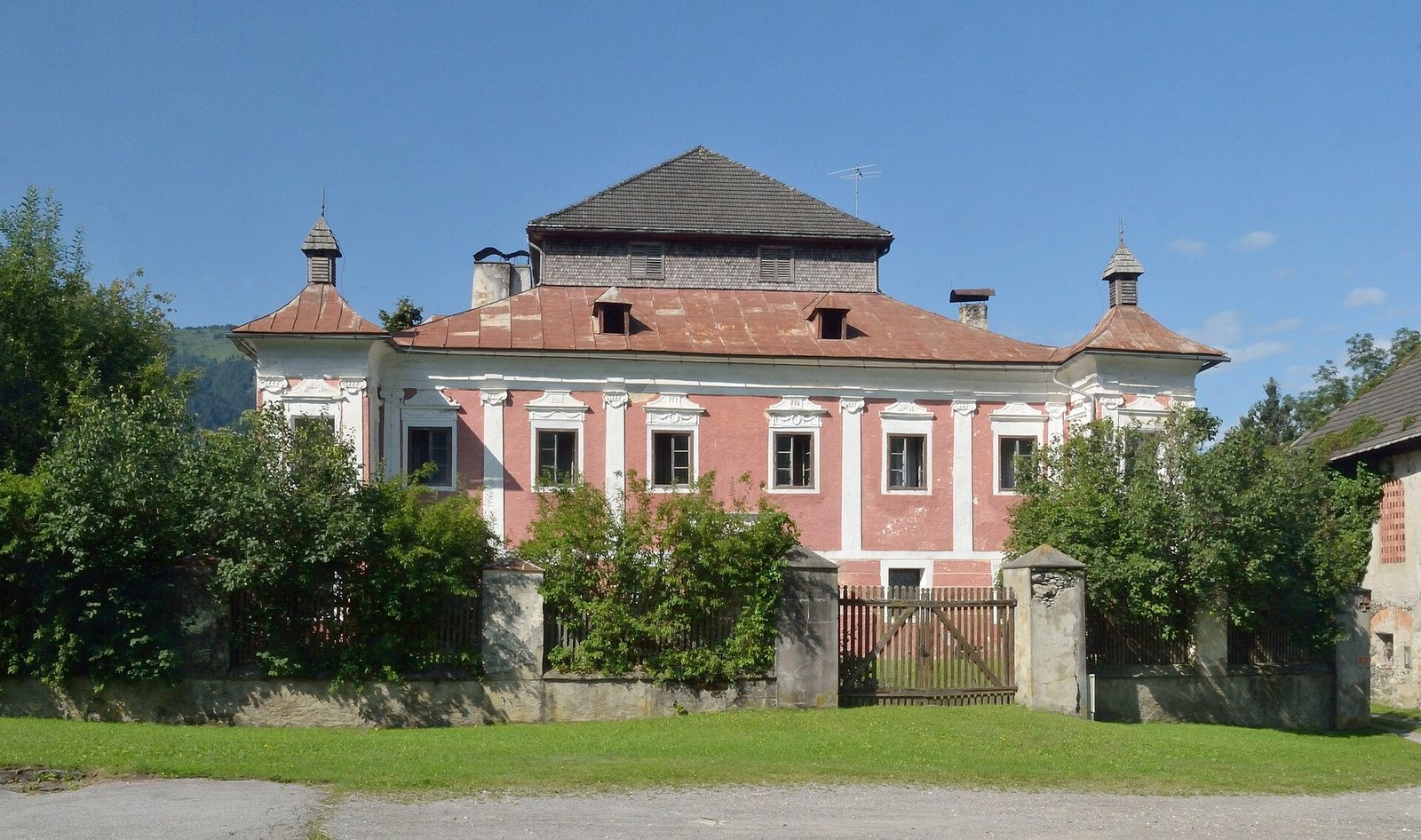
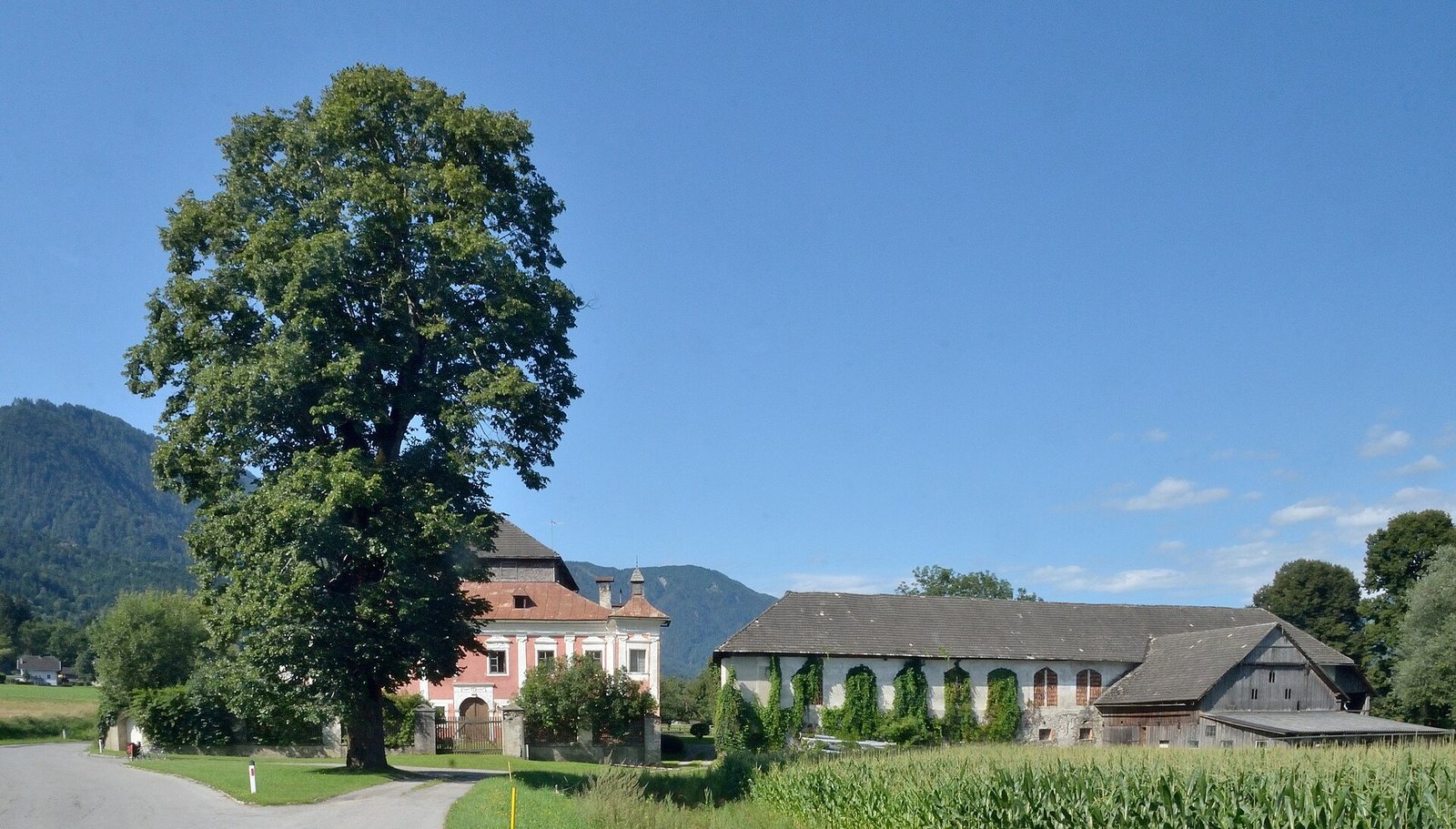
The complex combines an almost square, two-storey main house with agricultural buildings beside it, within a substantial enclosing wall. It stands about 500 metres southwest of Lind, near the Drava River. The building’s present appearance largely reflects a late-eighteenth-century rebuilding that incorporated fifteenth-century components.
House and grounds
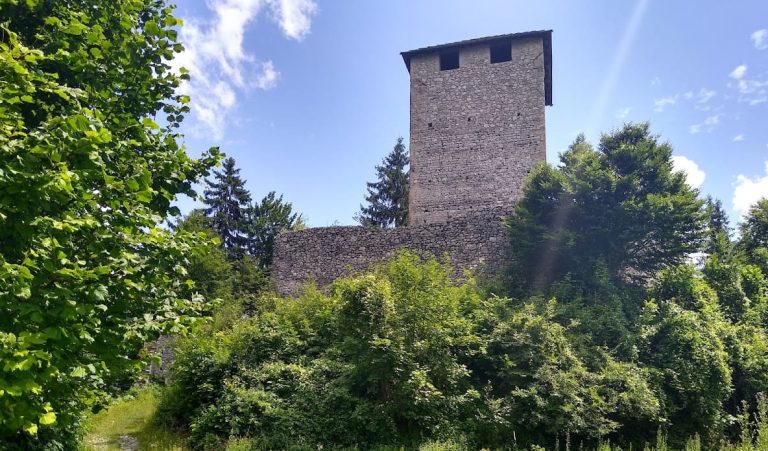
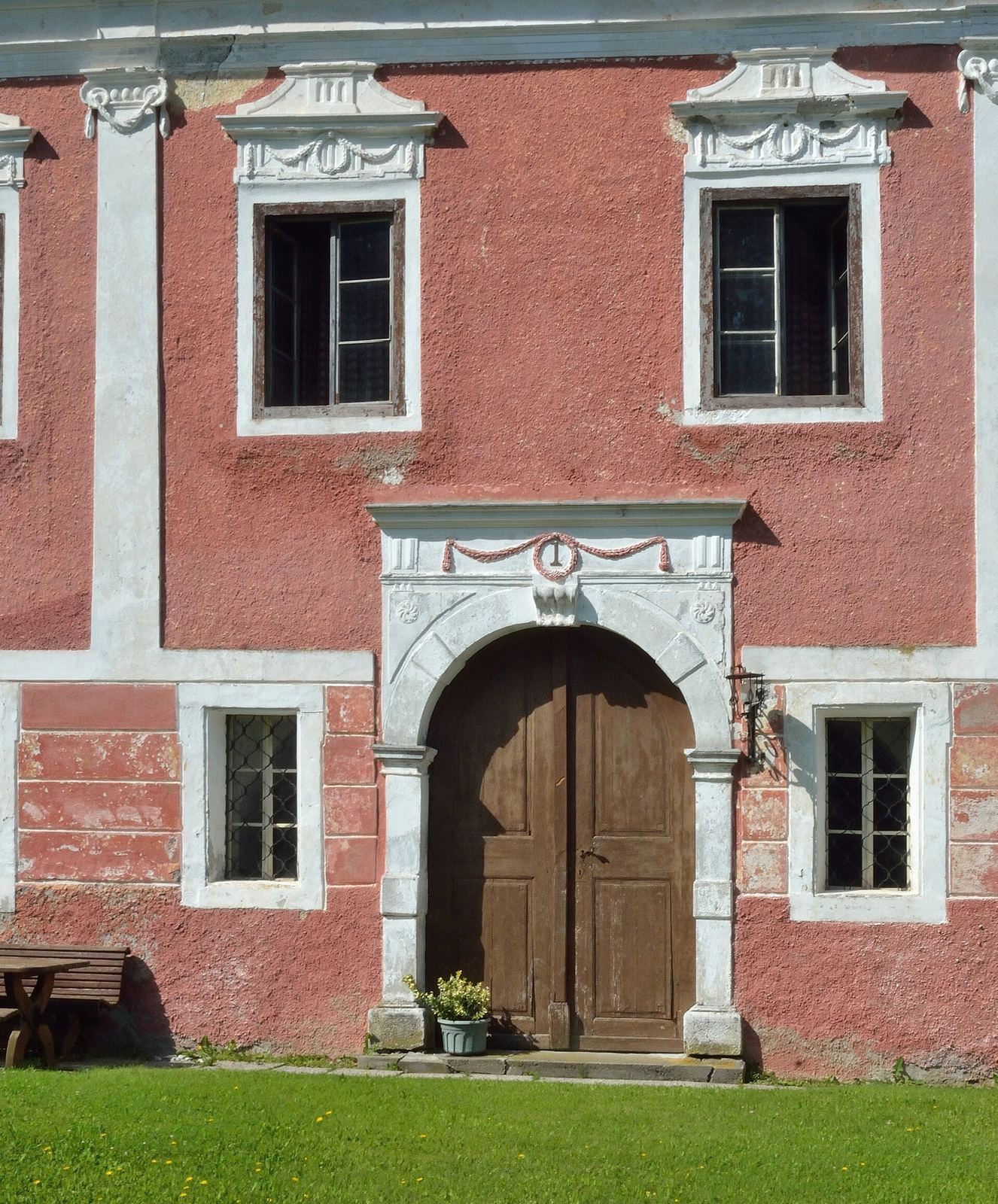
The northeast-facing front has two projecting corner sections, each topped by a tent-shaped roof and a small lantern. Together with the central attic storey, these features give the house an appearance described as Chinese-influenced. The front is eight bays, or structural divisions, wide. Horizontal bands mark the ground floor, while slender pilasters, shallow wall projections resembling columns, divide the upper storey. Their braided Ionic capitals are decorated column tops in the Ionic style. Stucco window surrounds, some curved, rise toward the top of the facade, and the windows have early-classical hood mouldings. The stone-framed main entrance has a round arch and dates to the late eighteenth century; its design is described as Renaissance-style. A tower reinforces the enclosing wall at the northwest. The visible facades date to around 1790.
Interior
Ground-floor passages
The central ground-floor passage has a continuous, tunnel-shaped vaulted ceiling dating to the sixteenth century. A second passage on the north side also has a tunnel-shaped ceiling, with curved sections above openings and a network of stucco ribs. This ceiling, too, dates to the sixteenth century.
Upper hall and family chapel
The upper-floor hall has a flat ceiling and a Rococo stove, reflecting an eighteenth-century European artistic style. At its southwest end, interior alterations around 1790 created the family chapel. A plaque above its entrance bears the date 1795; another records permission granted in 1797 to celebrate Mass there. The chapel’s illusionistic wall paintings use perspective to create apparent depth, depicting Old Testament scenes within elaborate classical architectural settings. Its ceiling is divided into recessed panels, and its altar is early-classical in style, a later eighteenth-century European style. The altarpiece depicts the Virgin Mary.