Herrevad Abbey: Denmark’s First Cistercian Monastery in Sweden
Site at a Glance
- Popularity
- Medium
- Country
- Sweden
- Primary era
- Early Modern
- Eras represented
- Medieval, Early Modern, Modern
- Civilizations
- Danish, Swedish
- Site type
- Domestic
- Remains
- Elite Residence
On this page10 sections
History
Foundation and medieval development
Herrevad Abbey was a Cistercian monastery in Scania, now part of Sweden, founded on 12 October 1144 as the earliest house of the order in Denmark. The Cistercians sought stricter observance of the Rule of St Benedict, the foundational guide to Benedictine monastic life. Herrevad was founded from Cîteaux Abbey, the order’s mother house, and belonged to the Diocese of Lund, an ecclesiastical district overseen by a bishop. Its church began in the Romanesque style in 1158. The monastery had been consecrated in 1150, while still incomplete, and was probably dedicated to the Virgin Mary.
Archbishop Eskil of Lund supplied the land and paid for the foundation. A legend links his support to a vow: while studying at Hildesheim, he became gravely ill and dreamed that the Virgin Mary promised his recovery if he established five monasteries belonging to different orders. Eskil had served as provost at Lund Cathedral and bishop of Roskilde before becoming archbishop of Lund, giving him the means to fulfil that vow.
At Eskil’s request, Bernard of Clairvaux sent twelve monks from Cîteaux under Robert, Herrevad’s first abbot. Nine lay brothers later joined them to teach crafts and agricultural skills. Their arrival also formed part of a wider reforming effort. Danish Benedictine houses were considered lax in their discipline, and the Cistercians were expected to renew strict adherence to the Benedictine rule.
The abbey stood beside a crossing of the Rönne on a major road between Sweden and Denmark, with access to markets. The place was earlier called Herivad, meaning “army ford.” Its later name, Herrevad, or “Lord’s ford,” probably reflected payments collected for crossing the ford and, later, the bridge. After a fire badly damaged the monastery in 1291, the church was replaced by a larger building.
Herrevad grew into one of Denmark’s largest and wealthiest monastic houses. At its height, it owned more than 400 properties that produced income, and Danish nobles and the royal family supported it. It founded daughter monasteries at Tvis in 1163, Holme in 1172, and Løgum in 1173, as well as several in Sweden. The abbey’s scriptorium, a room for copying manuscripts, has been proposed as the place where the Codex Runicus was produced. This medieval attempt to write the Law of Skåne in runes is associated with the abbey, although the attribution is disputed.
Reformation and secular use
In 1536, during the Reformation under King Christian III, Denmark became Lutheran, adopting a Protestant Christian tradition, and church properties passed to the Crown. Herrevad and its farms were secularized, or placed under non-church control, but continued to function much as before. The monks and lay brothers remained until Abbot Laurids handed the site to the Crown in 1565. The abbey school continued until 1575, and Lutheran services took place in the church until 1585, when they were judged unnecessary.
Laurids died on 30 October 1572, among the latest surviving heads of a religious house in Scania. Herrevad was granted for life to the nobleman Sten Bille and his wife. Bille, an uncle of the astronomer Tycho Brahe, encouraged Brahe to live at Herrevad after his studies abroad and paid for a laboratory in a former monastic building.
Tycho Brahe’s work
At Herrevad, Brahe improved a method of papermaking. By 1570, paper was being produced for the first time in Scandinavia at Klippan Mill, near the abbey. At Brahe’s request, a glassworks was also established at Herrevad; it was described as the first in the country.
On 11 November 1572, Brahe observed a new star in the constellation Cassiopeia. He called it Stella Nova, meaning “new star,” and described it as brighter than Venus. He summoned witnesses and used a sextant, an instrument for measuring angles, to observe and record the object for almost a year. It is now identified as a supernova, an exploding star. Brahe published his findings in Copenhagen in 1573, helping establish his reputation as an astronomer.
Swedish rule and military use
Scania became Swedish in 1658. Herrevad was granted to the Danish nobleman and statesman Corfitz Ulfeldt, passed to other nobles, and eventually returned to the Swedish Crown. King Charles XI ordered the ruined abbey buildings dismantled and their materials transported to Malmö for the construction of the German Church. The Northern Skåne Cavalry Regiment was assigned to Herrevad in 1691. During the Danish-Swedish wars of 1709-1710, a renewed conflict between the kingdoms, Danish forces plundered the abbey.
Military buildings later occupied the site, and military units continued to use them until 1994, when the property passed into private ownership. Herrevad Abbey was designated a protected historic building in Sweden in 1998.
Remains
Abbey precinct
The monastic precinct stood beside the Rönne crossing and comprised a large church and three building ranges for residential and service use. The church’s construction shifted from Romanesque sandstone work to later brick building, while the monastery’s other ranges housed communal and practical functions.
Abbey church
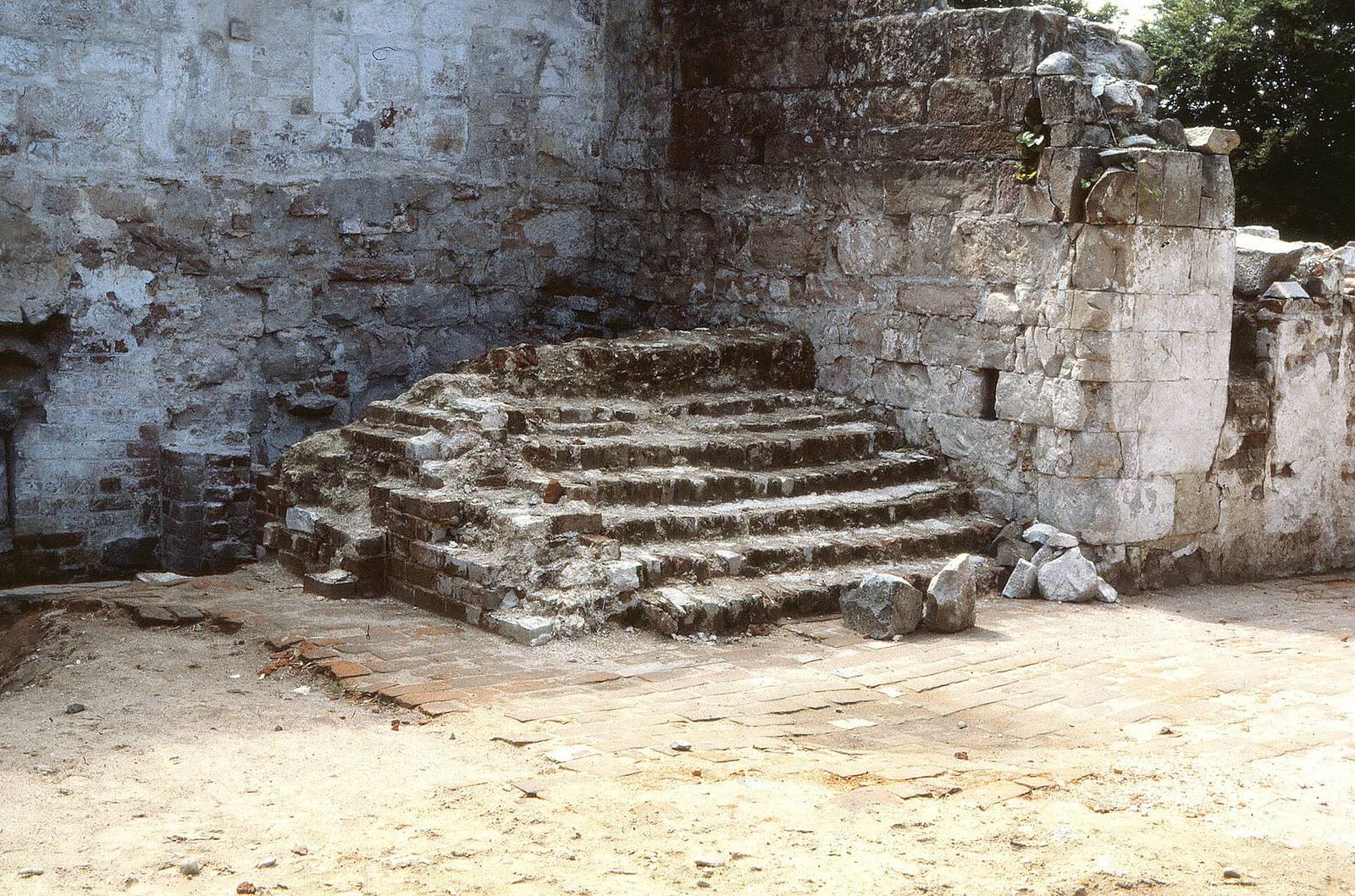
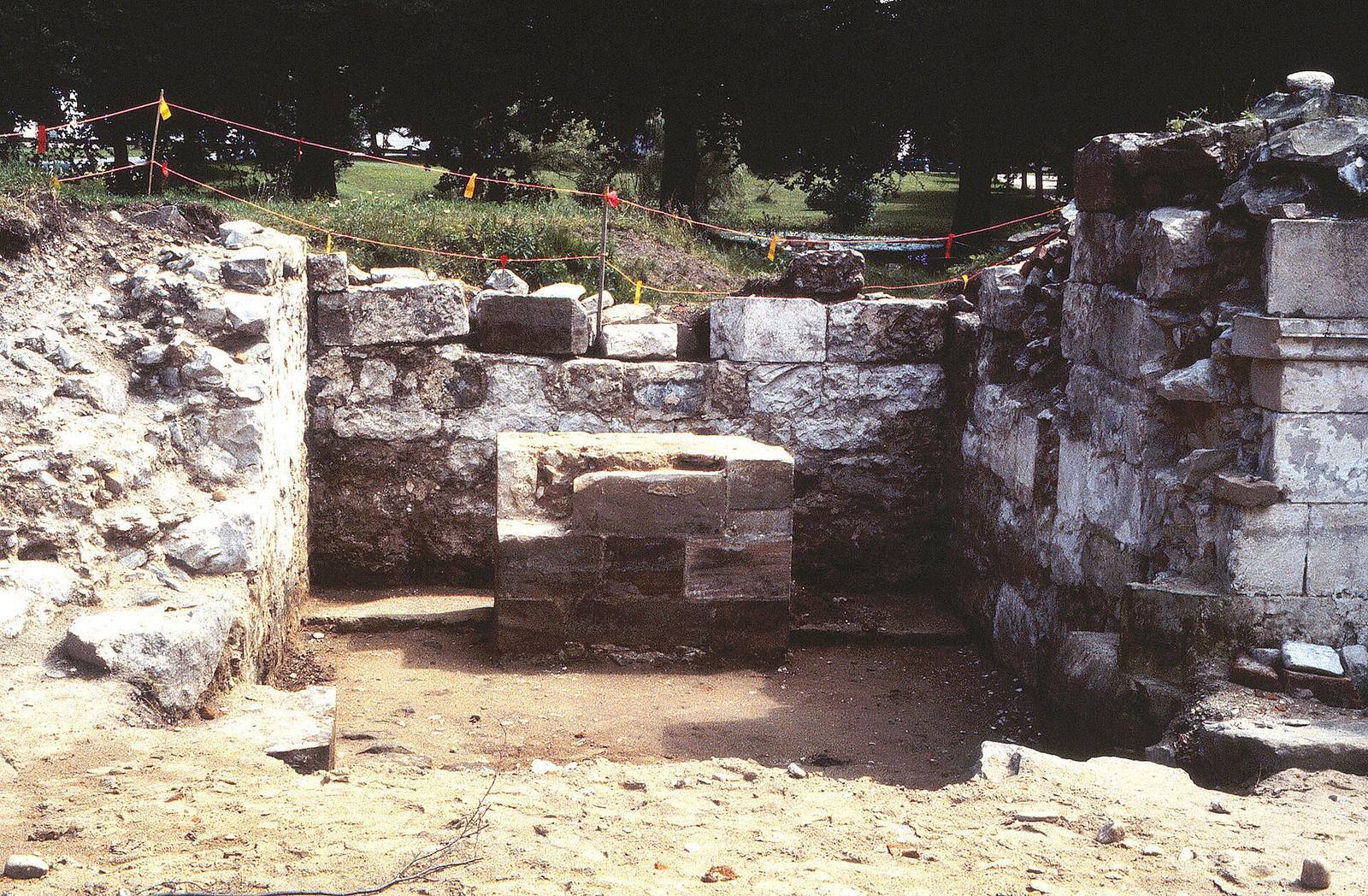
The first church was built from sandstone blocks in the Romanesque style. Brick was used in later construction to reduce costs, and the larger replacement church was built in Gothic style from brick. Its dimensions are uncertain, but the recorded plan gives a length of 53 metres and two naves, the main parts of the church, 19 and 28 metres wide. The choir, the area traditionally reserved for clergy and singers, was enlarged by 1513.
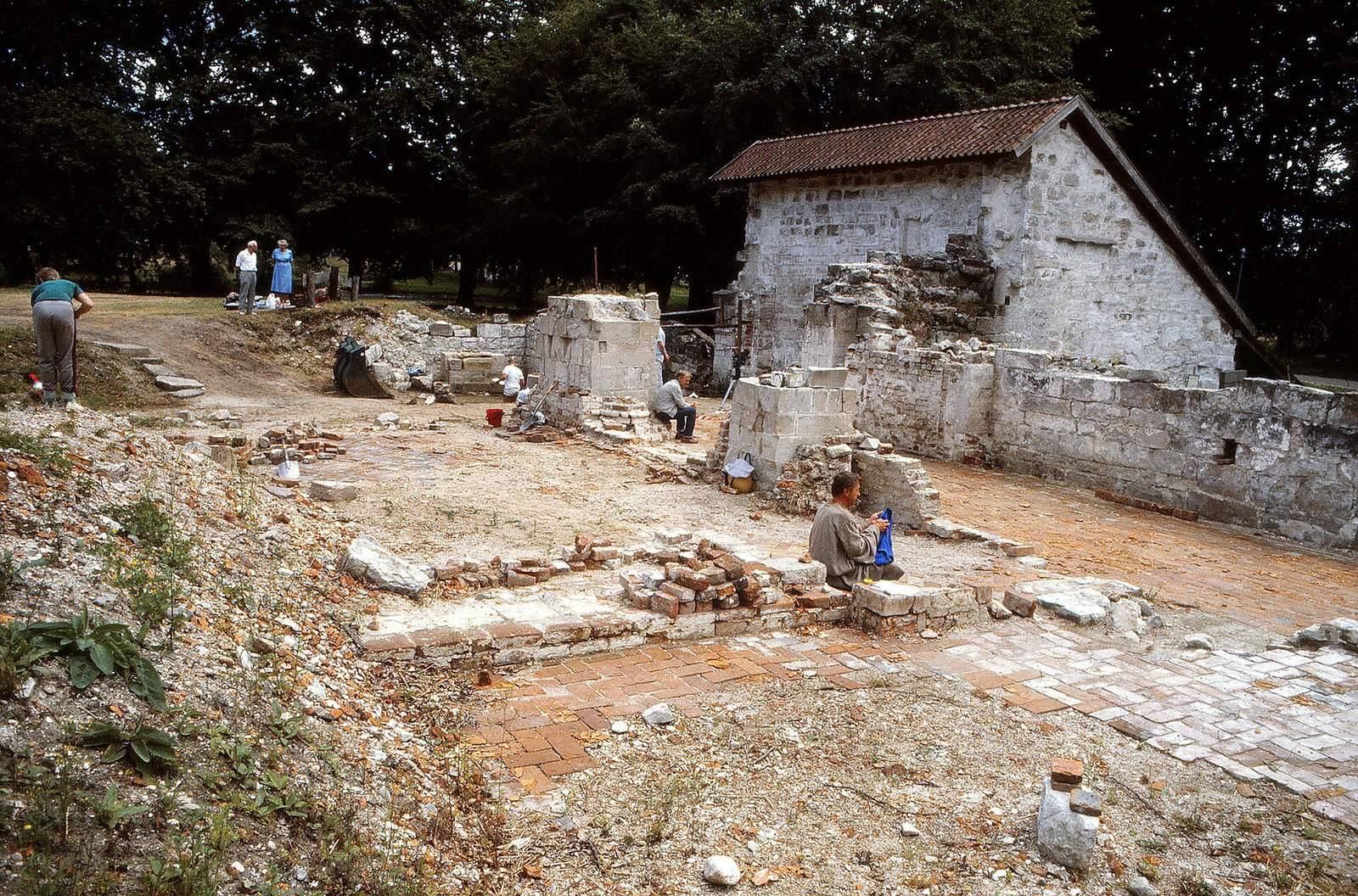
An excavation in 1939 revealed the church’s plan. Work in the 1980s exposed foundations of the choir and parts of the nave, which remain visible.
Monastic ranges
The three ranges included a dormitory, a refectory, or communal dining room, and service spaces such as kitchens and cellars. Separate accommodation served the lay brothers. A small library and a scriptorium, where manuscripts were copied, also belonged to the precinct. Part of the old sacristy, a room for vestments and church objects, was used as a shed and was the last abbey structure identified above ground.
Herrevad Castle
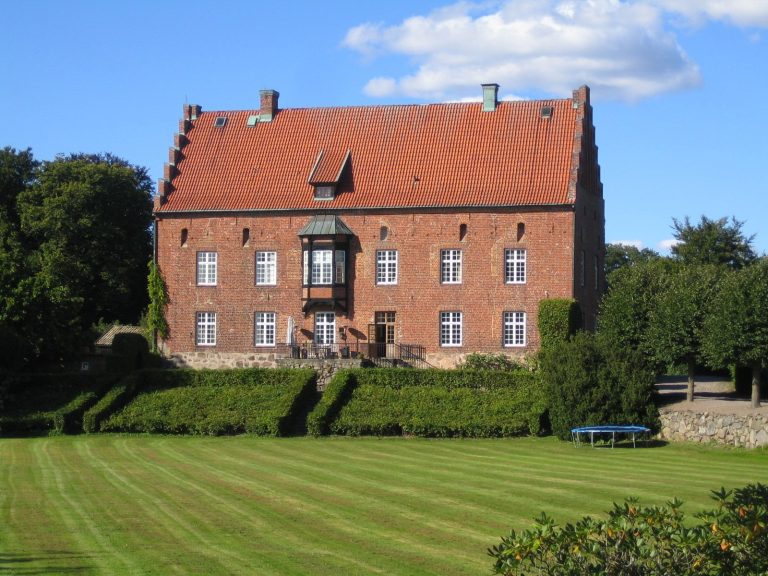
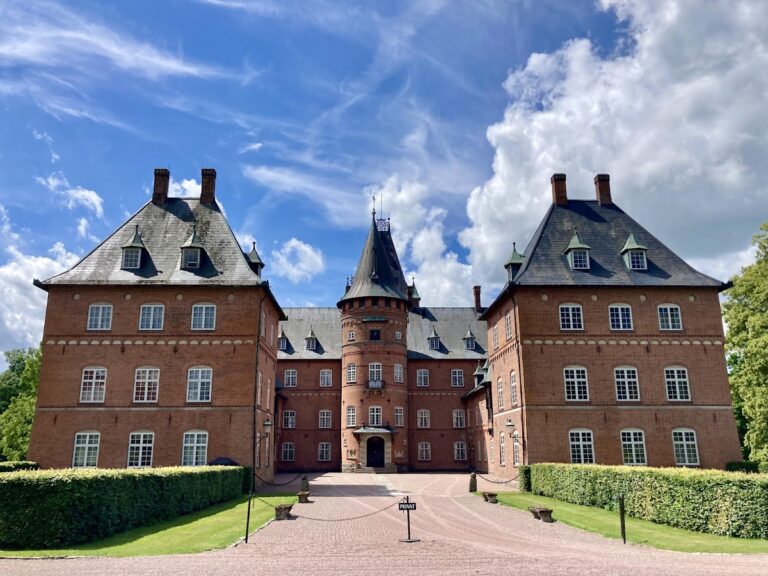
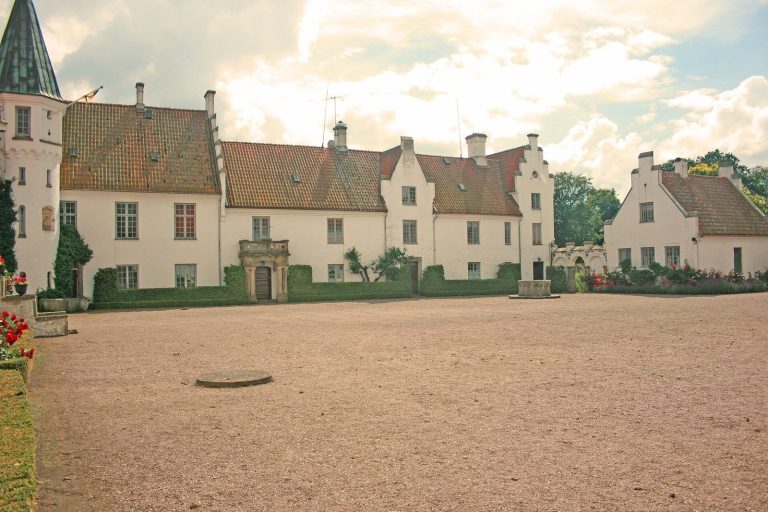
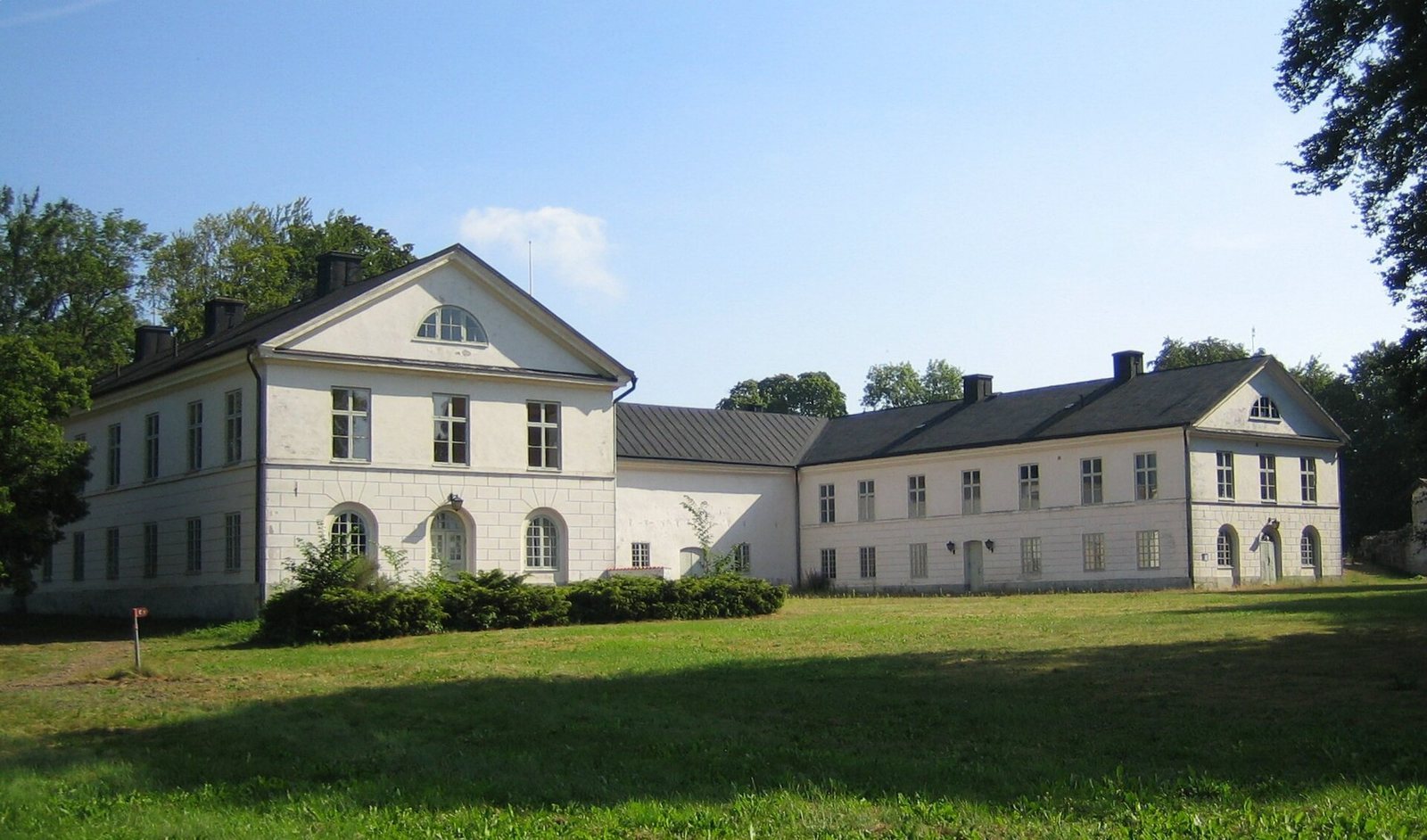
The regimental headquarters built in 1727 used material left after the abbey’s demolition. It later became the commander’s residence and was enlarged in 1745. Two wings were added in 1816-1819 in the Empire style, an early nineteenth-century architectural fashion. Designed by A. N. Edelcrantz, the wings stood on either side of an older abbey wing, and Herrevad Castle became the residence’s formal name. Laurids’s tombstone is preserved in the castle chapel.