Schloss Neuburg am Inn: A Castle Above the Inn Valley
Site at a Glance
- Popularity
- Medium
- Country
- Germany
- Primary era
- Medieval
- Eras represented
- Medieval, Early Modern
- Civilizations
- Duchy of Austria, Duchy of Bavaria, Habsburg, Holy Roman Empire
- Site type
- Military
- Remains
- Castle
On this page14 sections
History
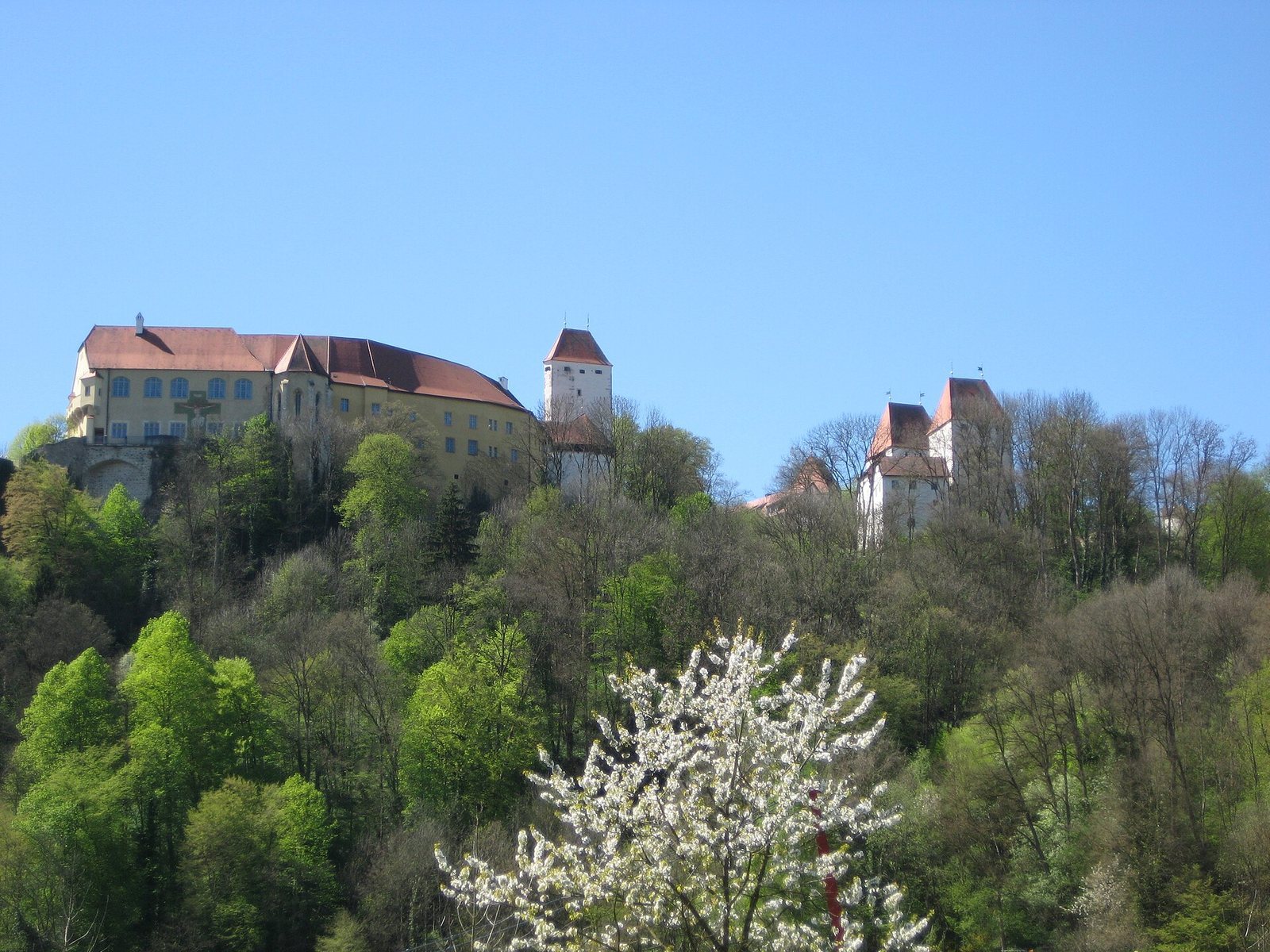
Schloss Neuburg am Inn is a castle high above the Inn valley in Germany, founded in 1050 by the Counts of Formbach. Its position made it a contested stronghold between Bavaria and Austria, and its architecture was later reshaped through Renaissance and Baroque rebuilding.
Foundation and Bavarian-Austrian conflict
The Formbach family built the castle several kilometres downriver from its ancestral stronghold and later took the name Neuburg. The Counts of Andechs acquired it in 1158, followed by Bavaria in 1248. Control shifted repeatedly between Bavarian and Austrian powers. During their conflict in 1310, the castle was destroyed, then rebuilt by the Austrian victors. Much of the structure that survives today dates from this reconstruction.
The Habsburgs held the rebuilt castle and pledged it to other parties. In 1463, Hanns von Rohrbach acquired Neuburg and began enlarging it. His successor, Sigmund von Niederthor, continued the work.
The Counts of Salm-Neuburg
In 1529, Niklas, Count of Salm, received the castle and County of Neuburg as an imperial fief, a holding granted by the emperor under feudal arrangements. The grant recognised his role in the successful defence of Vienna during the first Ottoman siege of the Habsburg capital. He became the ruling Count Nikolaus I of Salm-Neuburg and died the following year. His son, Nikolaus II, succeeded him and commissioned a Renaissance remodelling and an extensive garden. The Counts of Salm-Neuburg held the castle and county until 1654.
Later owners and changing uses
Count Georg Ludwig von Sinzendorf acquired the castle in 1654 and had it remodelled in the Baroque style. In 1680, the imperial court chamber in Vienna confiscated the property after accusing him of high treason and other offences. The castle and county were pledged to the Scottish nobleman Jakob von Hamilton in 1698; he received them outright in 1701. His son sold Neuburg to the Counts of Lamberg-Sprinzenstein in 1719.
In 1730, Cardinal Joseph Dominikus von Lamberg transferred the castle and imperial lordship, a territory held directly under the Holy Roman Emperor, to the Prince-Bishopric of Passau. This was a territory governed by a bishop who also exercised secular authority. It remained under the prince-bishopric until secularisation in 1803, when ecclesiastical lands passed into secular control. Bavaria sold the castle in 1806, after which it passed among private owners and associations.
Restoration and present uses
A fire badly damaged the castle in 1810. The Bavarian Heritage Preservation Association and the Passau Art Association rebuilt it in 1908. Around 1916, at the initiative of the Munich Artists’ Support Association, the castle became a retreat for artists in need, a use that continued into the 1930s.
The European Academy Neuburg, a scholarly institution focused on European affairs, made the castle its seat in 1973. The complex stood empty from 1982, after which the government of Lower Bavaria began restoration work. From 1986 to 1988, Passau District established its council hall in the outer bailey’s service courtyard, and in 1989 the Science Meeting Centre association converted the old malt house into accommodation.
Passau District has owned the complex since 1998. After extensive renovation, it came to serve as an international meeting centre for the University of Passau, a venue for the district council and a gallery for artists from the district. The main castle houses the university’s Institute for Market and Economic Research, and the complex contains 15 meeting and event rooms. The castle is protected as both a listed monument and an archaeological monument.
Remains
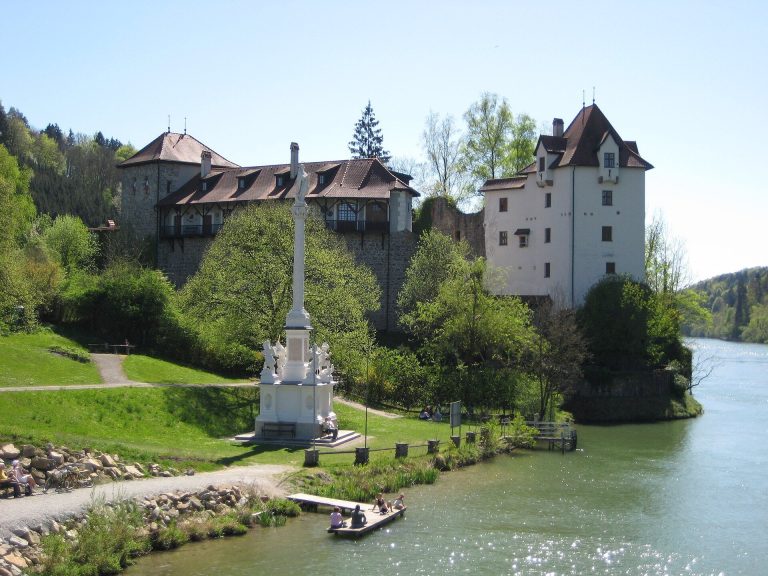
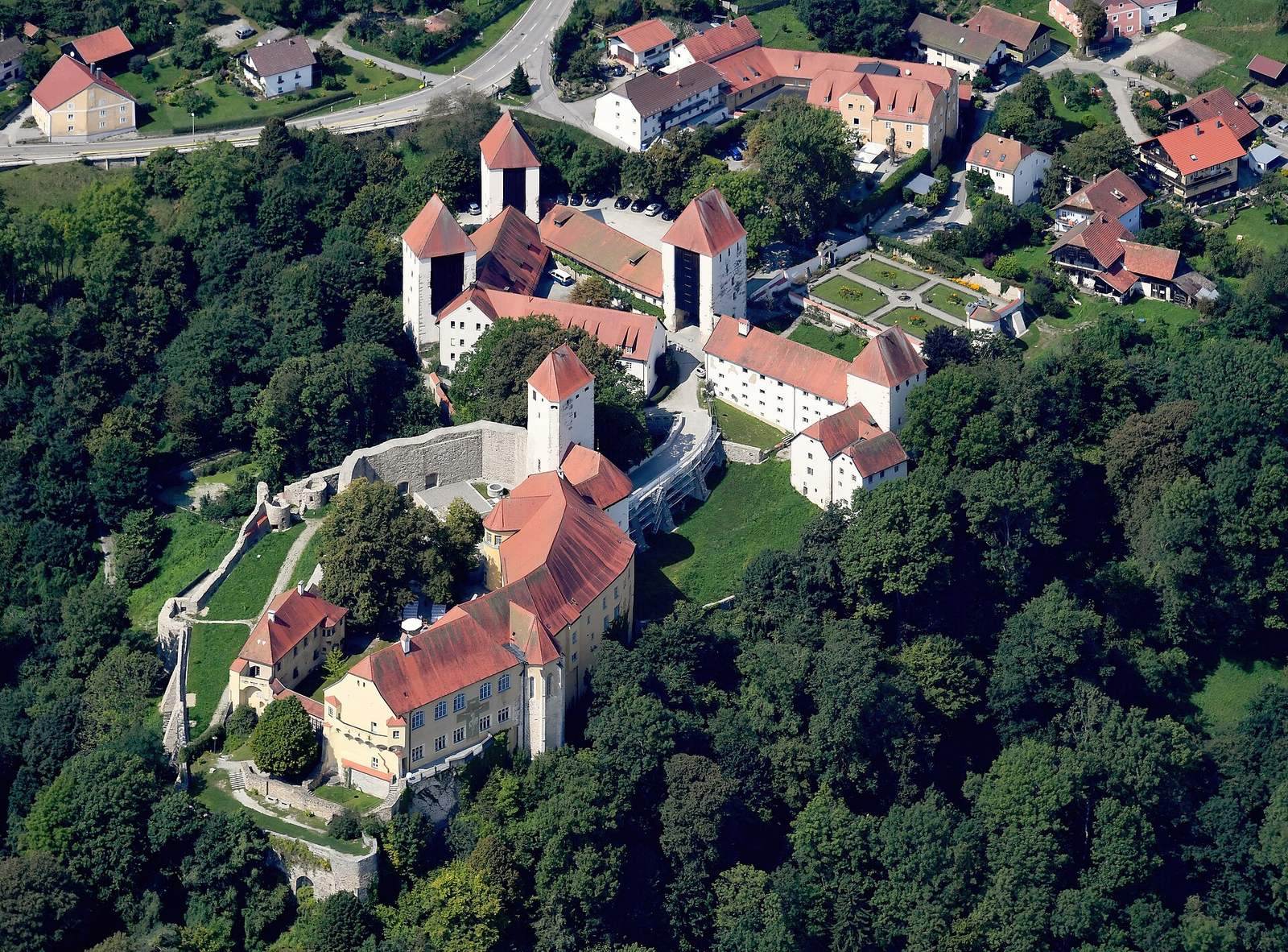
The castle complex stands on high ground above the Inn valley, opposite Wernstein Castle and near the Austrian border. Its three principal parts are the outer bailey, the main castle with its halls and gallery, and the court tavern. The surviving fabric reflects medieval construction as well as later Renaissance and Baroque work.
Outer bailey and boundary
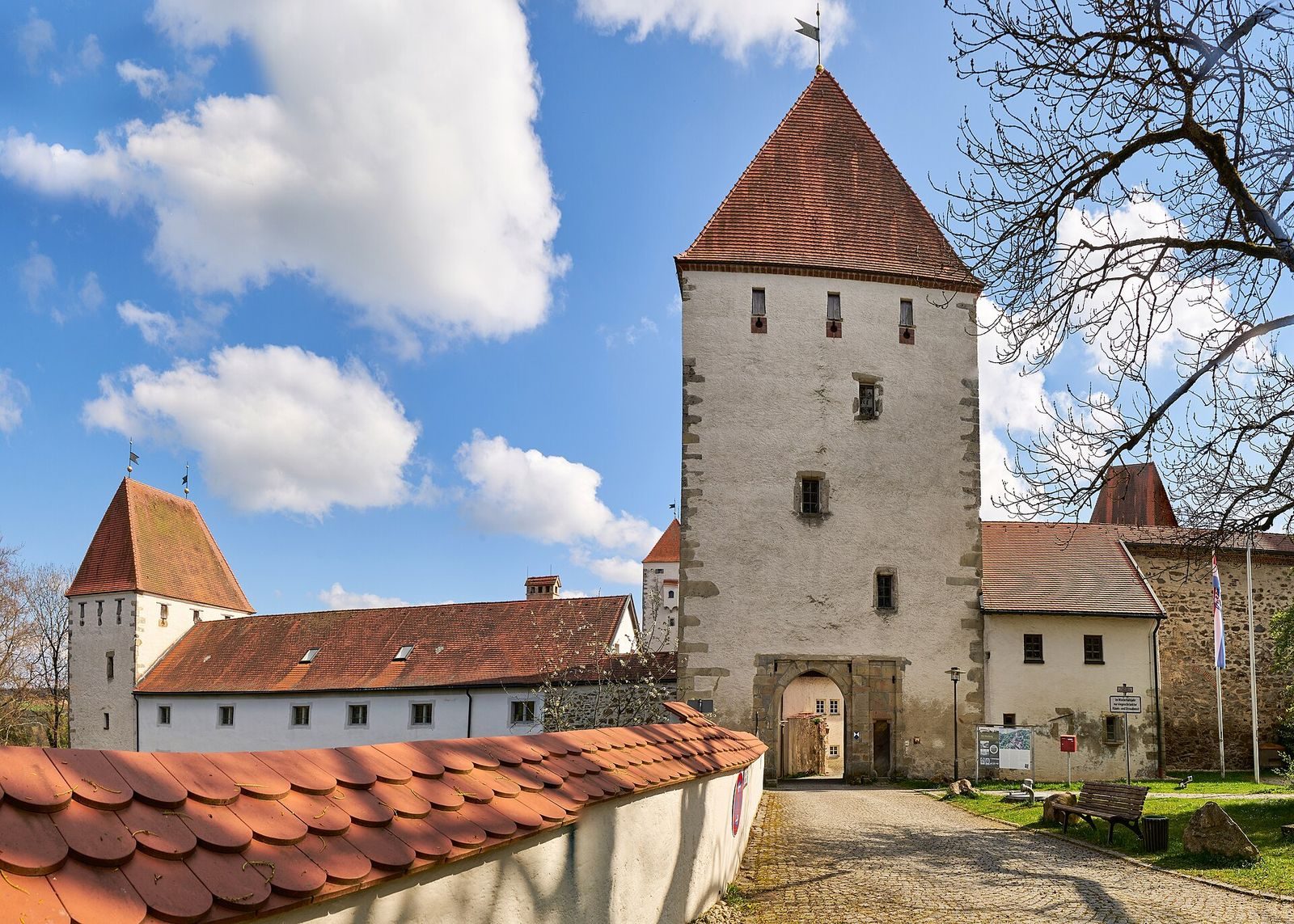
The approach to the outer bailey comes from the north through a flower garden with a grotto. A ring wall encloses the castle. It was once taller and had three corner towers and a gate tower; after its height was reduced, the northeastern tower, dating to around 1400, remained. The other towers were rebuilt between 1985 and 1988. The outer-bailey courtyard contains service buildings first built in 1599 and raised in 1738.
Main castle
Bridge, gatehouse and chapel
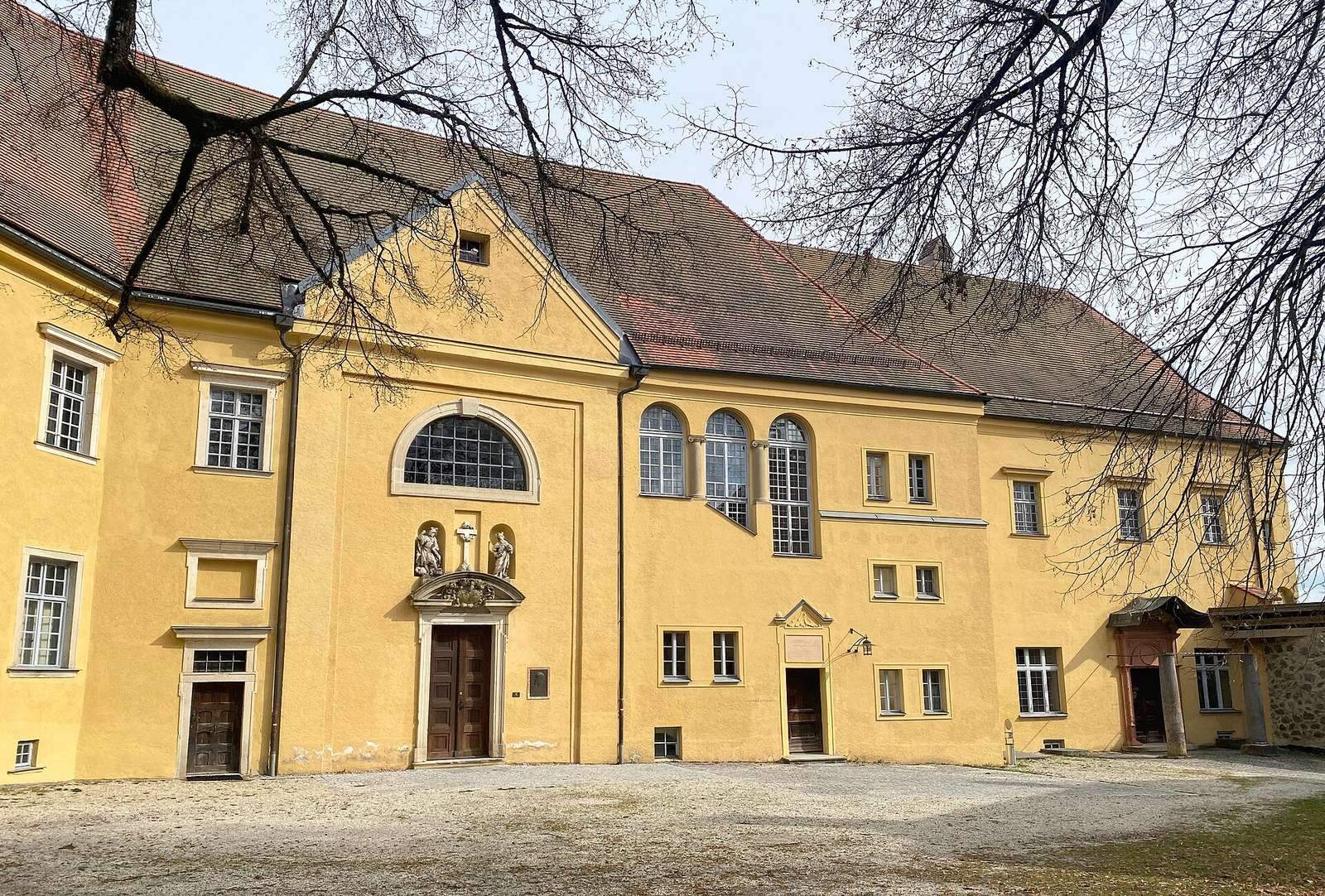
A bridge dating to 1707 leads to the main castle. The gatehouse bears an inscription dated 1484, with the keep, the castle’s principal defensive tower, rising above it. The Gothic chapel dates to the fourteenth century.
Halls and Renaissance decoration
A Renaissance portal leads to the Beautiful Halls and displays decoration identified as the oldest Renaissance example north of the Alps. In the small salon known as the Salettl, frescoes painted by Fritz Seitz in 1537 survive. Other named rooms include the Great Knights’ Hall, the White Marble Hall and the Red Marble Hall.
Garden
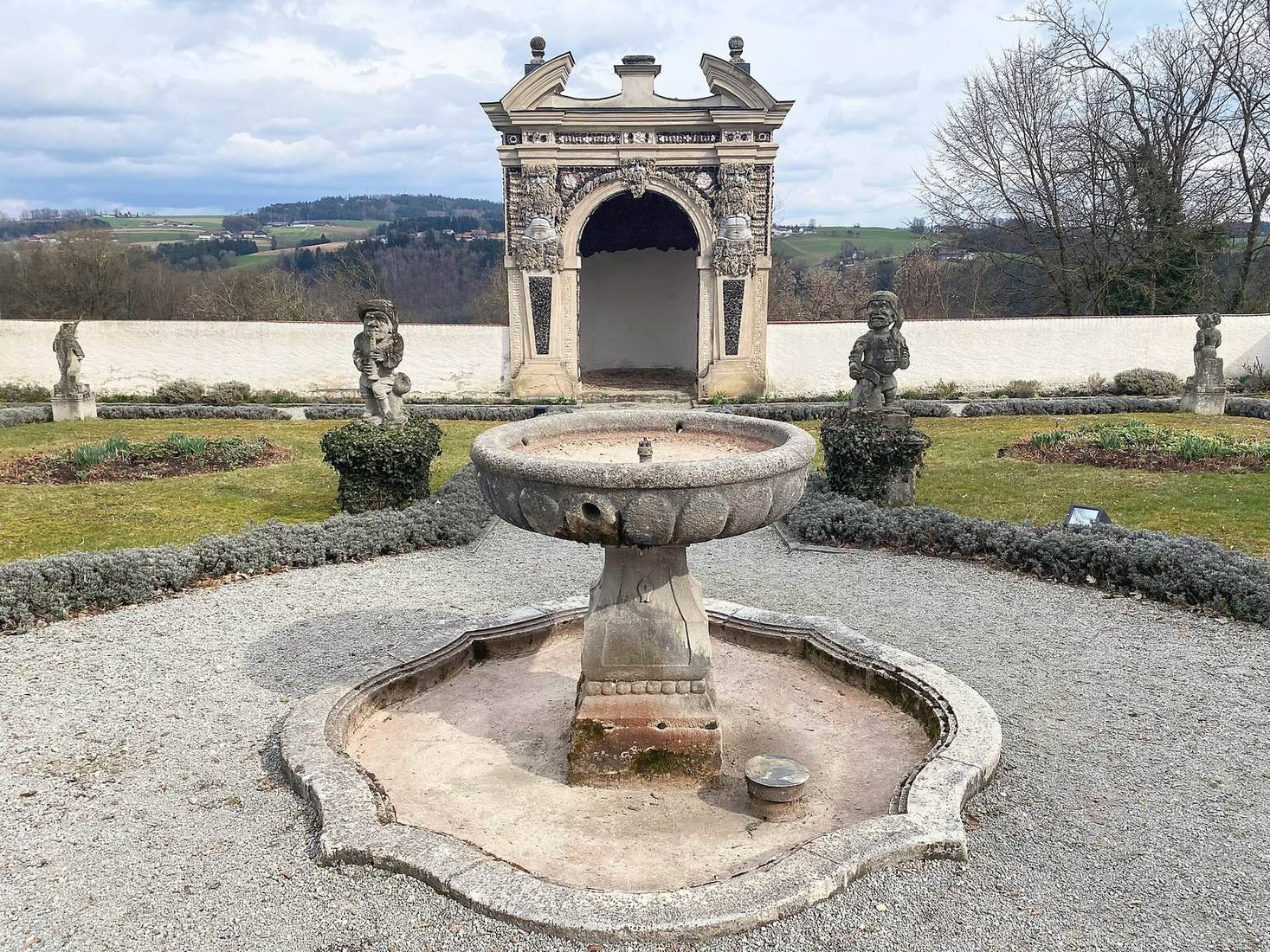
The Baroque garden was laid out in the second half of the seventeenth century. It contains several Callot figures, also known as Salzburg dwarfs, small decorative sculptures depicting dwarfs. The garden pavilion, built in 1664 by Batista Carlone and Giovanni Sforzza, includes a shell grotto, an ornamental grotto decorated with shells. A circular path runs through the surrounding woodland.
Associated defensive sites
Frauenhaus
South of the castle, Frauenhaus is the ruin of a ring-shaped complex dating to the fourteenth century. It is identified as a medieval small castle associated with Neuburg.
Wimberg outpost
The castle also had an outpost at Wimberg, on a rise above the opposite bank of the Inn.