Schloss Mannersdorf am Leithagebirge: A Baroque Palace and Lordship Seat
Site at a Glance
- Popularity
- Low
- Country
- Austria
- Primary era
- Early Modern
- Eras represented
- Early Modern
- Civilizations
- Habsburg, Holy Roman Empire
- Site type
- Domestic
- Remains
- Castle
On this page6 sections
History
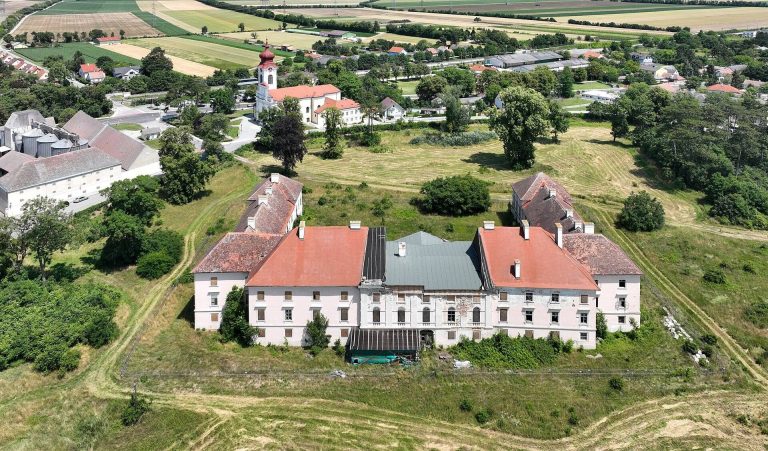
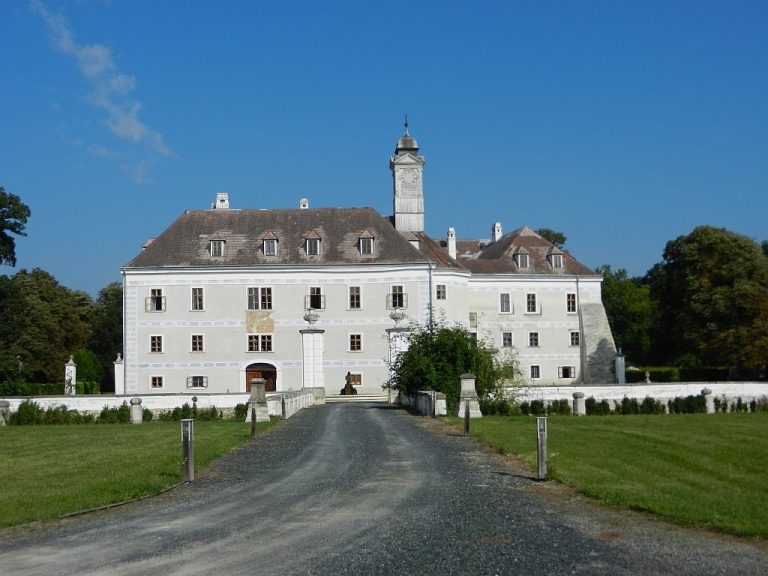
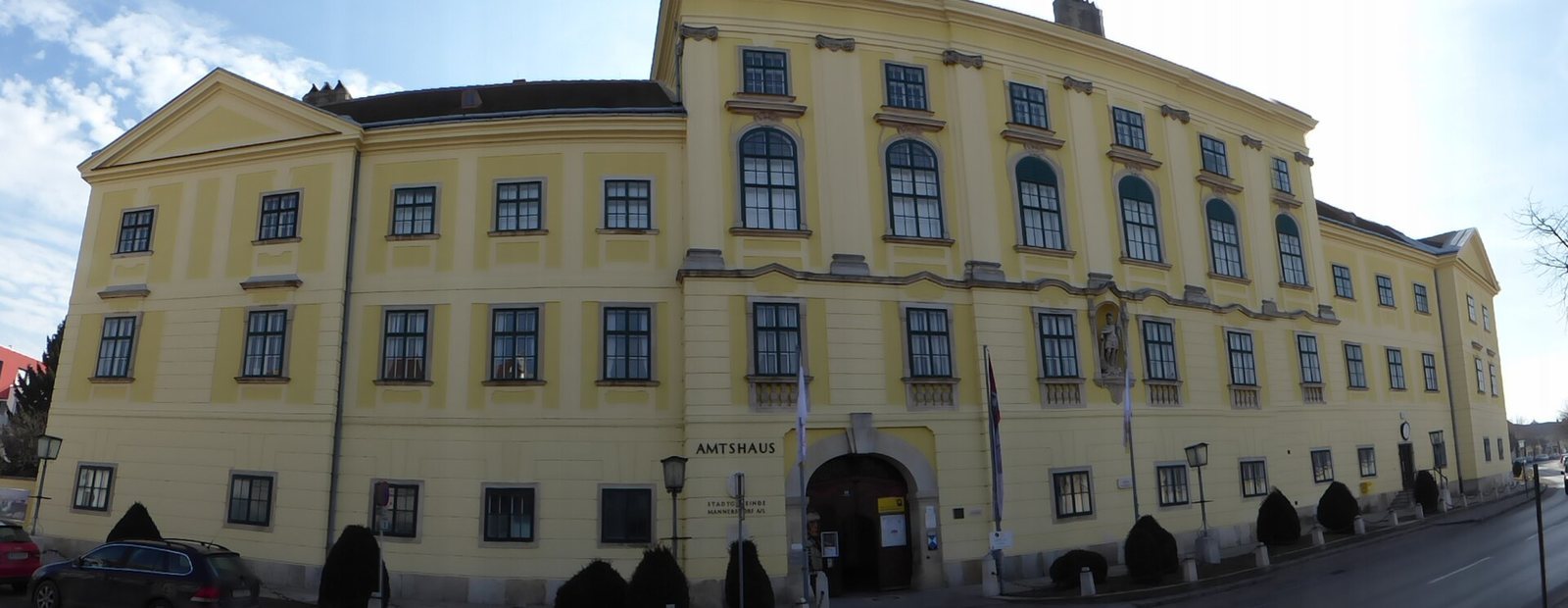
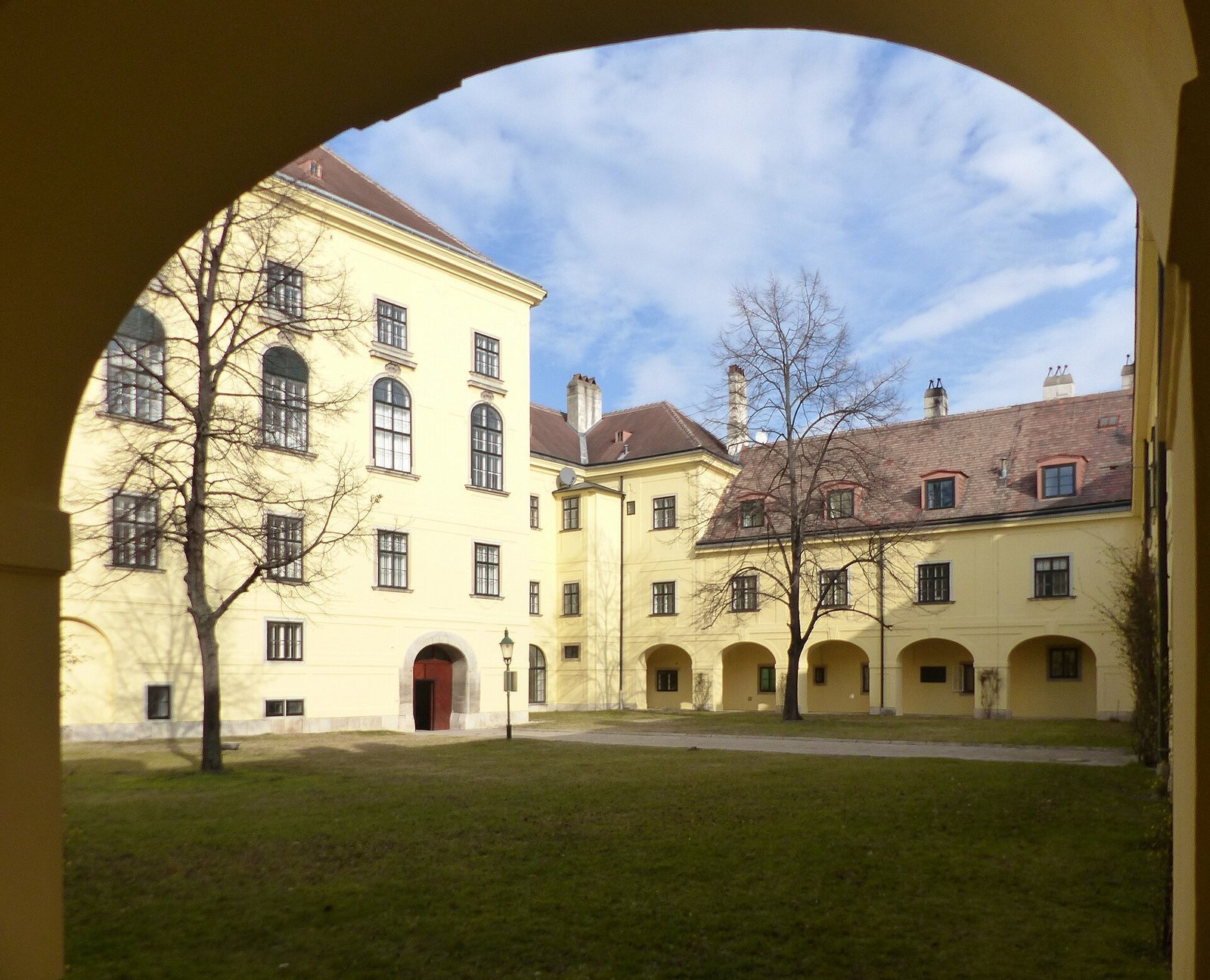
Schloss Mannersdorf am Leithagebirge, in Austria, served as the centre of the Mannersdorf lordship, a landed estate that could also exercise authority over its territory. Its fabric includes a 16th-century phase, and its expansion into a Baroque palace was stylistically complete by 1740 at the latest.
The lordships of Mannersdorf and Scharfeneck
In the 14th century, the Mannersdorf estate belonged to the Trauttmansdorff lordship. In 1390, that lordship was united with Scharfeneck, bringing the combined estate into a Hungarian feudal lordship, land held within a feudal system. The estate passed to the Order of St George, a chivalric order, in 1500. After the order was dissolved, it returned to the Scharfeneck lordship and later passed to the sovereign.
As Scharfeneck Castle fell into decline, the Mannersdorf estate was enlarged during the 16th century to become the seat of the lordship. It was later held in pledge by Polheim and Breuner, and granted as a life estate, the right to use property during one’s lifetime, to two imperial widows. The castle was sold in 1701 and passed in 1705 to Count Christoph Ernst von Fuchs zu Bimbach und Dornheim.
Expansion into a Baroque palace
After her husband’s death, Maria Karolina, Countess von Fuchs-Mollard, took over the lordship. She was chief lady-in-waiting to Maria Theresa, a senior woman official in the imperial household. From around 1719 to no later than 1740, Maria Karolina oversaw the castle’s expansion into a Baroque palace.
The castle and the Scharfeneck lordship remained in her possession until her death in 1754. Her daughters then sold them to Emperor Franz Stephan of Lorraine, Holy Roman Emperor Francis I and Maria Theresa’s husband. He transferred them, along with other lordships, to their daughter Marie Christine and her husband, Albert of Saxony-Teschen.
Later ownership and use
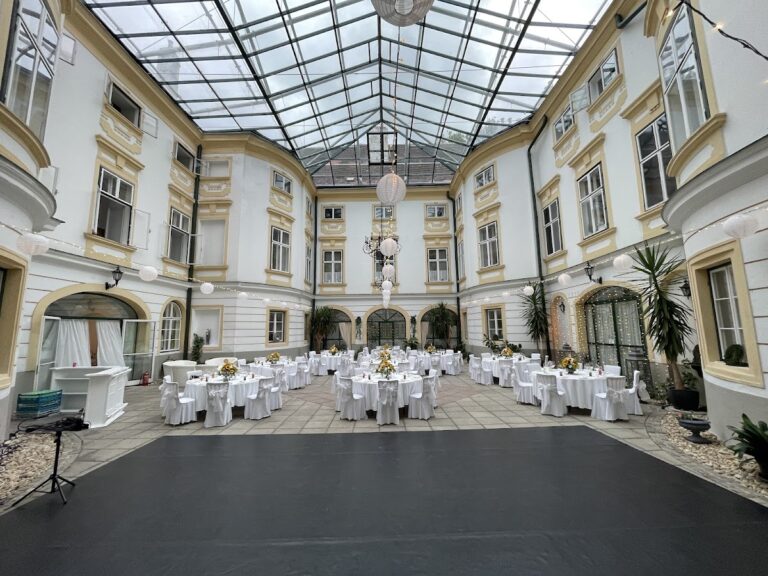
The castle remained in imperial private ownership until 1918. It later passed to the War Victims Fund, the Habsburg Family Fund and, during the Nazi period, the Army Administration. The municipality has owned it since 1942. The building now serves as a municipal office, an events venue and a residence; since 2006, it has also housed the museum collection of the Edmund Adler Gallery.
Remains
Baroque fabric and the Maria Theresa Hall
The castle’s surviving fabric dates partly to the 16th century, while its Baroque expansion began after 1719 and was stylistically complete by 1740 at the latest. The interior was adapted for apartments and municipal offices during the 20th century. In the main wing, the rectangular Maria Theresa Hall, created around 1720–1740, rises through two storeys. Paired pilasters, flat columns attached to walls, have stucco capitals, or decorative plaster tops; painted architectural details and marbled surfaces complete the walls. The hall has a mirror vault, a vault with a broad, flattened central ceiling surface. Its ceiling painting shows Apollo, the ancient Greek and Roman deity associated with the sun, riding in a sun chariot amid symbolic figures representing the seasons and stages of life. Curved ceiling sections depict Mannersdorf, Sommerein, Hof am Leithaberge and Au am Leithaberge, places within the Scharfeneck lordship, as well as detailed scenes of 18th-century life. The ceiling painting was restored in 1967–1968.