Karlsburg Palace: A Baroque Residence near Greifswald
Site at a Glance
- Popularity
- Medium
- Country
- Germany
- Primary era
- Early Modern
- Eras represented
- Early Modern, Modern
- Civilizations
- German, Holy Roman Empire, Kingdom of Prussia, Swedish
- Site type
- Domestic
- Remains
- Elite Residence
On this page10 sections
History
Karlsburg Palace is a Baroque brick residence near Greifswald, Germany, begun in 1731 for the Pomeranian nobleman Carl Heinrich Behrend von Bohlen. It developed as the seat of a landed estate and, centuries later, became the home of a major diabetes research institute.
The von Bohlen estate and palace construction
The estate, then known as Gnatzkow, had belonged to the von Normann family since the late sixteenth century. In 1679, Maria Lucretia von Normann, the last heir of her line, passed it to the von Bohlen family. Carl Heinrich Behrend von Bohlen initiated construction of the palace in 1731, but a fire on 24 August 1732 destroyed both the unfinished building and the village. The palace and village were rebuilt according to Baroque architectural and planning principles. Rooms were in use by 1733, the main parts were complete by 1739, and the palace was finished in 1773.
The expense of the project left Carl Heinrich Behrend in serious financial trouble. After his death in 1757, his eldest son, Carl Julius Bernhard von Bohlen, purchased the unfinished estate from the bankruptcy estate. He set aside his father’s proposal for a west wing and gallery. In 1744, Louisa Ulrika of Prussia, a sister of Frederick the Great, was received at Gnatzkow after her marriage to the Swedish crown prince. Her son, Gustav III of Sweden, stayed overnight in 1771 on his return from Paris. The estate was then renamed Carlsburg, after Carl Julius; the name is now spelled Karlsburg.
A formal garden in the French style was laid out behind the palace from 1750. Around 1800, landscape architect Peter Joseph Lenné redesigned the park in the English landscape style, a naturalistic garden design intended to evoke the countryside.
The Bismarck-Bohlen family
In 1809, Friedrich Ludwig Wilhelm von Bohlen took charge of the estate at his father’s creditors’ request and improved its finances. He was the last male descendant of the von Bohlen family. The estate again faced financial difficulty during the Napoleonic Wars. On 16 September 1817, Theodor Alexander von Bismarck married Caroline von Bohlen. King Frederick William III of Prussia made him a count in 1818, and after Friedrich Ludwig Wilhelm’s death in 1828, Theodor Alexander took over the estate. The von Bismarck-Bohlen family, joining the Bismarck and von Bohlen lineages, owned the palace until 1945.
While serving with a Pomeranian light infantry battalion in Greifswald, Otto von Bismarck often stayed at the palace from autumn 1838 to summer 1839. He later became a leading Prussian and German statesman. King Frederick William IV visited in 1843, then returned ten years later with naturalist and explorer Alexander von Humboldt and architect Friedrich August Stüler.
After Caroline’s death in 1858, Theodor Alexander became sole owner under their joint will, and their son Friedrich Alexander succeeded him. In 1894, Friedrich Karl von Bismarck-Bohlen left military service and moved to the estate from Schwedt. That year, his brother Theodor Wilhelm Eberhard died, and Theodor’s son Fritz Ulrich inherited the estate while still a minor. Fritz Ulrich’s mother, Elisabeth, managed it until he came of age in 1905.
War, confiscation, and medical research
Fritz Ulrich became patron of the palace and had the connecting section between its two main parts raised by a storey from 1913 to 1914. In the First World War, poor health prevented him from serving as a soldier, so he worked as a nurse in a field hospital run by the Johanniter Order, a Protestant order with roots in the medieval Hospitaller tradition.
After the Nazi regime came to power in 1933, Fritz Ulrich gave up his honorary offices and supported the Confessing Church, a Protestant movement resisting Nazi efforts to control church life. He also opposed Nazi church policy, including during his daughter Oriana’s wedding. He concentrated on agriculture, and sales of land and forest gradually improved the estate’s finances. Around 1939, his holdings covered about 2,230 hectares, including the Niedenhof and Groß Jasedow estates and the Karlsburg manor.
In 1942, the University of Greifswald moved its art collections to the palace for wartime storage. They included the Croÿ Tapestry, made between 1554 and 1556, and the university rector’s ceremonial insignia. From 1943, the palace’s western part served as a ward for children with tuberculosis from the university children’s clinic, while part of the park was used as a play area.
As Soviet forces approached, Fritz Ulrich died by suicide on 28 April 1945. His elder son Theodor had been killed in the war in March 1944, and his younger son Achaz died in Soviet captivity on 30 October 1945. The rest of the family fled west. Under the Soviet occupation-zone land reform, the estate was confiscated without compensation. After the war, the palace successively housed displaced people, an infirmary, and a temporary infectious-disease hospital. Its historical library of about 4,000 volumes was transferred to the University of Greifswald library around 1946–47; most of the books returned to the palace in 1985.
From May 1947, the palace housed a residential center offering social and medical care to people with diabetes. It began with 15 beds and a small laboratory, and in 1950 developed into the Institute for Diabetes Research and Treatment. Further construction around the palace formed the Central Institute for Diabetes, which remained there until 1990. Its central role in the German Democratic Republic reshaped Karlsburg from an agricultural village into a place centered on medical research; about 70 percent of the village’s working population was employed by the institute.
Since 1990, the palace has belonged to the state of Mecklenburg-Western Pomerania. The University of Greifswald administered it until 2016. Successor organizations of the former Central Institute have shared its use, including a private clinic, university institutes, and a non-university research institute. The university institutes have since moved to Greifswald. The Central Institute for Diabetes “Gerhardt Katsch” is now the palace’s sole permanent user.
Remains
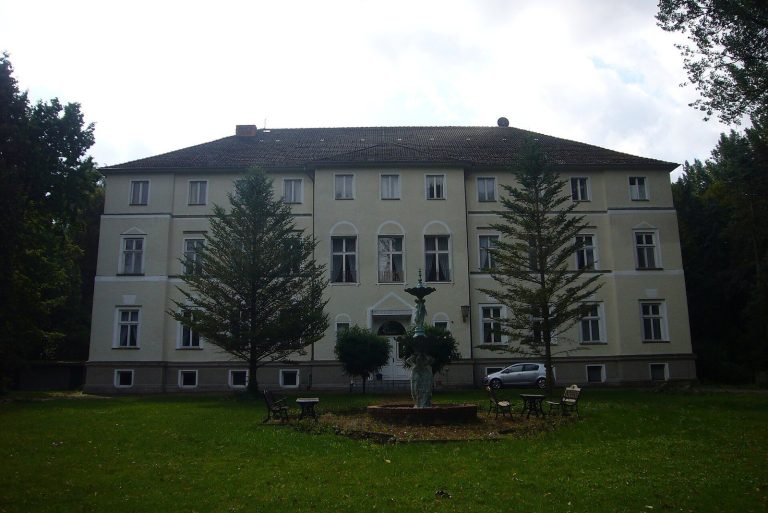
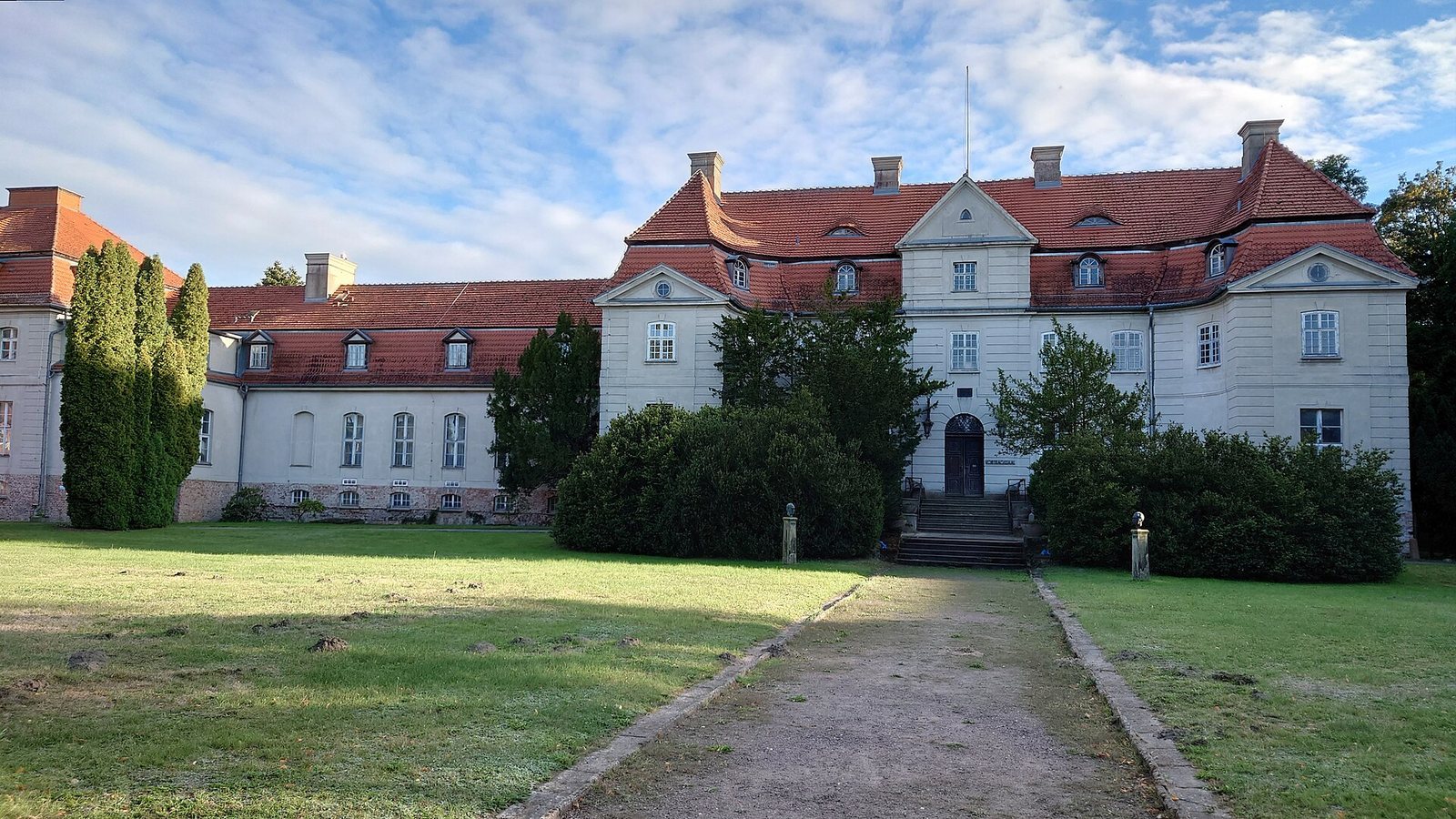
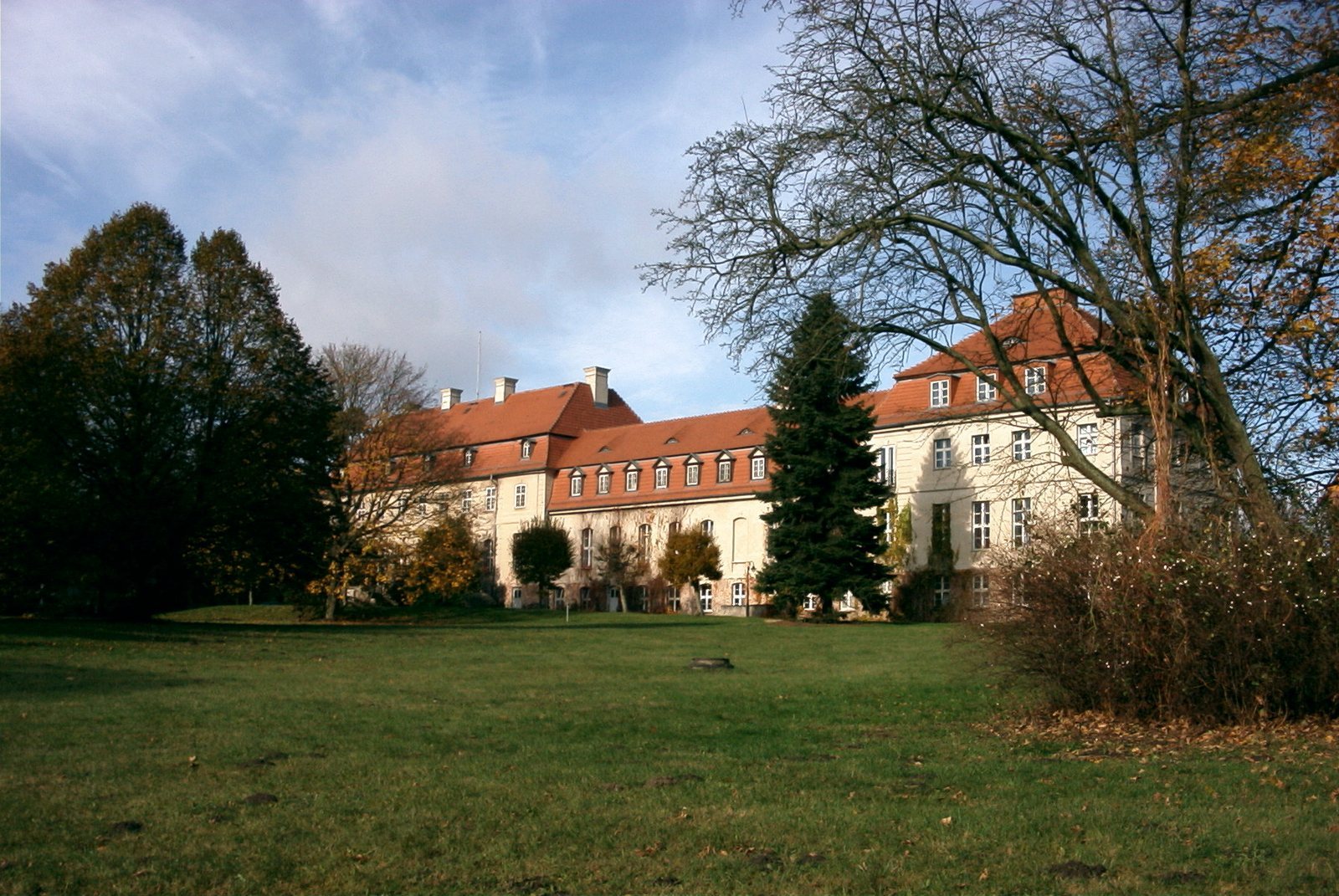
The palace is a Baroque brick building with an asymmetrical plan, reflecting a design that was never fully carried out. Its main block is linked by a long gallery to an eastern side pavilion. The park lies behind the residence.
Palace
Main block and entrance
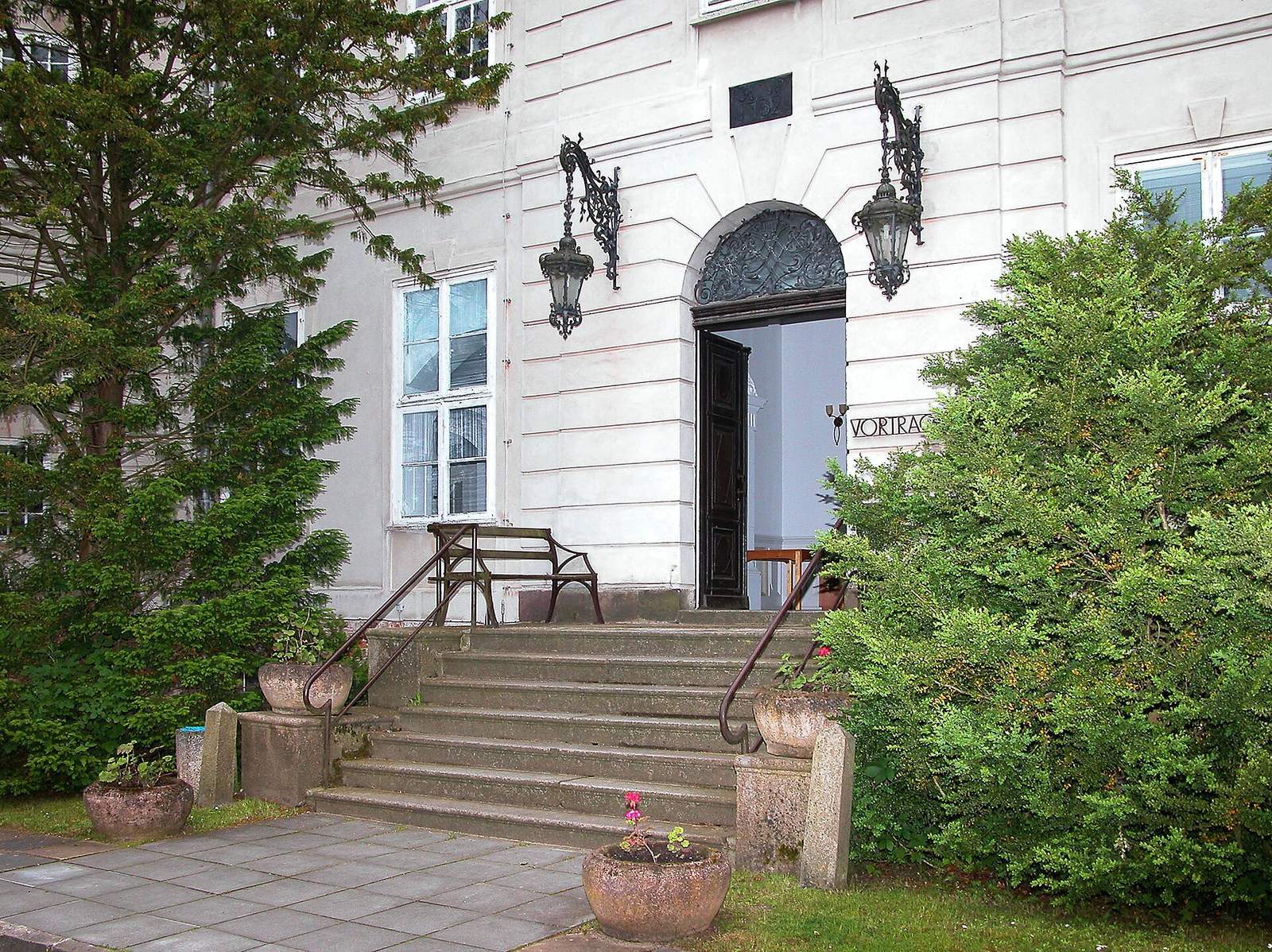
The main block stands on a high base and has three projecting sections topped by gables. The central projection rises three storeys into the mansard roof, while the two outer sections are two storeys high and have rounded profiles. The building has three storeys including the ground floor, a basement, and a deeper basement level. Its hipped roof carries mansards and Baroque chimneys. The courtyard entrance has a round arch and is reached by a plain staircase added after the original construction. Neo-Baroque lanterns and ornamental ironwork flank the doorway.
Gallery and interior spaces
The long gallery connects the central block to the eastern pavilion. Its roof was raised and fitted with mansards around 1913, changing its earlier proportions; a depiction from the 1860s shows it with a lower roof. A block-shaped addition between the pavilion and gallery also alters the courtyard side. The palace has about 2,460 square metres of usable space and roughly 140 rooms, around 100 on the ground, upper, and attic floors and about 40 in its basement levels.
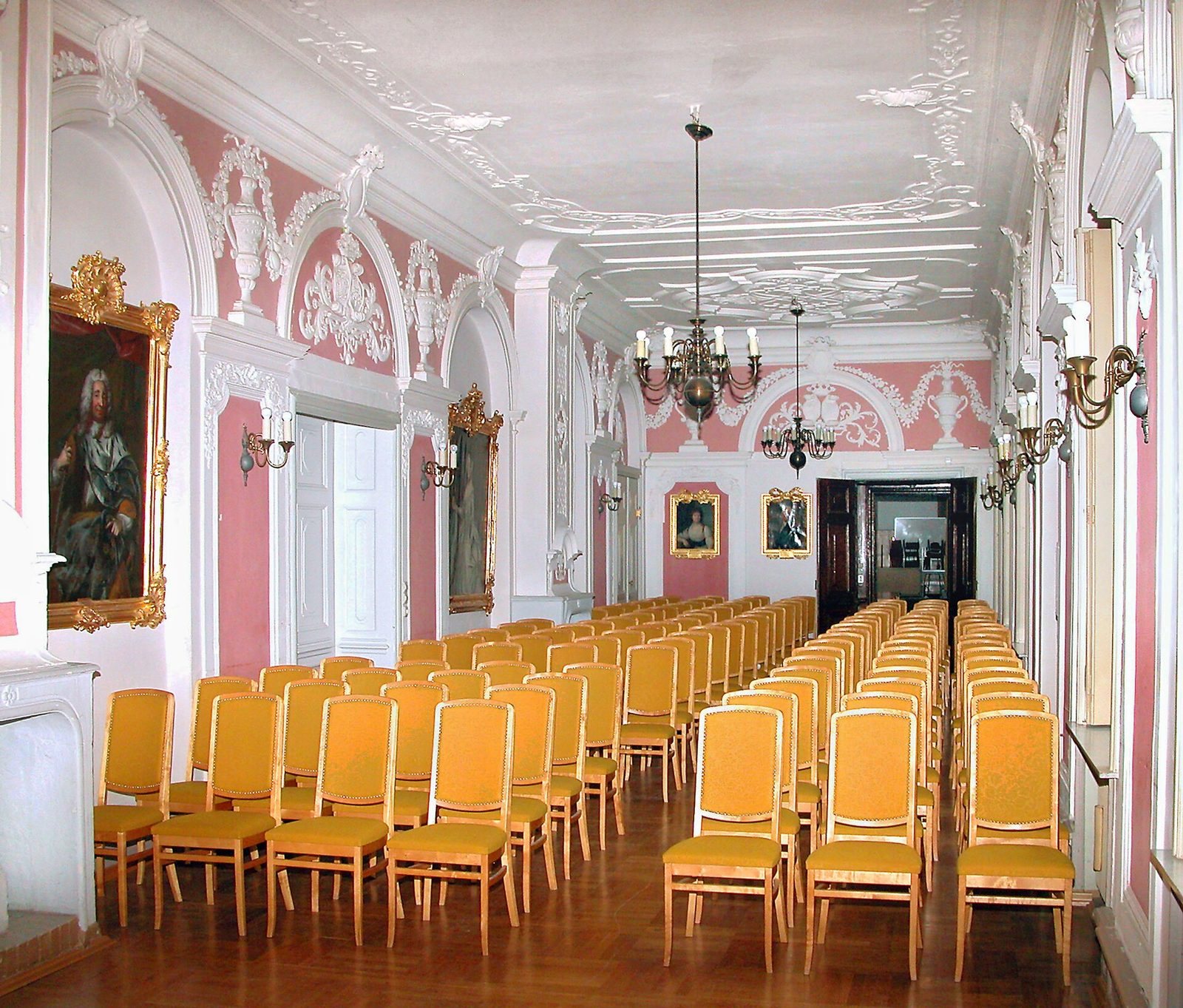
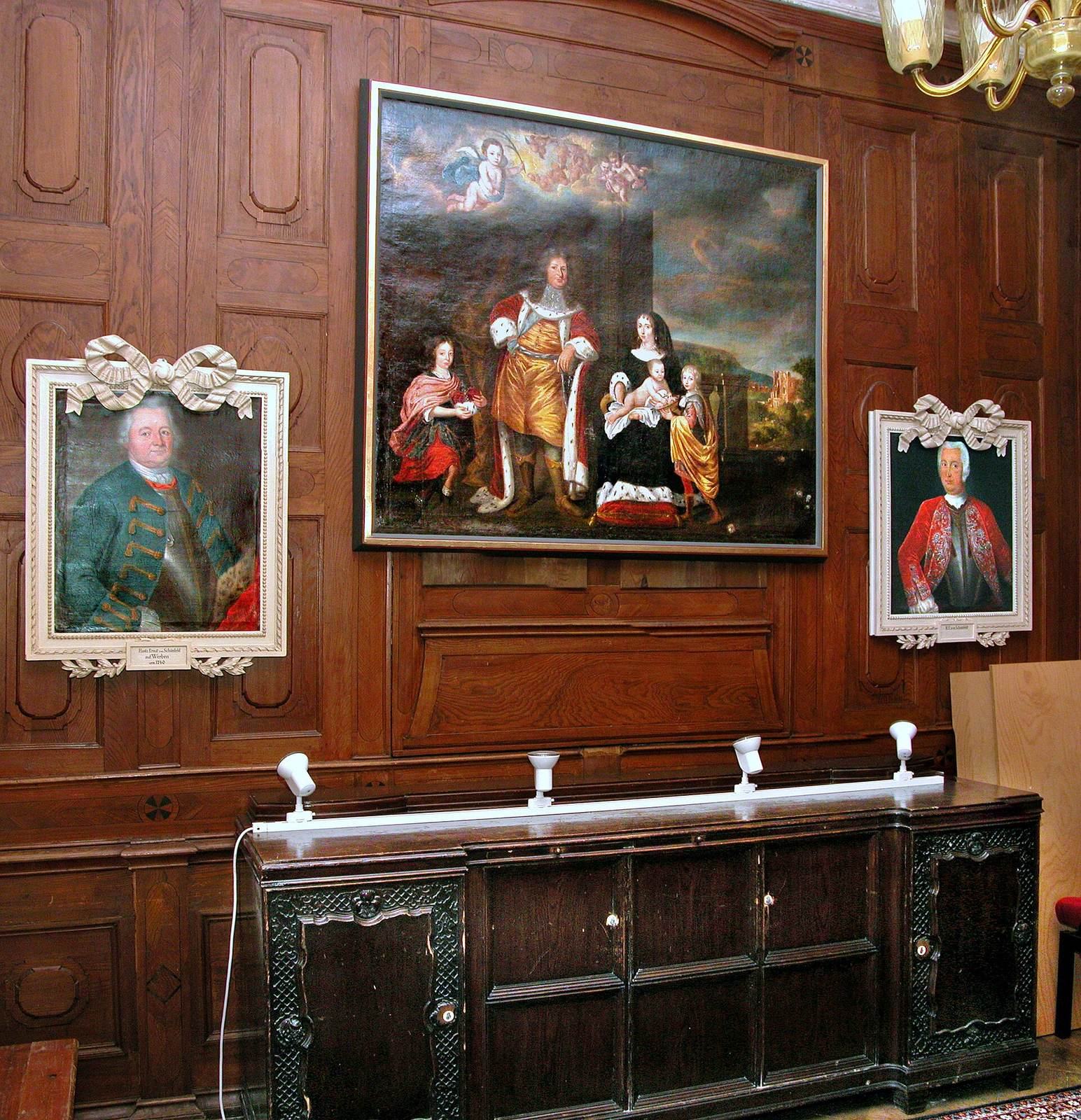
Several Baroque halls contain large portraits of members of the former aristocratic family. A specialist library shared by the clinics and research institutions occupies part of a side wing and the basement. The family’s historical library is also housed in the palace.
Rose gate
An iron rose gate made in 1896 from drawings by Friedrich Karl von Bismarck-Bohlen’s wife remains at the front of the palace. It has become a symbol associated with the palace, Karlsburg, and the institutions based there.
Park
The park includes a pond with a small island whose form resembles a motte, a raised mound associated with a medieval castle. A small temple is dedicated to Flora, and the grounds also contain an eighteenth-century marble statue of the goddess. Parts of the park are overgrown and poorly maintained, although its park-facing side retains something of its earlier appearance. Vegetation partly screens the courtyard side, where newer buildings stand close to the palace.