Grüningen Castle: A Historic Residence and Care Home in Germany
Site at a Glance
- Popularity
- Medium
- Country
- Germany
- Primary era
- Early Modern
- Eras represented
- Medieval, Early Modern, Modern
- Civilizations
- German, Holy Roman Empire, Landgraviate of Thuringia
- Site type
- Domestic
- Remains
- Castle
On this page9 sections
History
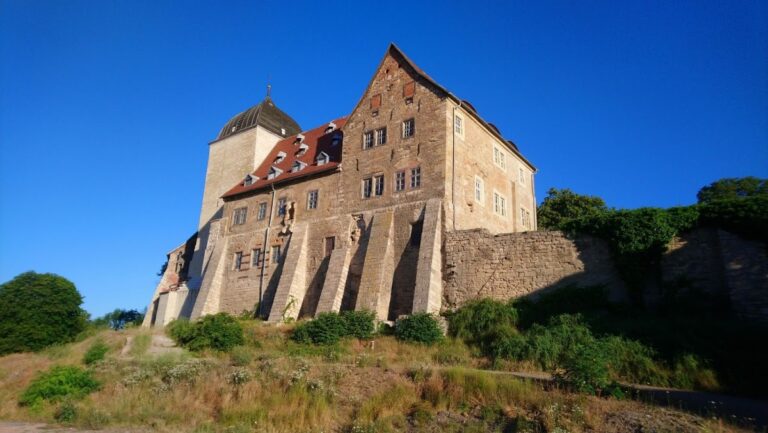
Grüningen Castle is a historic residence in Germany, on the site of a predecessor castle first recorded in 1198. It is closely connected with the lives of Sophie von Kühn and Friedrich von Hardenberg, known as Novalis.
Medieval origins and rebuilding
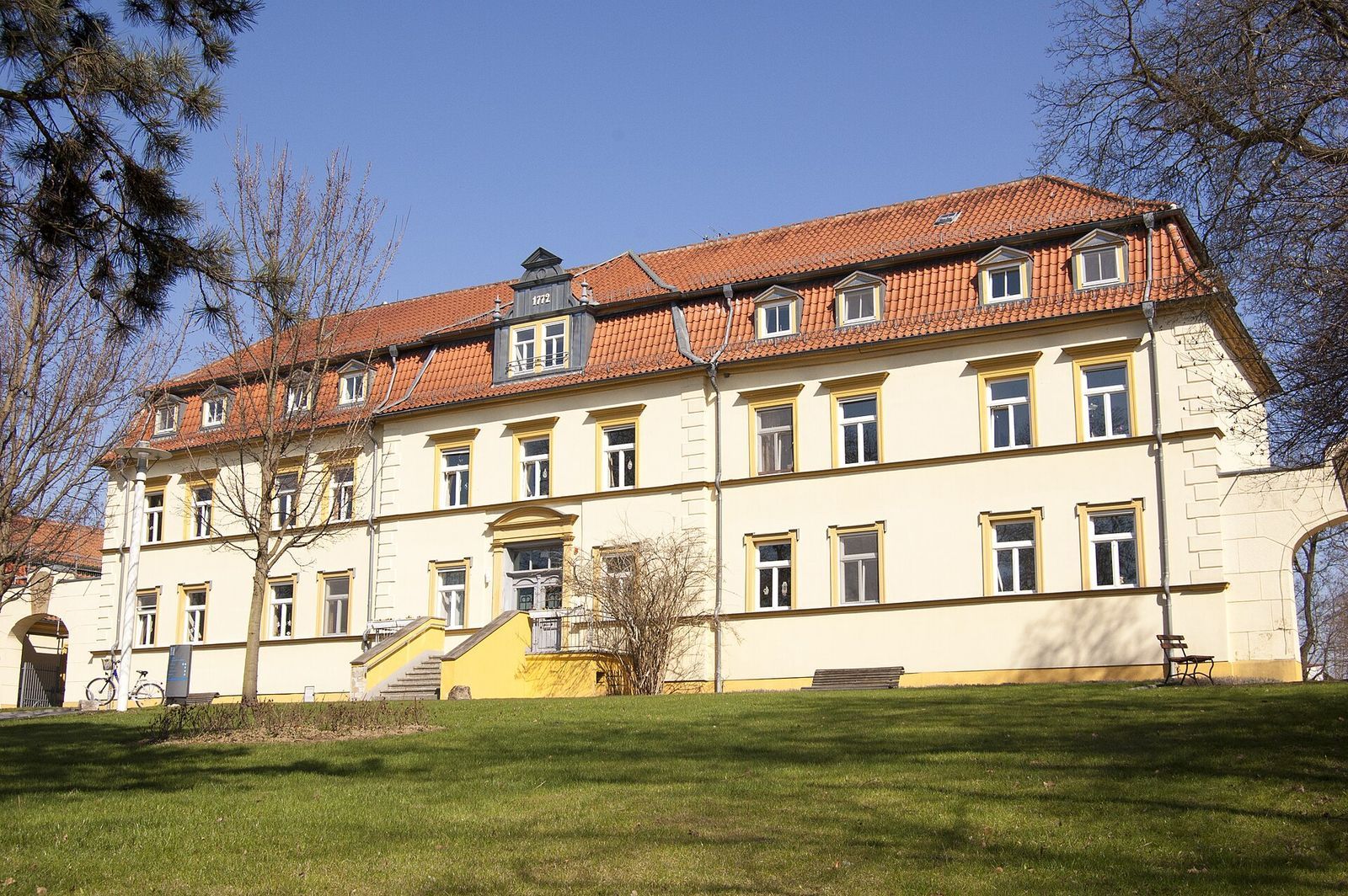
The Lords of Grüningen probably built the earlier castle. Their family included Dietrich von Grüningen, who later led the German province of the Teutonic Order, a medieval Catholic religious and military order. The title of German Master meant he headed that province. The castle was enlarged in the first half of the 16th century. In 1772, Sophie von Kühn’s father rebuilt it.
Sophie von Kühn and Novalis
Novalis met Sophie at the castle in 1794, and she later became his fiancée. She died there on 19 March 1797. Novalis commemorated her in many of his works.
Nineteenth- and early twentieth-century residents
The von Rüxleben family lived at the castle for one generation during the first third of the 19th century. Bruno von Rüxleben (1809 to 1861) served as a chamberlain, a senior household official, at the court of Schwarzburg-Rudolstadt, a German principality. In 1890, Kriegsheim was named as the manor owner and also served as a church patron. Around 1900, Erich Nette, a lieutenant in the reserves, and his wife, Marie Steiger, took over the castle and manor. Their family was expropriated in 1945 and moved to West Germany. The couple were later buried in Grüningen’s churchyard during the East German period. Maria Magdalena Paul (1885 to 1965), the manor’s bookkeeper, lived and worked at the castle for decades, until 1945.
Care use
After the Second World War, the castle became a home for older people and a nursing-care facility. Renovation work in 1998 and 1999 left the building in very good structural condition. It continues to operate as the Schloss Sophie von Kühn care home, run by Novalis-Diakonie-Gesellschaft.
Remains
The castle occupies ground that slopes south at the eastern edge of Grüningen, with the Schwarzburger Helbe flowing around two sides; a park is also associated with the site. The present building has two storeys, plastered walls and a mansard roof, with steep lower slopes and shallower upper slopes on each side.
Traces of the earlier castle
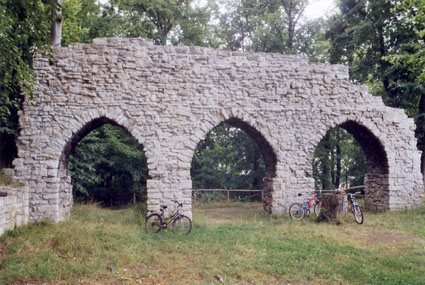
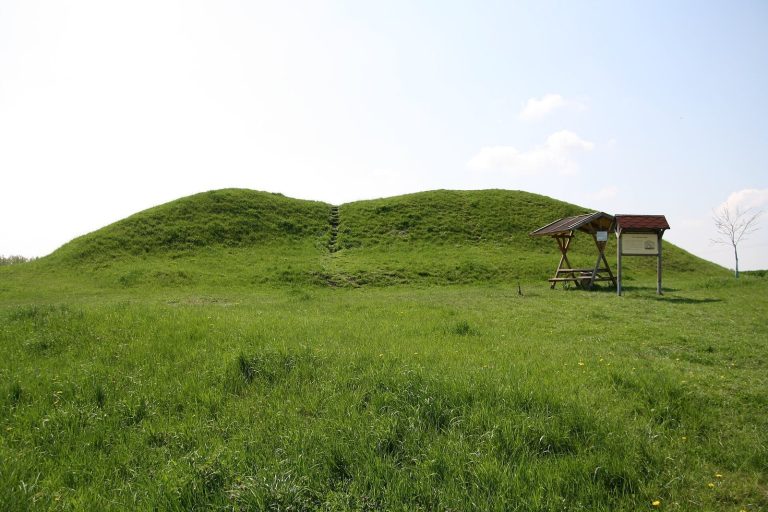
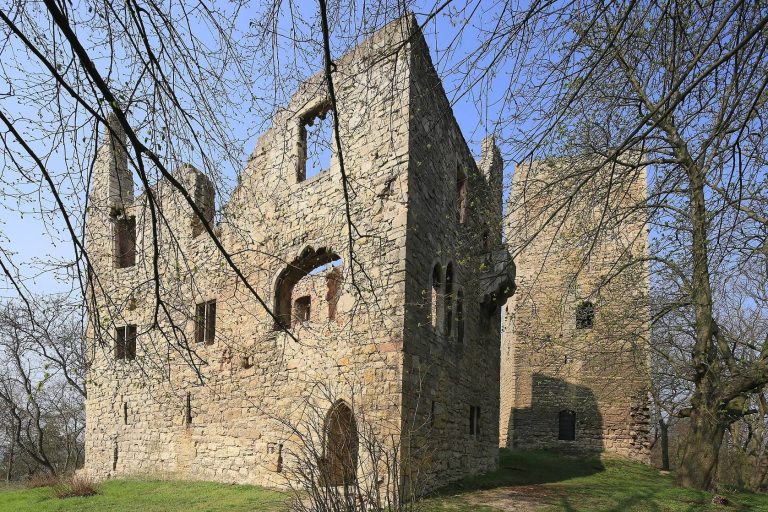
An earthwork rampart, a ditch and several remnants of masonry survive from the earlier castle.
Later additions
An extension with bay windows was added to the building in 1903.
Sophie von Kühn memorial
A medallion set into the wall of St. Peter’s Church in Grüningen shows a small image of Sophie von Kühn. Its inscription gives her birth date as 17 March 1782 and states that her resting place is in the churchyard.