Frankenhausen Castle: A Princely Residence and Regional Museum
Site at a Glance
- Popularity
- Medium
- Country
- Germany
- Primary era
- Early Modern
- Eras represented
- Medieval, Early Modern
- Civilizations
- Holy Roman Empire
- Site type
- Domestic
- Remains
- Castle
On this page8 sections
History
Frankenhausen Castle is a former residence of the House of Schwarzburg-Rudolstadt, a princely dynasty descended from the Counts of Schwarzburg, in Bad Frankenhausen, Germany. The Counts of Schwarzburg fortified its medieval predecessor, and the castle was rebuilt in Renaissance style from 1533 to 1536. It also served as an administrative center for Frankenhausen and its saltworks.
Schwarzburg rule and the stronghold
In the late fourteenth century, the castle and settlement came under the Counts of Schwarzburg. They strengthened the castle as a stronghold in the northern part of their territory, aiming to match the defenses of the Counts of Mansfeld and Beichlingen and the County of Stolberg. The castle served both as a residence and as a center of local administration.
Rebuilding and later damage
During the Peasants’ Wars, uprisings in the German lands in the early sixteenth century, most of Frankenhausen’s inhabitants joined the rebels against their rulers. The castle was badly damaged and rebuilt between 1533 and 1536. A major fire devastated much of the town in 1689 and also damaged the castle. Limited funds meant that repairs were carried out economically.
From princely residence to museum
The princely family retained the castle until 1918. Following Prince Günther Victor’s abdication, it passed into public ownership in Thuringia. From 1919, district administrator August Reinbrecht and his family lived there, and the building served as his official residence. In 1920, ancillary rooms housed the local-history museum Reinbrecht had founded; he also established a district library in his former residence. The local court later occupied some rooms.
During the Second World War, parts of the museum collection were moved for safekeeping, but were lost after the war. The Regional Museum of Bad Frankenhausen reopened on 1 September 1953. Renovation work followed from 1973 to 1975 in preparation for an anniversary of the Peasants’ War. The castle now houses the regional museum, whose work covers local and natural history in the Kyffhäuser hill range and the nearby Goldene Aue lowland. It also serves as a place of remembrance for Thomas Müntzer, a preacher and religious reformer associated with the Peasants’ War, and as a memorial to the uprising.
Remains
The surviving site combines a plain Renaissance residence with traces of an earlier medieval fortress and a small garden partly enclosed by an ornamental wall.
Medieval fortress
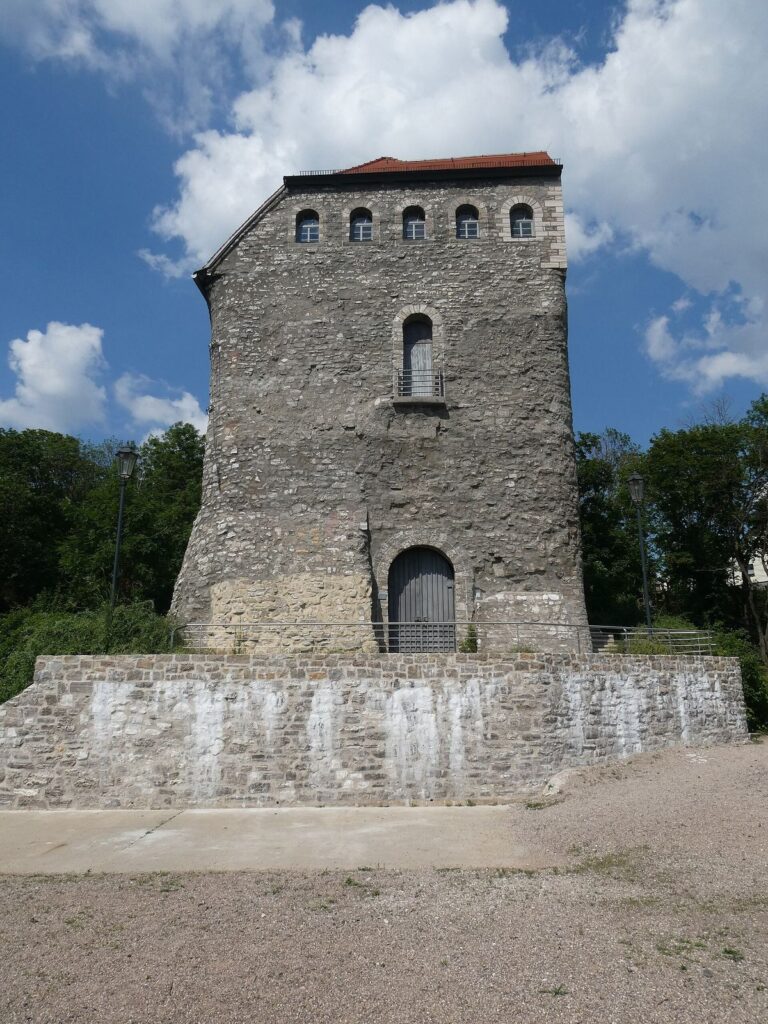
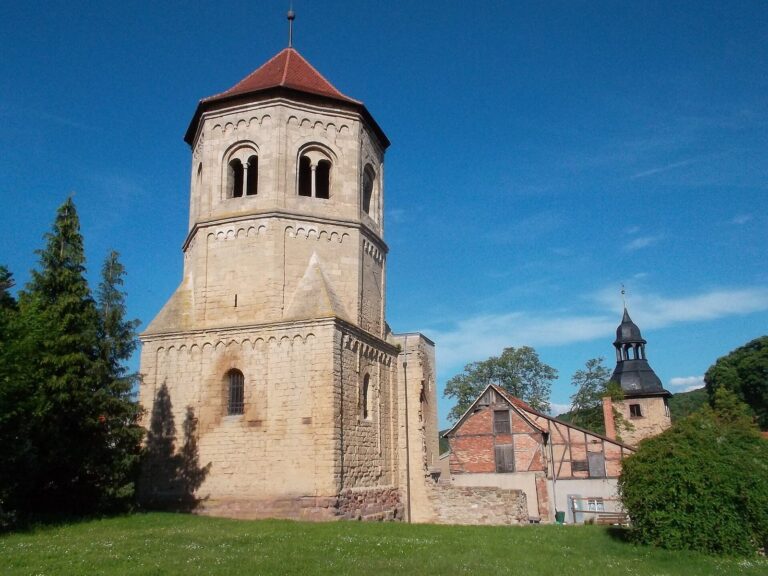
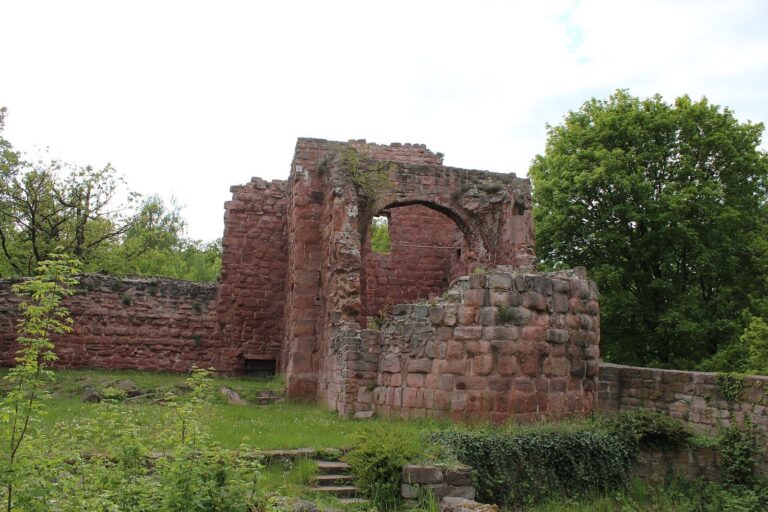
The medieval predecessor stood at the edge of the settlement beside the Water Gate in Frankenhausen’s defenses. Known as the Lower Castle, it was a small fortress, distinguished from the Upper Castle associated with the surviving Hausmannsturm above Bad Frankenhausen. Its visible traces include the cellar and parts of the moat.
Renaissance castle
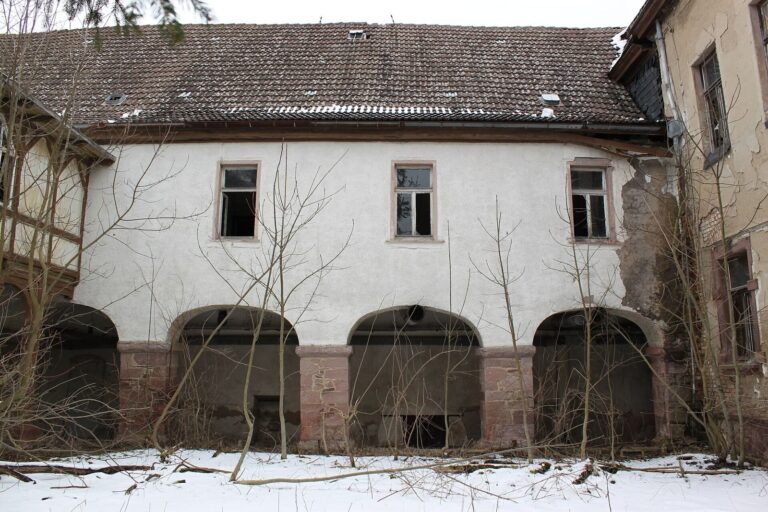
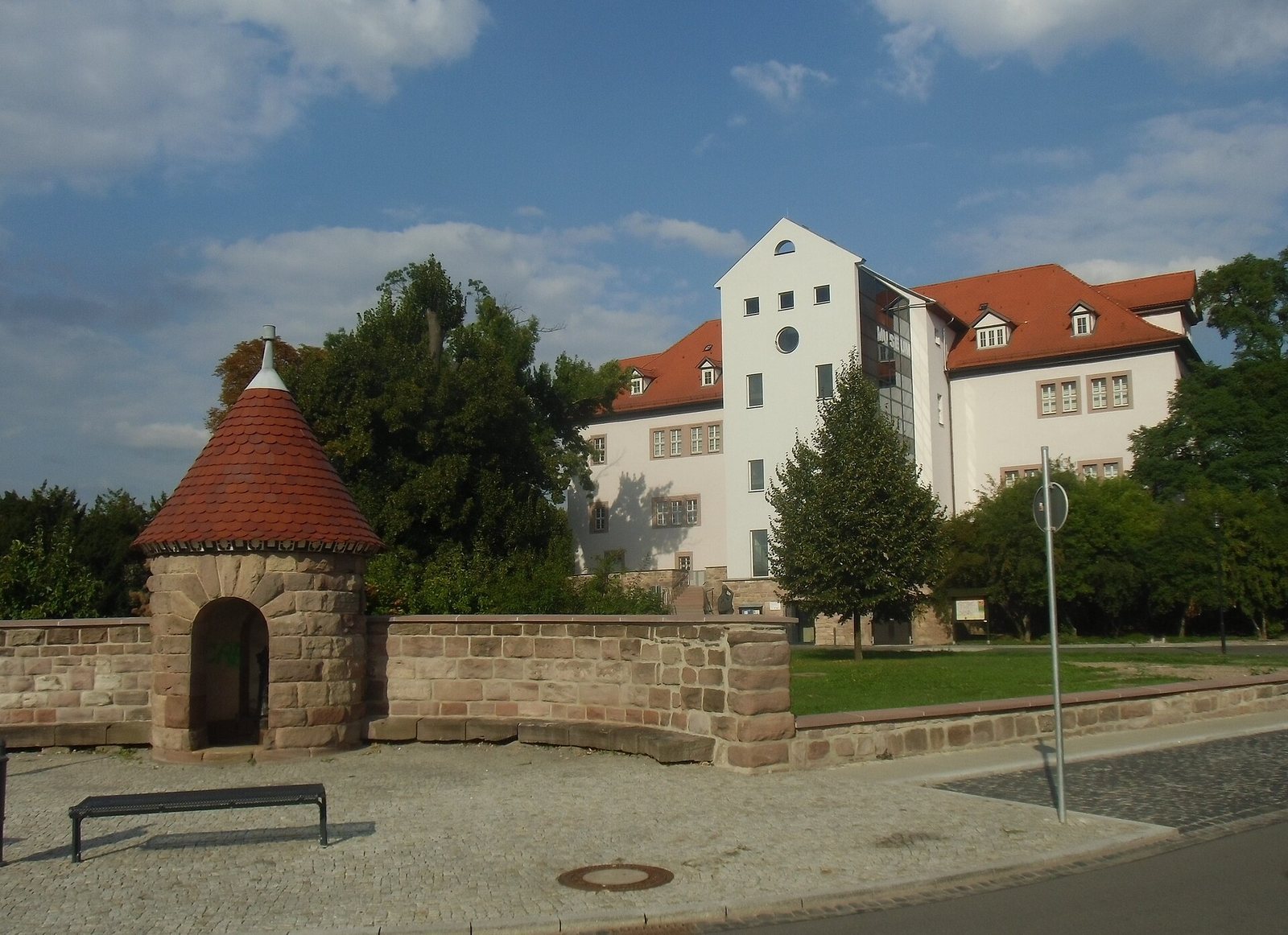
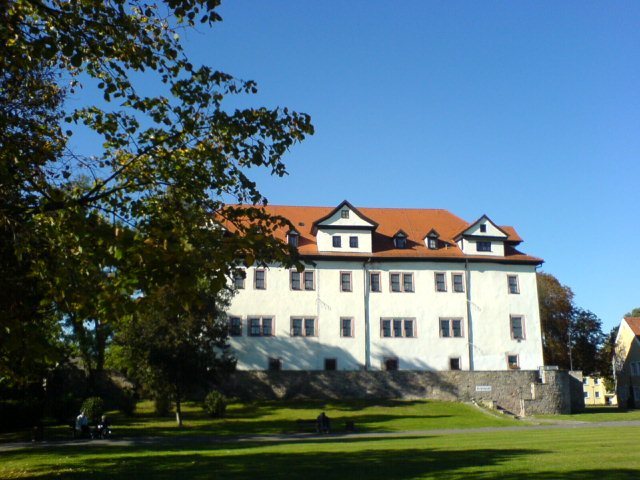
The present building has a simple, cuboid form, three storeys, a high fieldstone base, and a large gabled roof. Its whitewashed exterior has little decoration. On the west side, facing the town, a projecting bay with a pediment contains the entrance portal. The rear, east façade has three tall dormer windows and was the only façade to retain its Renaissance character after the 1689 fire. An illustrated town view made in 1650 by engraver and publisher Matthias Merian depicts an earlier, more elaborate roofline, with stepped gables and roof additions.
Castle garden
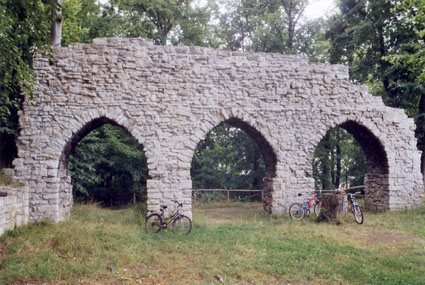
A small garden surrounds the building and is partly bounded by an ornamental wall.