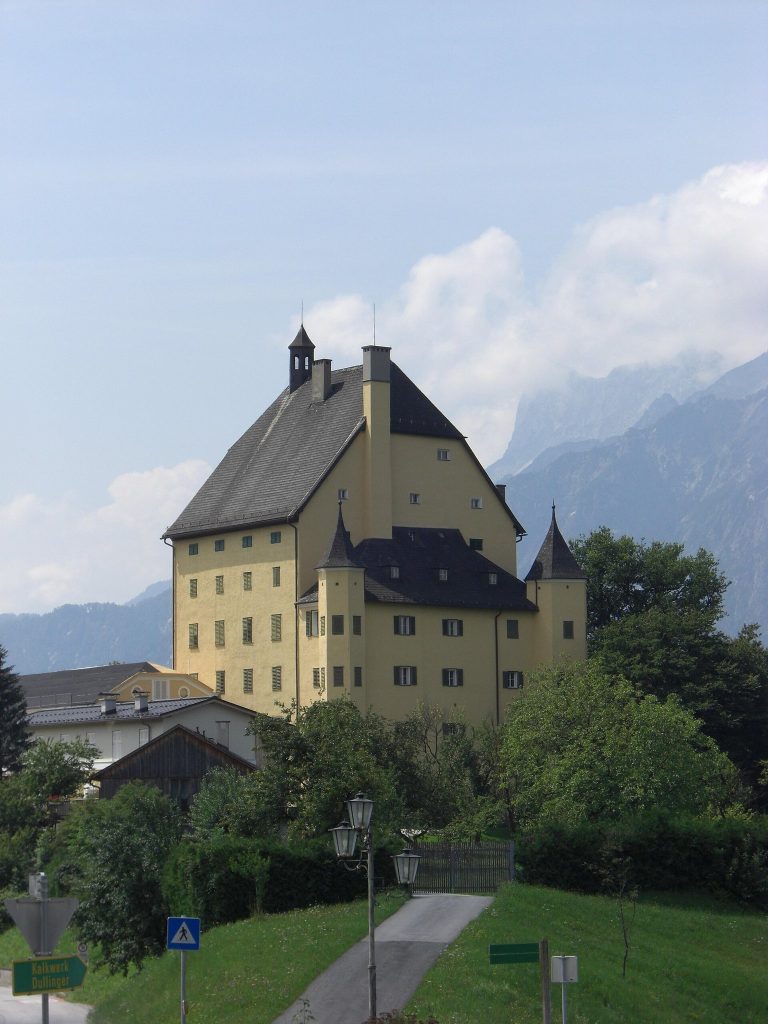
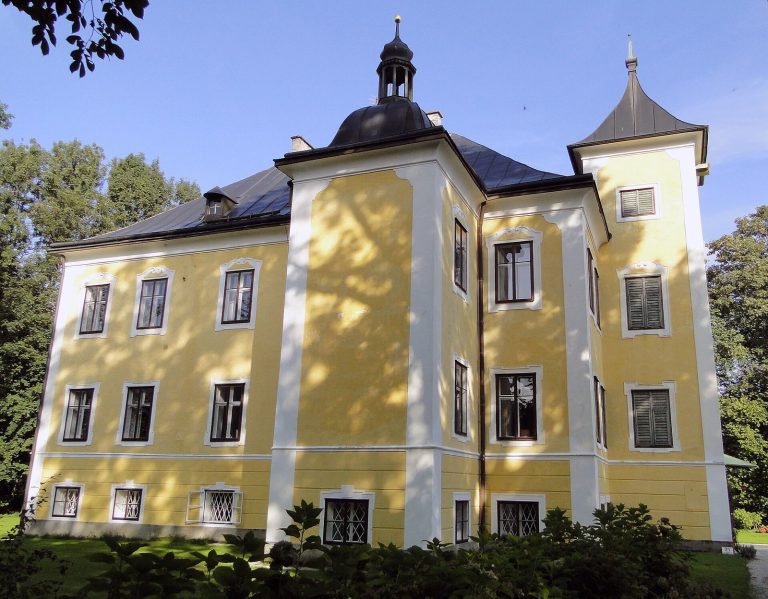
Emslieb Castle: A Seventeenth-Century Residence in Salzburg, Austria
Site at a Glance
- Popularity
- Medium
- Country
- Austria
- Primary era
- Early Modern
- Eras represented
- Early Modern
- Civilizations
- Holy Roman Empire, Prince-Archbishopric of Salzburg
- Site type
- Domestic
- Remains
- Castle
On this page9 sections
History
Construction and early transfer
Emslieb Castle, in Salzburg, Austria, was built in 1618 by Jakob Hannibal von Hohenems in the Italian manner. Hohenems was a nobleman and chief court marshal, as well as a nephew of Prince-Archbishop Markus Sittikus. A prince-archbishop combined the religious office of archbishop with secular authority over a territory.
After Sittikus died in 1619, Hohenems, unpopular in Salzburg for his excesses, had to leave the territory. In 1620, Prince-Archbishop Paris von Lodron took possession of the castle and gave it to the archiepiscopal councillor Thomas Perger. Perger was thereafter entitled to use the name Perger von Emslieb.
Changing ownership
The Perger family owned the castle until 1710. The Barons of Grimming held it from 1713 to 1778, after which it passed to the Bishop of Chiemsee. Ernestine, Princess Esterházy, owned the property from 1797 to 1811. Ownership changed hands repeatedly after 1811, often within short periods. The present owner is gallery owner Thaddaeus Ropac.
Interwar period and the Meierhof
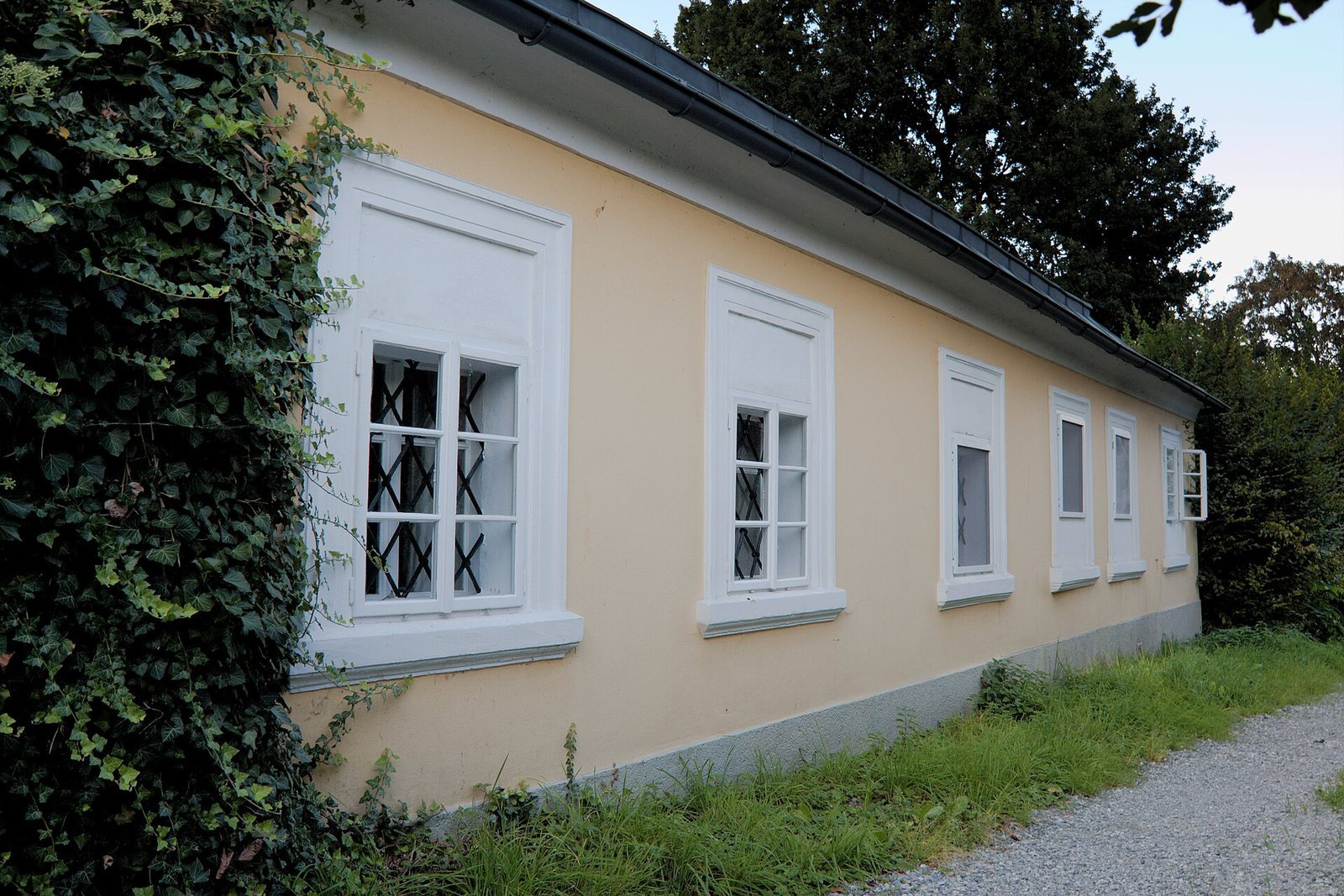
Between the world wars, the castle was briefly also known as Villa Strongfort. The nearby Meierhof, the estate’s farmyard and agricultural service complex, took its present form in 1874 while owned by the family of Baron von Imhof. From 1930 it was a separate building, used independently of the castle, and it served as a riding stable from about 1960 to 1980.
Remains
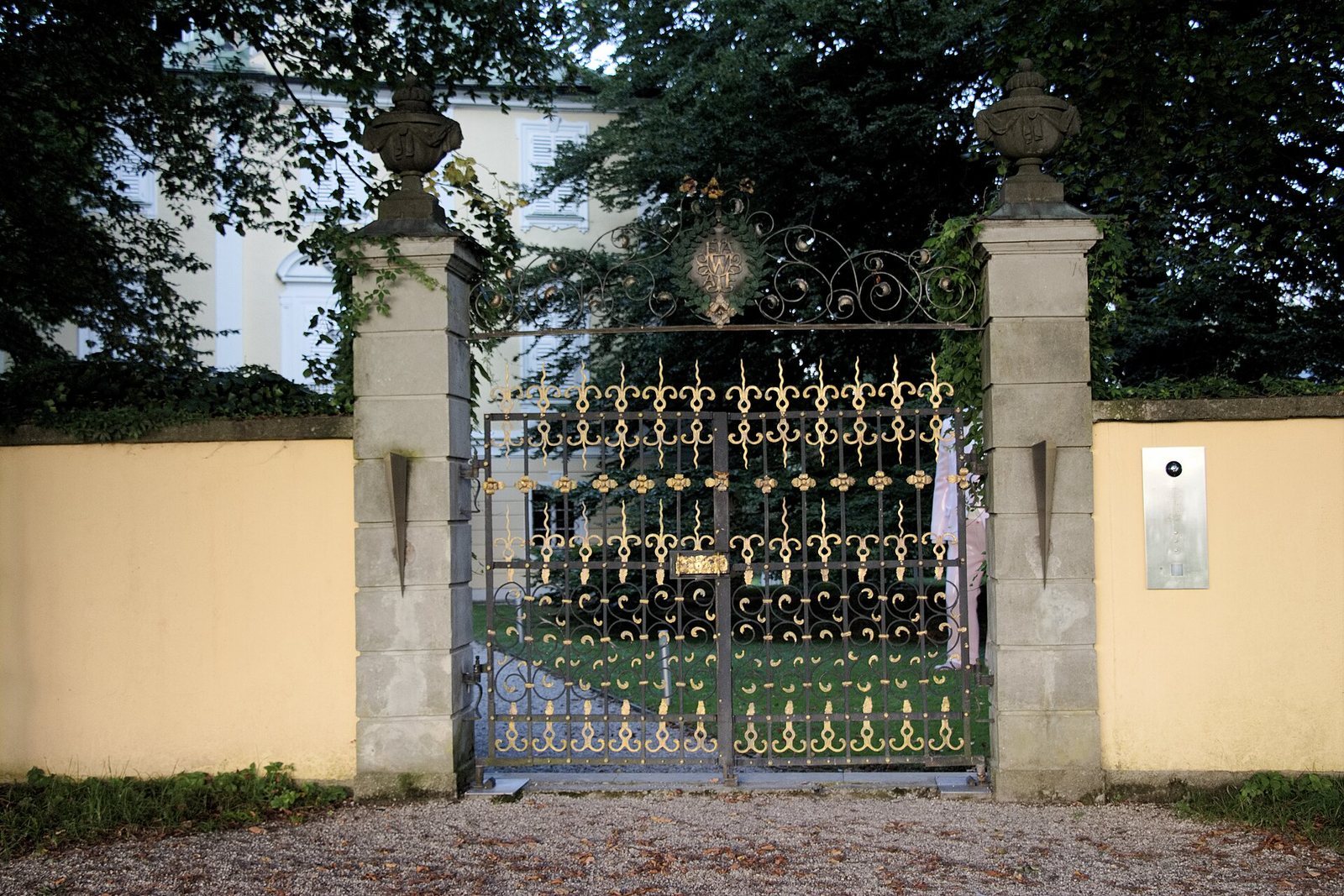
The estate’s surviving features include the much-altered castle, remains of its designed garden and a separate Meierhof. The castle’s original design adapted Palazzo Gallio, a palace in Gravedona in northern Italy, on a reduced scale.
Buildings and grounds
Castle
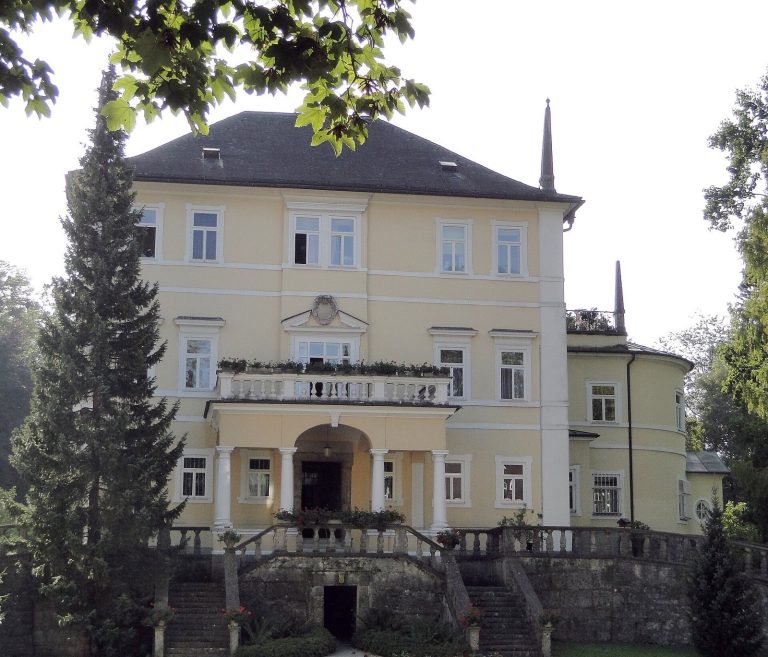
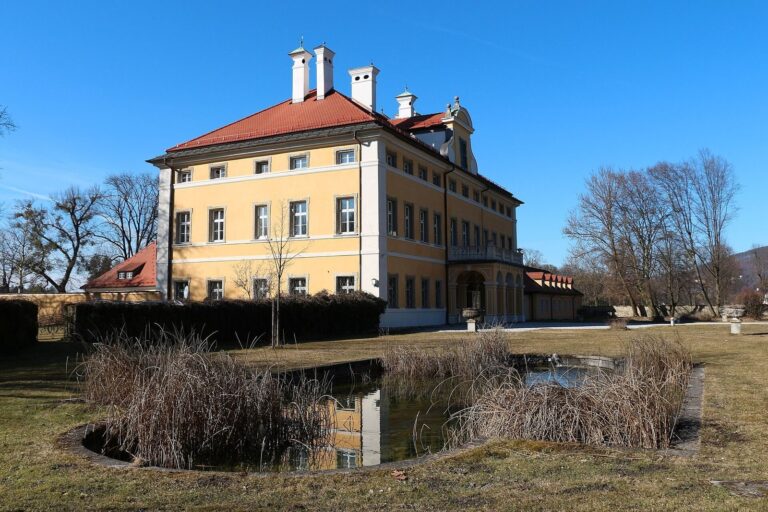
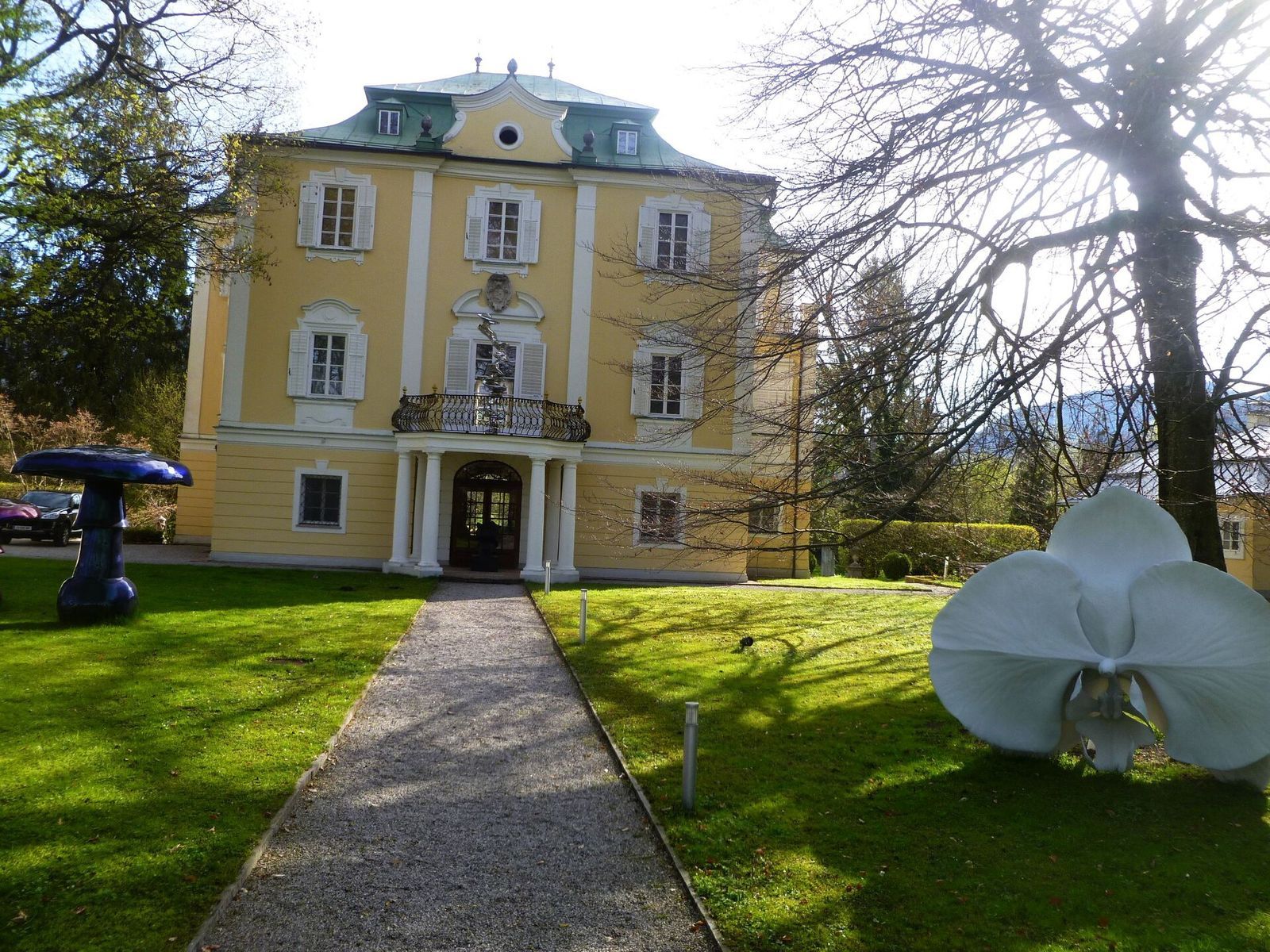
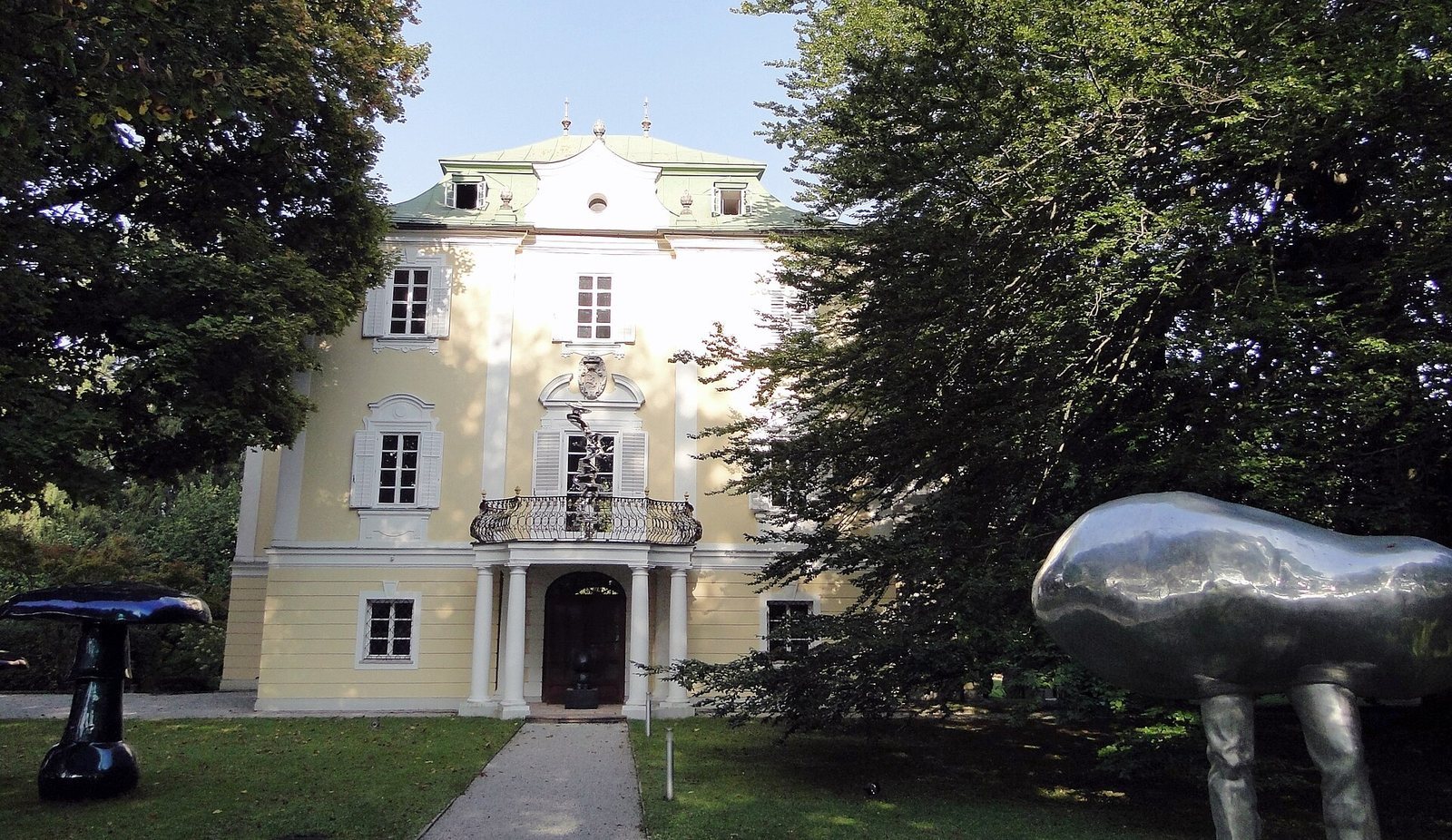
Extensive alterations have substantially changed the castle’s original character. Its earlier form had a rectangular central building with a roof sloping on all sides, flanked by slightly projecting towers with pyramid-shaped roofs. A stone bearing the Hohenems coat of arms sits above the entrance, while another bearing Archbishop Markus Sittikus’s arms is above the central balcony. The Crown Grotto among Hellbrunn’s trick fountains reproduces the castle on a greatly reduced scale.
Garden
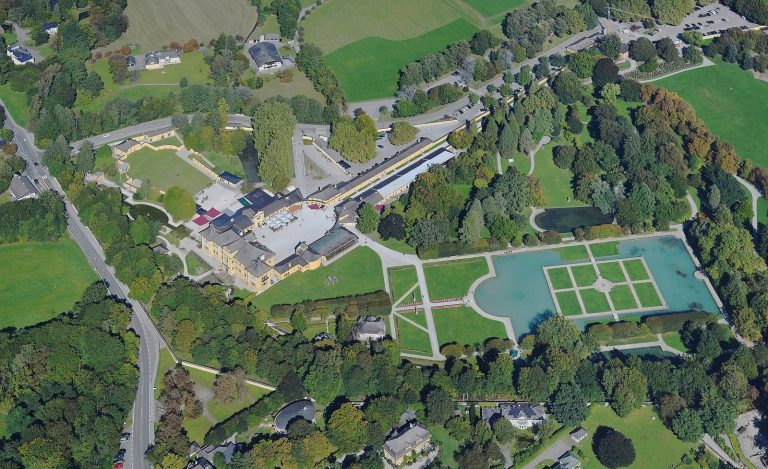
The old garden was divided into ornamental beds and crossed by a channel where rare waterfowl were kept, as at Hellbrunn. Its central oval pond was lined with stone from the outset and was once stocked with whitefish and Arctic char. Today, the pond is an important habitat for amphibians. A garden axis, a planned line through the grounds, runs parallel to Fürstenweg toward the Salzach floodplain woodland; it survives as a discontinuous avenue of fruit trees.
Meierhof
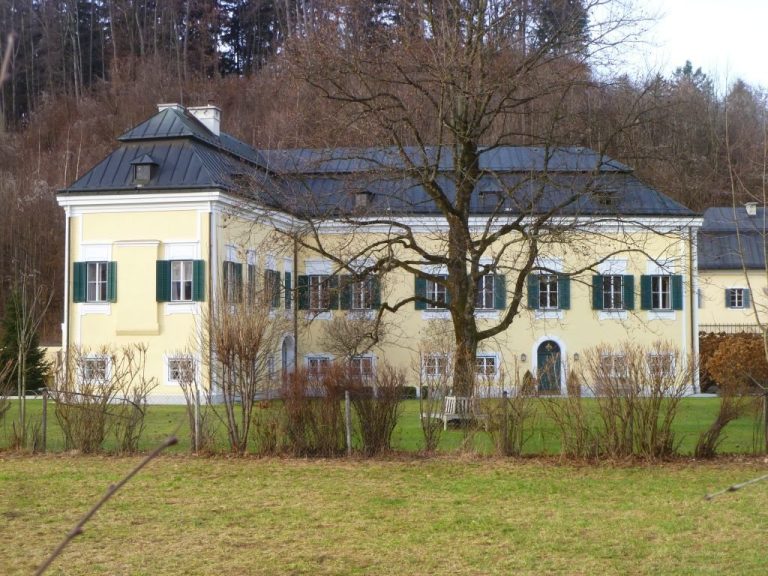
The Meierhof is a distinctive, spacious building near Schloss Hellbrunn.