Santa Ana–La Florida Archaeological Site: A Mayo-Chinchipe Settlement in Ecuador
Site at a Glance
- Popularity
- Medium
- Country
- Ecuador
- Primary era
- Bronze Age
- Eras represented
- Stone Age, Bronze Age
- Civilizations
- Unclassified
- Site type
- Religious
- Remains
- Sanctuary
On this page6 sections
History
The Santa Ana–La Florida Archaeological Site is a prehistoric settlement in Palanda Canton, Zamora-Chinchipe Province, Ecuador, north of Palanda. Communities associated with the Mayo-Chinchipe culture built and occupied it from around 3500 BC. Major construction took place from about 2600 to 1700 BC, when the settlement was abandoned. These dates place it in Ecuador’s Early Formative Period.
Mayo-Chinchipe settlement
Mayo-Chinchipe, also called Mayo-Chinchipe-Marañón, is an archaeological label for prehistoric communities identified through material remains. The name does not establish that they formed a single political state or used that name for themselves. Their cultural region extended from Podocarpus National Park in Ecuador to the area near Bagua, Peru. The name reflects local river names: the river is called the Chinchipe in Ecuador and the Mayo in Peru.
Santa Ana was connected through exchange with Huayurco, north of Jaén in Peru. Distinctive stone vessels from Huayurco circulated in neighboring areas. The Jaén stone-vessel tradition and its connections among Andean communities date to at least 2500 BC. Nearby Montegrande, on the Peruvian side of the border, was built by the same culture and has marked similarities to Santa Ana.
People at the settlement cultivated or gathered cacao, cassava, coca, and maize, as well as plants assigned to the botanical groups Phaseolus, Ipomoea, Dioscorea, Maranta, and Capsicum.
Discovery and archaeological research
The site came to light in the late twentieth century as machine operator Ulpiano Loján opened a road in the locality of Santa Ana. French and Ecuadorian archaeologists began fieldwork in 2002. An investigation of the settlement’s role as an Early Formative ceremonial center followed in March 2003. Later work led by Ecuadorian archaeologist Francisco Valdez contributed to identifying the Mayo-Chinchipe archaeological culture in the Chinchipe basin.
A 2018 study assessed cacao starch grains, absorbed theobromine residues (theobromine is a compound found in cacao), and ancient DNA dating. Cacao use at Santa Ana around 3300 BC is considered the earliest known evidence of cacao use in the Americas and the earliest clear archaeological evidence of its pre-Columbian use in South America. Mesoamerica, a cultural region encompassing parts of Mexico and Central America, had traditionally been considered cacao’s first domestication center. The upper Amazon, which has the greatest genetic diversity of cacao, has been proposed as its ultimate place of origin; how cacao reached Mexico remains unknown.
Remains
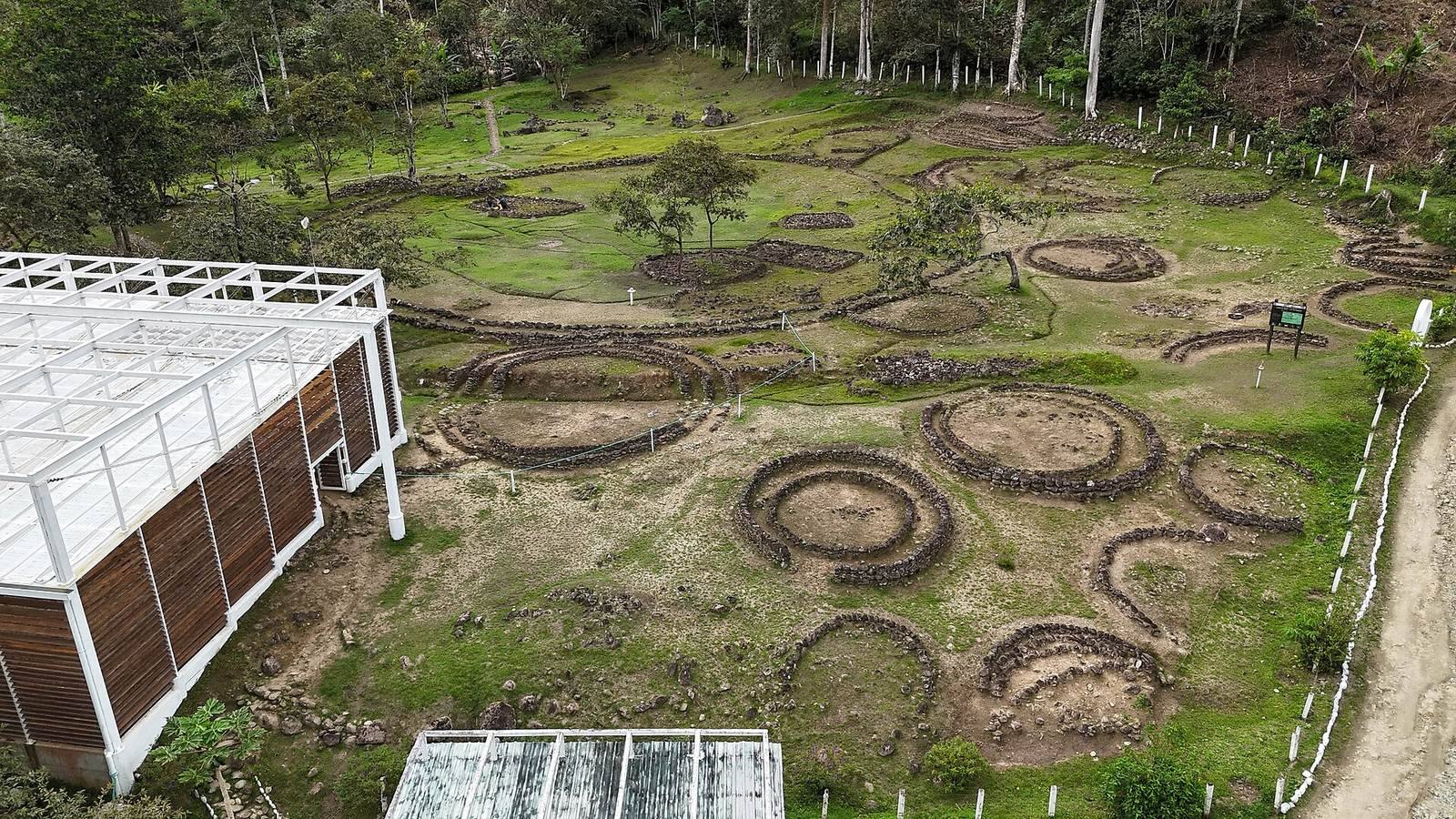
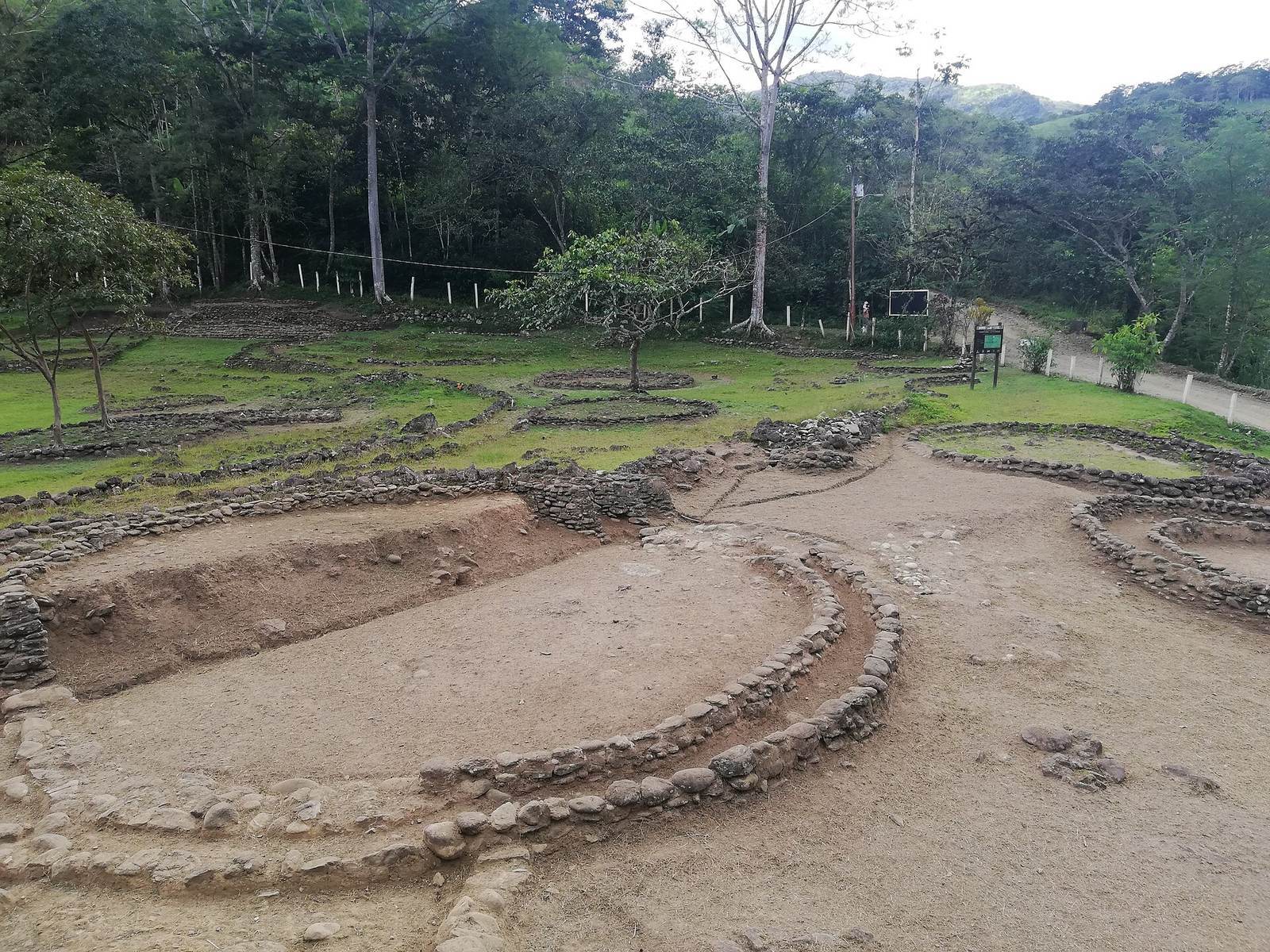
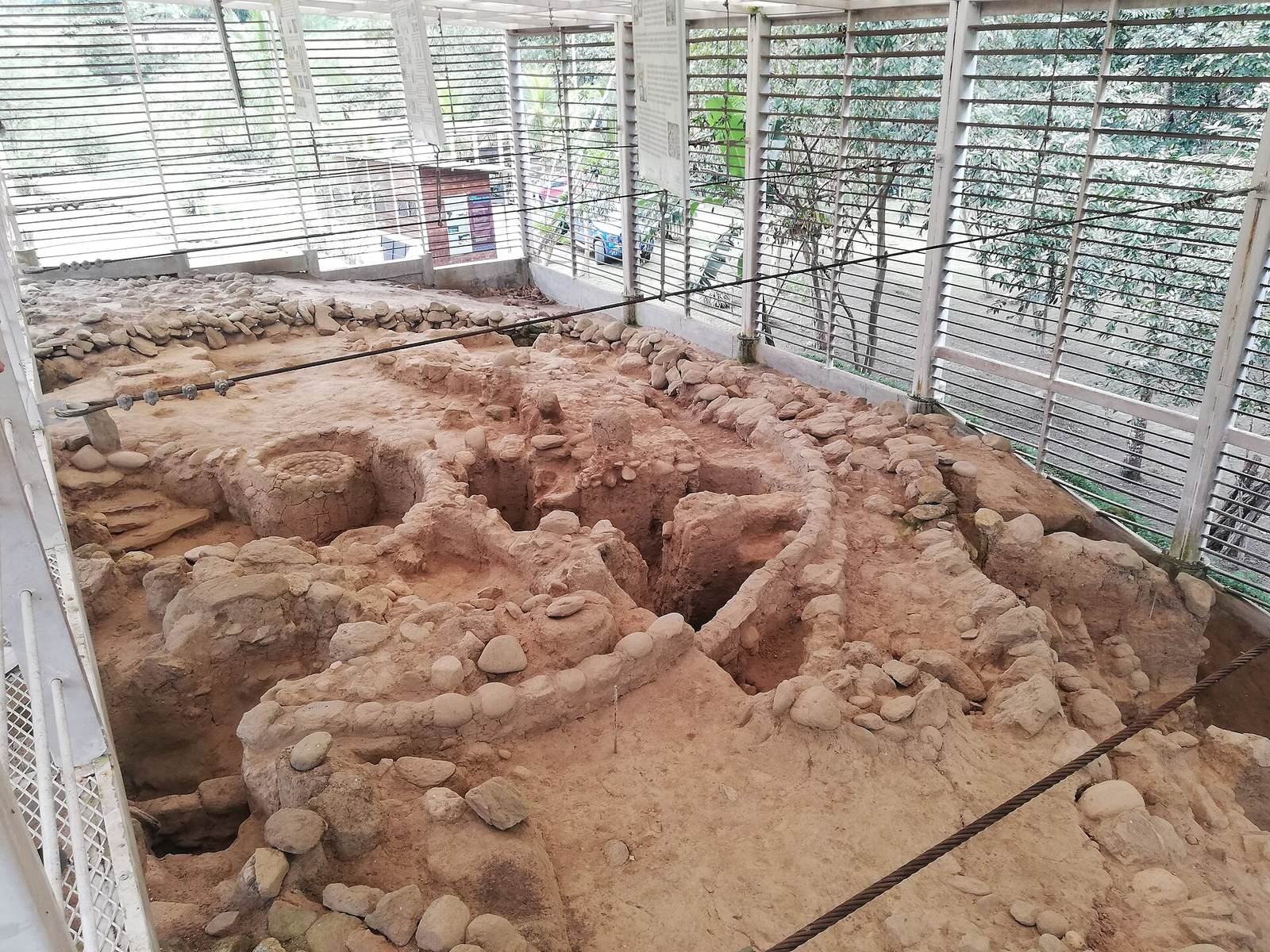
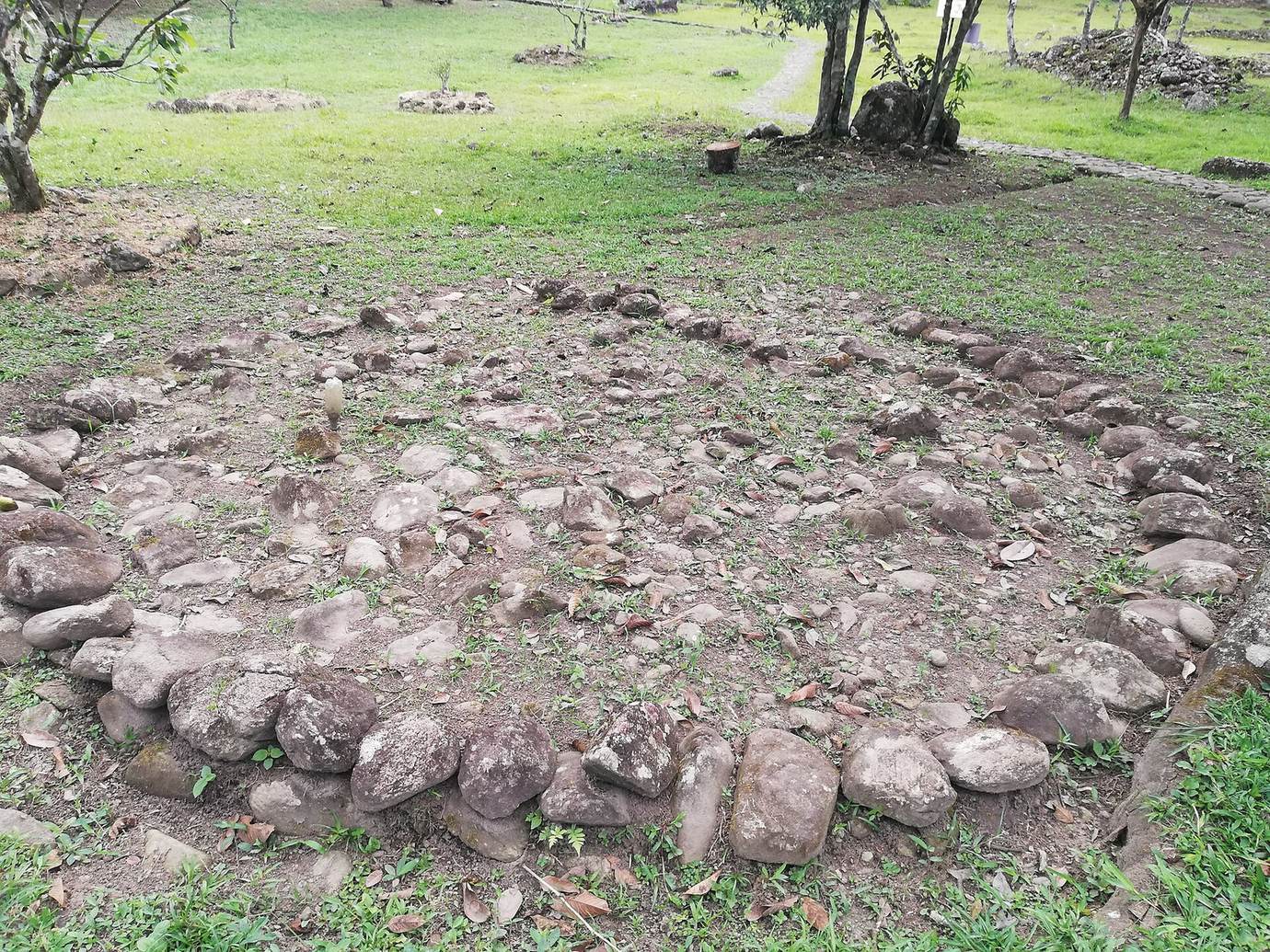
Santa Ana lies in a narrow river valley on the eastern Andean slope, where mountain highlands meet Amazonian lowlands. The site is associated with the Valladolid and Palanda rivers. The Palanda drains into the Mayo-Chinchipe river system and ultimately the Marañón. The settlement’s two principal zones cover about one hectare, and excavations uncovered remains of stone architecture.
Central plaza and platforms
A sunken circular plaza lies at the center of the settlement, alongside two artificial platforms. One platform has a spiral-form temple and a ceremonial hearth. Ceremonial hearths also form part of the site’s architectural remains.
Tombs and finds
Several tombs contained fine ceramic vessels, polished stone bowls and mortars, hundreds of turquoise and malachite beads, fragments of Strombus shells from marine gastropods, and small sculptures. Other finds include ceramic bottles, plain and decorated stone bowls, medallions, and necklace pieces made from turquoise, malachite, and other green stones.