Jedenspeigen Castle: A Four-Winged Castle in Lower Austria
Site at a Glance
- Popularity
- Medium
- Country
- Austria
- Primary era
- Early Modern
- Eras represented
- Early Modern
- Civilizations
- Habsburg, Holy Roman Empire
- Site type
- Domestic
- Remains
- Castle
On this page8 sections
History
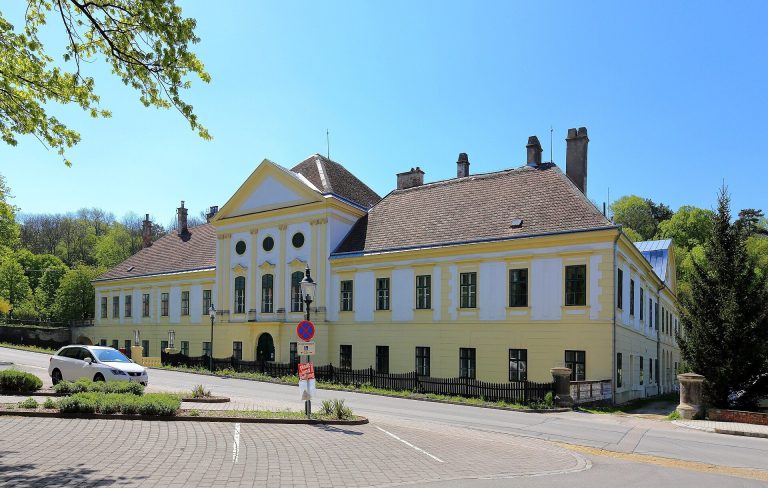
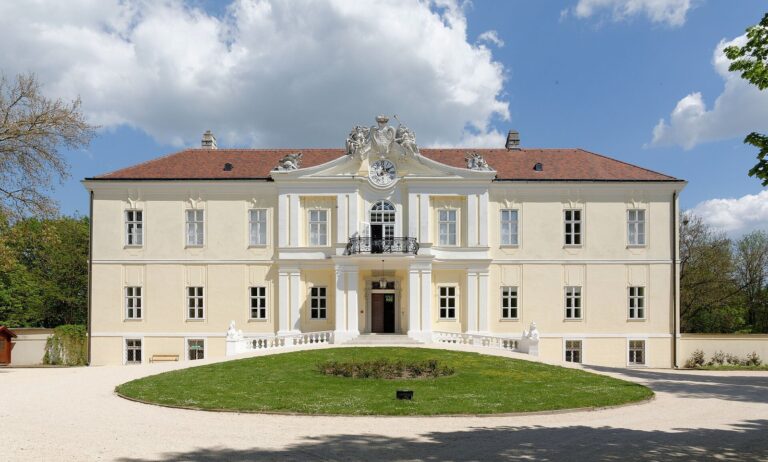
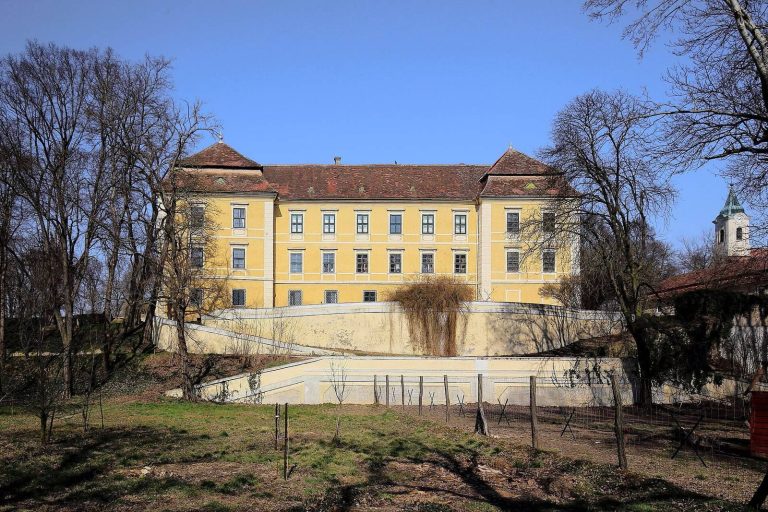
Jedenspeigen Castle is a castle in Jedenspeigen, Austria, whose present four-winged form dates from the 16th and 17th centuries. The place first appears in 1113 under the name Hiedungispuigin, as a possession of Melk Abbey, a Benedictine monastery in Austria.
Early records and the 1278 battle
In 1278, a battle took place near the castle between Rudolf of Habsburg, a German king and the first Habsburg to hold that crown, and Ottokar II Přemysl, king of Bohemia. Known as the Battle of Dürnkrut and Jedenspeigen or the Battle on the Marchfeld, it remains a defining event in the castle’s historical setting.
Ownership and remodelling
A knightly family of Jedenspeigen, also recorded as Idunspeugen, owned the estate from 1295 to 1497. The Steinpeiß family held it later, followed by the Lamberg family, whose tenure lasted from 1524 to 1574. General Konrad von Pappenheim took possession of the castle in 1578. In the 1580s it passed to the Kollonitsch family, whose members held the hereditary title of baron. They retained it until 1597 and remodelled the building.
Later owners and present stewardship
After further changes of ownership, the Kollonitsch family, by then counts, regained the lordship in 1675. A lordship was a landed estate with associated governing rights. In 1874, Max Count Kollonitsch bequeathed the castle and lordship to the Archdiocese of Vienna, a territorial Roman Catholic jurisdiction led by an archbishop. The municipality of Jedenspeigen has owned the castle since 1985. In 2019, the east wing was renovated and a new exhibition about the 1278 battle was developed.
Remains
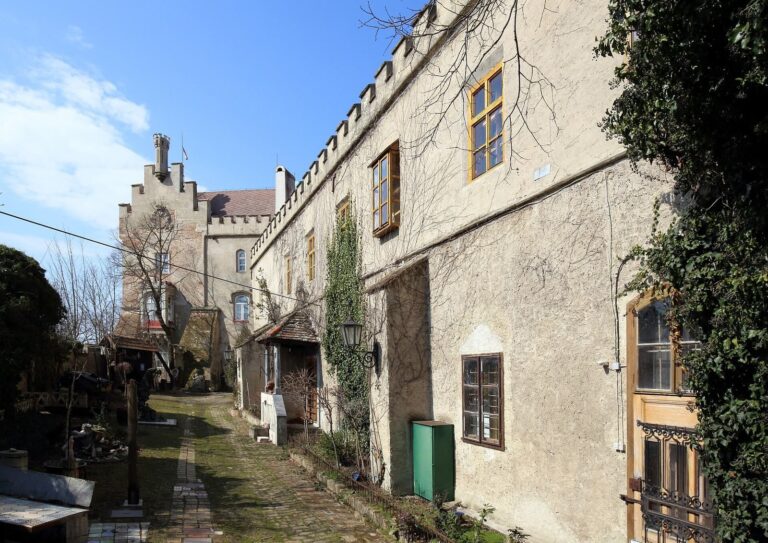
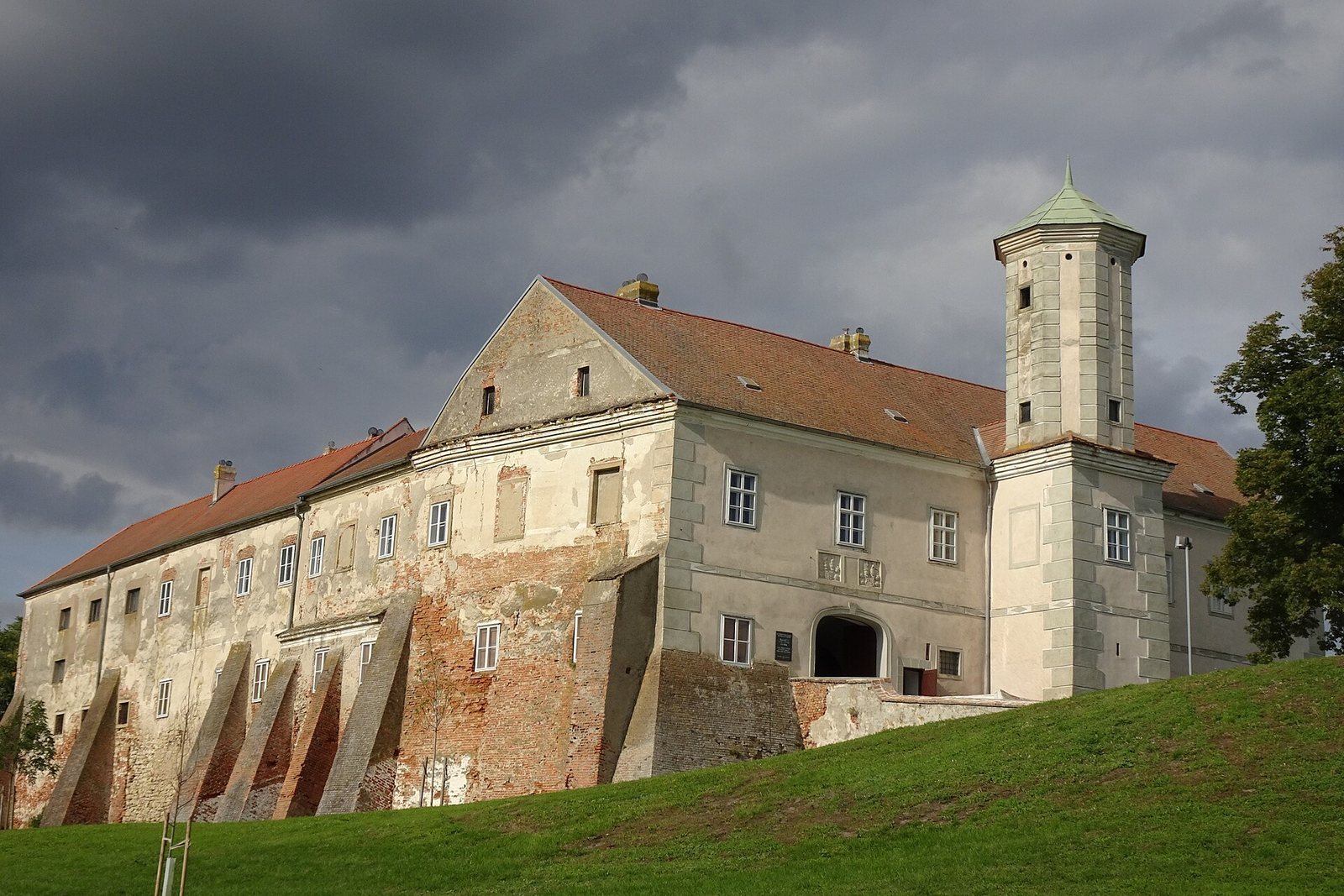
The present castle is a four-winged structure dating from the 16th and 17th centuries. It stands in Jedenspeigen, a market town in the eastern Weinviertel region of Lower Austria. Its entrance is in the east wing, and the courtyard includes an arcade along the south wing.
East entrance
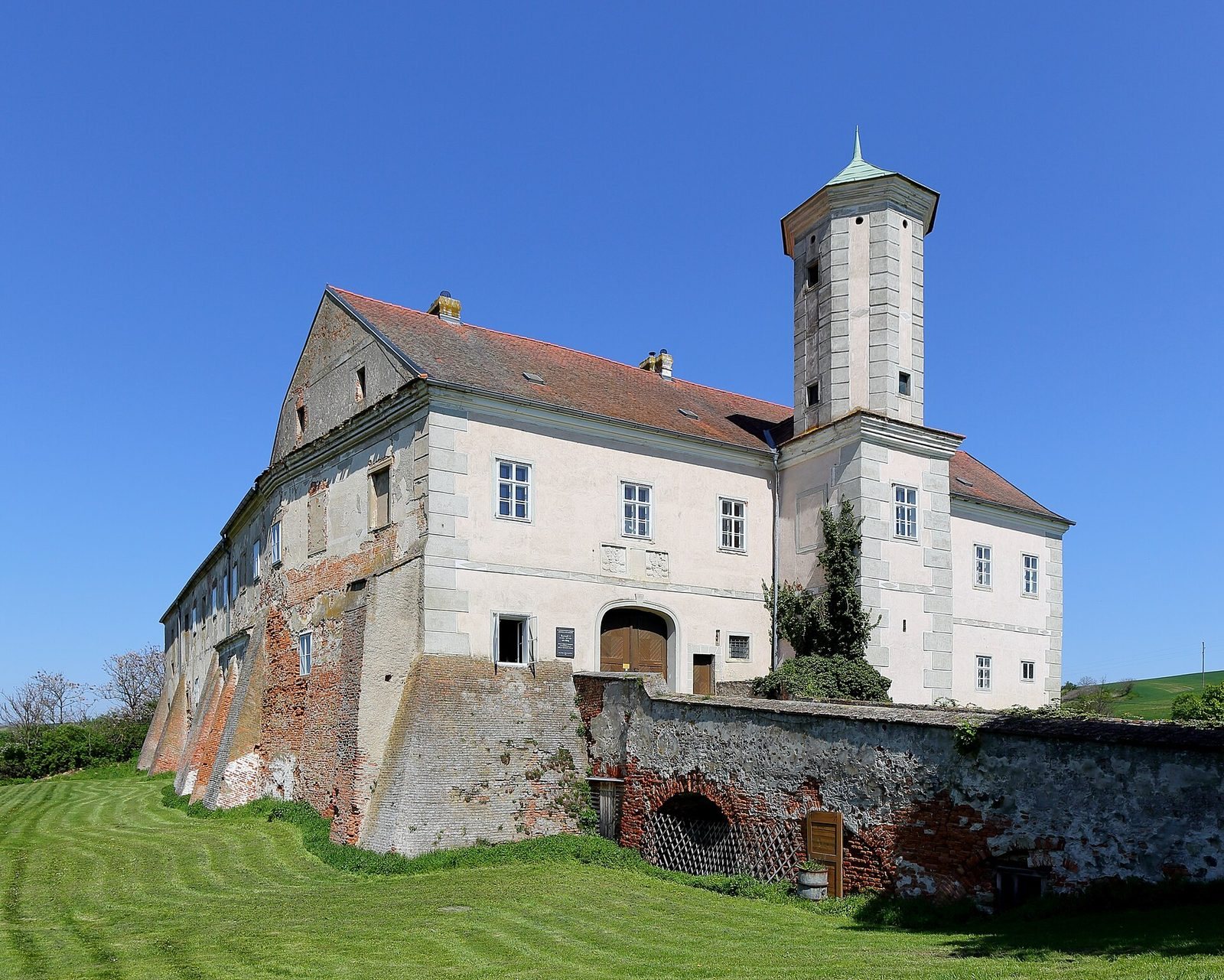
A ramp crosses a bridge to reach the castle gate. A tower marks the entrance, with a two-storey ashlar base, finely dressed stone laid in regular blocks, and an octagonal upper section beneath a flat pyramidal roof. The coats of arms above the gate belong to Georg Seyfried von Kollonitsch and his wife, Helena Fuchsin von Fuchsberg.
Courtyard and west wing
The arcade along the south wing rests on Tuscan columns, a plain classical form with unfluted shafts. The west wing is a three-storey granary, converted to that use in the 1950s.
East wing interiors
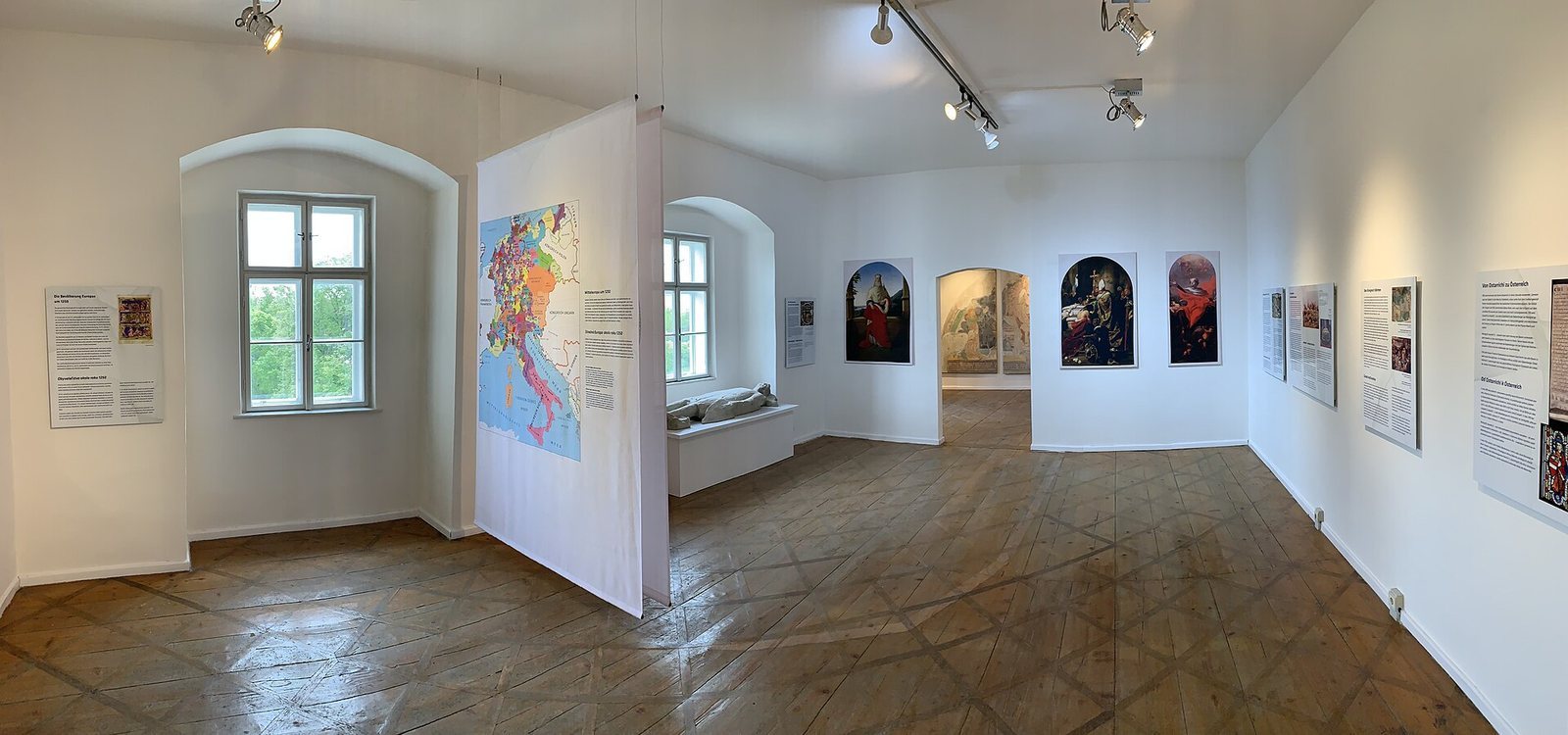
The east wing has a wine shop on the ground floor and a battle exhibition on the upper floor. The exhibition fills nine rooms, beginning with the Knights’ Hall, and explores the battle’s background, weapons, consequences, and later reception. A multimedia reconstruction presents the fighting of 26 August 1278 and relates the battle to the historical development of Austria, Bohemia, and Hungary. In a video installation, busts of Ottokar and Rudolf appear to recite passages from King Ottokar’s Rise and Fall by the Austrian playwright Franz Grillparzer.