Schloss Döbschütz: A Moated Castle in Saxony, Germany
Site at a Glance
- Rating
- 4.4
- Popularity
- Very Low
- Country
- Germany
- Primary era
- Medieval
- Eras represented
- Medieval, Early Modern, Modern
- Civilizations
- German, Holy Roman Empire, Kingdom of Bohemia
- Site type
- Domestic
- Remains
- Castle
On this page8 sections
History
Schloss Döbschütz is a moated castle in Germany, in Döbschütz, now part of the municipality of Vierkirchen in eastern Saxony. Probably built in the twelfth century, it is regarded as the oldest castle in Upper Lusatia and was the ancestral seat of the noble family of Debschitz.
Medieval origins
Historical tradition holds that the Bohemian King Vladislav II and his sons sought refuge at the castle in 1174 after a dispute with Friedrich Barbarossa, the twelfth-century German king and Holy Roman Emperor, over the succession to the throne. The Lords of Debschitz appear as owners of the estate in 1218.
Ownership and Renaissance transformation
The von Gersdorff family acquired the castle in 1506 and sold it to the Lords of Fürstenau in 1581. During the late sixteenth century, the building was remodeled in the Renaissance style, an architectural language inspired by classical antiquity that spread across Europe from the fifteenth century onward.
In 1778, the Upper Lusatian Estates purchased Schloss Döbschütz. These were the representative bodies of Upper Lusatia’s traditional corporate institutions. They used the castle as a prison before selling it again shortly afterward.
Nineteenth-century changes
At the beginning of the nineteenth century, the west wing was demolished to create access to the park. Around the same time, solid bridges replaced the two wooden drawbridges over the moat. A fire damaged a side wing in 1874, and the affected section was rebuilt on a smaller scale.
In 1876, Albrecht Graf von Roon acquired the estate. A former Prussian Minister of War and military statesman, he commissioned further alterations that gave the castle predominantly Neo-Gothic forms, reviving the architectural language of medieval Gothic in the nineteenth century.
Twentieth-century use and preservation
The von Roon family sold Schloss Döbschütz in 1930 for financial reasons to Paul Daniel, a former estate inspector. The land reform of 1945 in the Soviet occupation zone expropriated him. After the war, the cultivated estate lands were divided among new farmers, people who received redistributed agricultural land, while the castle initially housed expellees. One of the moats was filled in after 1945.
After standing vacant for an extended period, the castle was sold to a private individual in 2001. The new owner renovated the severely deteriorated building and established a toy museum there in 2003. Schloss Döbschütz is protected as a monument of architectural and local-historical importance and is listed as a heritage monument in Saxony.
Remains
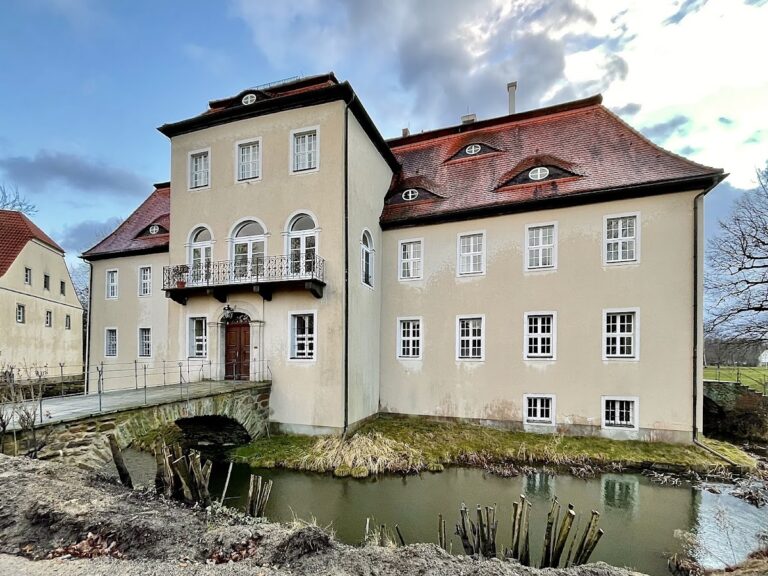
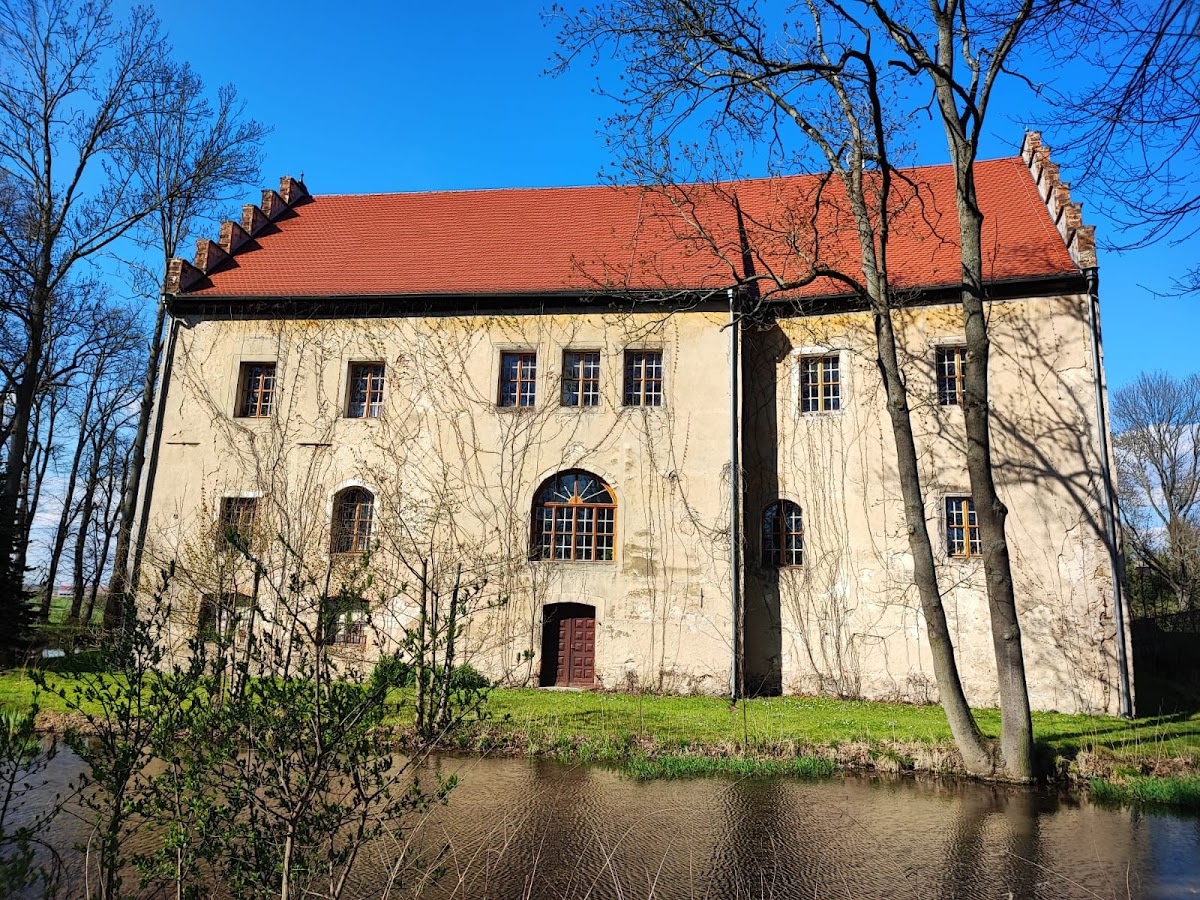
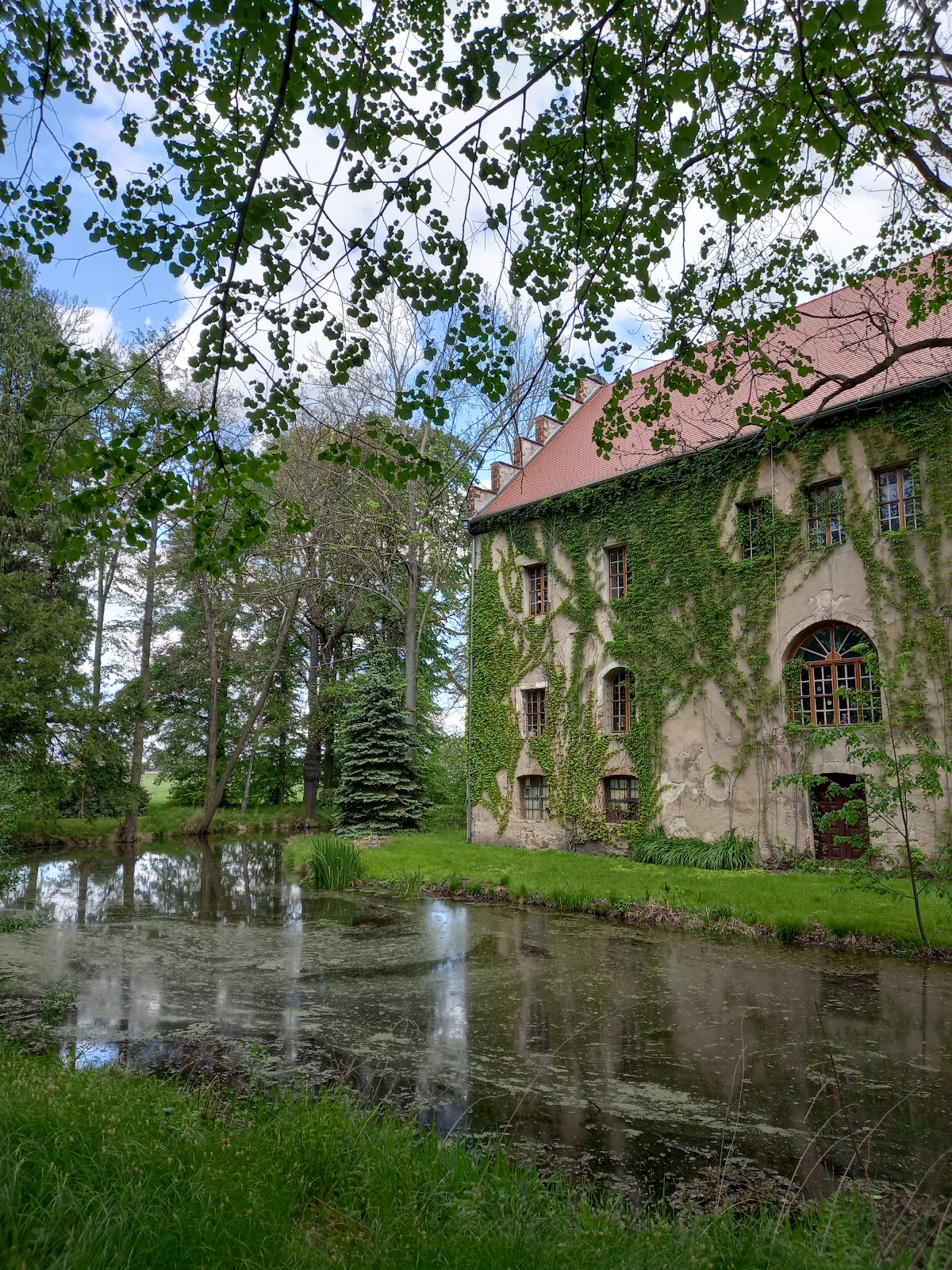
Schloss Döbschütz is a horseshoe-shaped building constructed from plastered rubble-stone masonry. A moat surrounds it on three sides today, while the former bridges and the surviving water boundary reflect successive changes to the castle’s defensive setting.
Castle wings and tower
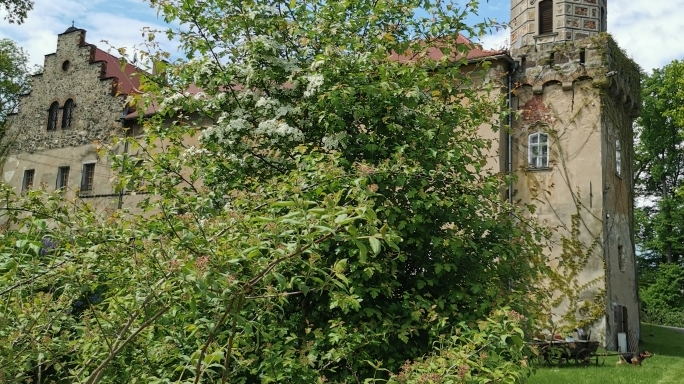
The south wing rises three stories beneath a gabled roof and has stepped gables. The east wing is two stories high and contains a round-arched entrance portal at its center, framed by projections resembling pilasters. Attached to the north side of the east wing is a three-story tower with a square ground plan and a crenellated parapet. Its upper section is octagonal and capped by a tent roof. The north wing is single-storied.
Manor grounds and park
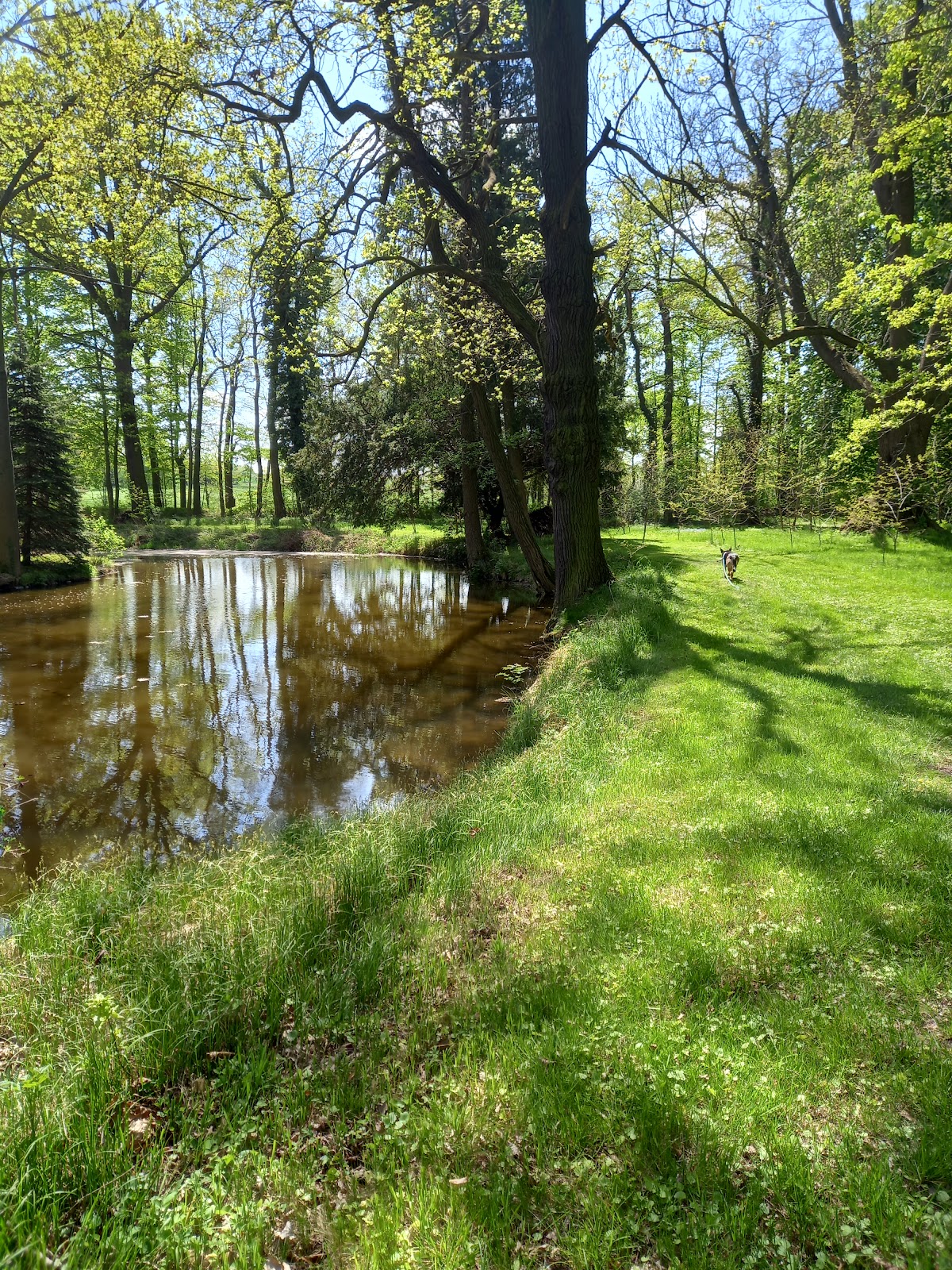
The former Döbschütz manor complex extends east of the castle. Its agricultural and service buildings date from the nineteenth and twentieth centuries. A landscape park lies north of the castle, with its western side bounded by the Schwarze Schöps River.