Bogenhofen Castle: An Austrian Estate and Educational Center
Site at a Glance
- Popularity
- Low
- Country
- Austria
- Primary era
- Modern
- Eras represented
- Modern
- Civilizations
- Austrian Empire, Habsburg
- Site type
- Domestic
- Remains
- Castle
On this page8 sections
History
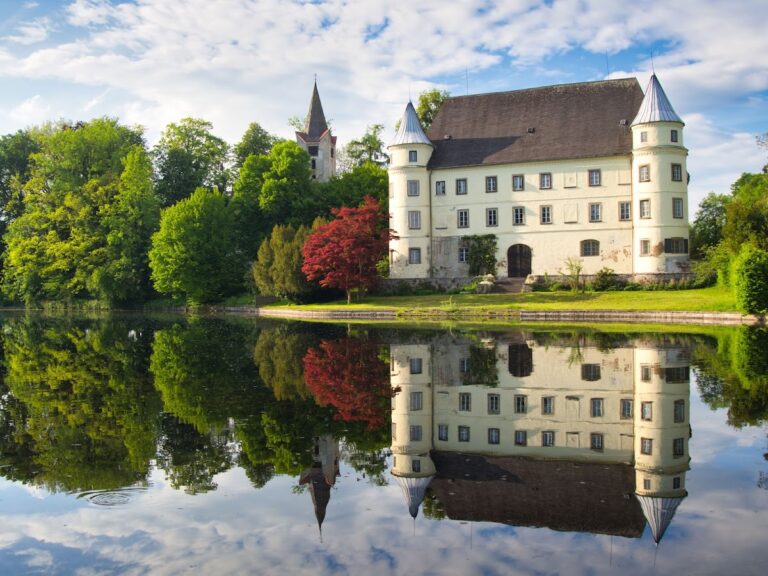
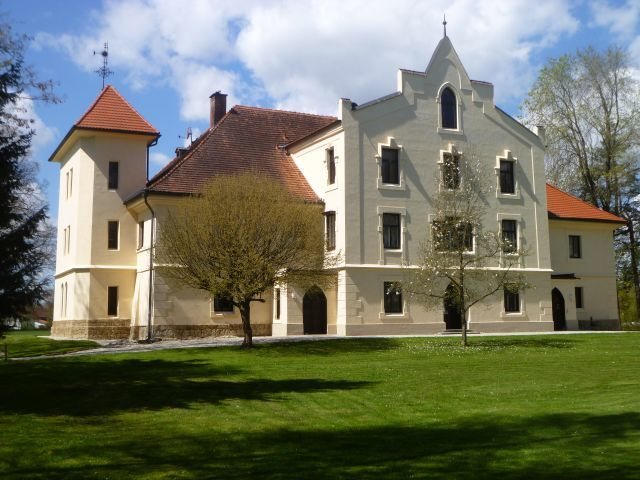
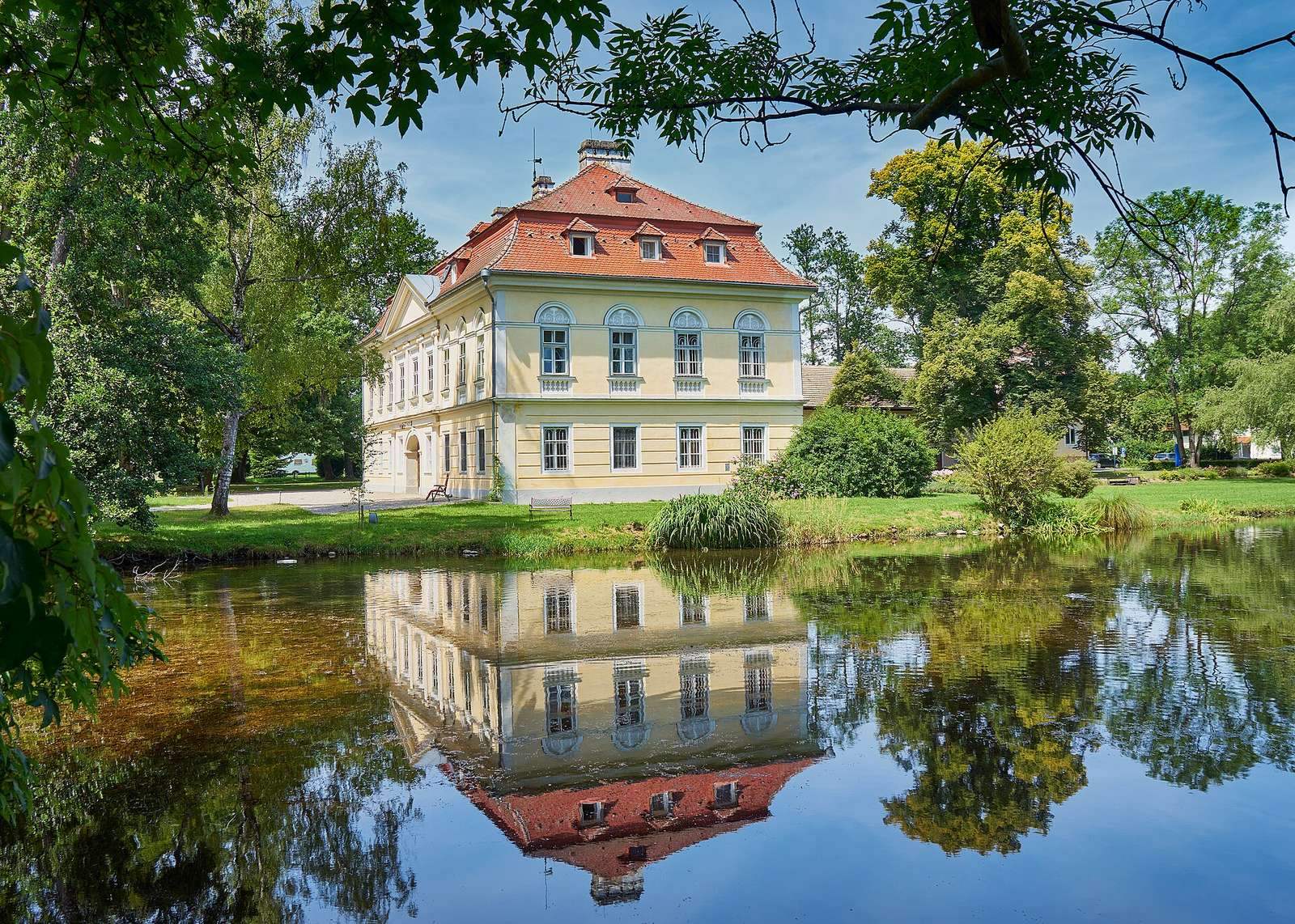
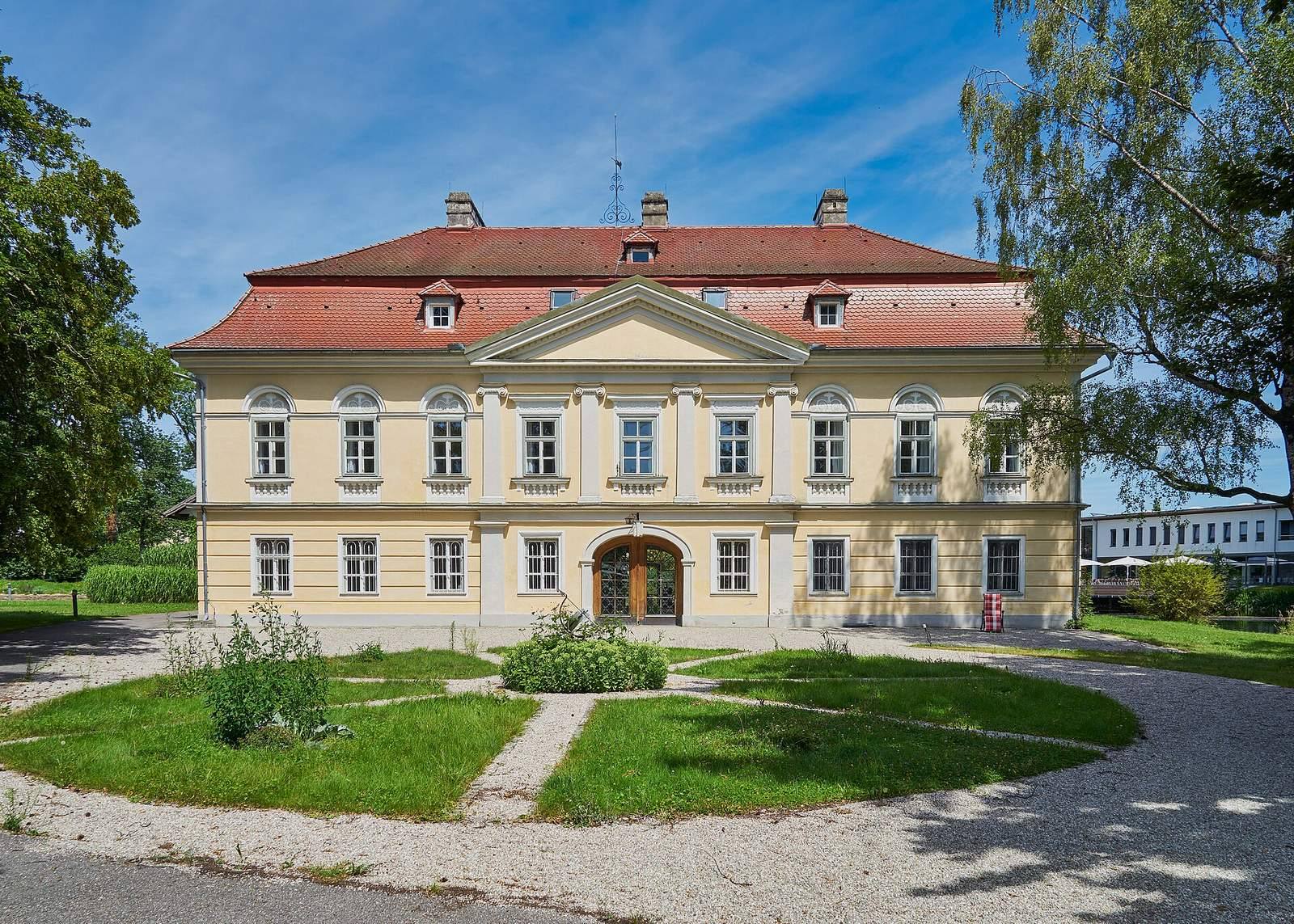
Bogenhofen Castle is an estate in the village of Bogenhofen, in the municipality of St. Peter am Hart, Austria. Its present building was constructed in 1834 in the Empire style, a neoclassical style that flourished during the Napoleonic era and drew on classical and imperial motifs.
Medieval estate and jurisdiction
In 1438, Hanns Rohrer and his wife, Margarethe, née Seiboldsdorfer, sold Bogenhofen to Andreas Loder, the Bavarian chancellor. In 1451, Duke Ludwig of Lower Bavaria granted the estate rights as a Hofmark, a landed jurisdiction whose lord held local rights and sometimes lower-court authority. Andreas’s son, Leonhard Loderer, adopted the estate-derived name Pogenhofner. The Pogenhofner family lived at Bogenhofen until 1677.
Later noble ownership
The Pienzenau family, also known as Pintzenauer, inherited the property. It later passed through marriage to the Barons von Nothafft. Baron Franz Xaver von Seiboldsdorf then bought the estate and had the castle rebuilt. In 1791, ownership passed to Anton Baron Hueber zu Mauern. Philipp Baron von Risenfels succeeded him in 1828 and exchanged Bogenhofen for Haitzing; Bogenhofen was subsequently combined with Schloss Hagenau.
Kajetan and Josephine Plaichinger acquired the estate in 1831. In 1842, Countess Anna von Geldern acquired it, and Paul Anton von Handel also acquired the estate that year.
From private estate to educational center
After the First World War, the property passed to Colonel Baron von Pereira and then to his wife, Baroness Pereira, née Wittgenstein, the sister of Baron von Handel. She held the estate until the mid-twentieth century.
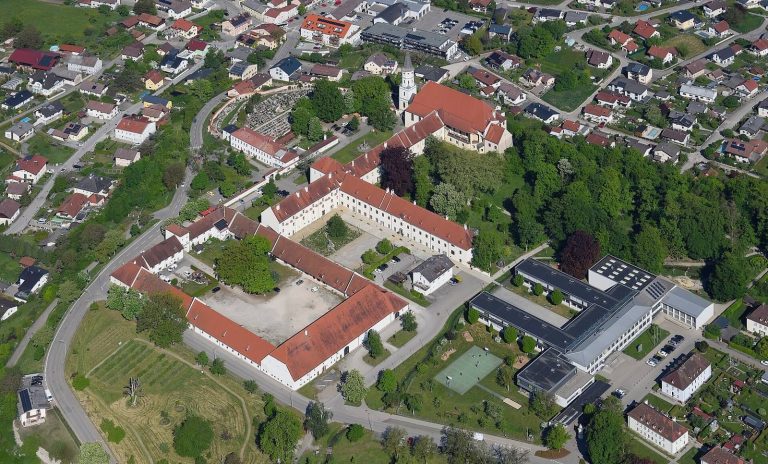
In 1949, the Seventh-day Adventist Church, a Protestant denomination that observes Saturday as its Sabbath, bought the castle and surrounding grounds. The property was developed as Seminar Schloss Bogenhofen, an educational center for Protestant free churches. Its programs included theological studies, a state-recognized upper-secondary academic school with instrumental instruction and health education, and a boarding school serving students from around the world.
Remains
Castle and predecessor
Present building
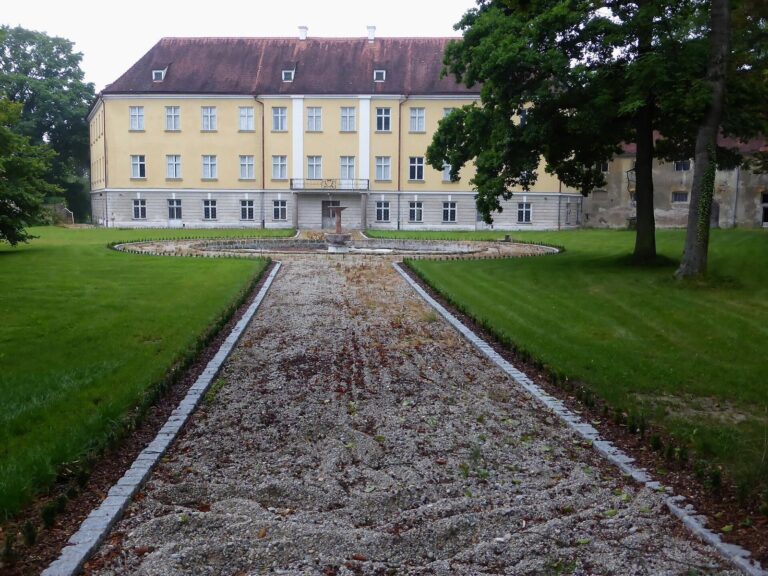
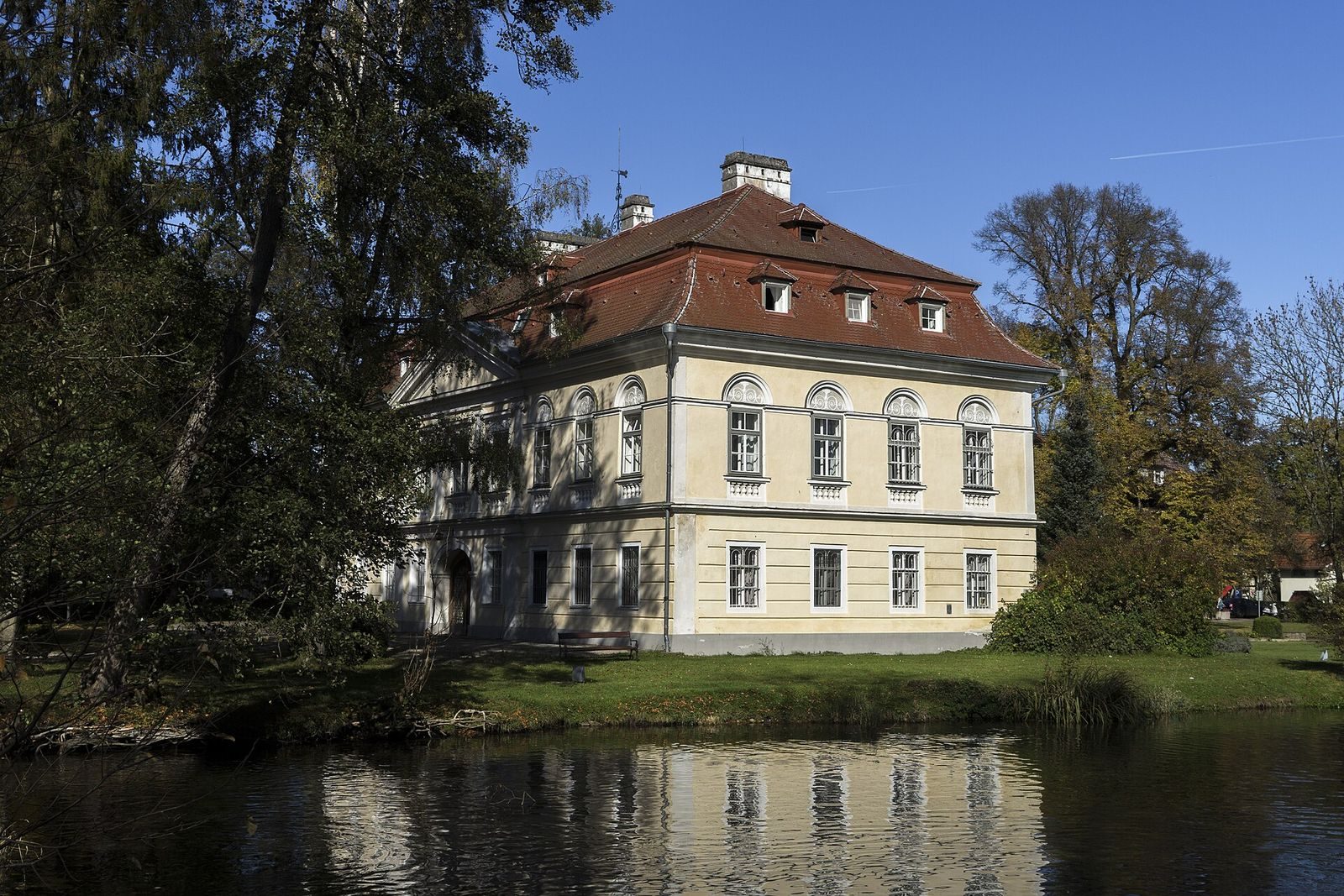
The present building has a two-storey rectangular plan. Its central section projects from the main wall and is topped by a triangular pediment. A hipped roof, with a simple break in its slope, completes the structure.
Earlier forms
The earliest form of the castle was a single-storey timber building. Before the present structure, a dilapidated water castle stood on an island in a nearby pond. A copper engraving by Michael Wening depicts Bogenhofen more like a farmstead than a castle.