Frauenstein Castle: A Medieval Castle and Estate beside the Inn
Site at a Glance
- Popularity
- Medium
- Country
- Austria
- Primary era
- Medieval
- Eras represented
- Medieval, Early Modern, Modern
- Civilizations
- Duchy of Bavaria, Holy Roman Empire, Kingdom of Bavaria
- Site type
- Military
- Remains
- Castle
On this page9 sections
History
Frauenstein Castle is a medieval castle beside the Inn at Mining in Austria’s Upper Austria region. Gregor von Pogen built it in the 10th century during the Hungarian incursions.
Earlier use and medieval ownership
Excavations in 1905 uncovered Celtic-era graves at the site. In Roman times, a watchtower stood there, and the navigable Inn served as a landing place for Roman ships. The Counts of Ering, probably a collateral branch of the Pogen family, succeeded Gregor von Pogen.
From 1296 to 1377, the castle was pledged to the Counts of Hals. In 1400, Knight Heinrich Weckhinger sold it to Knight Wilhelm von Fraunhofen, who altered the property and gave it the name Frauenstein. Wilhelm served as court steward to Duke Henry of Bavaria.
Ducal rule and the Paumgartner family
In 1435, Duke Henry the Rich, also known as Henry XVI, of Bavaria-Landshut bought Frauenstein and joined it with the lordship of Ering on the opposite bank of the Inn. Officials appointed by the territorial ruler administered the estate, including Kaspar Peuntner.
During the War of the Lower Bavarian Succession, a conflict fought from 1503 to 1505 over inheritance of the Duchy of Bavaria-Landshut, the castle was plundered and partly destroyed. The Paumgartner family bought it in 1508 and partly rebuilt it between 1508 and 1519. After the Ering family line died out, the two estates were united in 1602.
The Paumgartners became barons in 1629 and imperial counts in 1745. Their family burial place is in Mining parish church. As most of the family lived across the Inn at Ering, Frauenstein increasingly fell into disrepair. In 1807, its owners dismantled part of the castle, including the palace chapel, and built a manor house beside the granary.
Decline and renewal
During the 1880s, the property passed from the Paumgartner family to the baronial von Venningen family of Rigerting. The Ering-Frauenstein power station was built from 1939 to 1942, during Nazi rule in Austria, and its impoundment altered the Inn. The castle deteriorated further in the following decades.
In 1999, the local association Lebenswertes Frauenstein leased the castle from the von Venningen family for 99 years and undertook its renovation and revival.
Remains
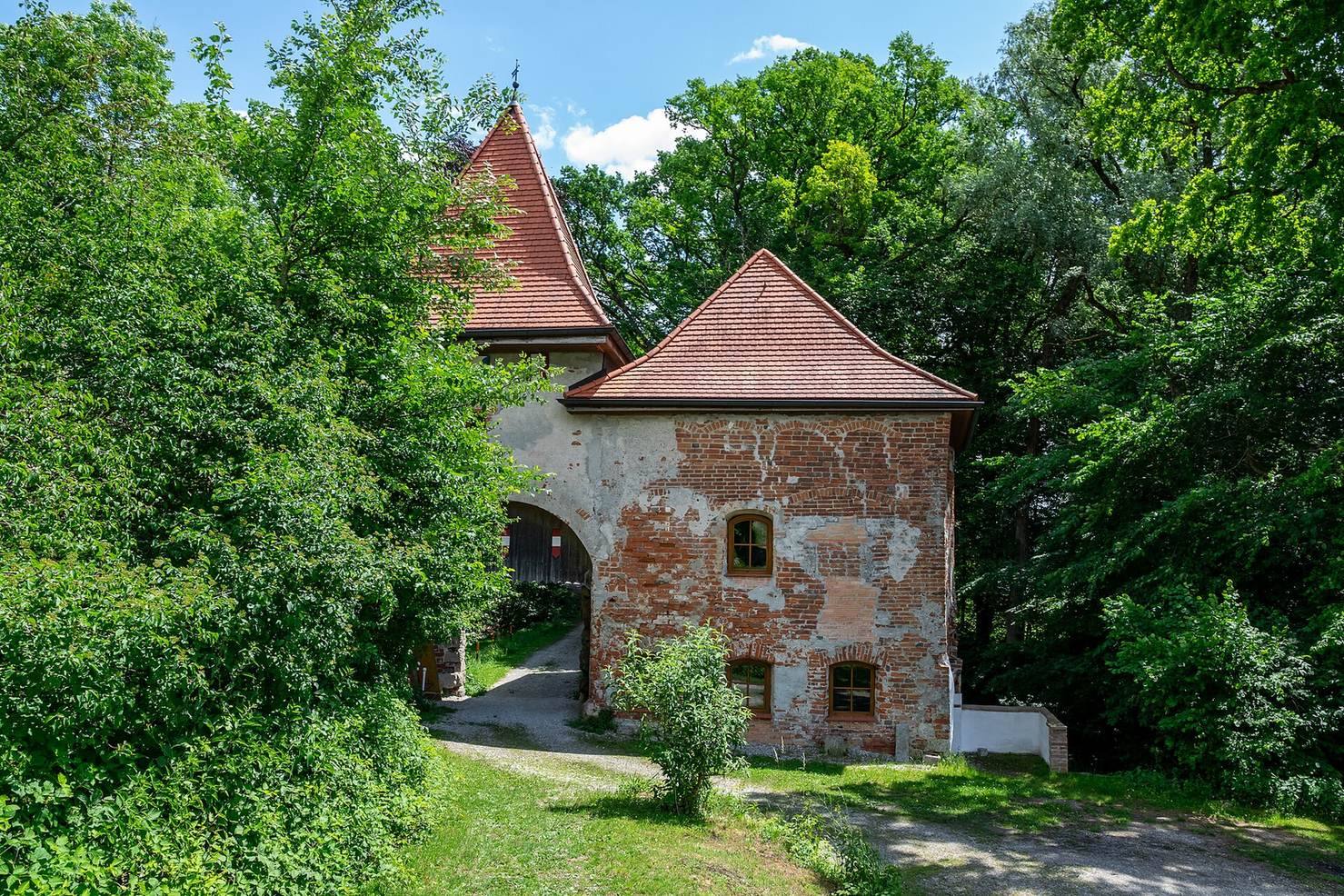
The former castle occupied a rocky outcrop above the Inn and once covered an extensive area. Today, its surviving fabric includes a gate tower, part of an enclosing wall, a later manor house and granary, and a rock-cut ditch that forms an artificial arm of the river. A copper engraving by Wening, a Bavarian engraver and publisher known for topographical views, depicts the larger complex.
Castle structures and grounds
Gate tower and enclosing wall
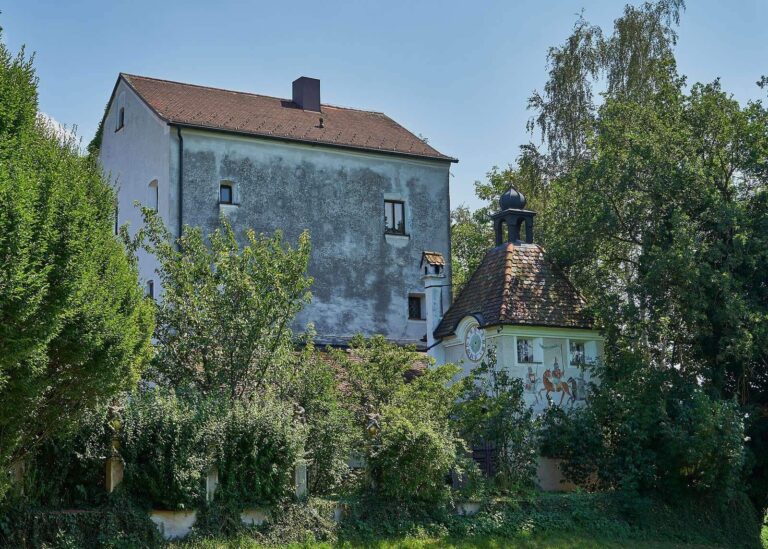
The gate tower survives with its tower house, a fortified residence built as or within a tower. Nearby, part of the enclosing wall built in 1508 remains. Together, these structures form the surviving castle fabric described from the former complex.
Manor house and granary
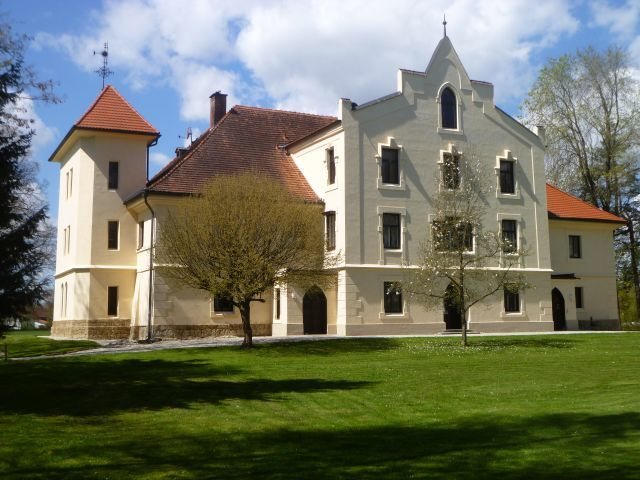
West of the castle remains stands a two-storey manor house dating to the early 19th century. It is built of tuff, rock formed from consolidated volcanic ash, and has round-arched portals and pilasters, shallow wall projections resembling columns. The building now houses the castle tavern, and a former granary stands beside it.
Rock-cut ditch and open-air stage
A ditch cut into the rock survives from the former fortifications and forms an artificial arm of the Inn. The grounds below the manor house have been converted into an open-air stage.