Gutenburg: A Medieval Hill Castle in Waldshut-Tiengen, Germany
Site at a Glance
- Rating
- 4.3
- Popularity
- Very Low
- Country
- Germany
- Primary era
- Medieval
- Eras represented
- Medieval
- Civilizations
- Holy Roman Empire
- Site type
- Military
- Remains
- Castle
On this page8 sections
History
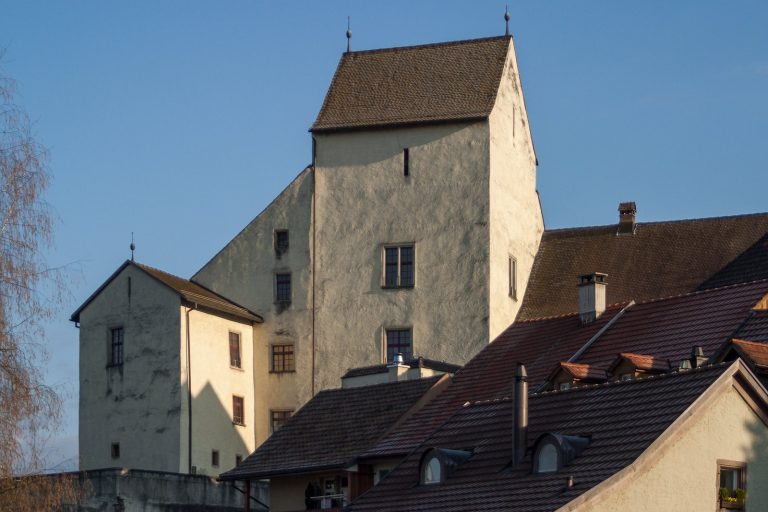
Gutenburg is a ruined hill castle in Waldshut-Tiengen, Germany. Its earliest known structure was a tower built in the tenth century by St. Gall Abbey, a Benedictine monastery in Switzerland. The tower served as a base and defensive work for the abbey’s extensive estates between the Black Forest rivers Alb and Schlücht, which it held around 900 to 1000.
Origins and early lordship
In 1128, the abbey granted the tower, its local estates, and associated rights to an unnamed noble family as a fief, a grant of property that carried obligations to the grantor. The family built a castle around the tower and treated the castle and surrounding lands as its own, although the tower remained a fief of the abbey. That year, Rudolfus de Gutenburch appeared as a witness in a document, but this does not establish that he belonged to the family receiving the grant.
The property passed in 1187 to the Lords of Gutenburg, a family of free noble status from the Swiss Aargau, possibly the Oberaargau in the canton of Bern. They belonged to the medieval service nobility, whose members served powerful lords or institutions. The castle probably took its name from the family or its ancestral lordship, now Gutenburg-Lotzwil. A seal associated with the Lords’ arms appears in a memorial book at Einsiedeln Monastery. It depicts a seated, mitred abbot holding a staff and raising his right hand in blessing, with a diagonal cross bearing five lanterns below him. Part of the inscription is legible.
A thirteenth-century Minnesinger, a German-language lyric poet and singer, named Ulrich von Gutenburg may have been the Ulrich von Gutenburg who appears repeatedly in documents, but their identity is uncertain. In 1276, Conrad, also called Insenhart, and Berchthold von Gutenburg sold numerous estates to St. Blaise Abbey, a Benedictine monastery in the Black Forest. Probably in 1302, the castle passed from Rudolfus von Gutenburg’s descendants, Ulrich and Eberhard, to Heinrich II von Krenkingen.
Changing noble ownership
In 1357, Heinrich and Johann von Blumenegg exchanged Herbolzheim, held as a fief of the Bishopric of Strasbourg, with Count Hug von Fürstenberg for Gutenburg Castle. Bishop Johann von Lichtenberg was involved in the exchange; Hug was the son-in-law of Lütold von Krenkingen. In 1361, Johann von Krenkingen pledged the castle to the brothers Walther and Burkart von Hohenfels, and the Krenkingens never redeemed the pledge. The castle was a fief of the Holy Roman Empire, the Central European political entity that lasted until 1806, while the tower remained a fief of the abbot and monastery of St. Gall.
The Hohenfels brothers sold the castle in 1393 to the knight Heinrich Gessler, also known as Heinrich III Gessler, who is recorded from 1359 until about 1407. He served Duke Leopold III of Habsburg as chamberlain and councillor, administered Aargau in 1386 and Thurgau in 1387 as territorial bailiff, and held authority over the Gutenburg forest district in 1393. After Gessler’s death, the castle passed in 1407 to the knight Wilhelm Im Thurn of Schaffhausen, who also acquired pledge rights to Hauenstein Castle.
During the Council of Constance, a major church council held from 1414 to 1418, Eberhard Im Thurn used Gutenburg to pursue feuds against the Swiss Confederates, an alliance of Swiss communities and cantons hostile to Duke Friedrich. In 1419, Abbot Heinrich von Mansdorf granted the tower, the estate at Wilhain, and associated lands and jurisdictional rights to Rüdiger, also called Ruoker, Im Turn, acting on Wilhelm’s behalf. Eberhard had held these properties, which passed to his legitimate son Wilhelm.
In 1447, the castle passed from Rüdiger Im Thurn to the knight Heinrich von Rümlang. In 1480, Abbot Christoph von Greuth of St. Blaise acquired the Gutenburg lordship from Dietrich von Rümlang. It included the castle and the villages of Weilheim, Ühlingen, and Krenkingen. The Schaffhausen patrician Heinrich Brümsi served as castellan, an official responsible for a castle’s administration, in 1482.
Monastic rule, conflict, and destruction
In May 1525, rebels led by Hans Müller and supported by the town of Waldshut temporarily occupied Gutenburg. They withdrew after their defeat, and in 1526 the peasants were required to compensate for the damage. By 1612, St. Blaise Abbey had also acquired the remaining sovereign rights over Gutenburg from Maximilian von Pappenheim. In its later extent, the lordship included two manorial farms and lands west of the Schlücht and Schwarza, with the villages of Schnörringen, Dietlingen, Weilheim, and Nöggenschwiel. It later gained the villages of Indlekofen, Bürgeln, and Gurtweil.
During the Thirty Years’ War, a major European conflict fought from 1618 to 1648, control of the castle changed hands repeatedly, and it served as a base for plundering the surrounding area. Bernhard von Weimar occupied it in 1638. A force of 4,000 men under Georg Druckmüller von Mühlburg zu Prunn und Rottenstein recaptured the castle and found substantial Swedish supplies, but it later returned to Swedish hands.
In 1640, Abbot Franz Chullot of St. Blaise ordered his men to burn and destroy the castle so it could no longer be used for plundering. It has remained a ruin since then, and the administrative seat moved to Gurtweil. St. Gall’s fief rights over the tower and the estate at Wilhain, including jurisdictional rights, formally continued until 1773.
Remains
Hilltop castle
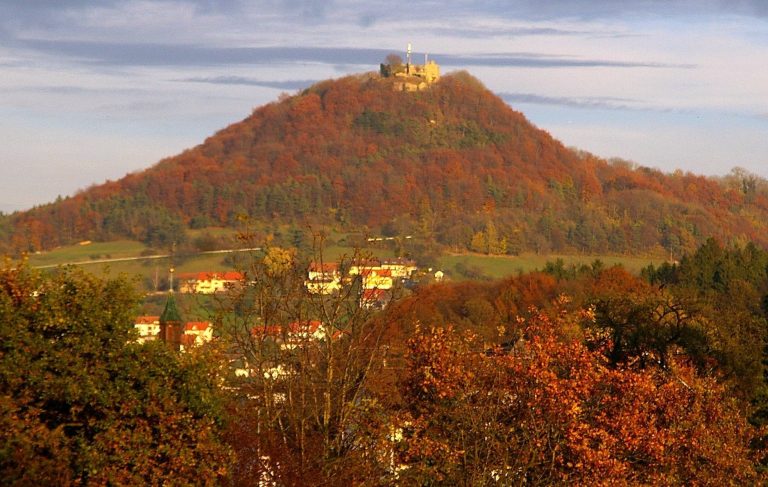
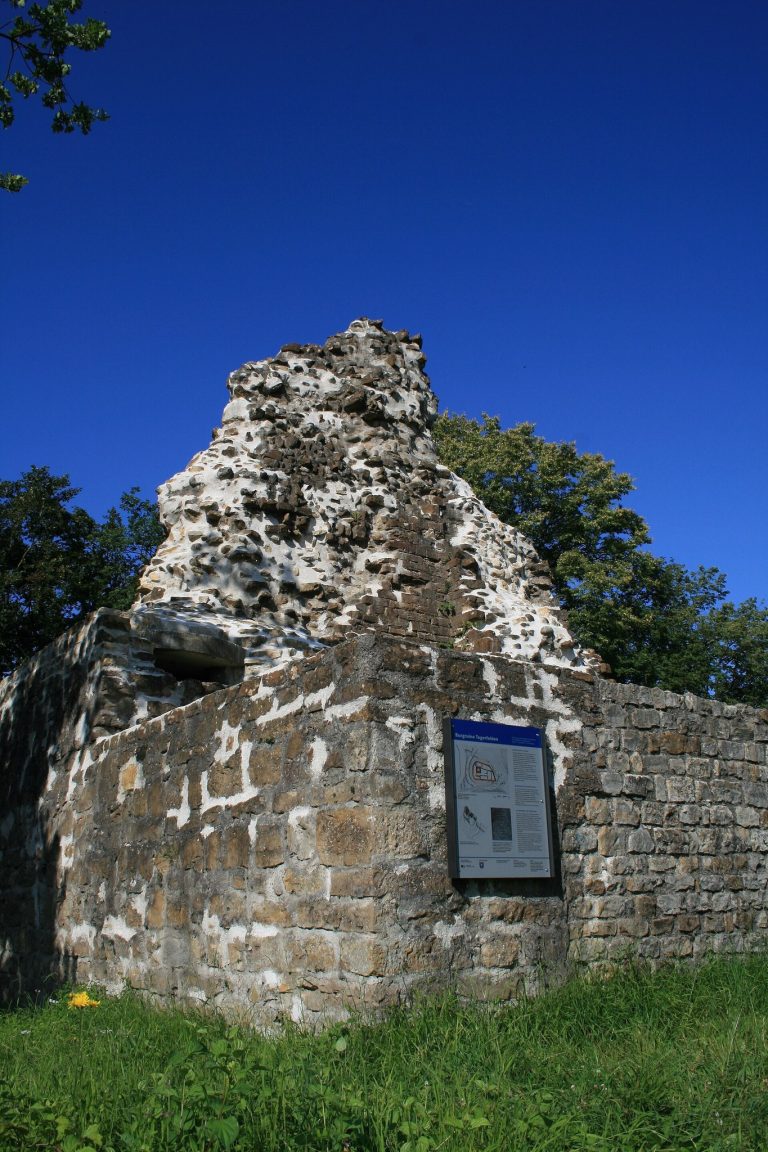
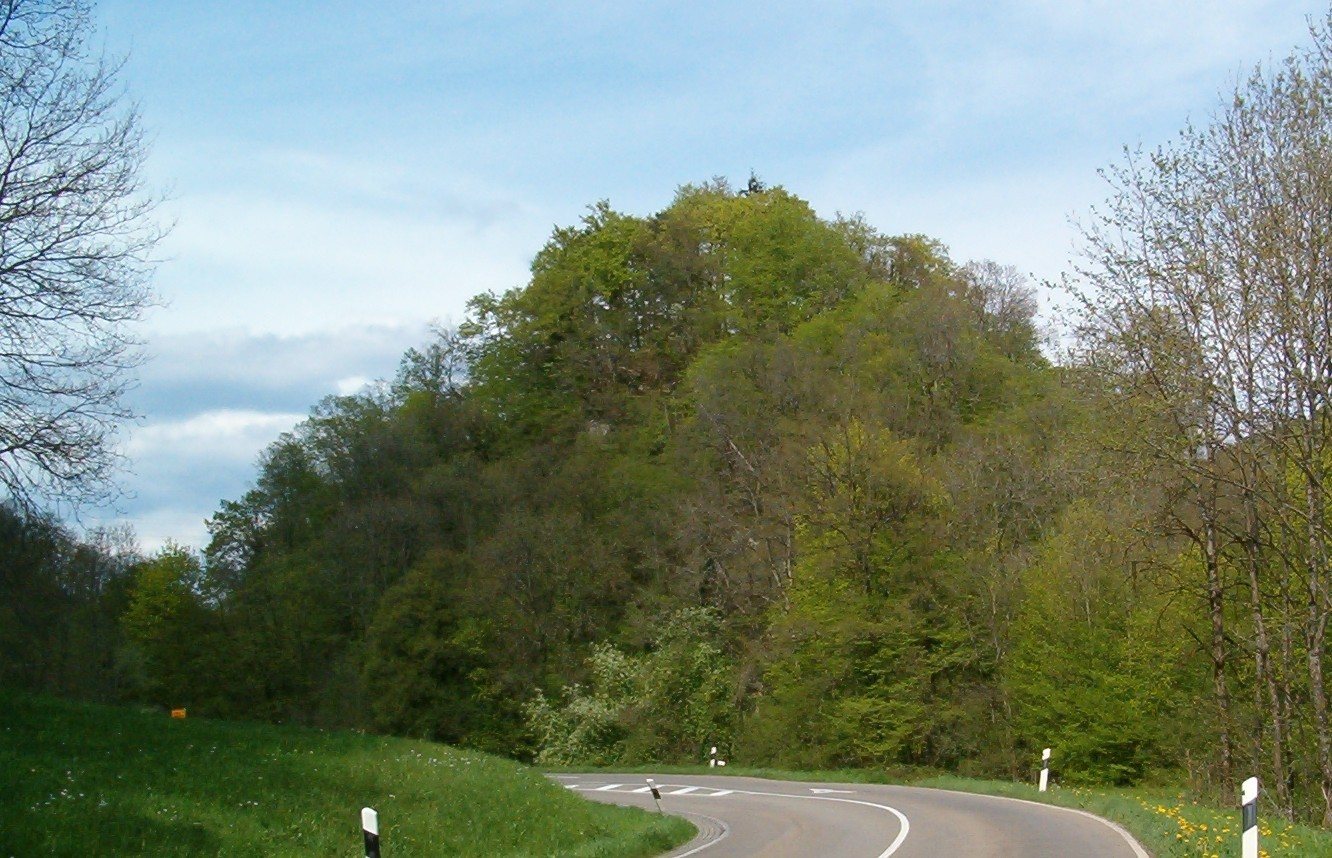
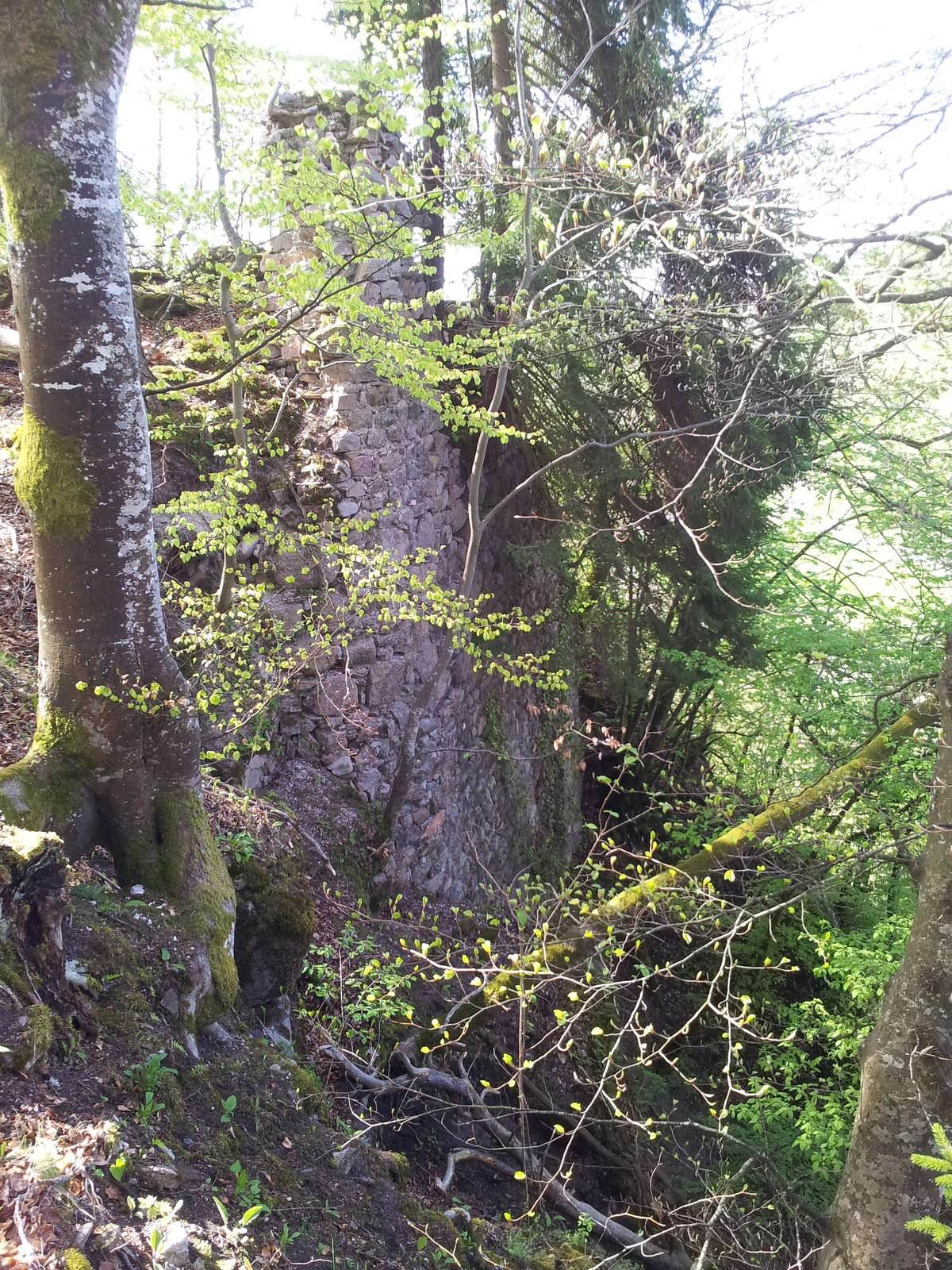
The castle occupies a natural hill at the lower end of the deep Schlücht valley, at the foot of the southern Black Forest. The hill’s hard core of ancient basement granite resisted erosion by the river; farther downstream, the valley opens towards the Klettgau. A tower formed the earliest known structure, and the later castle was built around it. The site survives in ruins.
Prehistoric finds
Prehistoric bone remains and a bronze axe were found beneath a masonry vault at the site.
Associated mills and ironworks
A castle mill is associated with Gutenburg around 1538. The lordship also included a grain mill on the Schlücht and later a sawmill. In 1660, with the agreement of Count Ludwig von Sulz, St. Blaise Abbey established an iron-smelting works, a hammer forge, and a wire-drawing works at Gutenburg. The Klettgau supplied abundant bog iron ore, while wood from the abbey’s jurisdictional forest could be readily obtained. The works closed in 1698 after the ironworks at Albbruck was established.