Schlandersburg: A Renaissance Aristocratic Residence in Italy


Site at a Glance
- Rating
- 4.8
- Popularity
- Very Low
- Country
- Italy
- Primary era
- Early Modern
- External website
- Open
- Eras represented
- Early Modern, Modern
- Civilizations
- Habsburg, Holy Roman Empire
- Site type
- Domestic
- Remains
- Castle
On this page12 sections
History
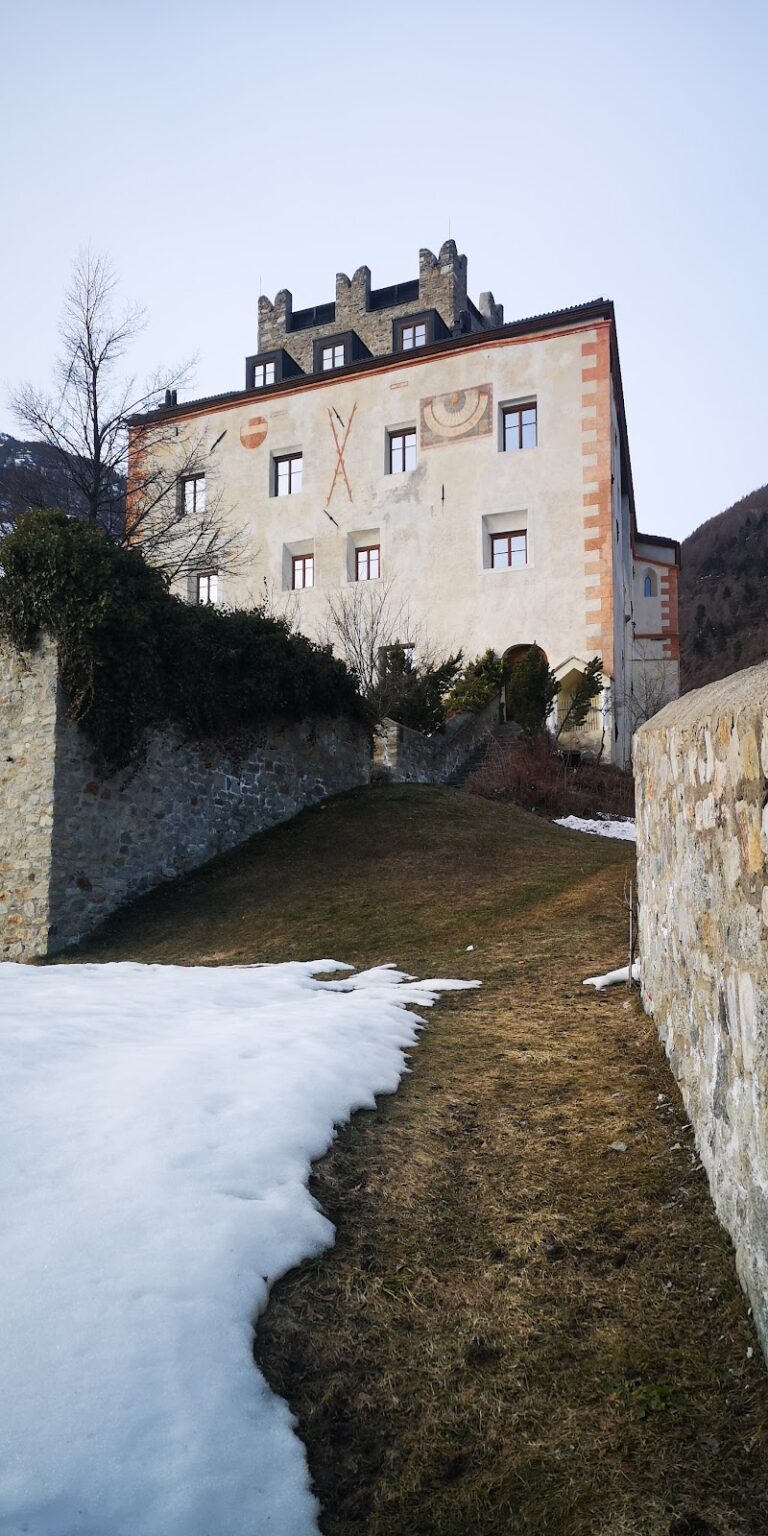
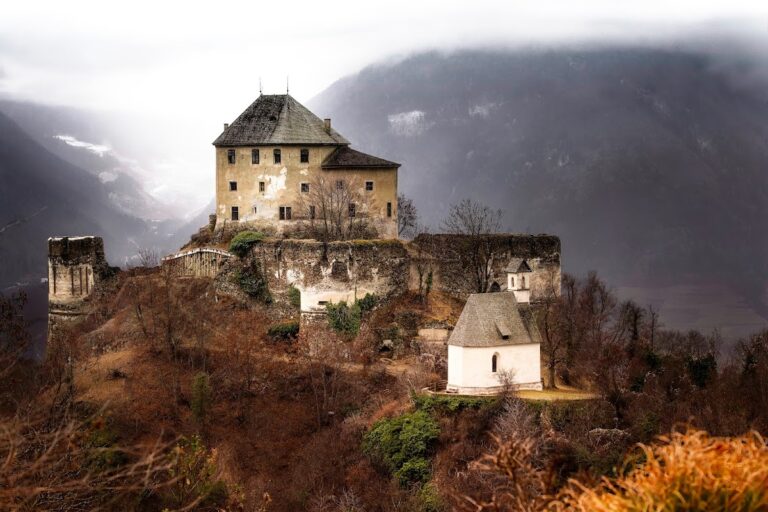
Schlandersburg is a Renaissance aristocratic residence in Italy, located in Schlanders in South Tyrol. Its Renaissance architecture, a revival of classical forms, was created around 1600 when the Counts Hendl commissioned Italian builders to enlarge an earlier rectangular, tower-like building. The present form was completed in 1609–1610, dates that survive in the masonry. Although its name and appearance suggest a castle, Schlandersburg was a residence rather than a fortress.
Creation of the Renaissance residence
The earlier tower-like structure was incorporated into the west wing during the enlargement. The redesign was probably influenced by Churburg, Dornsberg Castle, and Goldrain Castle, historic castles in the South Tyrolean area. The resulting complex expressed the Hendl family’s aristocratic status through its courtyard arrangement, towers, decorative painting, and elaborate fireplaces rather than through a primarily military function.
Changes of ownership and use
At the end of the eighteenth century, Schlandersburg passed from the Counts Hendl to the Counts Trapp. After the Trapp family sold the property, it served the Imperial-Royal District Court and other public institutions, while farming families also occupied parts of the complex. Around 1800, the estate included the residential lordly wing, a stable and barn, cellars, a courtyard, and an enclosed meadow with a fishpond.
Restoration and present role
In the mid-1980s, the private owner sold Schlandersburg to the municipality of Schlanders, which transferred it to the Province of South Tyrol in 1988. Extensive renovation began in the east wing in 1993, followed by restoration of the other wings. Since 1996, the complex has housed the Mittelpunktbibliothek Schlandersburg, while other parts accommodate the forestry inspectorate, agricultural inspectorate, vocational guidance service, Vinschgau kindergarten administration, and district employment office.
Remains
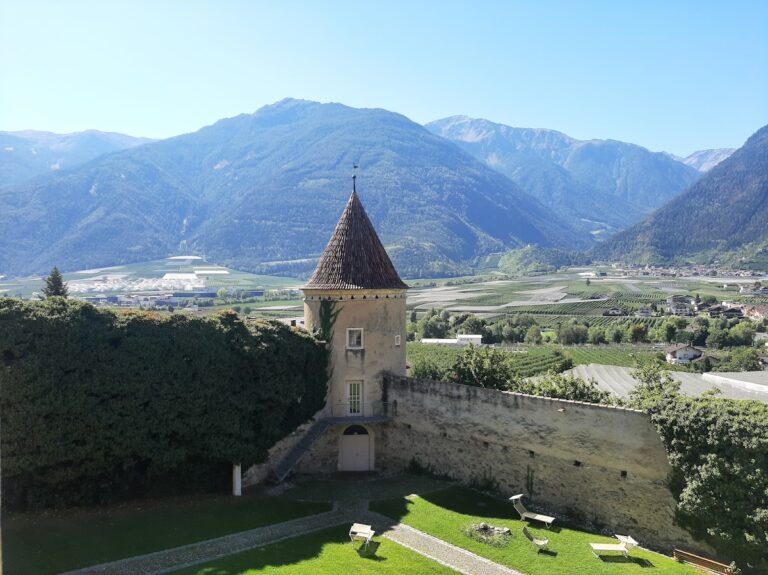
Schlandersburg is organized around a two-storey loggia courtyard, an open roofed gallery formed here with arcades. A cross-wing closes the southern side, while two square towers rise beneath pyramidal tent roofs. The eastern longitudinal wing has stepped crenellated gables. A marble-framed, round-arched gate leads toward the garden, and the southern cross-wing carries a Baroque sundial. A chimney above the same wing retains Renaissance sgraffito decoration, made by scratching through one surface layer to reveal another beneath it.
Wings, courtyard, and decorative features
West wing
The west wing incorporates the rectangular, tower-like predecessor. It has regular stonework and rendered masonry. A modern addition was attached to the west building during the restoration that followed 1993, and it now forms part of the library accommodation.
East wing and courtyard
The courtyard and the hall in the east wing are paved with river pebbles. The southern cross-wing contains a Renaissance portal framed in marble. Grisaille paintings, monochrome works usually made in shades of gray, and several fireplaces decorated with sgraffito patterns reveal the artistic ambitions of the patrons. The fireplace designs drew on examples at Ambras Castle and Goldrain Castle.
Interior furnishings and archaeological displays
Richterzimmer
On the upper floor of the east wing is the nineteenth-century room known as the Richterzimmer. Its walls bear wallpaper paintings by Leopold Strickner, who based the decoration on mezzotints and copperplate prints by Antoine Watteau, an eighteenth-century French painter.
Marble busts
The complex contains marble busts of the Habsburg emperors Leopold I and Joseph I, sculpted by Gregor Schwenzengast.
Figure menhirs
Two figure menhirs, prehistoric upright stones shaped with human features, were discovered at Vetzan in 2012. Since 2017, they have been displayed inside the Schlandersburg library.
Nearby sites