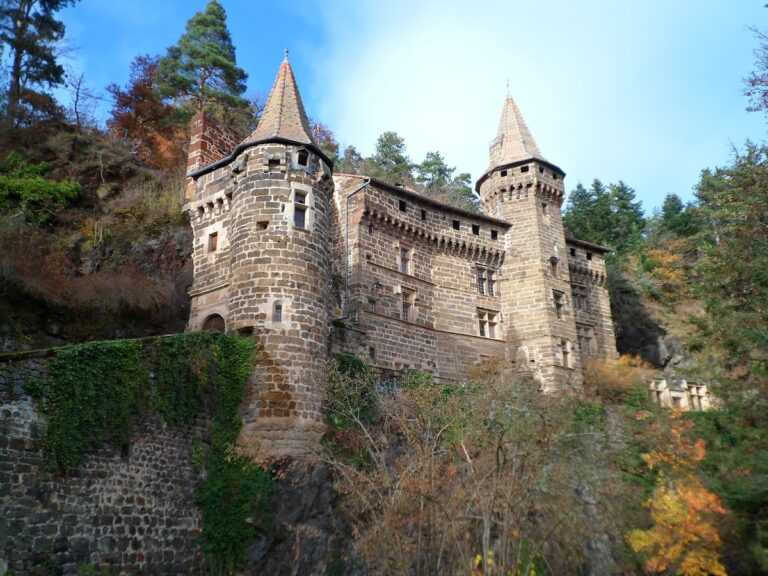
Mons Castle: A Fortified Castle and Jesuit Residence in France


Site at a Glance
- Rating
- 4.4
- Popularity
- Very Low
- Country
- France
- Primary era
- Medieval
- External website
- Open
- Eras represented
- Medieval, Modern
- Civilizations
- French
- Site type
- Military
- Remains
- Castle
On this page10 sections
History
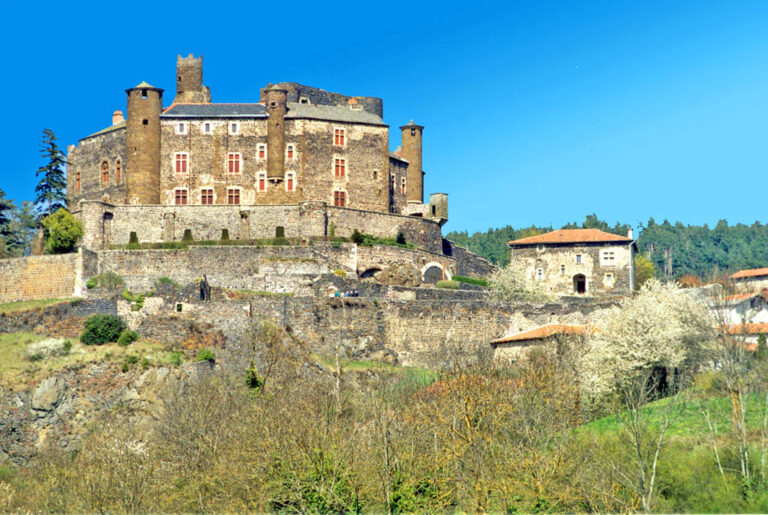
Mons Castle is a fortified castle in Le Puy-en-Velay, France, whose first recorded mention, under the name “Montz,” dates from 1299. Its medieval history connects it with the Polignac and Saint-Germain-Laprade families, while later centuries brought military occupation, religious use, architectural alteration, and changing ownership.
Medieval lords and the name Mons
Armand, Viscount of Polignac, owned the castle in the fourteenth century. A viscount was a high-ranking noble who could exercise delegated territorial and judicial authority. On the feast of Saint Matthew in 1331, Armand donated Mons to his physician, Jean de Murs, also known as Jean de Muret. Jean sold the property in 1342 to Gilbert de Saint-Germain-Laprade, Lord of Mons.
The transfer helped establish the castle’s association with the lordship of Mons. The property remained part of the local network of noble residences and fortified holdings that shaped the political landscape around Le Puy.
The Wars of Religion
At the turn of the sixteenth and seventeenth centuries, Mons belonged to the La Tour Saint-Vidal family. Antoine II de La Tour Saint-Vidal owned the castle in March 1589, when he joined the Catholic League, a Catholic political and military movement active during France’s Wars of Religion. These conflicts combined disputes between Catholic and Protestant factions with wider political and dynastic struggles.
Mons was then listed among Antoine II’s fortresses, together with Saint-Vidal, Le Villard, Montvert, Saint-Quentin, Goudet, Beaufort, and Eynac. After Antoine II died in 1591, the property remained with his family. The Duke of Ventadour occupied Mons from 1594 to 1596 while besieging Le Puy, and François de Clermont Chaste attacked the castle during the Wars of Religion. Peace at Le Puy became definitive on 5 April 1596.
Seventeenth-century ownership
Pierre Antoine de La Tour de Rochefort, Baron of Saint-Vidal, sold Mons to Hugues Spert around 1634 or 1635. Spert settled at the castle after soldiers of the Duke of Ventadour burned his castle at Volhac.
Spert died on 9 March 1650. The following year, Charles de Molette, Lord of Morangiers, unsuccessfully tried to abduct Spert’s daughter, Marie Isabeau Spert, so that he could marry her. She later married Jacques-Hubert Pradier d’Angrain, Lord of Saint-Julien and criminal lieutenant in the seneschal court of Le Puy. A seneschal court was a royal or seigneurial court with judicial authority over a defined territory.
Religious occupation and nineteenth-century changes
In 1759, Mons became a holiday and rest house for the Grand Seminary of Le Puy. A grand seminary provided advanced training for men preparing for the Catholic priesthood. The Jesuits, members of the Society of Jesus, were expelled during the French Revolution.
In 1839, after failing to purchase the privately owned Château de l’Ours because of its price, the Jesuits acquired Mons and its dependencies. Between 1840 and 1842, they repaired the castle, remodelled the exterior grounds, rebuilt the retaining wall, and added a chapel. During the same campaign, a former dovecote, a building for housing pigeons, was converted into a chapel dedicated to the Virgin Mary.
The Jesuits left during the expulsion of religious congregations in 1880. The Verac and Sinéty families subsequently acquired the property and placed it at the disposal of the diocese and the Society of Jesus. Jesuit activity at Mons resumed in 1897, ended again in 1901, and returned after 1919, when the order used the castle for Thursday rest days and summer stays.
Twentieth-century decline and preservation
In the middle of the twentieth century, the Borne and Dolaizon Company became the owner. In 1959, it began efforts to place Mons on the supplementary inventory of historic monuments, a French heritage-protection category for buildings considered historically or architecturally important without being placed in the principal classification category.
In 1962 and 1963, the property was acquired first by the White Fathers of Vals, a Catholic missionary congregation founded for work in Africa, and then by the Notre-Dame de France boarding school. The school built a sports stadium on the property.
The castle had fallen into ruin by 1995. After Mrs Soleilhant acquired it, Mons was listed as a historic monument, although the later south wing was excluded from the listing. The Association for the Safeguarding of Mons Castle and Its Environment had been founded in 1994, and in 1996 it launched a public appeal to purchase the property collectively and restore its roof.
Remains
Castle and grounds
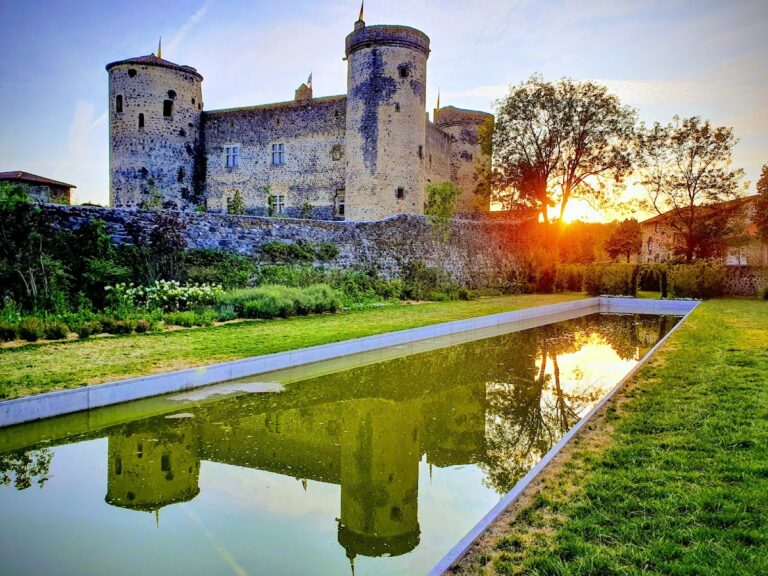
Mons survives as a fortified castle with associated dependencies. Its physical setting includes exterior grounds remodelled between 1840 and 1842 and a retaining wall rebuilt during the same period. These works formed part of the Jesuit repair campaign, which altered the immediate surroundings while preserving the property’s castle complex.
The building was described as being in ruins in 1995. The later restoration appeal concentrated on repairing the roof, indicating the priority given to protecting the surviving structure. The castle’s historic-monument listing covers the principal property, while the south wing added at a later date was left outside that protection.
Chapels and interior decoration
Two religious features belong to the nineteenth-century transformation of Mons. A chapel was added to the castle between 1840 and 1842, and a former dovecote was converted during the same campaign into a chapel dedicated to the Virgin Mary. The dovecote’s earlier function as a pigeon house was thus incorporated into the religious use of the estate.
Interior works undertaken during the twentieth century included frescoes attributed to André Bouler. Frescoes are paintings made on freshly applied plaster. These paintings form part of the later interior history of the castle, whose uses had shifted from a noble residence and fortified holding to a religious and educational property.
Later additions to the property
The property also includes the sports stadium built by the Notre-Dame de France boarding school after its acquisition of the site in 1962 and 1963. This addition belongs to the period when Mons was used by a boarding school rather than by the Jesuit communities that had occupied it during earlier phases.