Sasayama Site: A Jomon and Medieval Archaeological Settlement in Japan

Site at a Glance
- Rating
- 3.7
- Popularity
- Low
- Country
- Japan
- Primary era
- Bronze Age
- External website
- Open
- Eras represented
- Bronze Age, Medieval, Early Modern
- Civilizations
- Jomon
- Site type
- Domestic
- Remains
- House
On this page11 sections
History
Sasayama Site is a complex archaeological site in Tokamachi, Japan, preserving a Jomon settlement and a later medieval settlement associated with the warrior class. The Jomon occupation belongs to the Middle and Late Jomon periods, while the medieval remains date from the thirteenth through sixteenth centuries. Together, the layers preserve evidence of long-term settlement on a river terrace beside the Shinano River.
Jomon settlement
The earliest community at Sasayama was occupied from the early Middle Jomon period through the early Late Jomon period. Its main phase of use fell in the middle and late Middle Jomon, part of Japan’s prehistoric hunter-gatherer period, conventionally dated from roughly 14,000 BCE to the first centuries BCE. The settlement included houses, hearths, pits, buried vessels, and distinctive flame-shaped pottery, providing evidence of domestic activity and material culture during this period.
Medieval settlement
The later remains belong to a settlement used between the thirteenth and sixteenth centuries. They are interpreted as a community of the warrior class that developed around the residence or fortified residential compound of a locally powerful family. This phase extended from the Kamakura period, an era of samurai government from 1185 to 1333, into the Warring States period, when widespread political conflict preceded Japan’s unification in the late sixteenth century.
The medieval occupation included buildings supported by upright posts, smithing workshops, a well, a ditch, and pits. Objects such as ceramics, inkstones, whetstones, weapons, and coins help characterize this period of settlement and craft activity. Celadon and white porcelain were glazed ceramics, while Sue ware and Seto-Mino ware belonged to established Japanese ceramic traditions.
Investigation and heritage recognition
Seven investigations took place between 1981 and 1990 during the construction of sports facilities. Further surveys carried out from 2002 to 2004 confirmed the extent of the site, followed by three academic investigations between 2011 and 2013. Sasayama is designated as a historic site by Tokamachi City.
The excavated Jomon materials received national recognition. The collection was first designated an Important Cultural Property in 1992 and became a National Treasure in 1999. As of 2016, it was Niigata Prefecture’s only National Treasure and the only Jomon-period pottery collection with that designation. Since 2000, the annual Sasayama Jomon Fair has commemorated the designation through Jomon-themed local stalls and children’s performances organized by the Nakajo District Promotion Association.
Remains
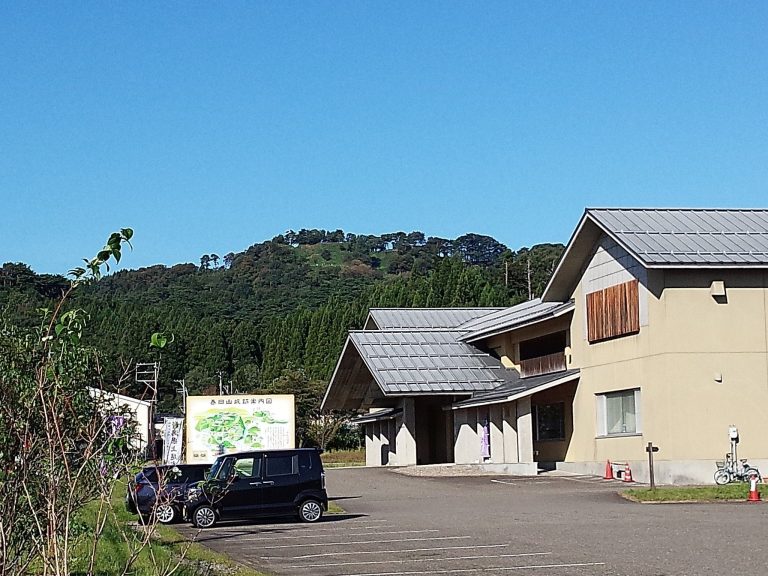
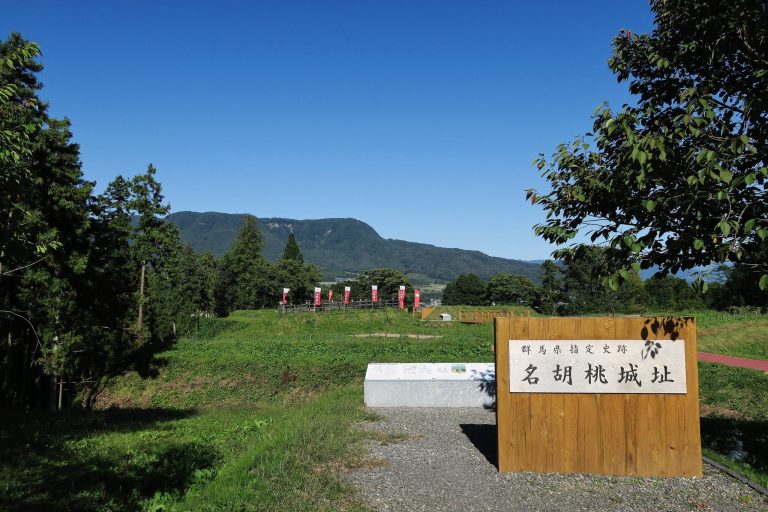
The site occupies a river terrace on the right bank of the Shinano River. Its remains comprise two superimposed settlement phases, with the Jomon features arranged around a roughly circular or horseshoe-shaped occupation area and the medieval evidence represented by post-built buildings, workshops, and associated facilities. Parts of Sasayama are maintained as an archaeological park, while a municipal athletics stadium, Sasayama Baseball Stadium, and Sasayama Jomon Hall also stand within the site. Two reconstructed pit dwellings have been installed among the remains.
Jomon settlement features
The Jomon settlement contains seven pit-dwelling remains, 105 hearths not associated with pit dwellings, five pits, one stone-arrangement feature, and 36 buried vessels. A pit dwelling was a house whose floor was dug below ground level and covered by a superstructure. The dwellings and hearths formed the settlement’s main circular or horseshoe-shaped arrangement, while the buried vessels were concentrated in a smaller central area. These features preserve the layout of a Middle to Late Jomon community on the river terrace.
Medieval settlement features
The medieval remains include 27 post-built structures, two smithing workshops, one well, one ditch, and pits. A post-built structure was supported by upright posts set into the ground rather than by continuous foundation walls. The smithing workshops indicate metalworking within the settlement, while the well and ditch formed part of its working and defensive environment. Medieval finds include celadon, white porcelain, Sue ware, Seto-Mino ware, earthenware, inkstones, whetstones, iron arrowheads, a short sword, and Northern Song coins.
National Treasure pottery collection
Deep-bowl vessels
The Tokamachi City Museum holds a National Treasure collection of 57 deep-bowl vessels excavated at Sasayama. It contains 14 flame-shaped vessels, three crown-shaped vessels, and 40 other vessels, together with 12 additional vessels associated with the collection. Flame-shaped pottery is a Middle Jomon style distributed through the Shinano River basin. Its projecting rim ornaments and overall form create the appearance of rising flames.
The flame-shaped vessels carry horizontal S-shaped decoration across the upper outer surface. Their upper handles have crest-like ornaments resembling a chicken’s comb, and a continuous row of thorn-like projections runs along the rim between the handles. Fourteen excavated vessels are classified as flame-shaped, while three without the chicken-comb-like handle ornament are classified as crown-shaped. In the terminology used for the National Treasure designation, “flame-shaped pottery” served as a broader category that included both groups.
Associated objects
The associated objects include 34 clay figurines, 26 other clay objects, 777 stone tools, 14 additional stone objects, and eight lumps of red ochre. The 12 associated vessels consist of five shallow bowls and seven small vessels. The clay objects comprise 20 clay earrings, three clay discs, and three clay triangular objects.
The 777 stone tools include 409 stone axes, 28 stone arrowheads, 13 stone spearheads, four stone drills, two stone scrapers, 268 grinding, pounding, and hollow stones, 27 stone slabs, six whetstones, one stone weight, six three-legged stone tools, three slab-shaped stone tools, and ten flake tools. The 14 other stone objects consist of three stone pendants, seven stone rods, a pumice float, a stone triangular object, and two perforated stone objects.
Flame-shaped examples
One particularly well-preserved and artistically accomplished flame-shaped deep bowl is informally known as “Jomon Snow Flame.” Reconstructed flame-shaped vessels from Sasayama are considered the most numerous among comparable sites in the Shinano River basin. Their elaborate ornament and varied associated objects give the museum collection a central place in the interpretation of the site’s Middle Jomon occupation.