Samegao Castle: A Uesugi Frontier Stronghold in Japan
Site at a Glance
- Country
- Japan
- Primary era
- Medieval
- Eras represented
- Classical, Medieval
- Civilizations
- Uesugi, Yayoi
- Site type
- Military
- Remains
- Castle
On this page10 sections
History
Samegao Castle was a mountain stronghold on Shiroyama in Japan. Its exact construction date and builder are unknown, but tradition associates its construction or major renovation in the 16th century with the Uesugi (Nagao) clan’s defenses along the North Country Highway. Built chiefly to guard against the Takeda, a rival warrior house, it served as a forward stronghold near Kasugayama Castle during the Sengoku period, an era of political fragmentation and warfare among competing military houses.
Defending the Shinano frontier
After the Fourth Battle of Kawanakajima in 1560, Takeda Shingen seized most of Shinano Province. With few natural barriers between the Shinano frontier and the Uesugi capital at Kasugayama, about 50 kilometres away, the Uesugi reinforced the border and their remaining holdings in Shinano, including Iiyama Castle, to guard against a sudden Takeda attack.
Civil war and the castle’s fall
After Uesugi Kenshin died without naming a successor, his adopted sons Uesugi Kagekatsu and Uesugi Kagetora became rivals in a civil war. Kagekatsu took Kasugayama Castle and made peace with the Takeda. Kagetora received support from the Hōjō, a powerful warrior house based in Kantō. His relationship to Hōjō Ujiyasu, a leading head of that house, is uncertain; Kagetora may have been Ujiyasu’s son or another Hōjō relative.
In April 1578, Kagekatsu launched an all-out attack on Kagetora’s headquarters at Otate. After Otate fell and Kagetora was defeated, the lord of Samegao, who had supported him, brought him to the castle and planned to help him escape toward Kantō by the last remaining route. The lord then yielded to an opposing commander’s effort to secure his defection, set fire to the second enclosure, and withdrew. Samegao fell to a general assault, and Kagetora, his wife, and their children died by suicide. The castle appears to have been abandoned soon afterward.
In 1582, after Oda Nobunaga destroyed the Takeda clan and occupied Shinano, his forces threatened the Uesugi in Echigo. The ruins of Samegao Castle were designated a National Historic Site of Japan on 28 July 2008.
Remains
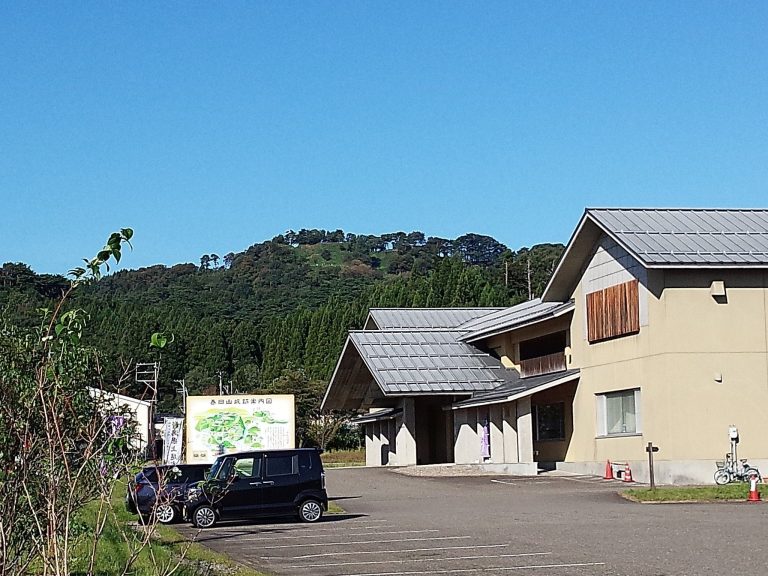
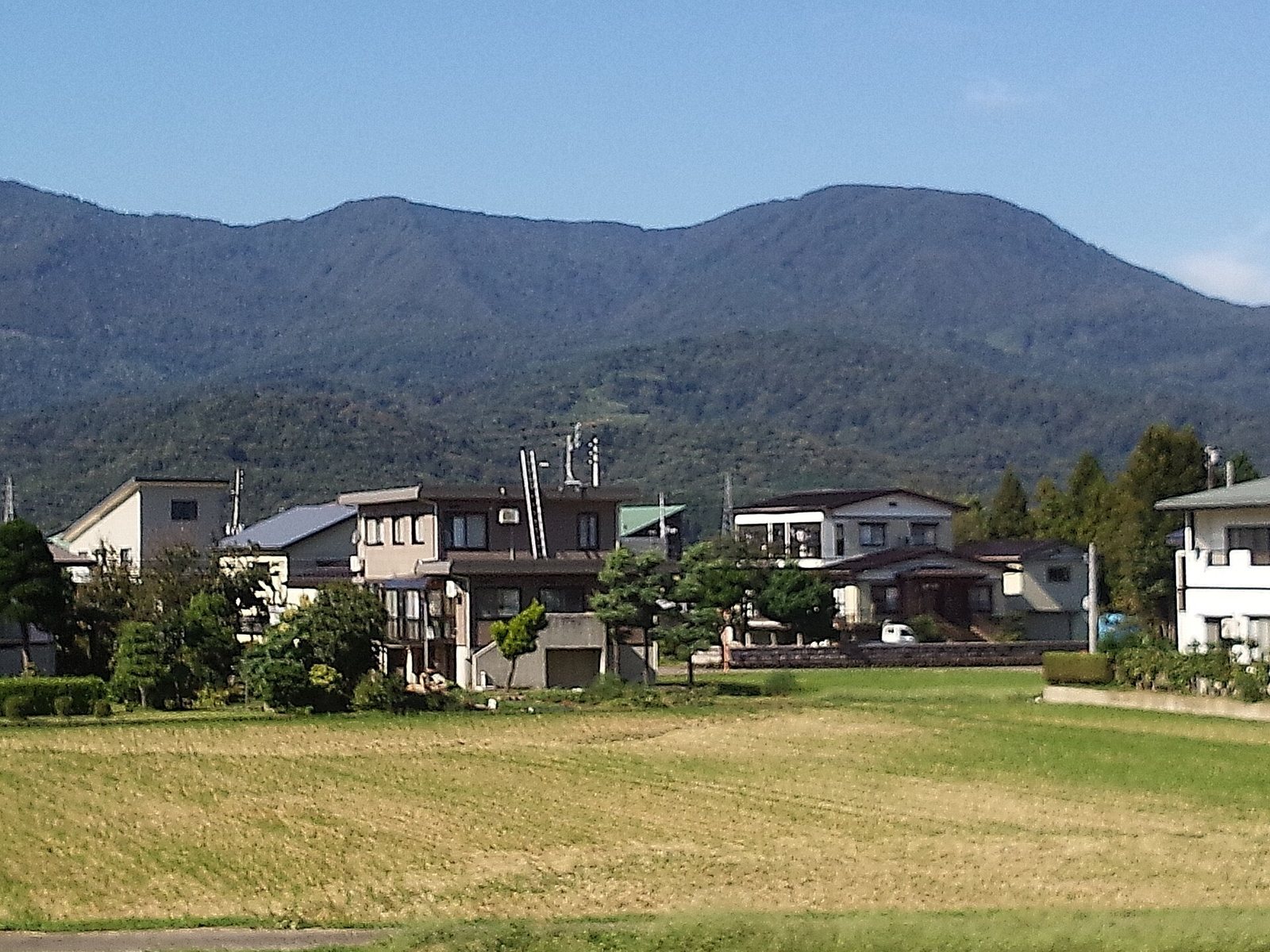
Samegao is a large mountain castle arranged in a line across the hilltop, with three principal areas extending for more than 300 metres. The 180-metre Shiroyama stands at the western edge of the Takada Plain and forms a bottleneck on the route to Shinano. The castle’s defenses include enclosures, terraces, dry moats, meaning ditches without water, and a water source.
Hill and earlier occupation
The lower part of Shiroyama contains the Hida Sites, the remains of a fortified settlement from the Yayoi period, an early era associated with settled farming and wet-rice cultivation. Their presence indicates that the area had strategic importance for more than 1,800 years.
Castle enclosures and defenses
Inner enclosure
The inner enclosure consists of several terraces, each approximately 50 metres long. Steep dry moats protect its northern edge.
Eastern entrance
The entrance lies to the east, within a fortified enclosure. Clay and earthen ramparts, dry moats, and terraces extend at intervals along a long ridge.
Southern rear area
South of the inner enclosure, the castle’s rear area consists of smaller terraces stepping up the steep hillside.
Excavated remains
Excavations uncovered traces of burned buildings and charred rice at a storehouse site. A 2008 investigation also recovered heat-damaged pottery and rice balls made without mixed grains.