Duomo di Santa Maria Assunta e San Nicolò Vescovo: The Mother Church of Montalbano Elicona
Site at a Glance
- Rating
- 4.7
- Popularity
- Very Low
- Country
- Italy
- Primary era
- Early Modern
- Eras represented
- Medieval, Early Modern
- Civilizations
- Kingdom of Sicily, Norman, Spanish
- Site type
- Religious
- Remains
- Basilica
On this page13 sections
History
Duomo di Santa Maria Assunta e San Nicolò Vescovo is a Roman Catholic church in Montalbano Elicona, Italy, whose present form was created in the seventeenth century from a Norman foundation and is built in the historical tradition of the Latin-cross church. It is the town’s mother church and largest church, dedicated to the Assumption of the Virgin Mary and Saint Nicholas the Bishop.
Norman origins and medieval development
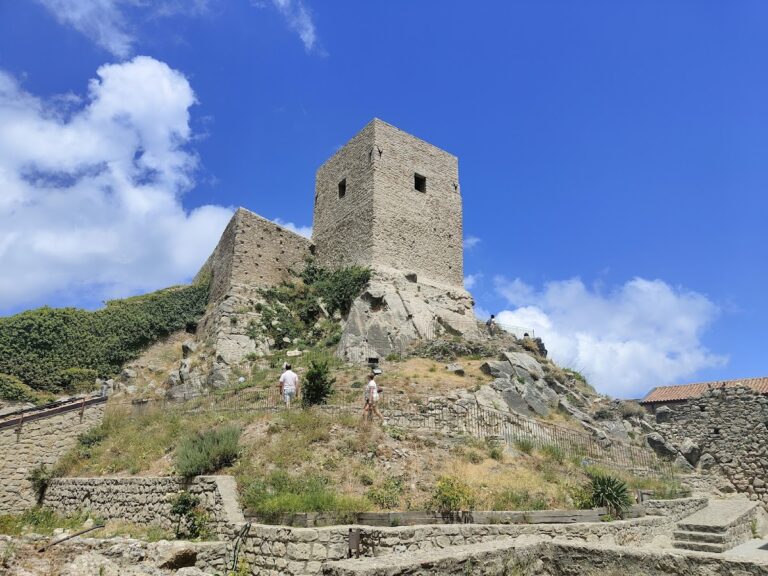
The church’s origins reach back to the eleventh century, when the site held a single-nave building with a different orientation. The Normans constructed it as a church dedicated to the Apostles Peter and Paul, in close connection with the history of Montalbano Elicona Castle.
During the rule of Frederick II, the medieval Holy Roman Emperor whose government brought major political and administrative changes to southern Italy and Sicily, the settlement received a new political arrangement and a changed urban configuration. The primitive Royal Chapel, known as the Palatine Chapel of the Holy Trinity, was complemented by a church for Saints Peter and Paul outside the town walls.
The first written reference to a church dedicated to Saint Nicholas dates from the first decade of the fourteenth century. It appears in the Rationes Decimarum, ecclesiastical records used to account for the collection of tithes. This reference reflects the later dedication that became central to the church’s identity.
The seventeenth-century reconstruction
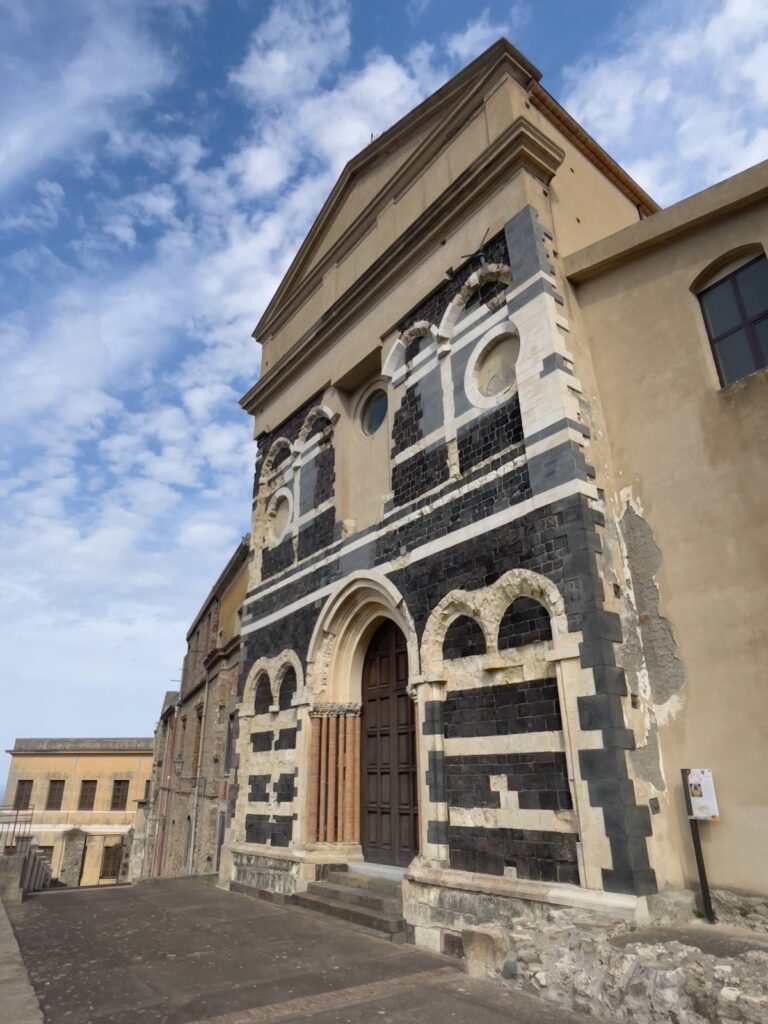
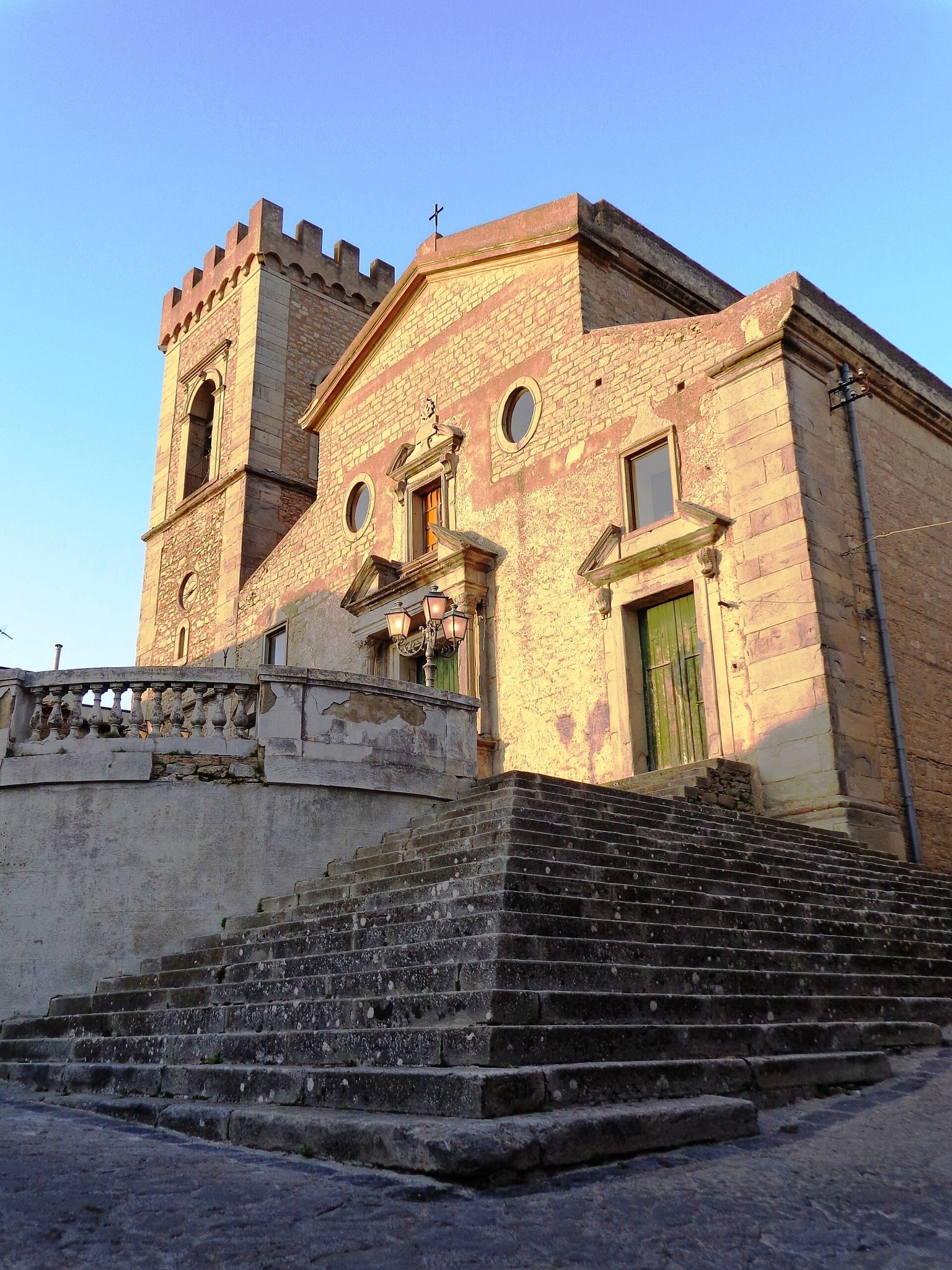
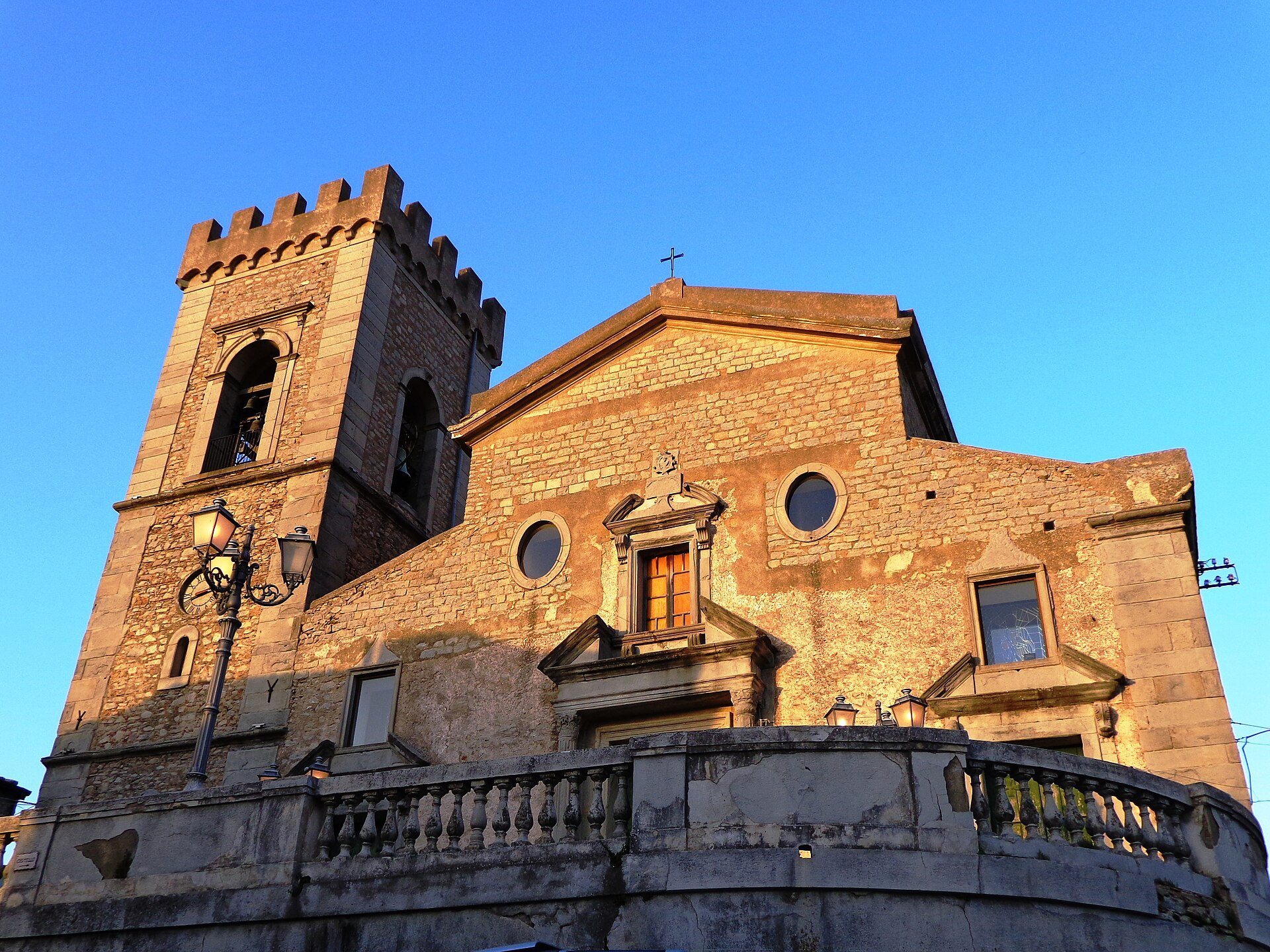
The building was reconstructed and enlarged in 1646. Two lateral naves were added to the central nave, and the axis of the church was reversed. This transformation created the monumental facade at the top of a broad staircase, giving the building the imposing approach that it retains today. The present church was consecrated in the same year.
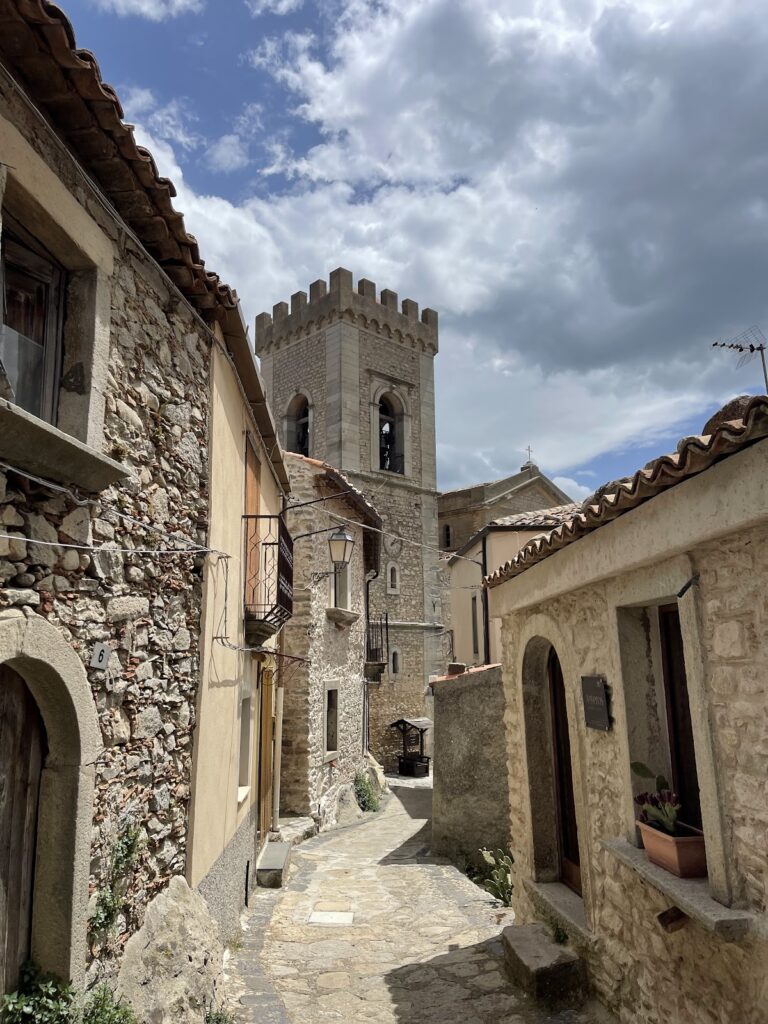
The campanile was built between 1665 and 1673. Its commission is recalled by a marble inscription in the lower part of the tower, while battlements in its upper design temper the severity of the structure. The recorded archpriests include Placido di Fiore and Leonardo Saccone, both associated with the seventeenth century, and Benedetto Rotella.
Parish church and minor basilica
The church is the parish church of Santa Maria Assunta and San Nicolò Vescovo within the Montalbano Elicona vicariate and archpriesthood. An archpriest is a senior priest responsible for ecclesiastical administration and clergy within a parish or group of parishes. The church belongs to the Archdiocese of Messina, Lipari and Santa Lucia del Mela and is under the patronage of the Sacred Heart.
On 17 September 1992, the church was consecrated to the Blessed Virgin Mary Assumed into Heaven, an event commemorated by a marble inscription inside the building. In 1997, Pope John Paul II elevated it to the rank of minor basilica. This is a special papal designation recognizing a Catholic church’s religious and historical importance, distinct from the category of major basilicas associated with Rome. A second marble inscription reproduces the papal bull establishing the elevation.
Remains
Plan, facade, and central nave
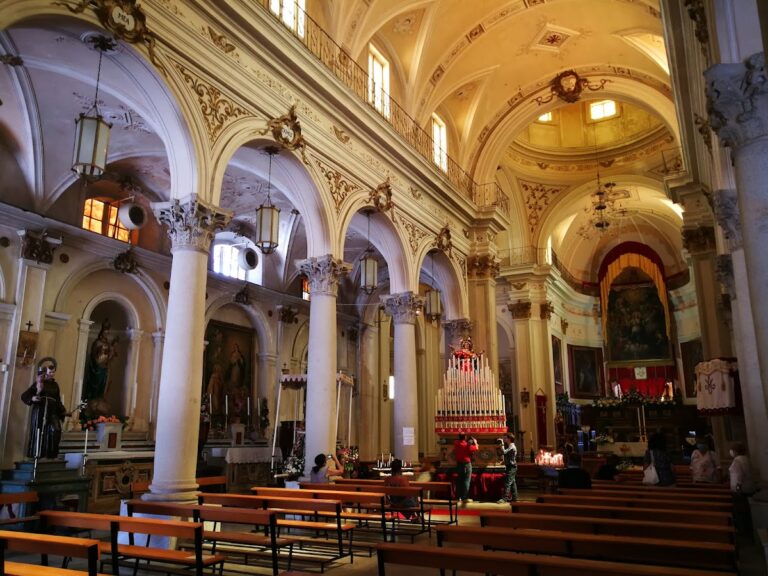
The church stands in Piazza Duomo with its principal facade facing the square. A broad staircase rises to the entrance and reinforces the monumental effect of the facade. Inside, the building follows a Latin-cross plan, meaning that a long central axis is crossed by a shorter transept. A broad central nave is flanked by two lateral naves, and robust pillars carrying large round arches divide the interior into three longitudinal spaces.
The central nave has a trussed roof with carved and painted wooden beams. Friezes, rosettes, and stucco work decorate its walls, including stucco medallions with biblical figures. The church also contains a marble main altar with a baldachin ciborium and a marble pulpit.
Lateral naves and side altars
South lateral nave
The right, or south, lateral nave contains decorated wall altars surmounted by paintings associated with the Sicilian school. Its first bay contains the marble inscription reproducing the papal bull that elevated the church to a minor basilica. The second has a painting of the Virgin and Child with saints, while the third presents the Trinity with the Sicilian female saints Lucia, Agatha, and Rosalia. The south-side entrance occupies the next bay, followed by a painting of the Virgin and Child with saints and the Souls in Purgatory, and an altar painting depicting saints.
North lateral nave
The left, or north, lateral nave has altars with glass-fronted niches containing statues of saints. Their marble frontal panels are elaborately worked and feature refined central medallions. Each altar has a tabernacle of a different shape on its shelf. The first three altar superstructures share a design made at the same time, with pilasters, pediments or symmetrically broken-arch pediments, and an intermediate frieze. The altar dedicated to Saint Joseph is older, richer, and more elaborate.
The first north-side bay contains the marble inscription commemorating the 17 September 1992 consecration to the Assumption of the Virgin Mary. The second bay has an altar dedicated to the Virgin and Child, and the third an altar dedicated to Saint Anthony of Padua. The fifth bay contains an altar dedicated to the Sacred Heart, with an opening leading to the sacristy, while the sixth has an altar dedicated to Saint Joseph and the Child Jesus.
Chapel of the Most Holy Crucifix
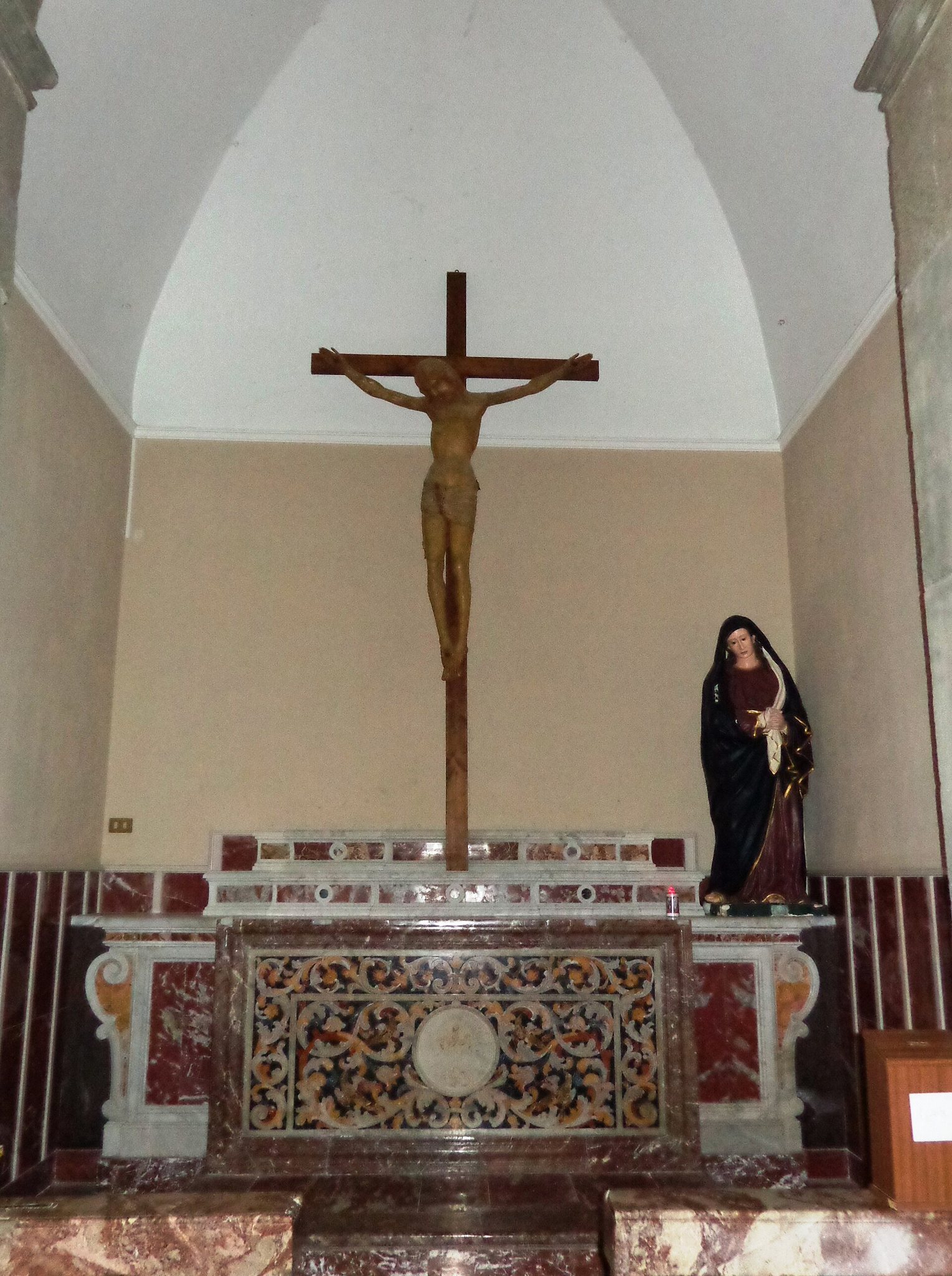
The fourth north-side bay contains the Chapel of the Most Holy Crucifix. Its altar has an elaborate marble inlay frontal panel with a central medallion. Above it stands a wooden Crucifix from the early sixteenth century, attributed to the Sicilian school and the workshop of Giovannello de li Matinati. A papier-mache statue of Our Lady of Sorrows stands to the left.
Minor apses and principal devotional works
Chapel of Saint Nicholas
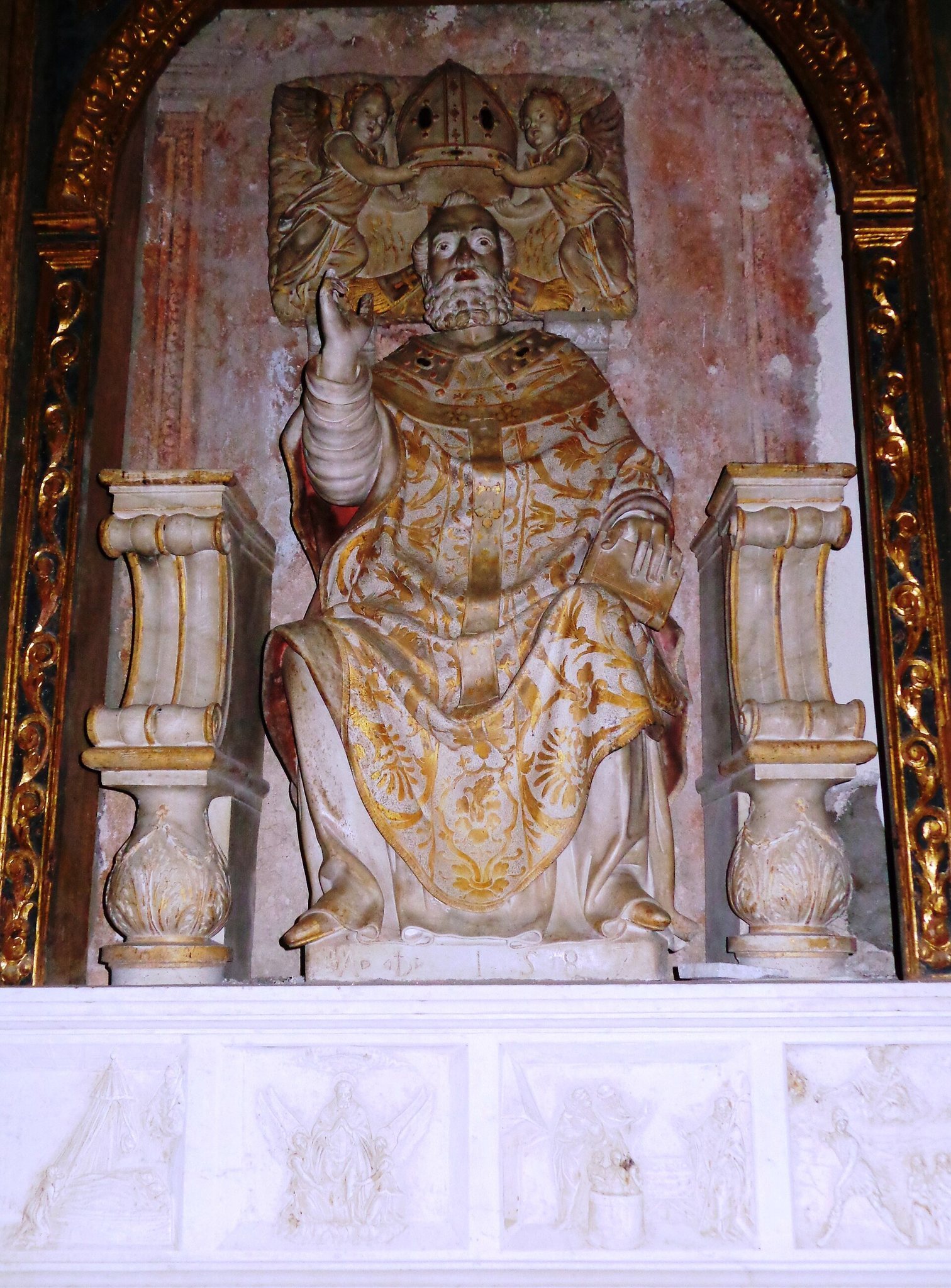
The right minor apse contains the Chapel of Saint Nicholas. Its enthroned statue of the patron saint was made by Giacomo Gagini in 1587. Gagini was a sixteenth-century Sicilian sculptor associated with a tradition known for marble sculpture and architectural altarpieces. Four relief panels at the base of the seat show episodes from the saint’s life.
The chapel’s elaborate structure frames the arch. Its columns have Ionic bases, shafts with vegetal carving and Doric fluting, and Corinthian capitals. Above them is a richly moulded entablature with gilded details, anthropomorphic figures at the sides, and winged putti heads on the buttresses and in the spandrels. Saint Nicholas sits on an episcopal throne enclosed by small columns and armrests, shown giving a blessing. His chasuble has a realistic damask effect, with floral and vegetal motifs emphasized by gilding and colored details representing accessories and precious stones. Behind the figure, a marble relief shows winged putti placing a bishop’s mitre on the saint’s head.
Chapel of the Most Holy Sacrament
The left minor apse contains the Chapel of the Most Holy Sacrament. Its marble aedicule, a small architectural shrine or framed structure, follows the Gagini style. Two angels stand beside the tabernacle, while reliefs occupy an architectural perspective framed by pilasters decorated with raised arabesques. A lunette at the top depicts God the Father among adoring putti.