Santuario della Madonnina: A Marian Shrine in Verolengo, Italy
Site at a Glance
- Popularity
- Low
- Country
- Italy
- Primary era
- Modern
- Eras represented
- Early Modern, Modern
- Civilizations
- Duchy of Savoy, Kingdom of Sardinia
- Site type
- Religious
- Remains
- Sanctuary
On this page8 sections
History
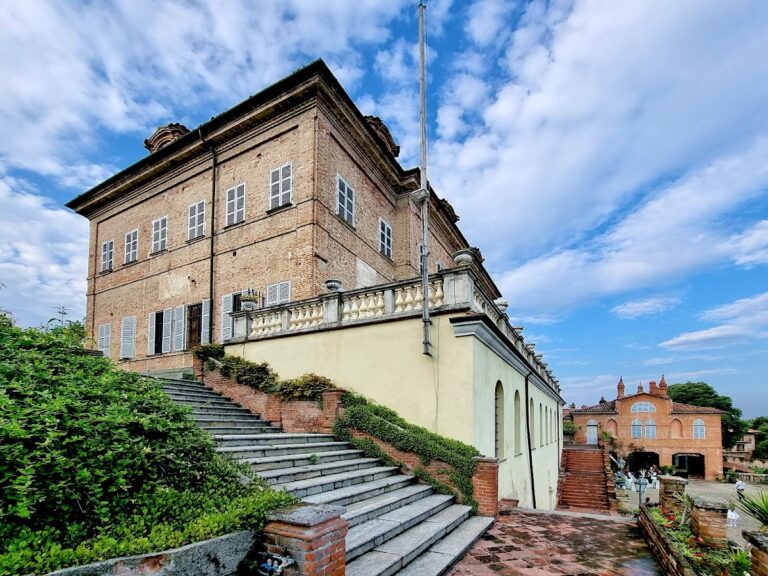
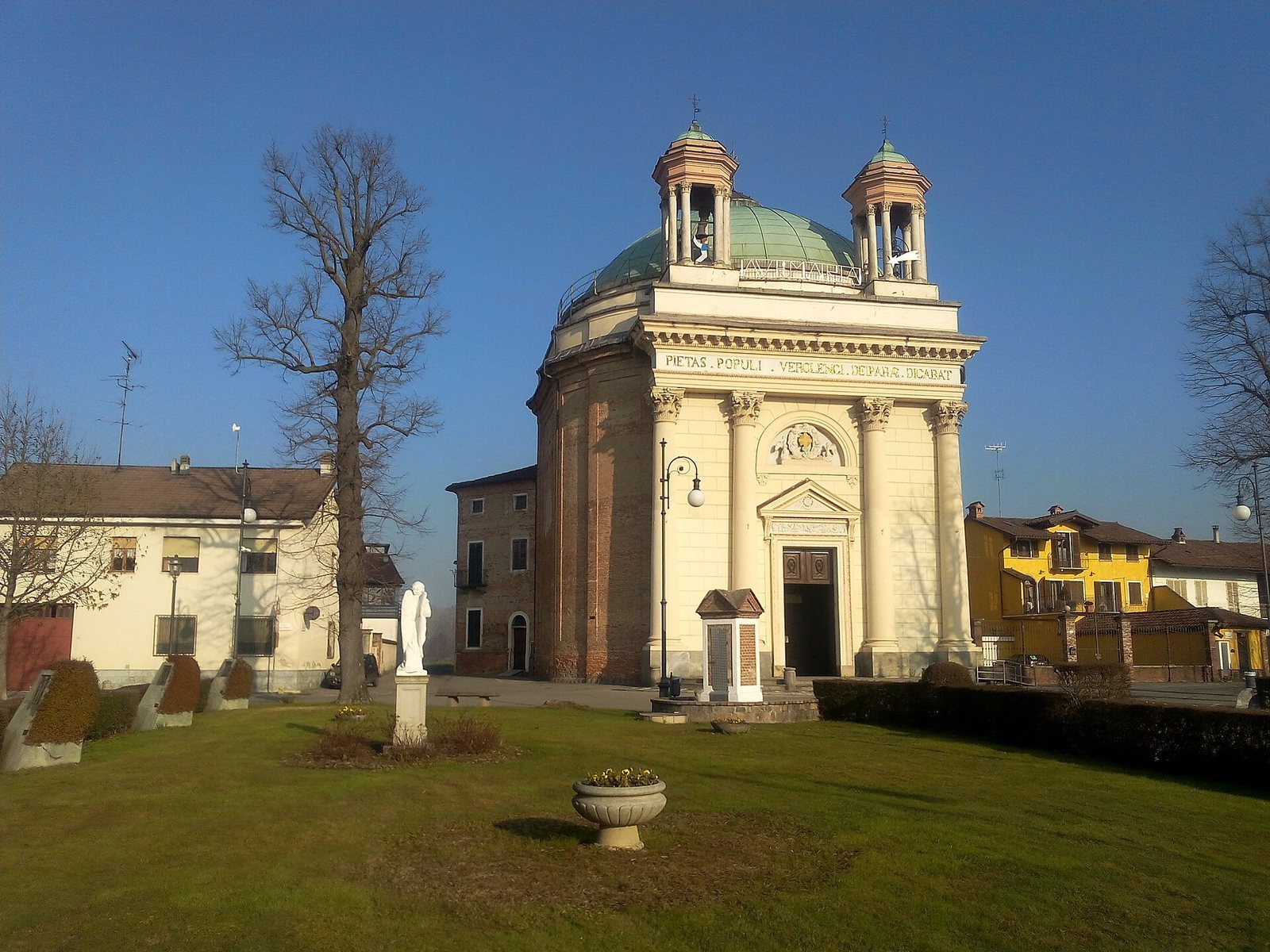
Santuario della Madonnina is a Catholic Marian shrine in Verolengo, Italy. Its present form dates to a nineteenth-century reconstruction in the Neoclassical style, which draws on ancient Greek and Roman architecture. The shrine became a pilgrimage destination after reports of apparitions and healings.
Origins and reported visions
Local tradition places an event associated with the shrine’s beginnings in 1609. The priest Giovanni Bracco was riding along the old road to Crescentino when his horse bolted, throwing him and dragging him with one foot caught in a stirrup. Bracco prayed to the Virgin Mary, and the horse stopped at Veuchio. He escaped physical injury, although his clothes were damaged.
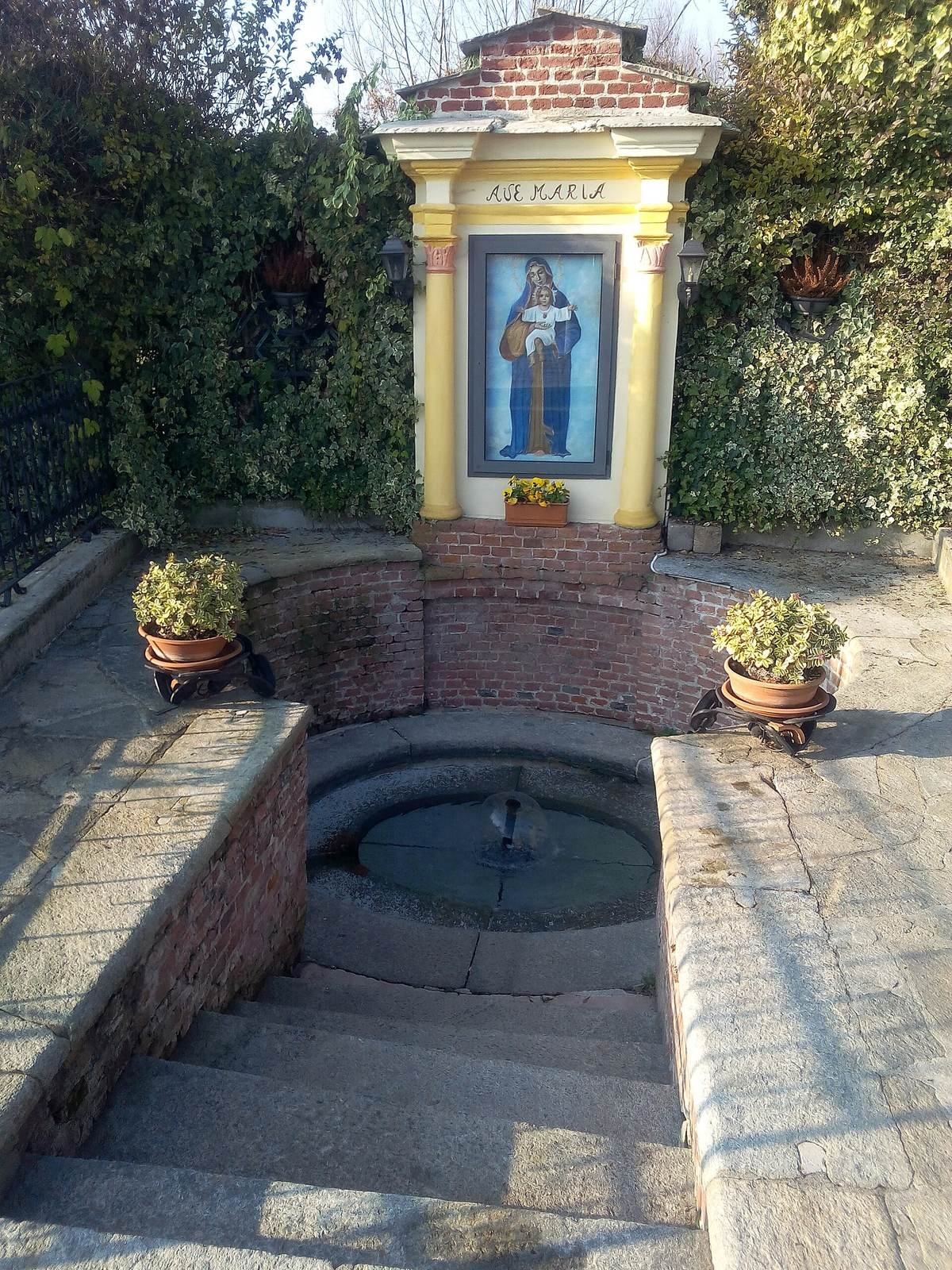
The next day, Bracco raised a devotional pillar in gratitude. He prayed there regularly, and on feast days a group joined him after Vespers, the evening prayer service, to recite Marian litanies, prayers formed from repeated invocations to Mary. The gatherings continued after his death. A local healing tradition also recounts that Pietro delle rocciole, a disabled beggar, came to Verolengo after hearing of recoveries among pilgrims. As he prayed at the pillar, he felt his legs regain strength, put aside his crutches, and gave thanks. Worshippers who knew him witnessed the event.
On 8 September 1690, seven-year-old Maddalena Bracco and Agata Peretti said they saw a grand lady circling the pillar. They reported the vision again on each of the next two Sundays. After further examination, the reports drew increasing attention. News of the visions and healings brought pilgrims from Monferrato, Acqui, Alessandria, Chieri, the Aosta Valley, and Switzerland.
Church construction and interruption
Growing crowds and offerings led to plans for a church able to hold at least 500 people. Construction began in 1698, and the first Mass was celebrated on 25 March 1699. As attendance increased, a larger sanctuary designed for 3,000 people was planned. Its first stone was laid on 13 June 1775.
Work soon stopped after the deaths of the benefactors, the counts Verulfo, and amid political and military upheaval following the French Revolution, the late-eighteenth-century transformation of France that also unsettled politics across Europe. Napoleon Bonaparte, the French military and political leader who became emperor, ordered religious property confiscated and sold, including property at Verolengo.
Nineteenth-century completion and administration
After Napoleon’s defeat and, later, his death in 1821, attention returned to completing the sanctuary. In 1834, the parish priest Francesco Umberto of Chivasso restarted the work and commissioned a new design from engineer Bossi. The walls stood about six or seven metres high, and the project required approximately 150,000 more bricks. The benefactor Giuseppe Roggero undertook the cost.
Gianni Ghiggia recalled that his great-great-grandfather Domenico, an experienced brickmaker, moved from Scarmagno to Verolengo with his wife, Margherita Capello, and their children. Domenico bought clay-rich land known as the Roletto Plateau in the Torrazza hamlet and established the first Ghiggia brick kiln there to supply the construction. The hilly land, extending from Torrazza’s church to beyond Rondissone, was then mainly covered by old oak trees and was inexpensive because it was poorly suited to common local crops.
Gaetano Effisio Viora became parish priest in 1847 and advanced the project. On 13 September 1851, Bishop Luigi Moreno of Ivrea arranged for the transfer of sacred relics, physical remains of saints or objects associated with them and venerated in religious practice. The sanctuary was solemnly consecrated the following morning, on the eve of the feast of the Holy Name of Mary.
By 1851, the sanctuary’s administration included the parish priest as president, the mayor, three elected administrators, and the Prior for that year. Viora’s regulations provided for the appointment of the next year’s Prior and Prioress, annual officers of the sanctuary, on the second Sunday of September during solemn Vespers and a blessing.
Remains
The Neoclassical sanctuary was built around the earlier church, which remained intact and in use during construction. Its surviving features include the earlier church’s altar, a dome above the Holy of Holies, the particularly sacred inner sanctuary, and numerous devotional offerings.
The earlier church and devotional pillar
The original pillar bore an image of the Virgin Mary holding the infant Jesus on one side and a heart on the other. The painting was transferred to the altar of the first church.
Dome and frescoes
A dome was raised above the Holy of Holies in 1851. Painter Amedeo Augero decorated it with two frescoes, wall paintings made on wet plaster. One depicts the prophet Daniel. The priest Don Dino Mantovani identified Viora’s face as the model for Daniel’s figure.
Votive offerings
The sanctuary contains numerous votive offerings, gifts made in gratitude for perceived divine favors. Most are paintings showing dangers from which worshippers believed the Virgin had saved them. Their subjects include workplace and road accidents, recovery from illness, and wartime experiences.