Sanctuary of the Dead of the Fossetta: A Place of Plague Devotion in Ghedi, Italy
Site at a Glance
- Popularity
- Very Low
- Country
- Italy
- Primary era
- Early Modern
- Eras represented
- Early Modern, Modern
- Civilizations
- Italian, Venetian
- Site type
- Religious
- Remains
- Sanctuary
On this page8 sections
History
The Sanctuary of the Dead of the Fossetta is a Catholic sanctuary in Ghedi, Italy, devoted to people who died in plague epidemics. Its present church developed from a chapel associated with plague burials, and construction of the larger sanctuary began in 1683. The site became a focus of devotion to the dead, who were revered as martyrs even though they were not saints, and whom people asked to intercede for the living.
Burial traditions and the plague dead
Finds from the second millennium BC and Roman-period tombs point to ancient settlement at Ghedi. The sanctuary’s beginnings have also been connected with older burial customs. From the sixth century AD, people increasingly buried the dead near martyrs’ graves, while plague victims continued to be buried separately. Fear of contagion and the belief that epidemics might express divine will led communities to place plague graves outside settlements.
At Ghedi, plague victims were buried at San Lorenzo, Cherubietti, and the site of the present sanctuary. An inscription associates the chapel with a plague in 1630, while the particularly severe epidemic of 1513, nicknamed the Black Death, has also been proposed as the one it commemorates. The victims had been buried outside consecrated ground without funeral rites. A local legend tells that, years later, farmers irrigating fields at night saw processions leave Cherubietti, pass through the town and cemetery, and arrive at the sanctuary, as if the dead were pleading for a proper burial. The chapel gave expression to their veneration. Devotion there came to center on asking the dead to intercede for the living, rather than on praying for the dead’s salvation.
Church construction and popular devotion
In 1665, remains from the plague graves at San Lorenzo and Cherubietti were moved to an ossuary in front of the altar, providing those dead with a formal burial. The sanctuary is dedicated to Saint Roch, a Catholic pilgrim venerated as a protector against plague. According to his life story, he began travelling as a pilgrim after his father’s death, contracted plague at Piacenza, and recovered after withdrawing to a wood. He later died in prison, where he had been held on suspicion of being a spy. His dedication at the sanctuary is recorded after Bishop Giorgi’s pastoral visit in 1676.
In 1682, local people and members of a confraternity, a lay religious association organized around a shared devotion, received the bishop’s permission to build a church larger than the existing chapel. Work began the following year and produced the sanctuary in its present form. Church authorities long resisted the project, regarding the popular devotion as superstition. In 1708, Bishop Bodoer ordered the Fossetta closed, but the devotion continued and spread through the province of Brescia. People believed the dead could heal the sick and livestock and help crops to thrive.
Modern devotion and care
In 1916, Ghedi’s people raised the bell tower as a communal votive offering, expressing thanks to the dead of the Fossetta, who were believed to watch over local soldiers at the front. No servicemen from Ghedi had died during the first years of the First World War.
Lorenzo Tracconaglia became the priest serving the sanctuary during the 1920s. People credited him with healing powers like those attributed to the dead: he blessed silkworms, drove away mice, and was also said to perform exorcisms. In a 1938 letter to the bishop, he complained of his low pay and reliance on relatives for sacristan duties. He also described opening the pit for people seeking miracles in return for small tips.
In 1940, Bishop Giacinto Tredici ordered the pit permanently closed and the skull-shaped votive offerings removed from the church walls and kept in the sacristy. He also wanted the statue of Saint Teresa of the Child Jesus removed. Tracconaglia continued to care for the sanctuary until 1967, although whether he reopened the pit is unclear. The custom of lighting candles and bringing sick people’s handkerchiefs or clothing to the pit continued.
After Tracconaglia’s time, the sanctuary fell into neglect. A permanent popular committee formed in 1978 to care for the chapel, with no opposition from parish priest Giacomo Pernigo. The committee reorganized the annual feast of Saint Roch, held on August 16. Saint Roch is now Ghedi’s patron, and a restoration project also began.
Remains
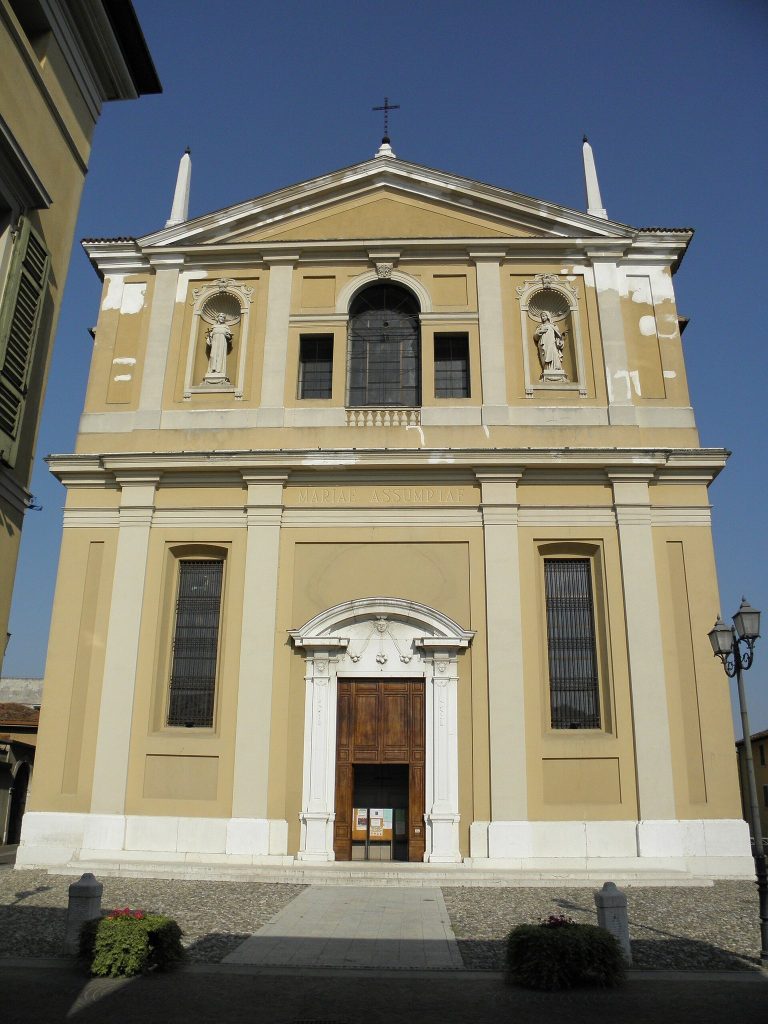
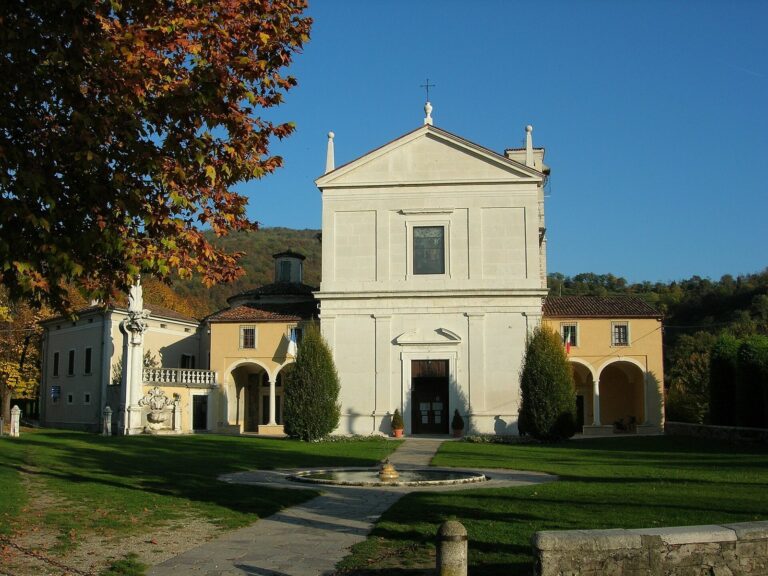
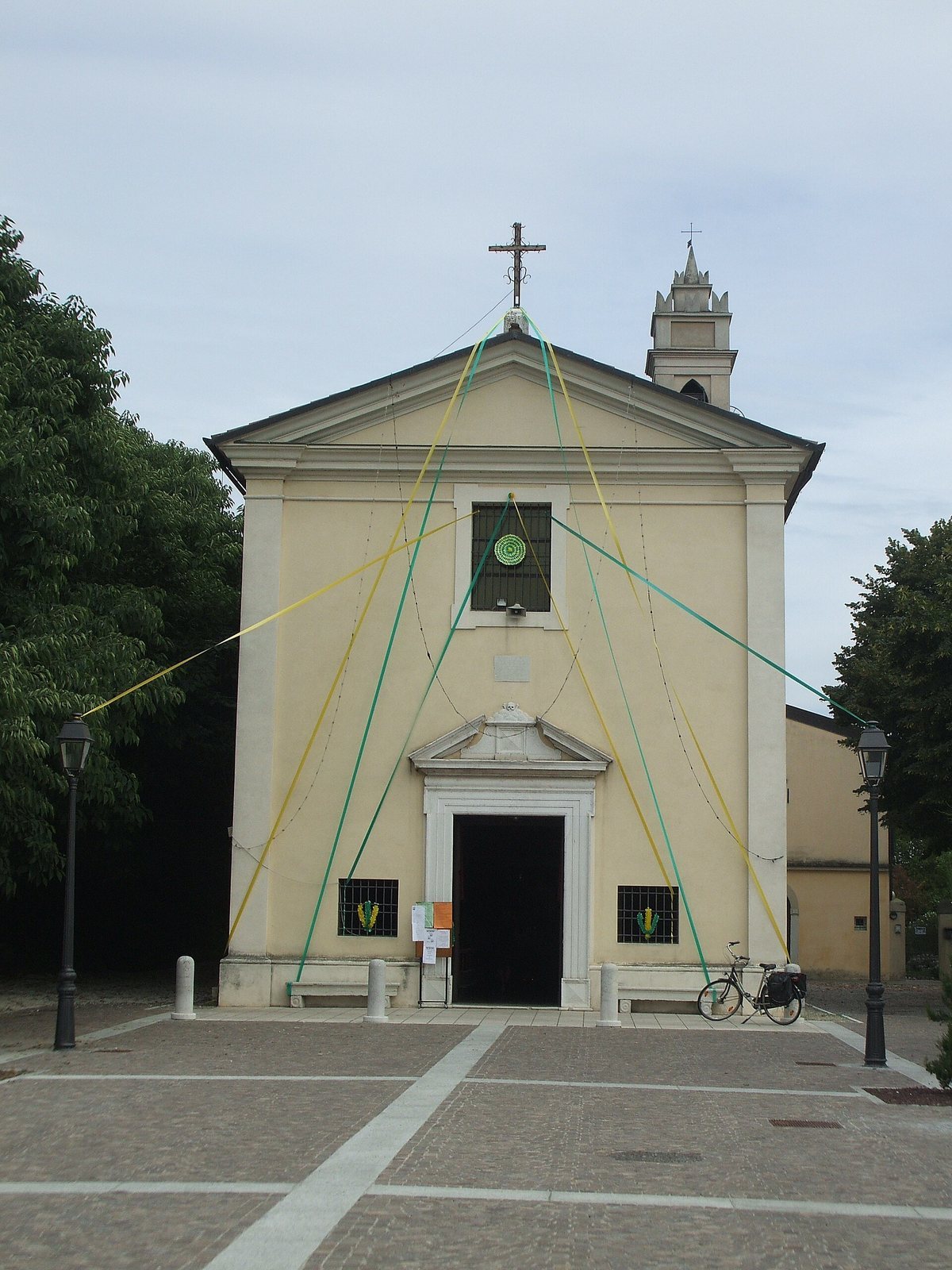
The sanctuary is a small, single-nave church. Its gabled front, bell tower, altar, and collection of votive offerings preserve the physical forms of worship associated with the site.
Church plan and exterior
The front has a triangular upper section outlined by a projecting cornice, a doorway topped by a broken pediment, a rectangular window at the center, and two smaller windows beside the entrance. The bell tower, erected in 1916, is built of white Botticino stone, a pale limestone.
Interior and altar
A band running around the interior carries a reference to 2 Maccabees 12:46, a biblical passage concerning prayer for the dead. The ossuary stands in front of the altar and holds the remains transferred from the plague graves. The altarpiece by Zanne Bozza depicts the Madonna of Loreto, a title of the Virgin Mary, with the Child; Saints Sebastian, Gotthard, Roch, Martin, and Vincent appear below. Cesare Bertolotti painted The Glory of Saint Roch in 1903. During restoration work in the 1980s, sculptor and stonemason Bruno Archetti laid marble paving in the altar area and forecourt and donated a marble altar and lectern. A room beside the church, the sacristy, contains a statue of Saint Teresa of the Child Jesus, a French Carmelite nun and Catholic saint.
Votive offerings
About sixty painted votive tablets have been found at the sanctuary. A votive offering is an object given in fulfillment of a vow or in thanks for a favor believed to have been granted. The tablets date from the 1600s to the 1900s; the latest is a parchment from 2004 thanking the dead of the Fossetta for a favor received. Restored in 1980 by the ENAIP school in Botticino, an Italian vocational-training organization, they are now kept in a room adjoining the sacristy. The church walls were once said to have been covered with tablets. Other offerings included silver or gold hearts, jewelry, crochet work, and fabric flowers.
The paintings show either a petitioner appealing to a saint or the event in which a miracle was believed to have occurred. They usually include the petitioner and the saint, while tablets from Ghedi also feature skulls representing the Fossetta dead. Subjects include accidents involving carts, illnesses in adults and infants, family blessings, shootings, and other mishaps. Inscriptions may name the recipient and sometimes their town, describe the favor sought, or use abbreviations such as PGR (“for a favor received”), VFGR (“vow made, favor received”), GF (“favor granted”), and GR (“favor received”). Together, the tablets offer glimpses of changing daily life, including agricultural tools, medical and surgical care, transport, customs, and occupations.