Chapel of San Bernardino: A Cemetery Chapel in Lusernetta, Italy
Site at a Glance
- Popularity
- Very Low
- Country
- Italy
- Primary era
- Medieval
- Eras represented
- Medieval, Early Modern, Modern
- Civilizations
- Duchy of Savoy, Italian
- Site type
- Religious
- Remains
- Chapel
On this page10 sections
History
Foundation and parish history
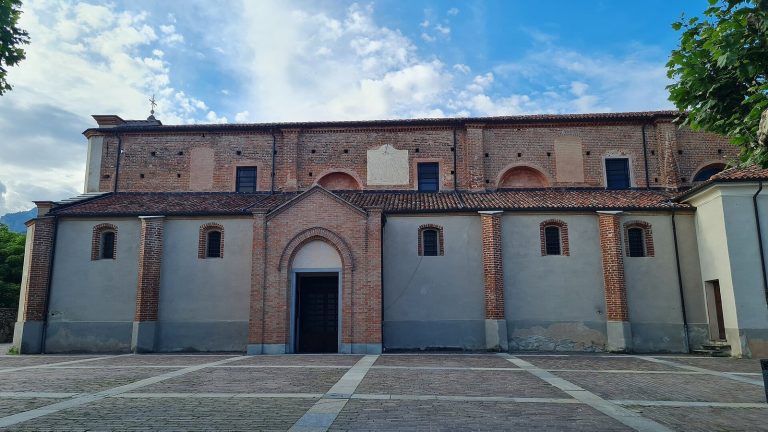
The Chapel of San Bernardino is a Catholic chapel in the cemetery at Lusernetta, Italy. Built as a votive chapel around 1450–1520, it was consecrated during the sixteenth century. Dedicated to Bernardino of Siena, an Italian Franciscan friar and preacher, it recalls his efforts to convert the Waldensians, a Christian movement that began in the medieval period.
In 1584, the chapel became the family chapel of the Counts of Rorà. It remained under the parish of Bibiana until 1784, when it was separated from that parish as Lusernetta formed its own parish.
Cemetery reorganization and restoration
During the late nineteenth century, Count Enrico Morozzo and his wife, Irene Veraris di Castiglione, nobles of Turin, reorganized the cemetery. The chapel’s facade was partly reconstructed after its first building phase. Restoration work in the late 1990s brought a fresco of Saint George to light.
Remains
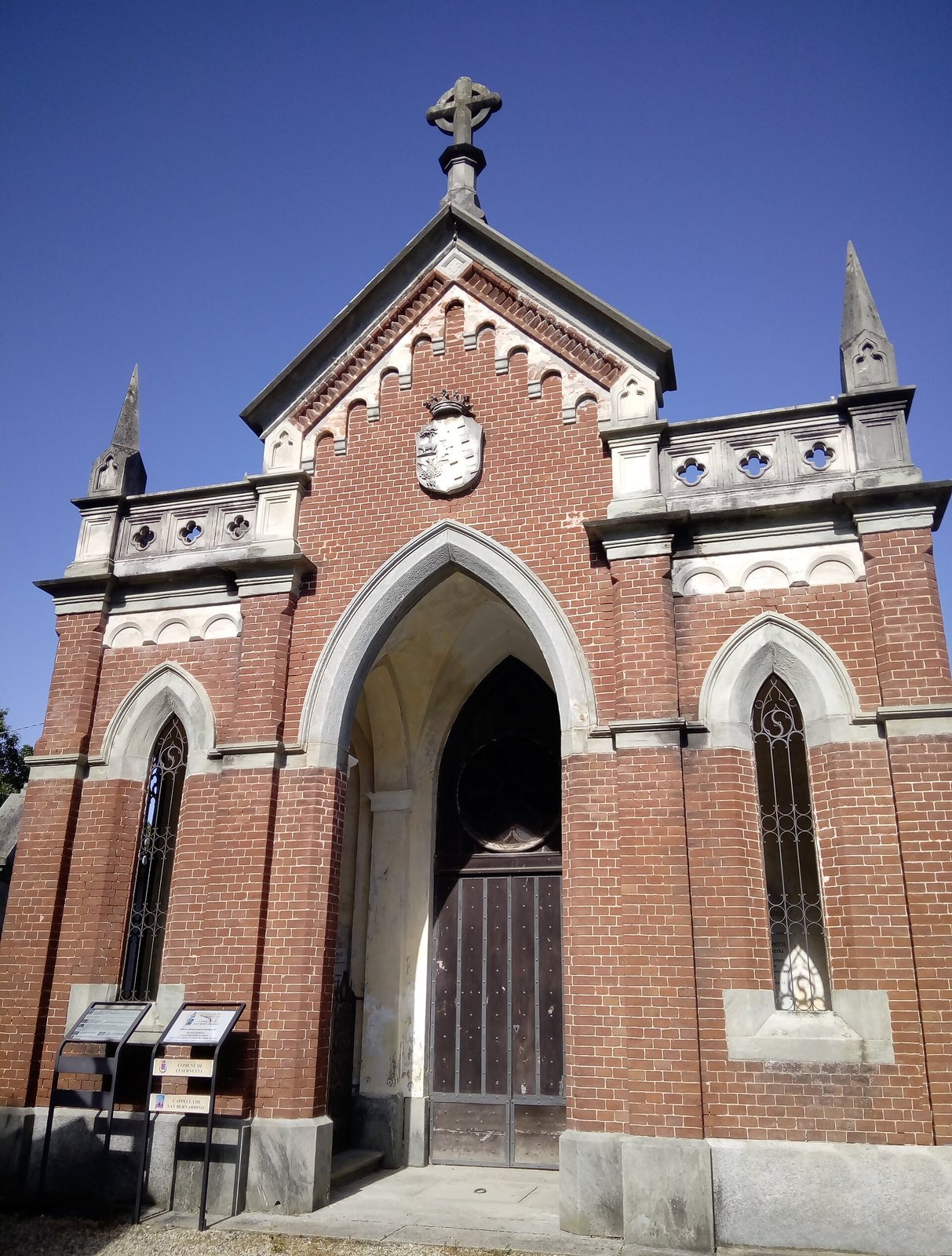
The chapel has a single main hall, a Neo-Gothic facade, and a square Gothic apse, the sanctuary end of the building. The apse has a barrel vault, a continuous arched ceiling, decorated with religious paintings.
Facade
The partly reconstructed facade bears a coat of arms associated with Count Enrico Morozzo and Irene Veraris di Castiglione.
Interior
Apse and vault paintings
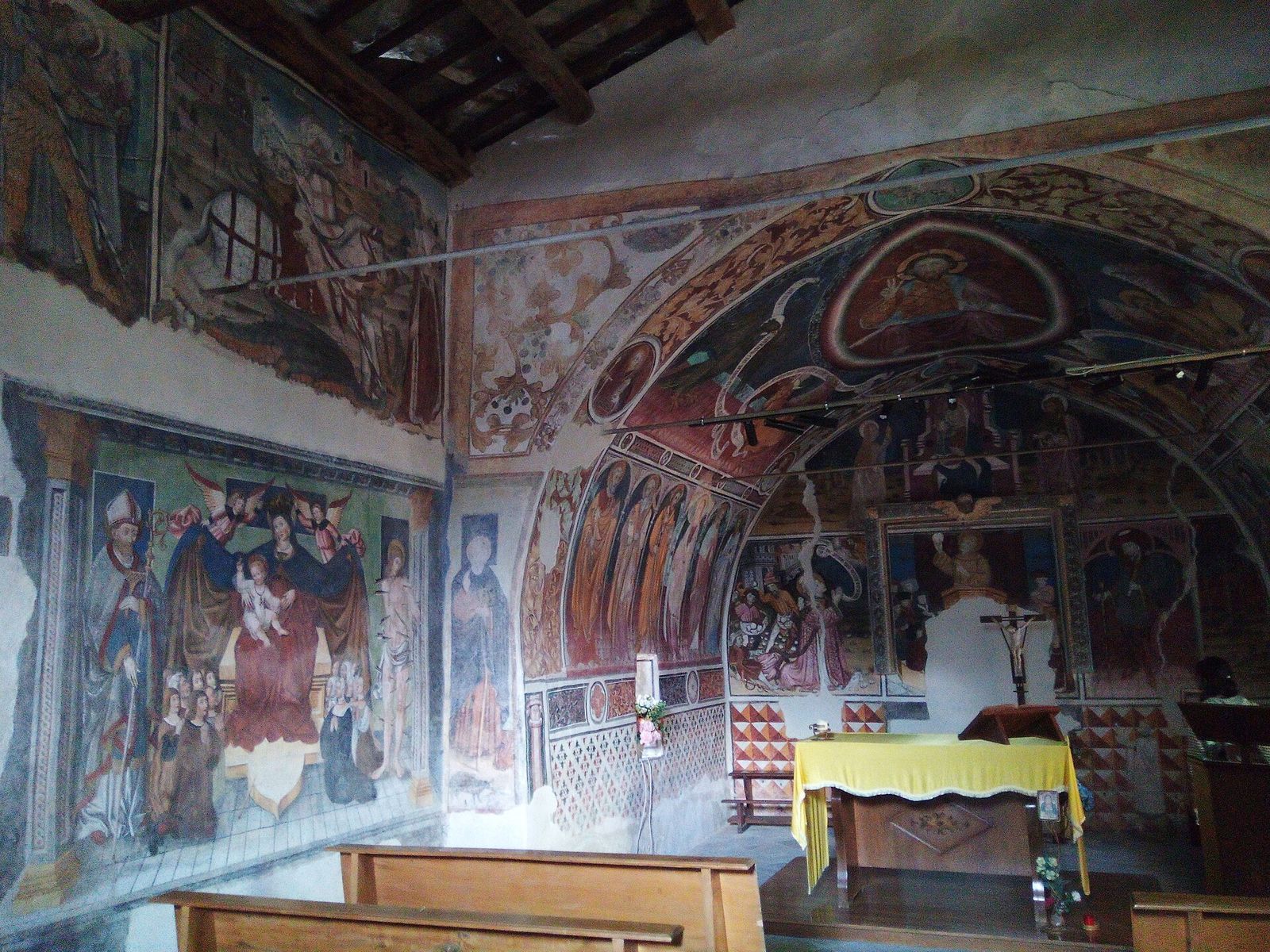
The apse frescoes are attributed to an unidentified painter known by the art-historical label Master of Lusernetta. At the center of the vault, Christ gives a blessing within a mandorla, an almond-shaped frame around a sacred figure. Symbols of the four Evangelists surround him. The twelve Apostles appear on the walls, six to each side, each in a separate niche marked with the figure’s name. Bands of acanthus leaves, a decorative plant motif, run across the vault at both ends and are broken by six round panels. Five show the busts of saints Costanzo, Lucia, Barbara, Stephen, and Catherine; the sixth contains a lamb, a symbol of Jesus.
Former altar wall
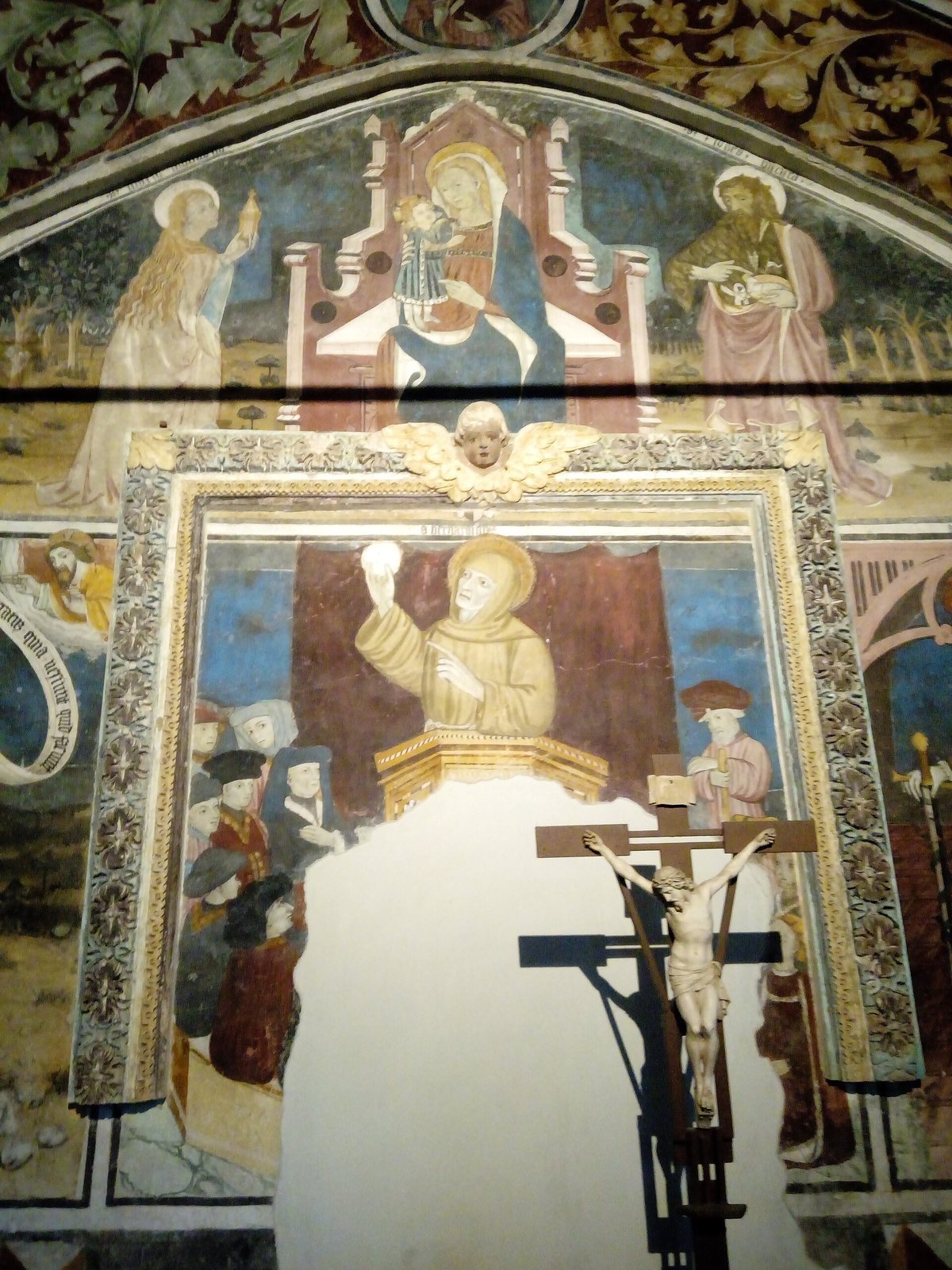
The painting on the end wall, where the altar once stood, is later than the apse decoration. It shows the Madonna enthroned with the Child, who wears a small coat, alongside Mary Magdalene, a follower of Jesus, and John the Baptist, the preacher who baptized him. Saint Chiaffredo, a Christian martyr venerated in Piedmont, appears to their right. Beside him, Saint Bernardino displays the Eucharistic host, the consecrated bread used in Catholic worship, to people he seeks to convert.
Madonna of Mercy
On the left wall, a painting dated to the early sixteenth century shows the Madonna of Mercy sheltering the Counts of Luserna di Rorà beneath her blue mantle. The counts commissioned the work, attributed to Jacobino Longo, a Piedmontese painter active around the beginning of the sixteenth century.
Saint George
The fresco revealed during the late-1990s restoration depicts Saint George on horseback, killing a dragon to save a princess. Its background lacks perspective, a feature that points to a fifteenth-century date.