Palazzo Cattaneo Adorno: A Rolli Palace in Genoa

Site at a Glance
- Rating
- 4.4
- Popularity
- Very Low
- Country
- Italy
- Primary era
- Early Modern
- Eras represented
- Early Modern
- Civilizations
- Genoese
- Site type
- Domestic
- Remains
- Palace
On this page7 sections
History
Palazzo Cattaneo Adorno is a Mannerist palace in Genoa, Italy, built between 1583 and 1588 for the cousins Lazzaro and Giacomo Spinola. It stands on Via Garibaldi, the former Strada Nuova, and formed part of the Palazzi dei Rolli, official registers that selected Genoese aristocratic residences to accommodate distinguished state guests on behalf of the government.
Construction and the Spinola residences
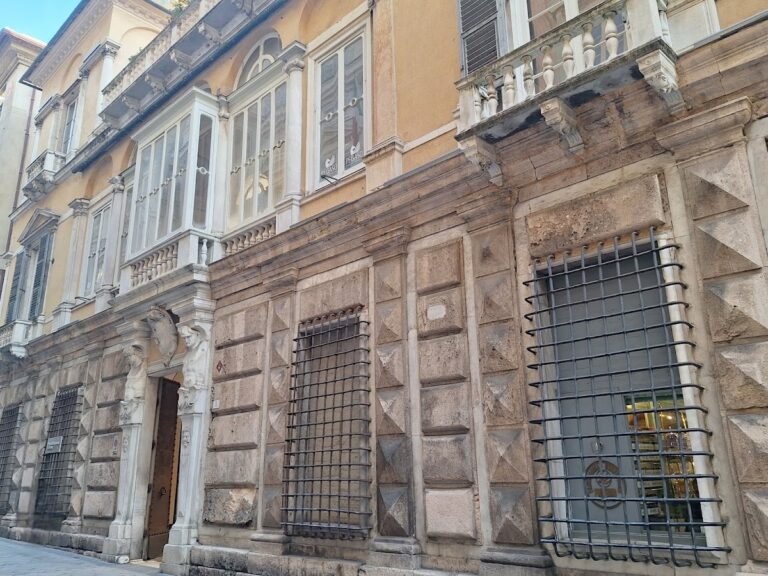
An unidentified architect designed the palace as two distinct but symmetrical residences joined within a single building. This unusual arrangement explains its two entrances and house numbers, 8 and 10, and was considered unique among the palaces of Strada Nuova. The building entered the Rolli registers in 1588 in the second class, was listed in the first class in 1614, and appeared in the third class in 1664.
The western residence, now number 10, passed to Filippo Adorno in 1609. His descendants retained it into the twentieth century and commissioned much of its interior decoration. In 1624, Giovanni Battista Adorno engaged the Genoese painter Lazzaro Tavarone to create a fresco cycle celebrating the deeds of the Adorno family and its ancestors.
Changing ownership and historical recognition
The eastern residence, now number 8, belonged to the Saluzzo family from the seventeenth century until the middle of the nineteenth century. It then passed to the Scassi family and later to the Cattaneo family. The two halves eventually came under the Cattaneo-Adorno family through the marriage of Luigi Cattaneo and Viola Adorno, giving the palace its present name.
Peter Paul Rubens included the palace in surveys made for the 1622 edition of Palazzi di Genova. His illustrated studies provide early visual evidence of the building’s symmetrical design. Palazzo Cattaneo Adorno has been protected by heritage authorities since 1996 and remains in use. It forms part of the UNESCO World Heritage property “Genoa: Le Strade Nuove and the system of the Palazzi dei Rolli,” inscribed on 13 July 2006 as part of a group of 42 palaces.
Remains
Overall design and setting
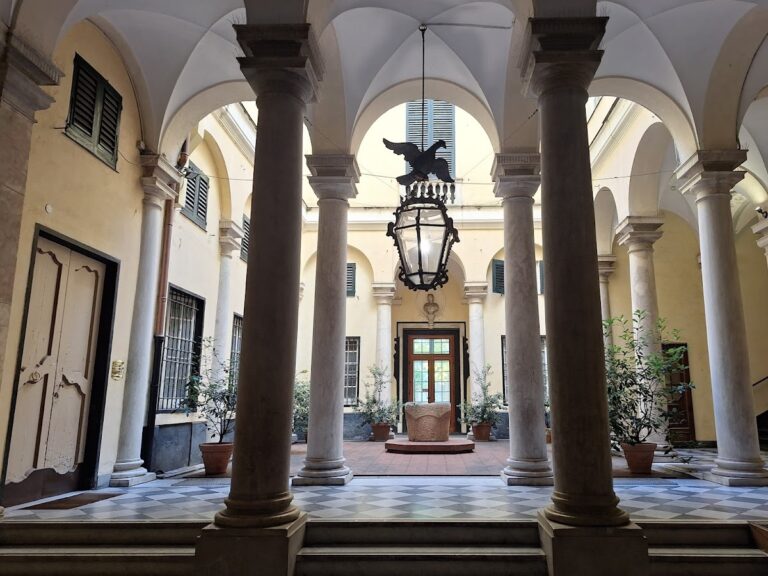
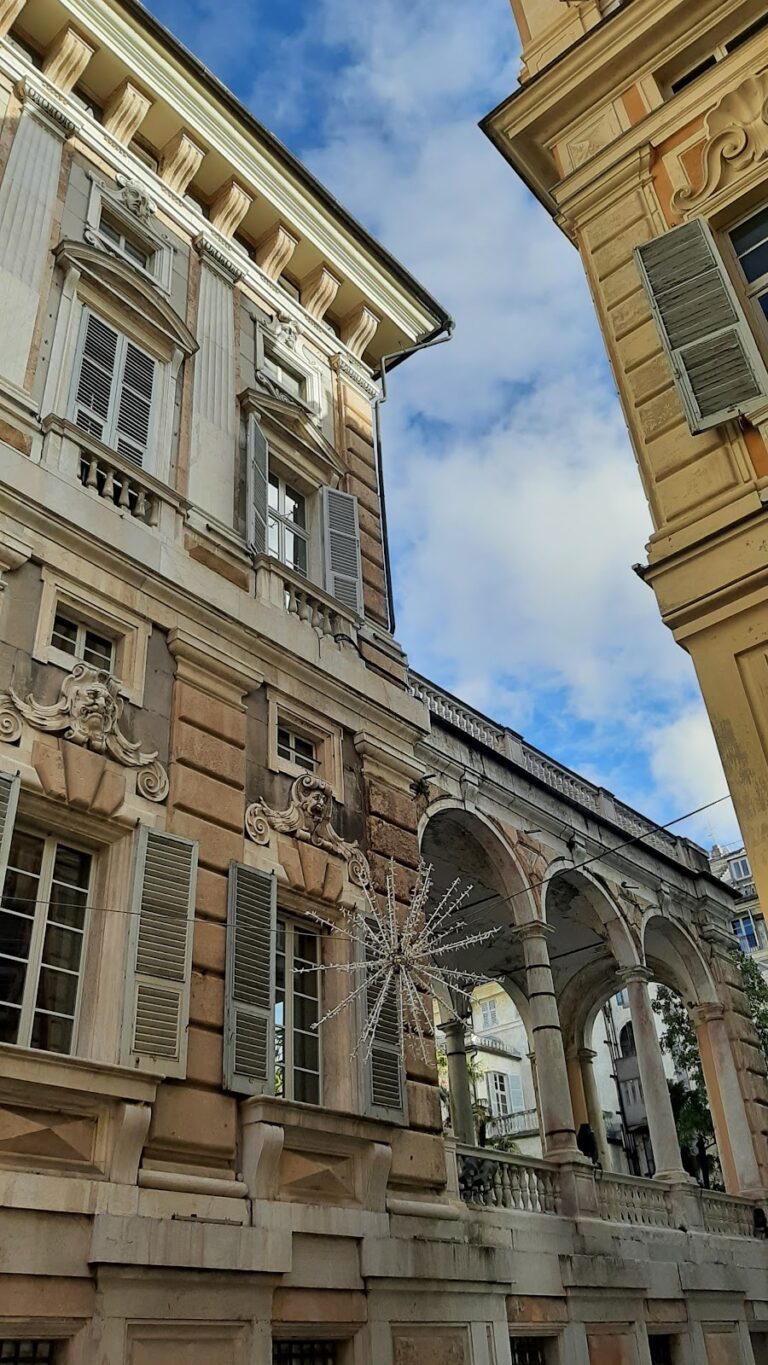
The palace presents a unified Mannerist design while retaining the identity of two mirror-symmetrical homes. The symmetry governs the facade, internal plan, and formally arranged gardens. Two identical portals open separately onto Via Garibaldi, one for each residence. Rusticated masonry, in which the joints and surfaces are strongly emphasized, covers the ground floor, while fresco decoration extends across the upper parts of the facade. The building occupies a sloping site on the lower side of the Strade Nuove, so its two rear gardens are raised above ground level and function as roof gardens.
Eastern residence
The eastern wing at number 8 has more restrained decoration than its counterpart. Its sixteenth-century frescoes include scenes from the myth of Cupid and Psyche by Giovanni Andrea Ansaldo, a Genoese painter active in the late sixteenth and early seventeenth centuries. These paintings form part of the interior decoration preserved within the eastern residence.
Western residence
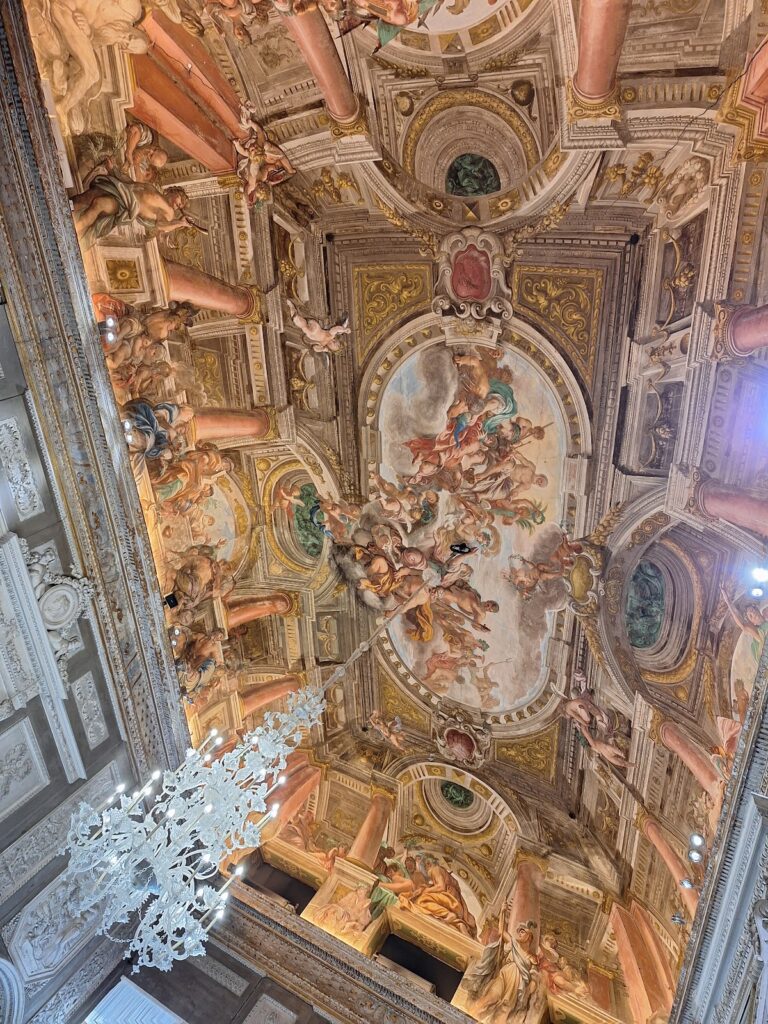
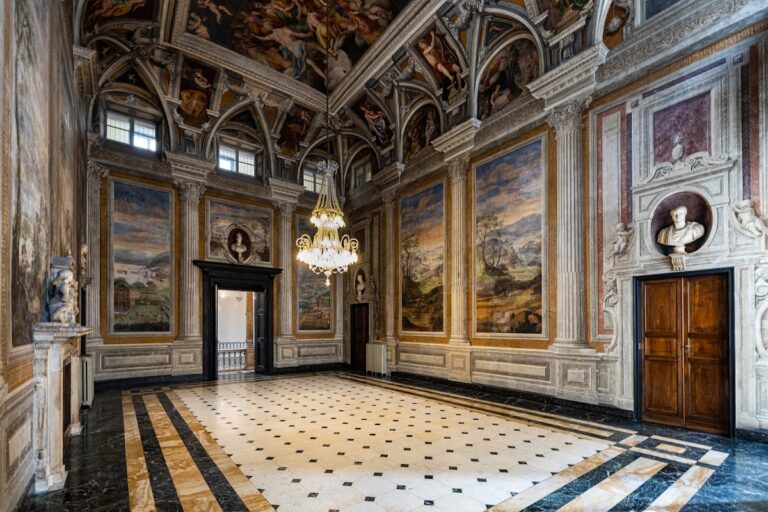
The western wing at number 10 contains Lazzaro Tavarone’s fresco cycle of 1624. The vault of the entrance atrium shows a military achievement of Antoniotto Adorno, a doge and ancestor of the family associated with this residence. A ground-floor room contains scenes connected with the conquest of Jerusalem, including Guglielmo Embriaco’s capture of the city, the delivery of the ashes of John the Baptist, and the presentation of the Holy Basin, a relic traditionally identified with the vessel used at the Last Supper. Allegorical figures surround these scenes.
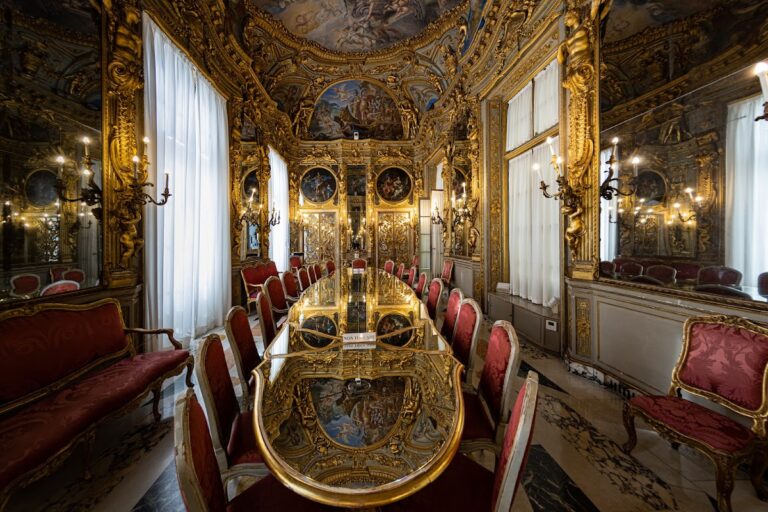
Further frescoes portray Antoniotto Adorno’s role in the liberation of Pope Urban VI, who was besieged at Nocera by Charles III, King of Naples, in 1385. Other rooms contain celebratory, biblical, historical, and mythological subjects, including Raffaele Adorno’s conquest of the island of Gerba in 1388, the angel’s announcement to Hagar and Ishmael, Stories of Daniel, and Cupid blindfolded. Reception rooms preserve mythological frescoes on their vaults, along with valuable furniture, decorative objects, and part of a picture gallery containing notable paintings from the sixteenth and seventeenth centuries.
Nearby sites