Santa Maria delle Giummare: A Roman Catholic Church in Sciacca

Site at a Glance
- Rating
- 4.2
- Popularity
- Very Low
- Country
- Italy
- Primary era
- Medieval
- Eras represented
- Medieval, Early Modern
- Civilizations
- Crown of Aragon, Norman, Spanish
- Site type
- Religious
- Remains
- Monastery
On this page11 sections
History
Santa Maria delle Giummare is a Roman Catholic church in Sciacca, Sicily, Italy, whose construction began in 1103. The site originated as a Basilian cenobium, a monastery where religious members lived together under communal rules, on a hillside near a fortification captured from Muslim invaders by Count Roger I of Altavilla in 1087.
Foundation and double monastery
Judith of Altavilla, Roger I’s daughter and ruler of Sciacca from 1100 to 1136, established churches and monasteries at the site. She placed enclosed nuns and Cluniac religious there, and also founded a monastery with the same dedication at Mazara del Vallo. The Cluniac order was a reforming Benedictine movement centered on the Abbey of Cluny in Burgundy.
Santa Maria delle Giummare was organized as a double monastery. This arrangement placed male and female religious communities within one complex while keeping them canonically separate. Because the women lived in enclosure, the Cluniac fathers celebrated their services in the nearby church of San Leonardo di Limoges, dedicated to Leonard of Noblac.
Cluniac priory and royal foundation
The Sciacca institution was the only Cluniac priory in southern Italy. A priory was a dependent religious house governed under the authority of a larger monastery or order. Its foundation came about two centuries after the establishment of the Cluniac movement, when the order was entering a period of decline linked to the debts of Cluny Abbey and the shift from a land-based medieval economy to a monetary one.
The Sicilian Vespers, a revolt that began in 1282 against Angevin rule in Sicily, expelled the French from the island. The French religious members consequently left the monastery, which was then converted into a royal priory under the title Santa Maria delle Giummare of Sciacca. In 1382, the monastery was assigned to Benedictine nuns.
Union with Valverde
Between 1401 and 1598, the nuns of Santa Maria di Valverde in Caltabellotta joined the community. A papal bull, the formal document used by a pope for authoritative decisions and grants, was issued by Boniface IX on 7 May 1401. It ordered the nuns’ transfer to Sciacca. Francesco Vitali, bishop of Mazara, installed Abbess Agata Montaliana in possession of the monastery and its rights, assisted by the abbots of Santo Spirito in Palermo and Santa Maria del Bosco in Calatamauro.
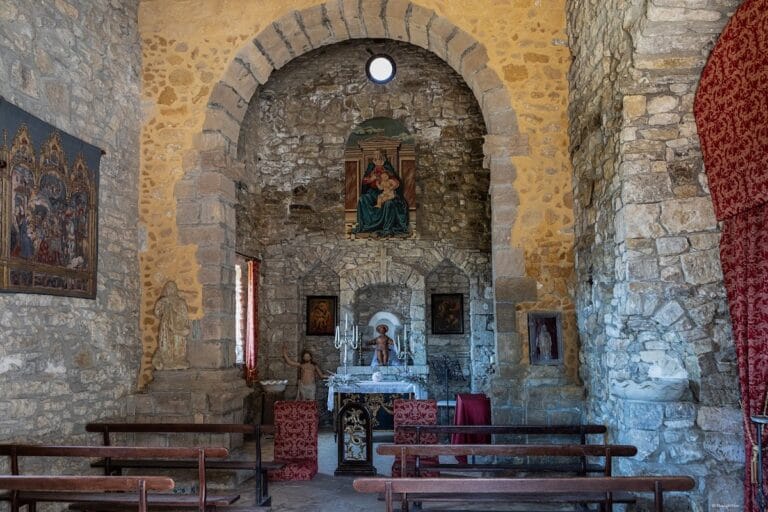
The arrival of the Caltabellotta community extended the title Santa Maria di Valverde to the Sciacca church. The nuns brought a painting of the Madonna of Valverde with them. As the surrounding area was progressively repopulated, an earlier church about 80 metres southeast of the present building was permanently abandoned.
Castle, remodeling, and relocation
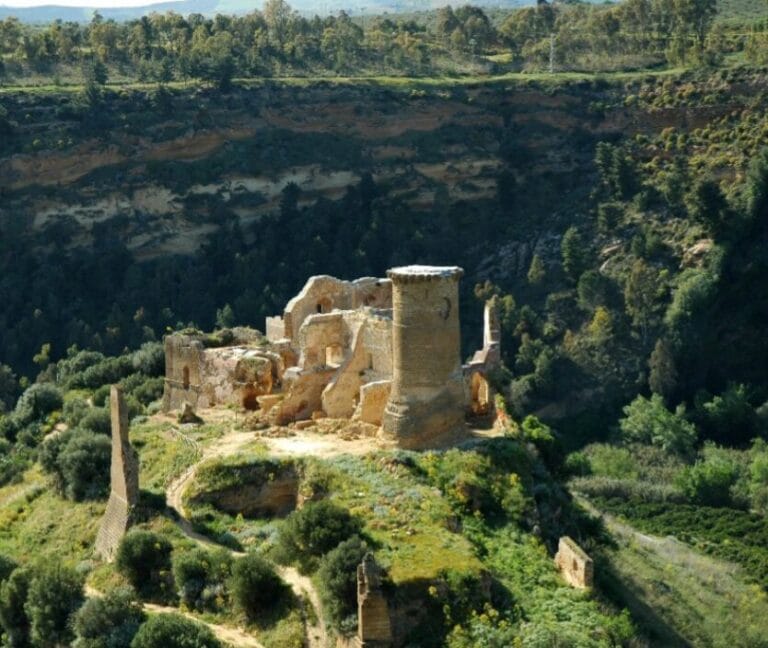
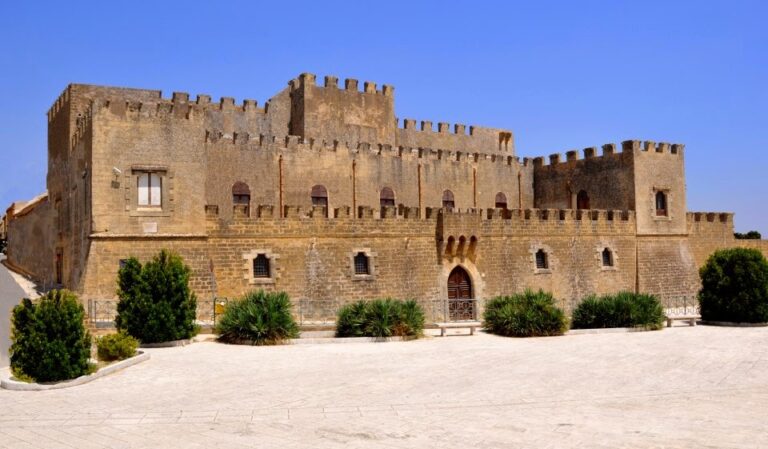
The fortification near the original monastery was transformed into an imposing medieval castle of the De Luna d’Aragona family by Guglielmo Peralta, Count of Caltabellotta. It later passed to the Counts of Luna after Margherita Peralta, one of Nicolò Peralta’s three daughters, married Count Artale de Luna.
From 1530, the church was remodeled in the Gothic-Catalan style, a tradition associated with Catalan and wider Crown of Aragon building practices. In 1619, fear of raids by Turkish pirates led to the nuns’ transfer to the Badia Grande monastery because the Giummare complex stood outside Sciacca’s walls. They returned in 1622, after the monastery had been enclosed by high, robust walls.
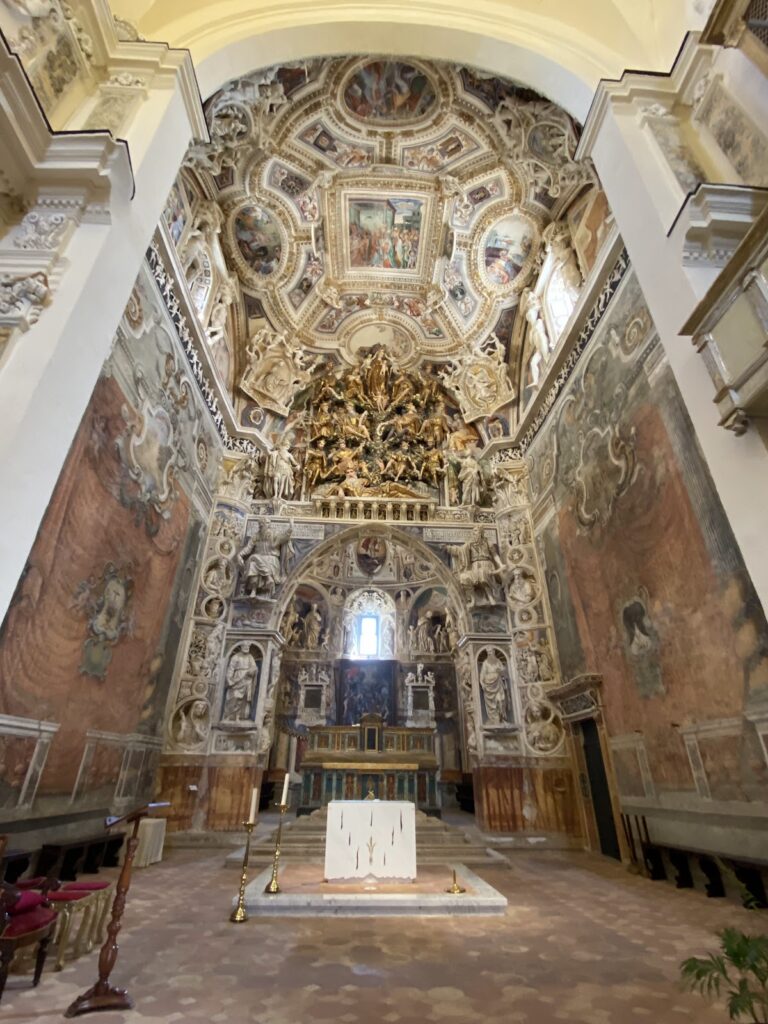
Restoration in 1763 introduced stucco and Baroque decoration, including work by the Palermo artist Angelo Firriolo, who belonged to the workshop of the Serpotta family. After the complex became structurally unsafe, the nuns returned to Badia Grande in 1896.
Twentieth-century changes and records
In 1914, the municipality transferred the eastern part of the complex to an electrical company. That section was demolished to make way for a workshop. The western part was granted to the Royal Army and used for several years as a dormitory and warehouse for an infantry detachment. The remaining portion of the former monastery is occupied by the orphanage associated with Father Michele Arena, whose work is credited with saving the church and much of its structure from ruin.
The monastery’s Tabulario, a collection of diplomas, documents, and parchments concerning Santa Maria delle Giummare, is held in the Diplomatic Section of the State Archives of Palermo. Ignazio Scaturro donated the parchments to the archive in 1942.
Remains
The complex stands on the hillside at Via Valverde in Sciacca. Its early layout combined the church and monastic buildings near a fortified structure, with separate spaces for the enclosed female community and the Cluniac fathers. The present church preserves the effects of its sixteenth-century remodeling and eighteenth-century decorative campaign, while the monastery survives in a reduced and altered form after the twentieth-century demolition and reuse.
Church and monastery buildings
Church
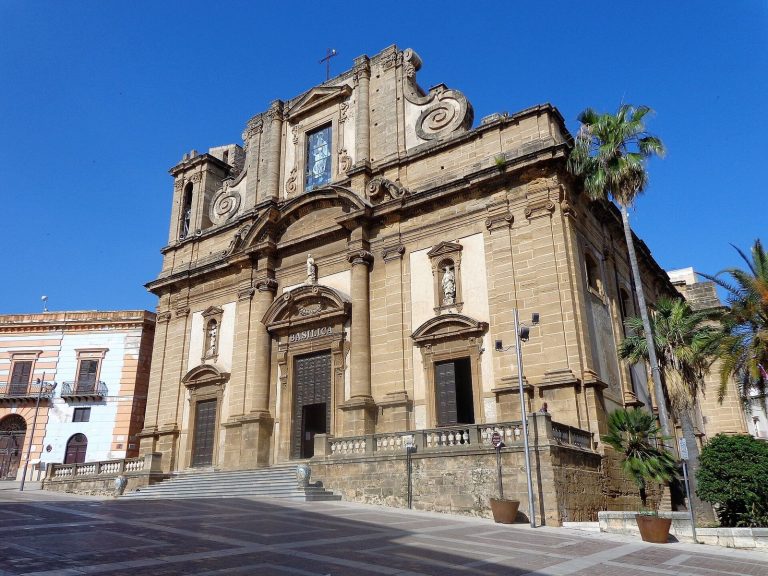
The church was remodeled from 1530 in the Gothic-Catalan style. The building later received stucco and Baroque decoration during the restoration of 1763. That work included contributions by Angelo Firriolo, a Palermo artist connected with the workshop of the Serpotta family. The church forms the principal surviving part of the former religious complex.
Monastery remains
The eastern section of the monastery was demolished in 1914 for an electrical workshop. The western section survived and was reused by the Royal Army as a dormitory and warehouse for an infantry detachment. The remaining portion of the former monastery is now occupied by the orphanage associated with Father Michele Arena.
Painting
The listed works associated with the church include an oil painting of the Assumption of the Virgin Mary by Mariano Rossi, dated 1767 to 1768. Rossi was an Italian painter active in the eighteenth century.