Castello di Siculiana: A Medieval Castle in Sicily
Site at a Glance
- Rating
- 4.7
- Popularity
- Medium
- Country
- Italy
- Primary era
- Medieval
- External website
- Open
- Eras represented
- Medieval
- Civilizations
- Kingdom of Sicily
- Site type
- Military
- Remains
- Castle
On this page9 sections
History
The Chiaramonte foundation
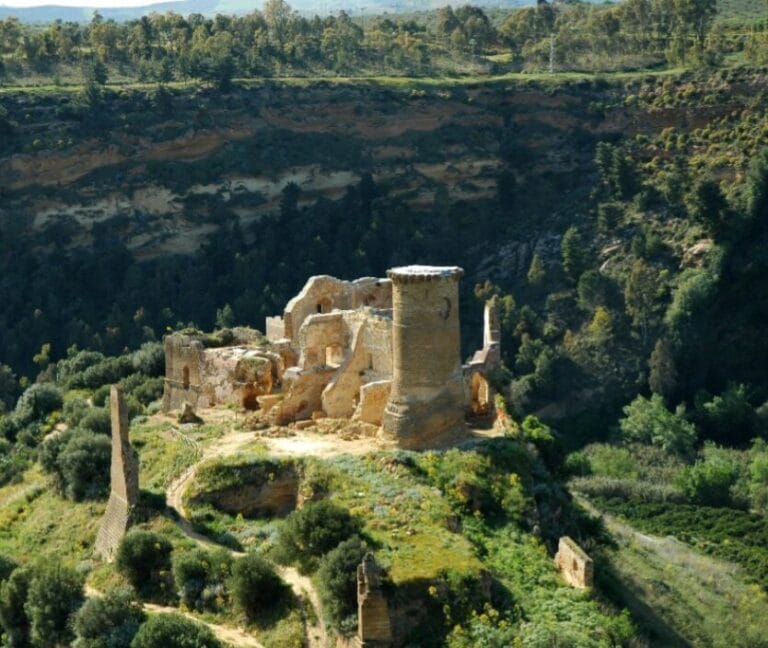
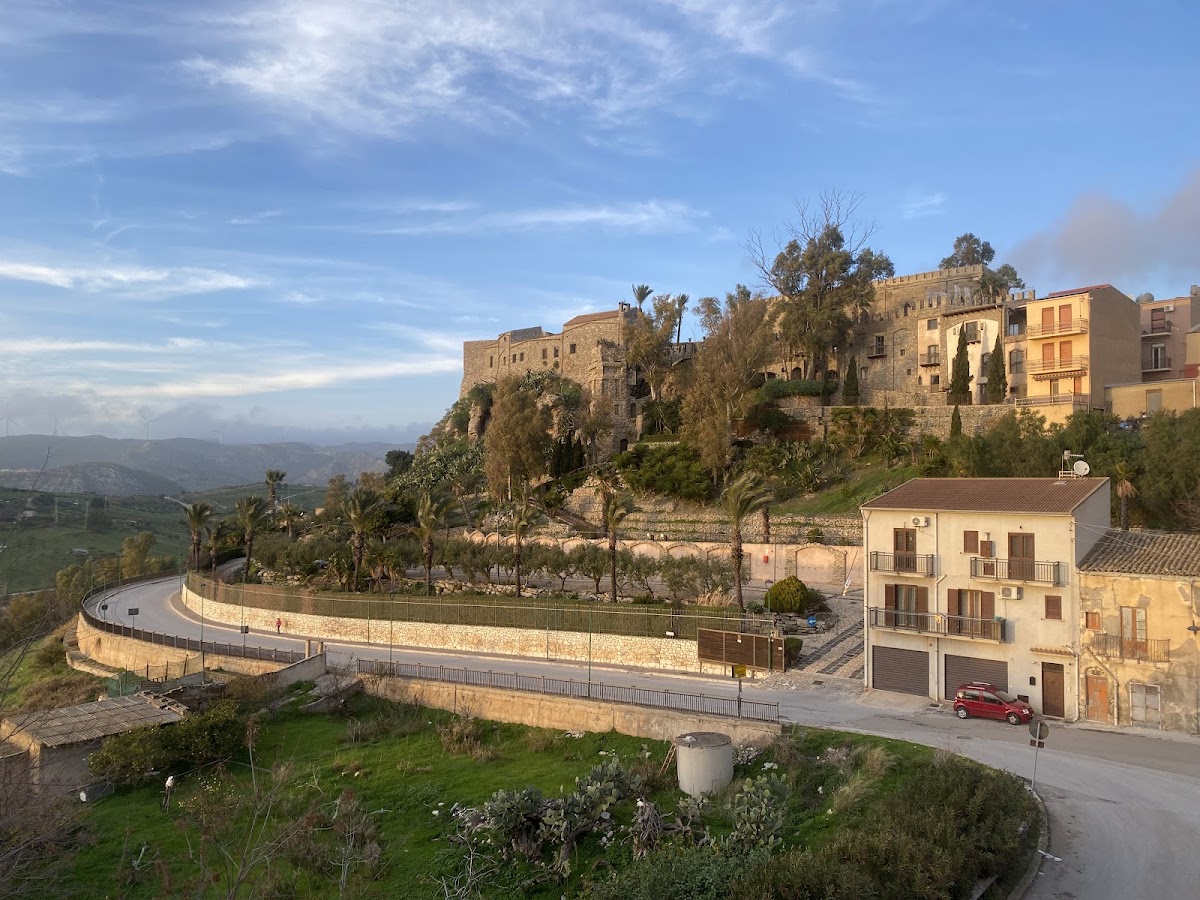
Castello di Siculiana is a medieval castle in Italy, built around 1310 by Federico II di Chiaramonte and associated with the Kingdom of Sicily. It became the focal point for the urban development of Siculiana’s oldest settlement. Set at the northwestern end of a rocky ridge, the castle occupied a strongly defensible position, with walls descending sheer to the edge of the rock.
A fortification had existed in the surrounding territory during Arab rule. Muslim inhabitants called the place “Rahl” or “Kalat Sugul,” and it was counted among the eleven castles that resisted Roger I, the Norman ruler associated with the conquest of Sicily. The original complex also included service spaces and a church dedicated to Saint Lawrence.
Feudal succession and divided lordship
After Federico Chiaramonte died in 1311, his only daughter Costanza succeeded him. In a will dated 1350, she named her first son, Antonio del Carretto, as heir. Before 1398, Antonio’s son Gerardo del Carretto received formal possession of Siculiana. In 1401, Martin I, a late-medieval king of Sicily, confirmed the barony and castle to Matteo del Carretto, who had acquired them from his brother Gerardo. An investiture was the formal granting or confirmation of a feudal possession, title, or jurisdiction by a superior authority.
In 1408, Matteo’s son Giovanni del Carretto and Andrea Caro each received half of the territory. The territory and castle were then purchased in 1427 by the nobleman Catalano Gilberto. In 1430, Alfonso V, a king of Aragon who also ruled Sicily, granted Gilberto Isfar the mero e misto impero, an extensive judicial authority covering lesser and more serious civil and criminal cases.
The Isfar and Bonanno periods
In 1457, Gilberto’s son Giovanni Gaspare Isfar received the barony and castle. In 1491, Giovanni Gaspare’s son Vincenzo Isfar sold the barony of Siculia to Guglielmo Valguarnera. Giovanni Isfar reacquired the barony and castle in 1526. Following a donation from his father Giovanni, Francesco Isfar received the barony, territory, and castle in 1542, while investiture passed to Giovanni’s brother Blasco in 1561.
In 1616, Blasco’s daughter Giovanna Isfar received the Siculiana possessions and brought them as her dowry to Vincenzo del Bosco, Duke of Misilmeri. After the death of her nephew Giuseppe del Bosco, Francesco Bonanno del Bosco, Prince of Roccafiorita, acquired the barony in 1721. The lordship passed to Francesco Antonio Bonanno Borromei in 1781 and to Antonio Bonanno Perez in 1899. The Agnello family owned the castle until the 1970s, after which it changed hands through a sale. Castello di Siculiana is designated Italian national heritage.
Remains
Ridge-top complex
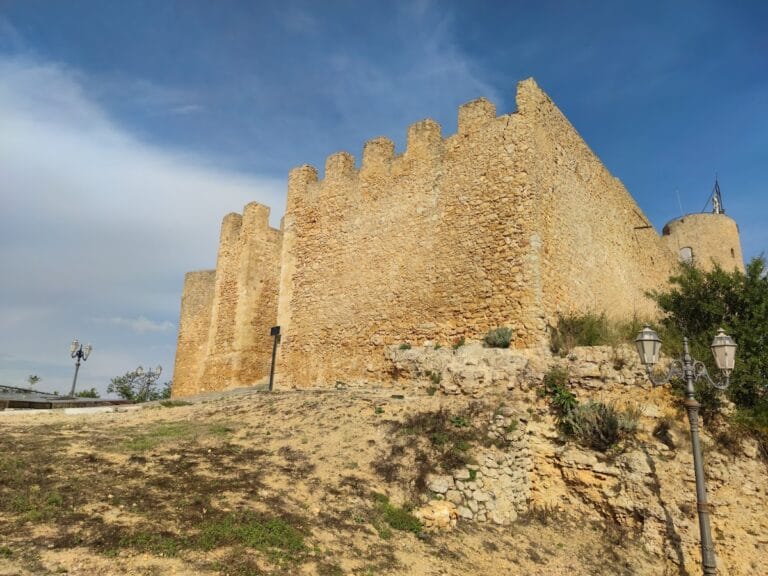
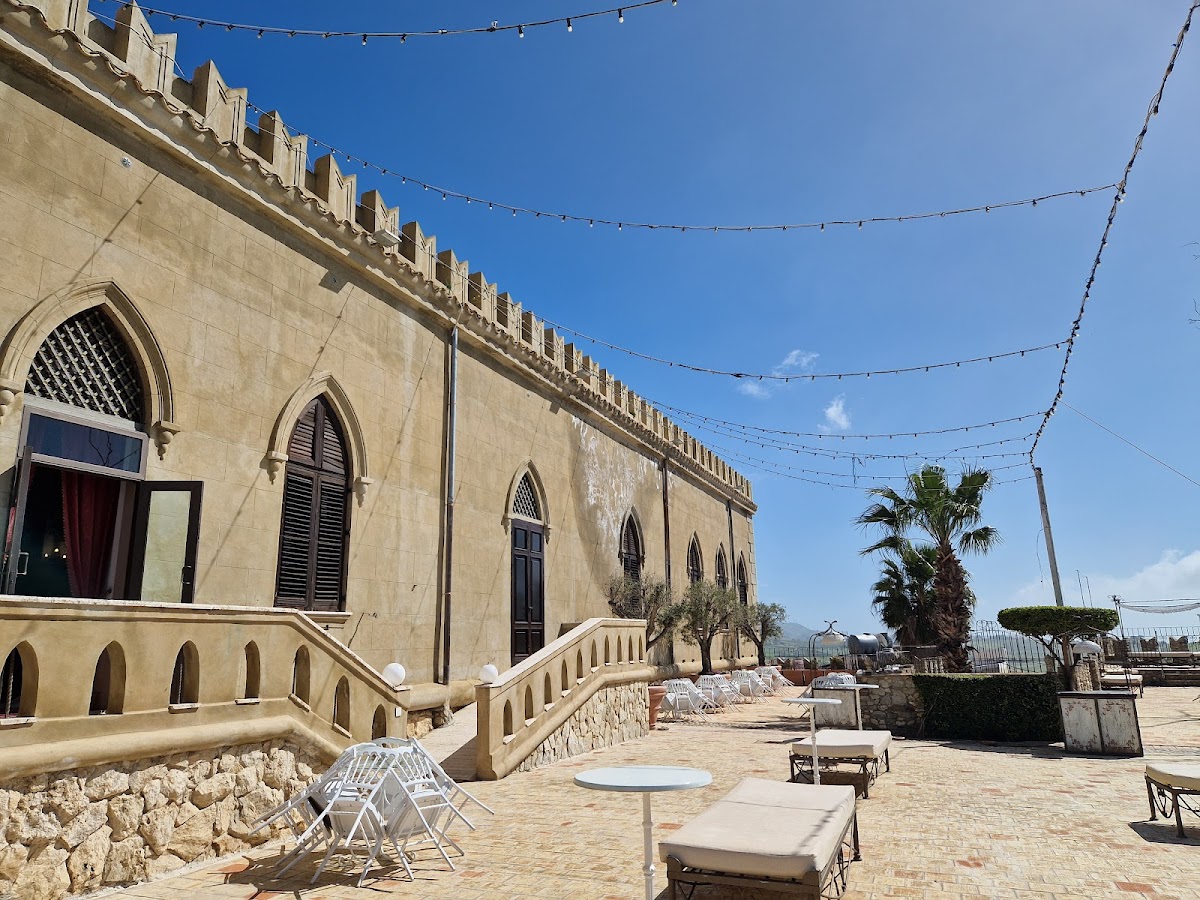
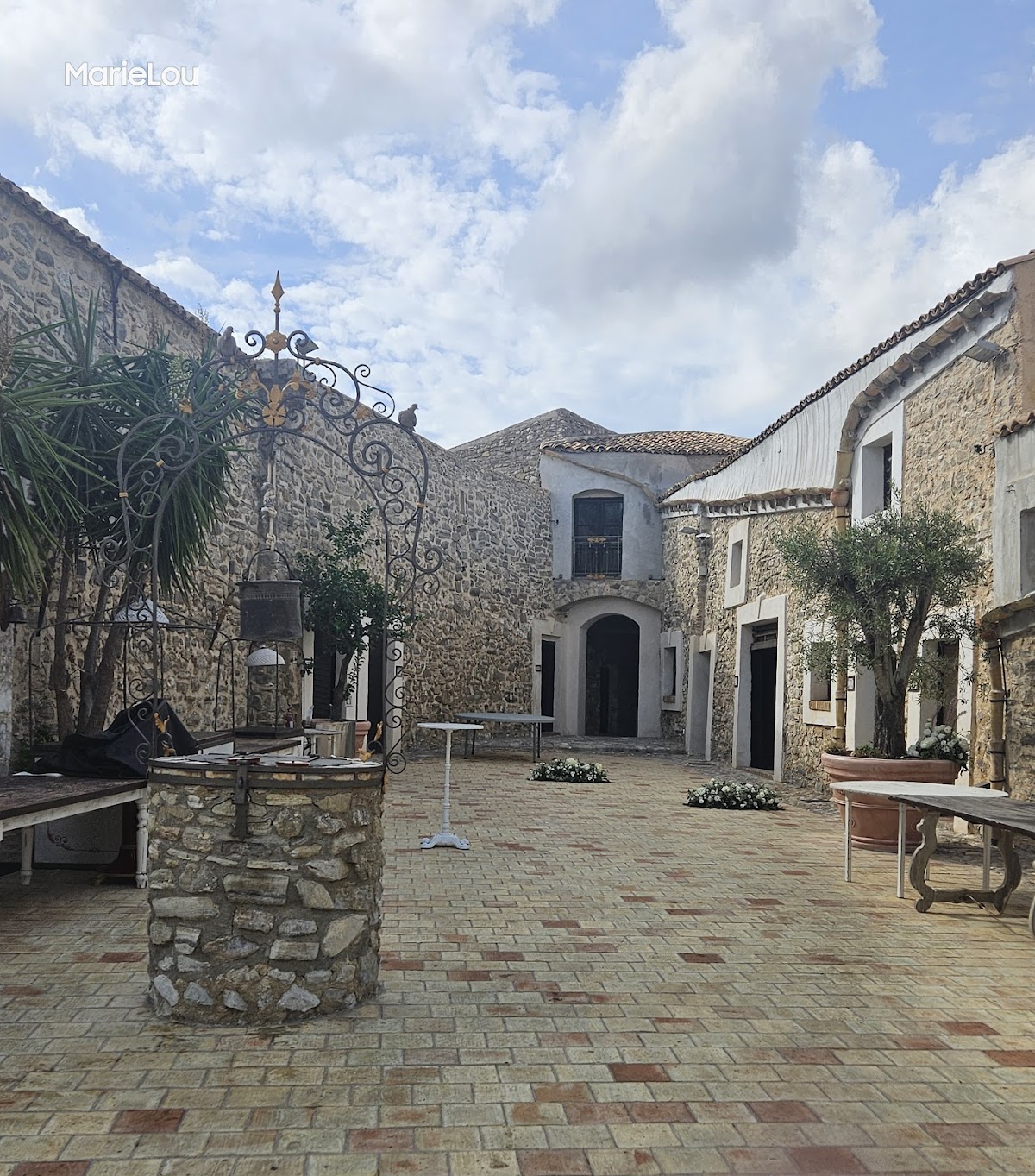
The castle stands about 85 metres above sea level at the northwestern end of a rocky ridge between Agrigento and Sciacca. Its position and the sheer drop along the rock’s edge helped make the complex exceptionally defensible. The surviving portion has a plan formed by two longitudinal bodies that converge, and the entire structure is built from gypsum rubble masonry bonded with abundant mortar.
Southern wing
The southern wing is a single-storey longitudinal structure within the surviving complex. Its form contributes to the two-part plan of the castle.
Northern wing
The northern wing has a more complex arrangement and rises through two storeys. Together with the southern wing, it forms the converging layout of the surviving portion.
Church of San Lorenzo
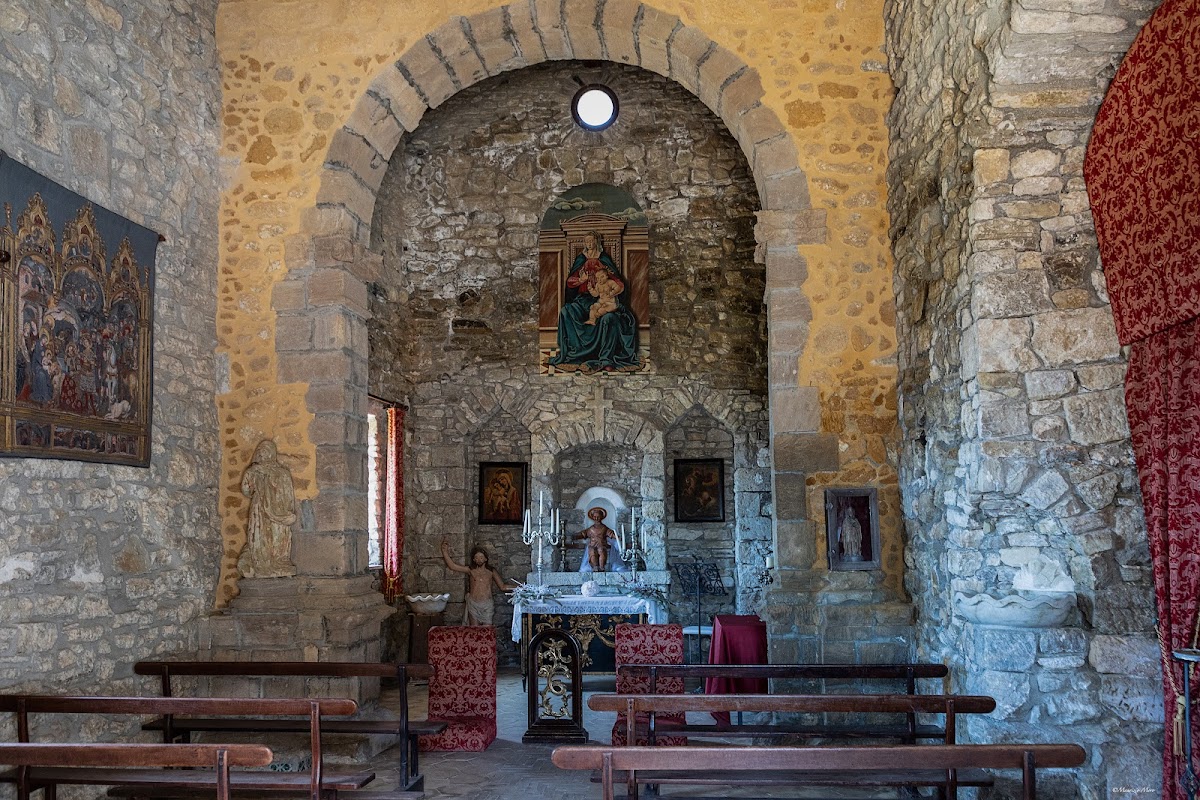
The Church of San Lorenzo is a distinct built component of the castle complex. It belonged to the original architectural arrangement, which also contained service spaces.