Sant’Ulderico: A Catholic Parish Church in San Dorligo della Valle
Site at a Glance
- Popularity
- Low
- Country
- Italy
- Primary era
- Early Modern
- Eras represented
- Early Modern, Modern
- Civilizations
- Austria-Hungary, Habsburg, Holy Roman Empire
- Site type
- Religious
- Remains
- Church
On this page10 sections
History
Sant’Ulderico is a Catholic parish church in San Dorligo della Valle, Italy, dedicated to Saint Ulrich of Augsburg. It is the municipality’s oldest place of worship and among the oldest churches in the Diocese of Trieste. The present building was constructed between 1630 and 1724. The church is the principal seat of the Pieve of Sant’Ulderico, a historic parish center with dependent churches.
Medieval church and the 1615 attack
The Pieve of Sant’Ulderico was a principal parish center by the thirteenth century. Its medieval church was rebuilt between the thirteenth and fourteenth centuries. During the Uskok War, an early seventeenth-century conflict involving Venice, the Habsburg Monarchy, and Uskok raiders, Venetian forces attacked and burned the settlement and its church in 1615. The attack destroyed much of the area’s accumulated heritage. A church was rebuilt and inaugurated in 1626 under Benco Fogarin, then the bishop’s vicar and parish priest.
Rebuilding and the expanding parish
The medieval church was later demolished in the seventeenth century to make way for the present building, constructed from 1630 to 1724. In the eighteenth century, parish priest Baron Johannes Ernst von Raunach commissioned important architectural works. In 1790, while the territory was under Habsburg rule, the Pieve of Sant’Ulderico included 42 dependent churches, most in the Karst and Istria.
A bell tower beside the right side of the church façade is mentioned in 1359. In 1790, the parish priest began work on a separate tower. The project involved removing the earlier tower and restoring the church, and was completed in 1792. Local donations and a contribution from the Habsburg Court helped pay for the work.
Twentieth-century changes
Lightning almost completely destroyed the bell tower on the night of 26 March 1918. A temporary tower was put on the surrounding wall, and the tower was rebuilt in 1953 under the Allied Military Government of the Free Territory of Trieste, administered by the Allies after the Second World War. The church remained the seat of the Dolina deanery until 1948, when that district joined the deanery of Opicina. The parish belongs to the Diocese of Trieste and has long been part of Italy’s indigenous Slovene-speaking community.
Remains
Churchyard and approaches
Church form and enclosure
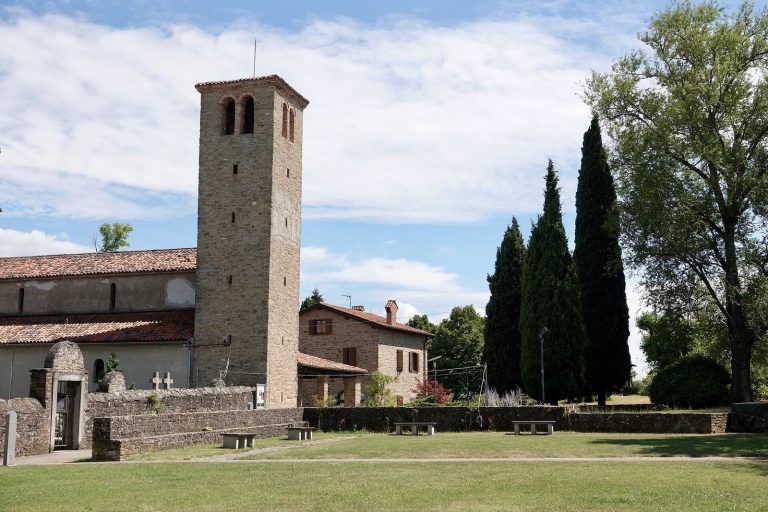
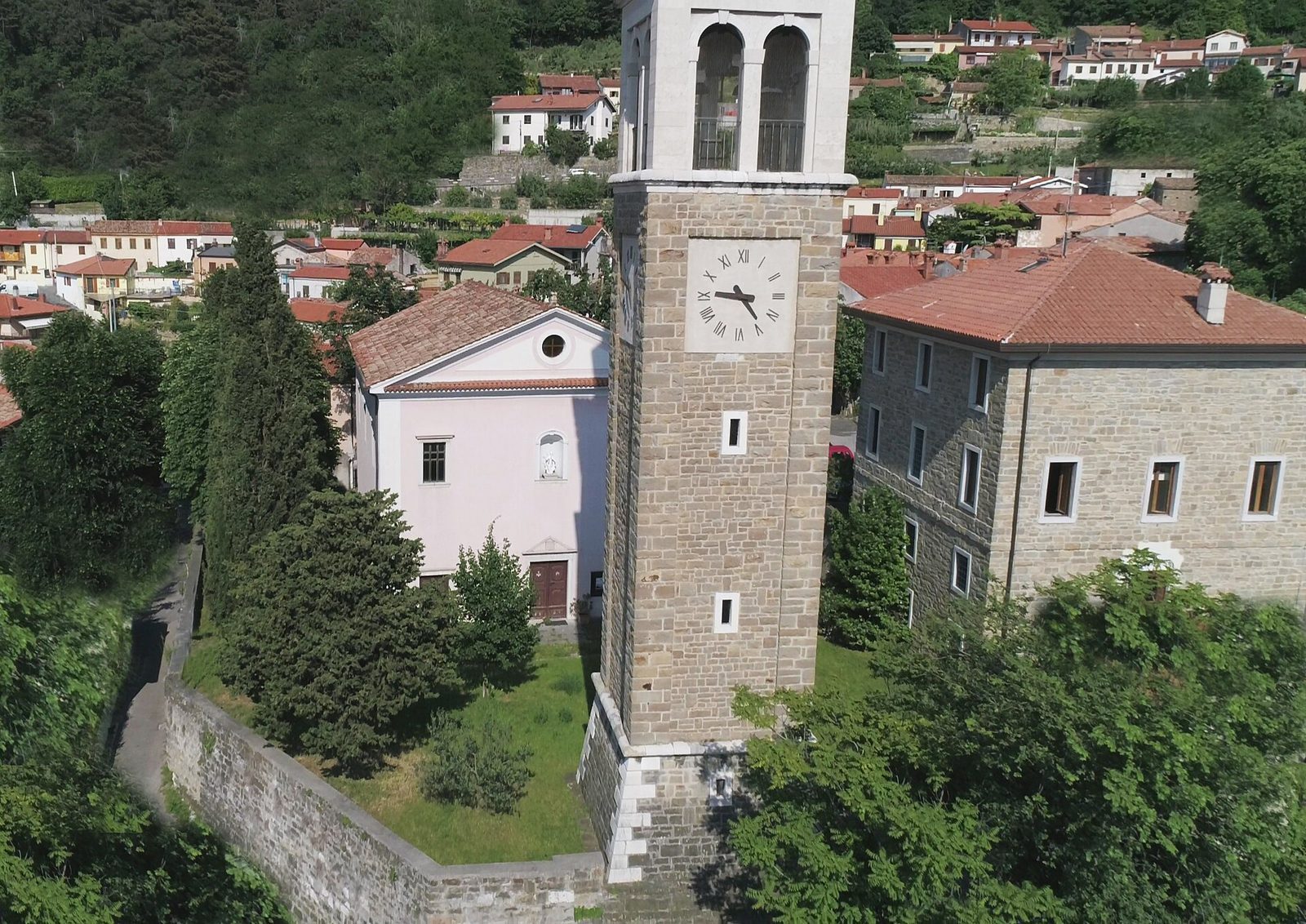
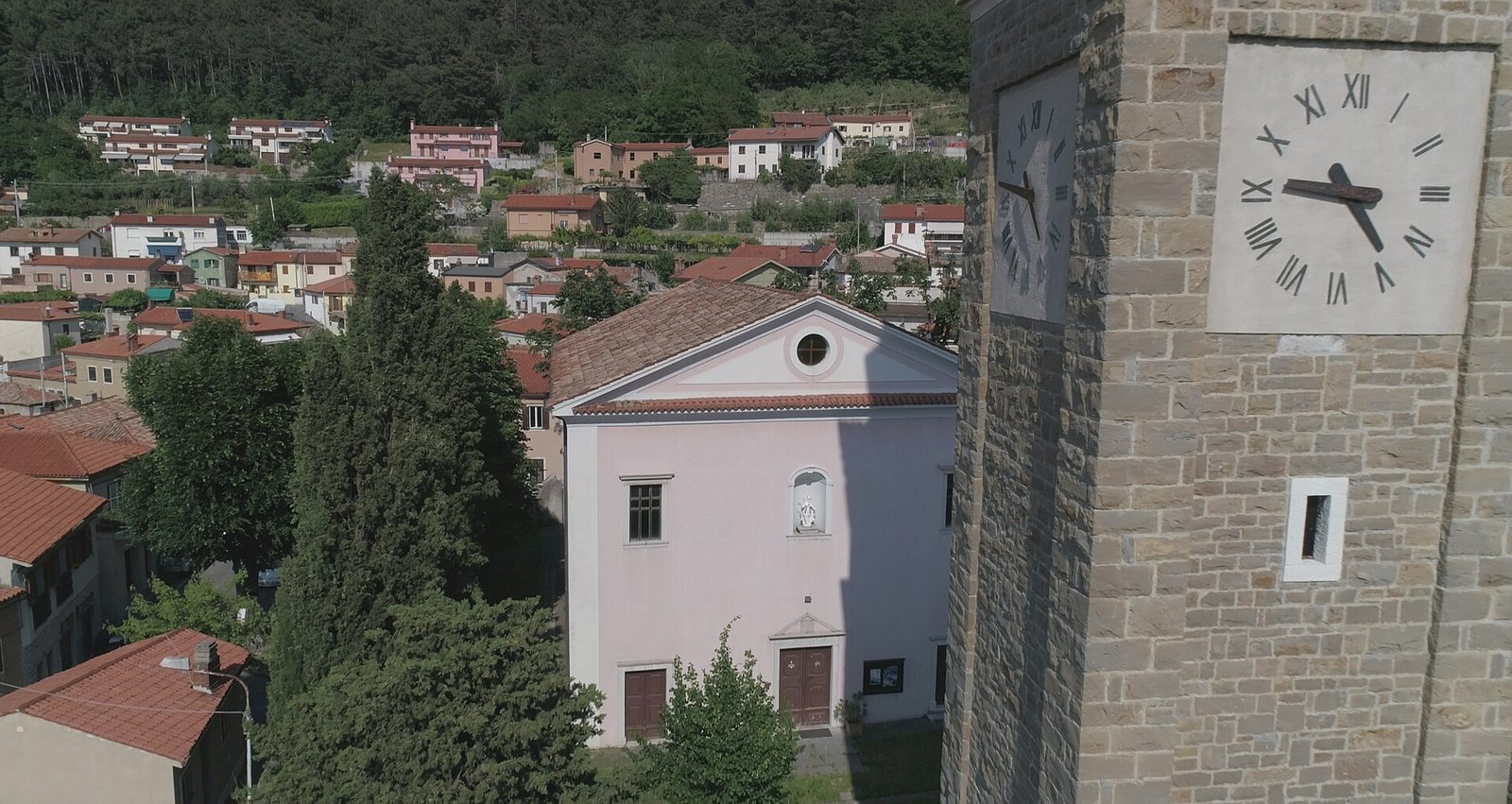
The church has a rectangular plan, one central worship space, and a deep, five-sided sanctuary end. Old walls enclose the churchyard. A robust retaining wall runs along its downhill side and once encircled the settlement summit. Seventeenth-century descriptions identify the settlement as a fortified place.
Cemetery and Sacristan’s Passage
The grassed area in front of the church served as the parish cemetery from at least the early fifteenth century. The Sacristan’s Passage is one of three ways into the churchyard. The sacristan used it and lived in the nearby Sacristan’s House, demolished in 1833 to make room for an Austrian school. Since the end of the First World War, that building has served as a Carabinieri barracks. The Carabinieri are Italy’s national gendarmerie and military police.
Detached bell tower
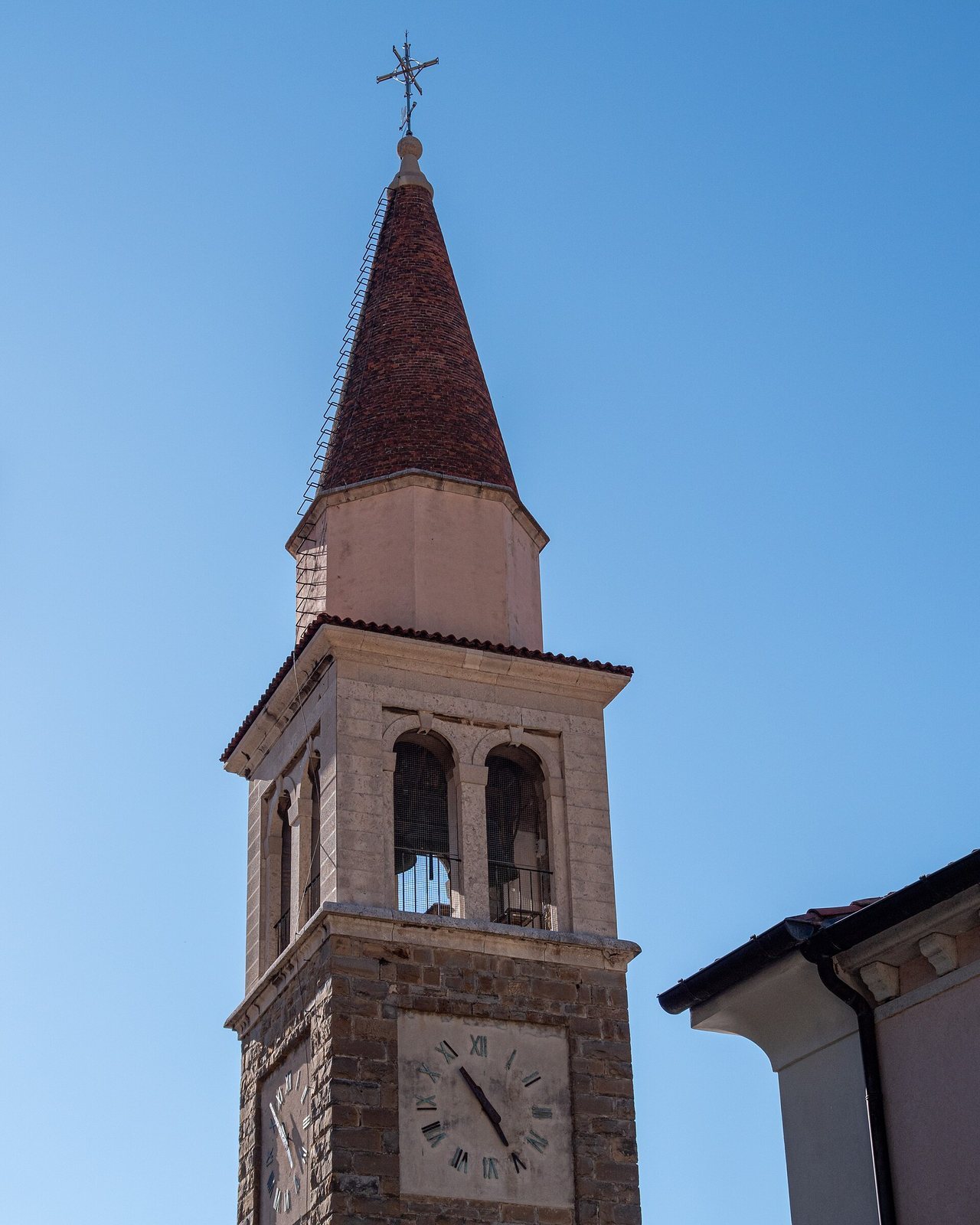
The bell tower stands apart from the church. The earlier tower reached 26 metres. Three bells hang in the tower today. The large bell, dedicated to Saint Ulrich, was cast in Udine by the Lucio Broili foundry in 1952 and is tuned to C; the medium bell, dedicated to Saint Martin, was cast by the same foundry that year and is tuned to E. The small bell, dedicated to the Virgin Mary, was cast in Trieste by the Francesco and Romeo Lapagna foundry in 1922 and is tuned to G. The current clock was made by the Solari company of Pesariis and acquired by the Municipality of Dolina. The previous clock belonged to the Srenja (Comunella), a communal association.
Interior furnishings
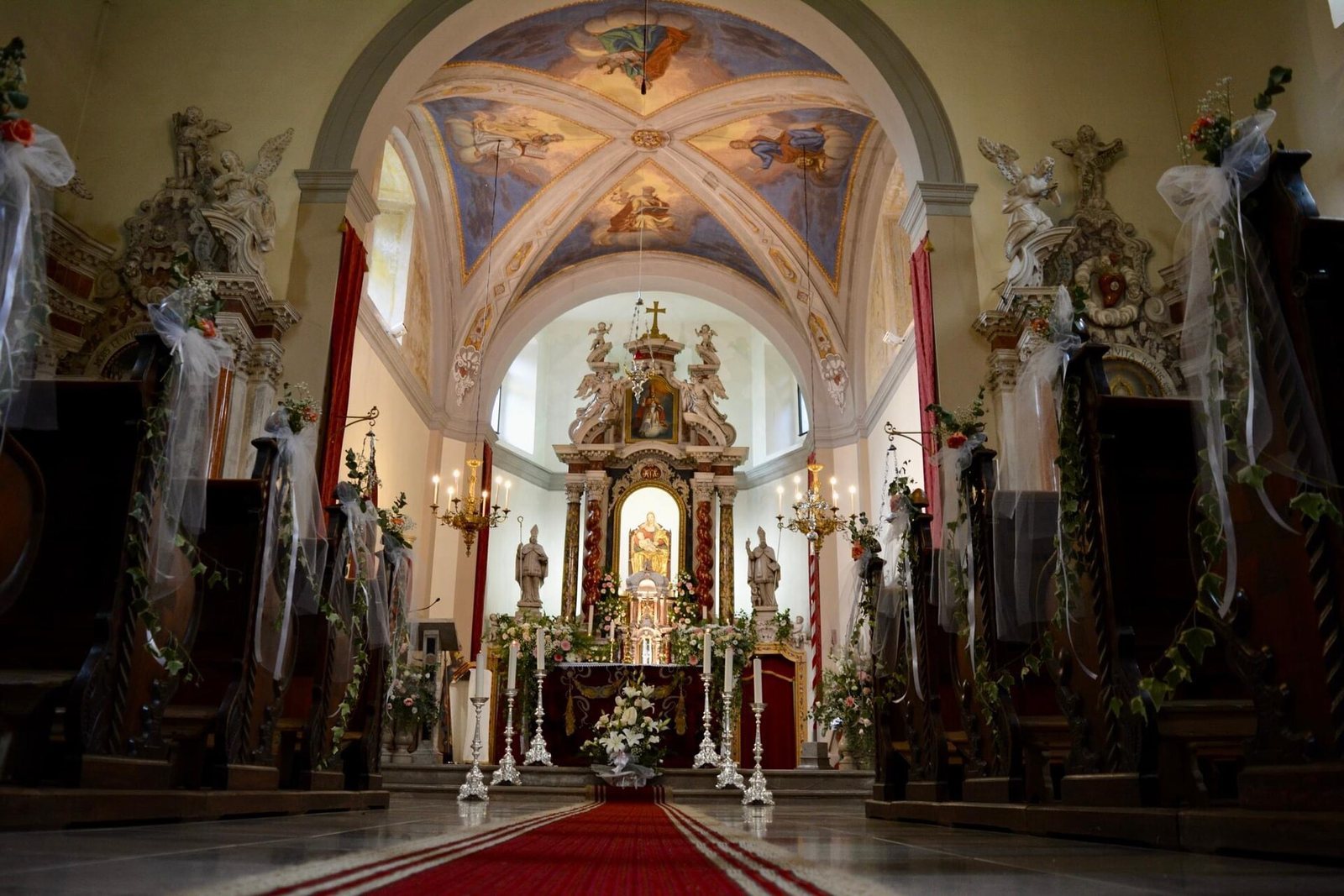
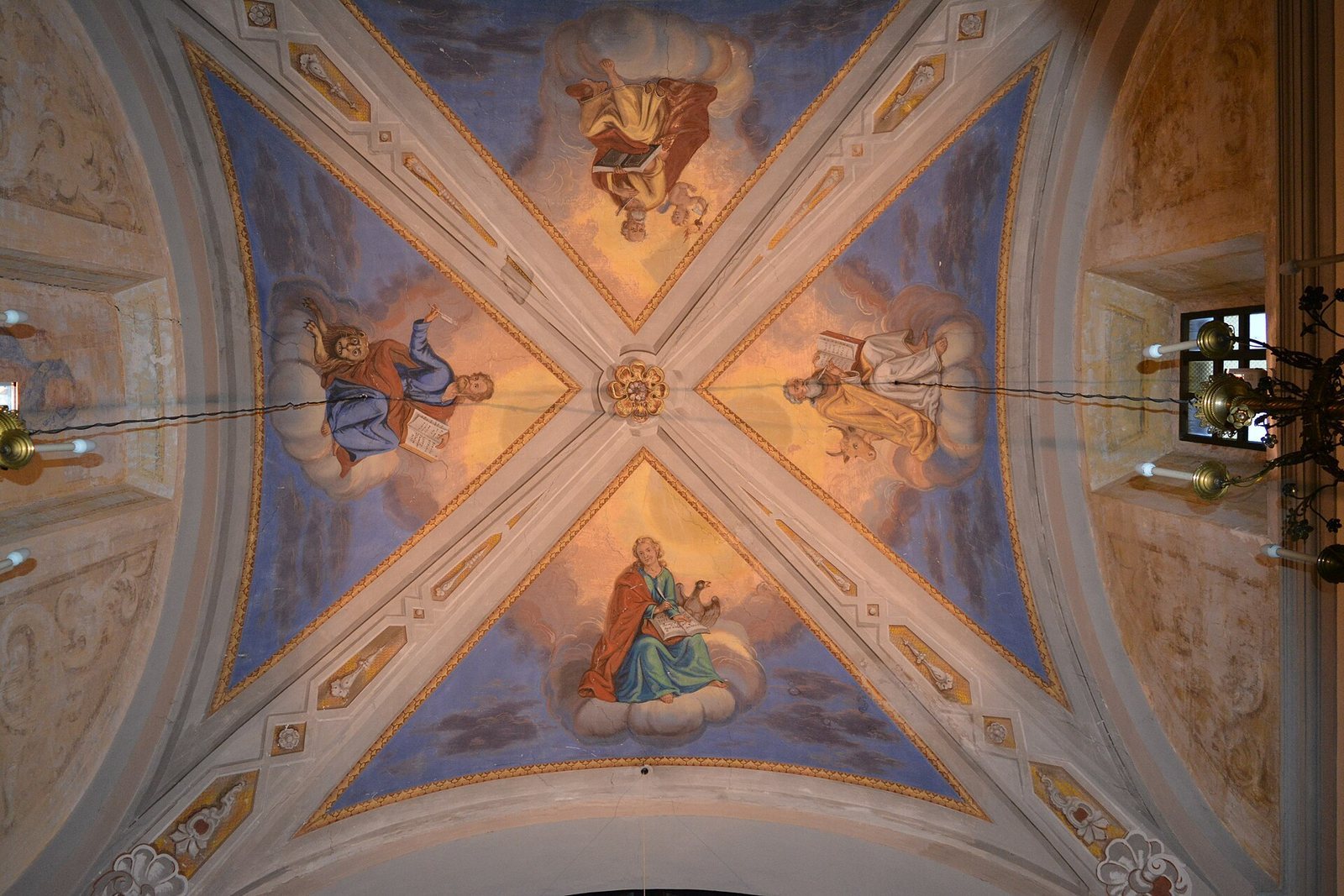
The interior contains five monumental altars of multicolored marble dating from the seventeenth and eighteenth centuries, a marble pulpit, and a seventeenth-century baptismal font. Wall paintings commissioned in 1877 by the dean and parish priest Jurij Jan, a knight, decorate the church. Its pipe organ was made in 1878 by the F. Goršič company of Ljubljana. Valuable sacred furnishings include a set of liturgical vestments and a chalice donated to the parish by Empress Maria Theresa in 1763.