Sant’Agata al Borgo: A Baroque Church in Catania
Site at a Glance
- Popularity
- Low
- Country
- Italy
- Primary era
- Early Modern
- Eras represented
- Early Modern
- Civilizations
- Kingdom of Sicily, Spanish
- Site type
- Religious
- Remains
- Church
On this page8 sections
History
Sant’Agata al Borgo is a Roman Catholic church in Catania, Italy, built in 1669 in the Baroque style, an ornate European style prominent in the seventeenth and eighteenth centuries. Dedicated to Saint Agatha, an early Christian martyr and Catania’s patron saint, it belongs to the Archdiocese of Catania and follows the Roman rite. Bishop Michelangelo Bonadies established the church to provide spiritual care for people displaced from Etna villages, including Misterbianco and Malpasso, after lava flows destroyed their settlements.
Earthquake damage and rebuilding
The 1693 earthquake damaged the church. It was rebuilt in 1709, with the work paid for by the faithful.
The 1908 earthquake
After the 1908 earthquake, tremors frightened residents of Catania. A procession carrying Saint Agatha’s veil set out from the church, led by Giustino Francica Nava, an archbishop and cardinal. The townspeople gave thanks that the earthquake had spared the city.
Remains
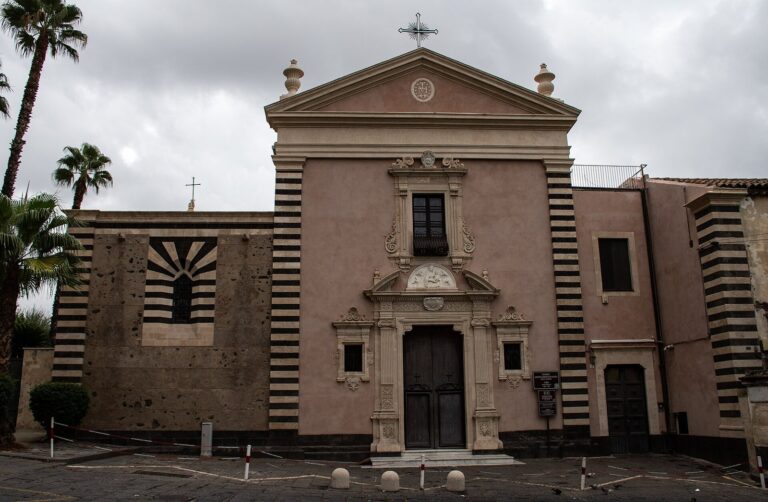
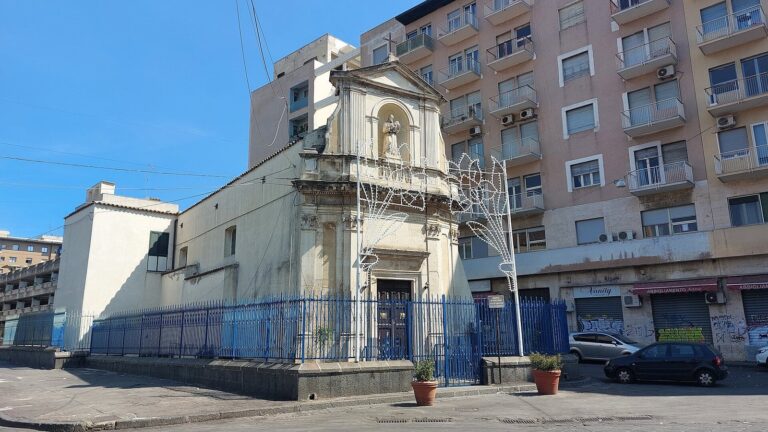
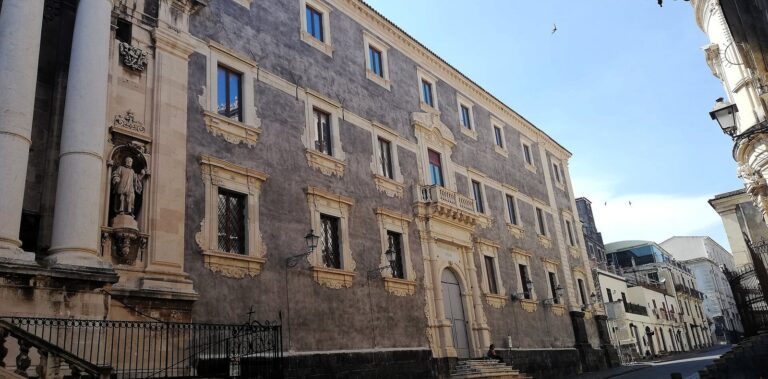
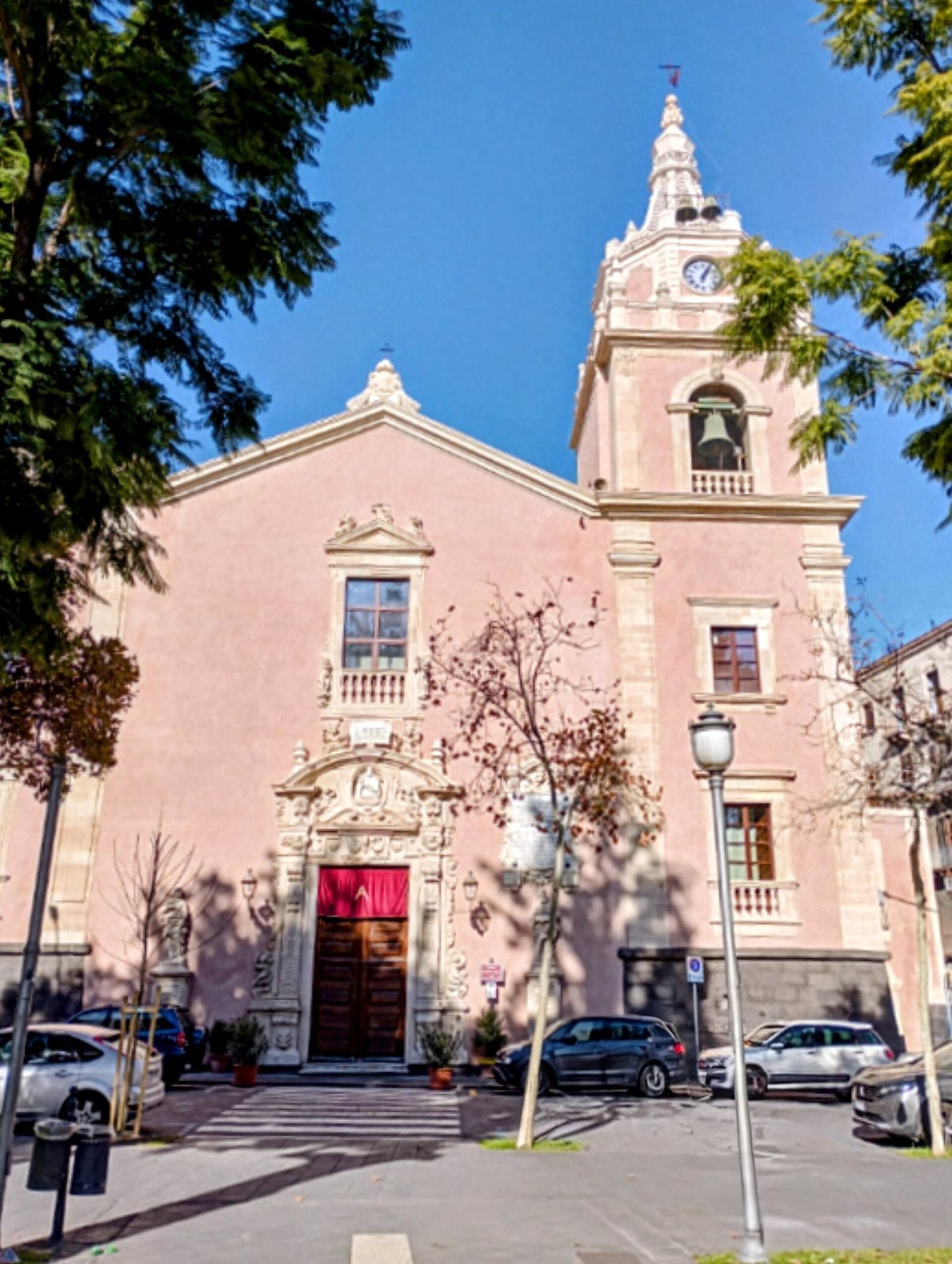
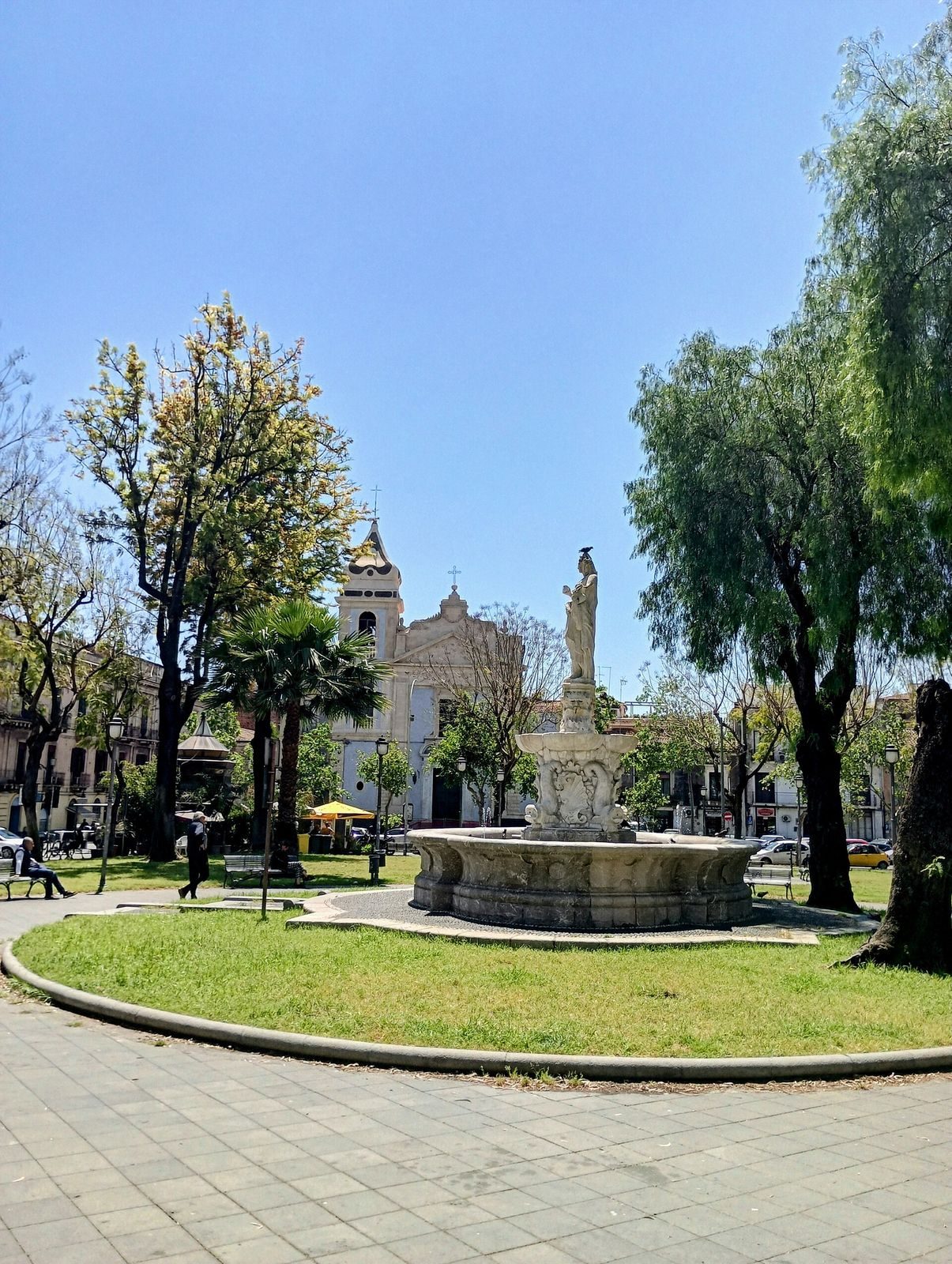
The church stands on the north side of Piazza Cavour, formerly Piazza Borgo, in Borgo, one of Catania’s original four districts. Via Etna runs alongside it; a tree-lined square and the fountain of Ceres are in front, while the church of Consolazione stands across the square to the south. The building combines a Baroque masonry exterior with a rectangular interior and a single nave, the church’s main body.
Exterior
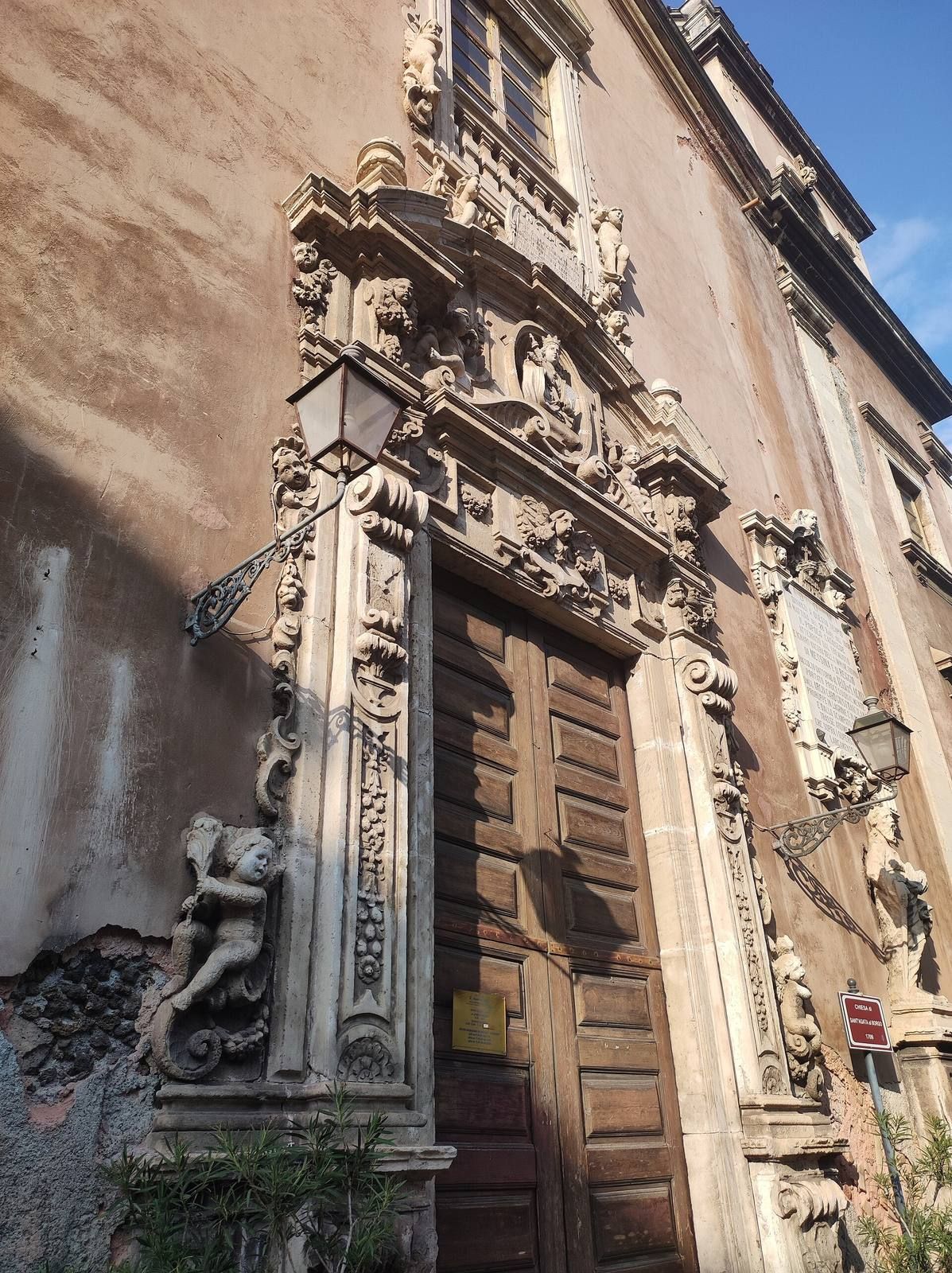
Tall stone pilasters, shallow rectangular projections from the wall, frame the façade. Lava-stone statues of Saints Peter and Paul, apostles, stand on tall bases beside the central entrance. Above the stone doorway is a large window with a railing. The doorway’s upper stone beam supports an arched pediment, a gable-like feature, containing a bust of Saint Agatha. Small vases, decorative child figures, curled ornaments and leaf patterns embellish the upper trim and the sides of the doorway. An inscription on the entrance records the rebuilding. A square bell tower forms part of the church’s right side and contains a clock and four bells. A marble plaque above the statue on that side commemorates the procession after the 1908 earthquake.
Interior
Nave and side altars
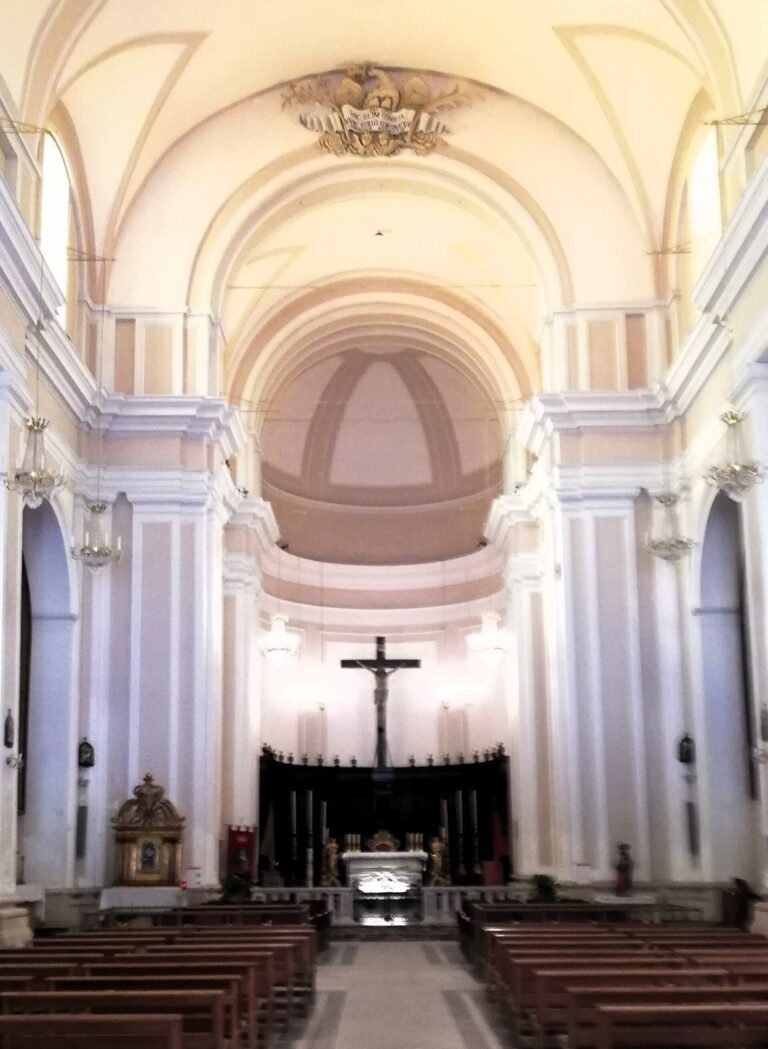
The nave’s vaulted ceiling carries early-eighteenth-century paintings applied to wet plaster by Giovanni Lo Coco, a painter from Acireale. The scenes relate to Saint Agatha and Saint Euplius, another martyr associated with Catania. Along the right side, the bays contain, in order, an altar to Saint Anthony Abbot, an early monastic saint, with an anonymous canvas depicting him on its raised structure; an altar of the Sacred Heart of Jesus, a Catholic devotion to Jesus’s heart as a sign of divine love, with a statue in a niche; an opening; and an altar of the Immaculate Conception, the Catholic teaching that Mary was preserved from original sin from conception, also with a statue in a niche. On the left are an altar to Saint Anthony of Padua, a Franciscan preacher, with a statue in a niche; an altar to Saint Joseph, Jesus’s foster father in Christian tradition, also with a niche statue; an altar of the Pietà, representing Mary mourning the dead Christ, with a large niche containing a sculptural group; and an altar bearing a crucifix, an image of Jesus on the cross.
Apse
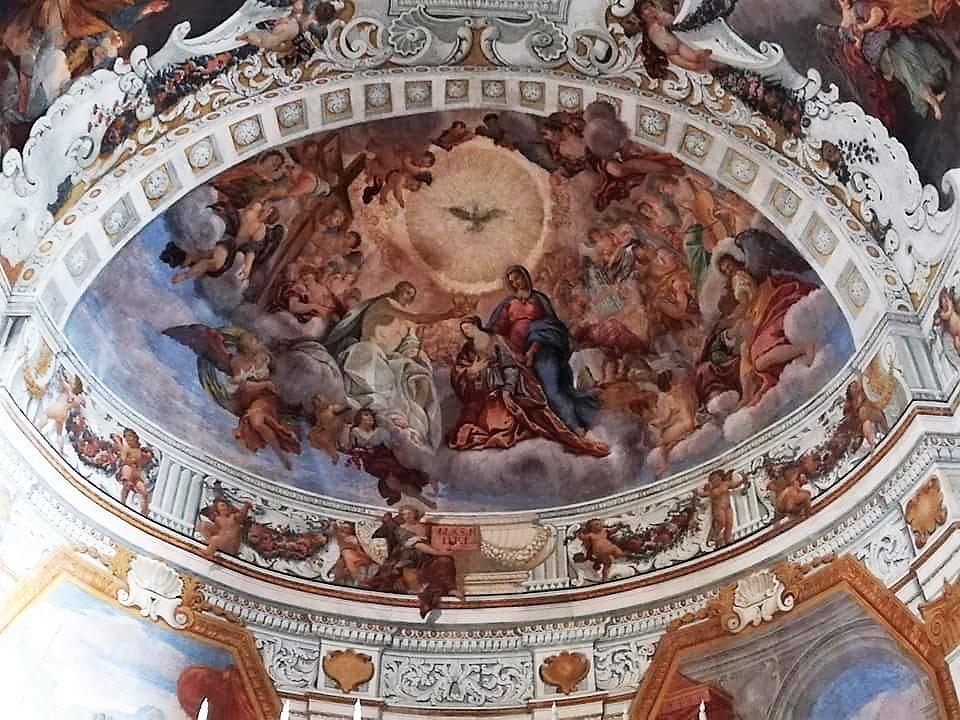
At the end of the church, the apse is covered with paintings by Lo Coco. Panels on its side walls show Saint Agatha before Quintianus, a Roman provincial governor, her scourging, the removal of one breast, and her martyrdom in a furnace. The ceiling depicts Saint Peter appearing to Agatha in prison, God the Father at the center, and angels leading her toward Paradise. Her coronation appears on the apse’s half-dome. The high altar bears images of Saint Agatha and God the Father.