San Vito: A Church and Franciscan Monastery Complex in Palermo
Site at a Glance
- Rating
- 4.9
- Popularity
- Very Low
- Country
- Italy
- Primary era
- Early Modern
- External website
- Open
- Eras represented
- Early Modern
- Civilizations
- Kingdom of Sicily, Spanish
- Site type
- Religious
- Remains
- Monastery
On this page11 sections
History
San Vito is a church and former Franciscan monastery complex in Palermo, Italy, whose development took place mainly during the seventeenth and eighteenth centuries. Its origins lie in a confraternity and a charitable institution created for poor young women who lacked the means or dowries to enter religious life.
Origins in Palermo and Monreale
A Confraternity of San Vito is recorded in Palermo in 1439, during the Aragonese period. It was among the groups supplied with tuna by workers engaged in processing the catch, showing the confraternity’s place within the religious and social life of the city.
During the Spanish period, the knights Gjaimo and Niccolò Zummo, members of the Sovereign Order of Jerusalem, joined the Franciscan priest Giovanni Guadagnino in sponsoring a new religious institution. It was intended for poor young women without the resources or dowries required to enter religious life and was initially planned for the Company of Charity under the title of the Nativity of the Virgin Mary.
Cardinal Giannettino Doria opposed establishing the institution in Palermo because the city already had many monasteries. The founders therefore opened it at the Hospital of Santa Caterina in Monreale in September 1628. The community began its life there on 1 April 1629 with 15 novices and an older woman who served as superior. Its members chose their rule by lot from Benedictine, Dominican, and Franciscan models, selecting the Franciscan Third Order, a branch of the Franciscan tradition for laypeople and religious communities outside the order of friars.
Transfer to Palermo and canonical establishment
The Monreale site proved unhealthy for the novices, leading to the transfer of the institution to Palermo. The Oratory of San Vito was selected as the church for the new complex. The nuns entered the monastery, dedicated to Santa Maria di tutte le Grazie, on 6 October 1630. Papal authorization for enclosure was published on 15 April, and the monastery was canonically established on 15 May 1638.
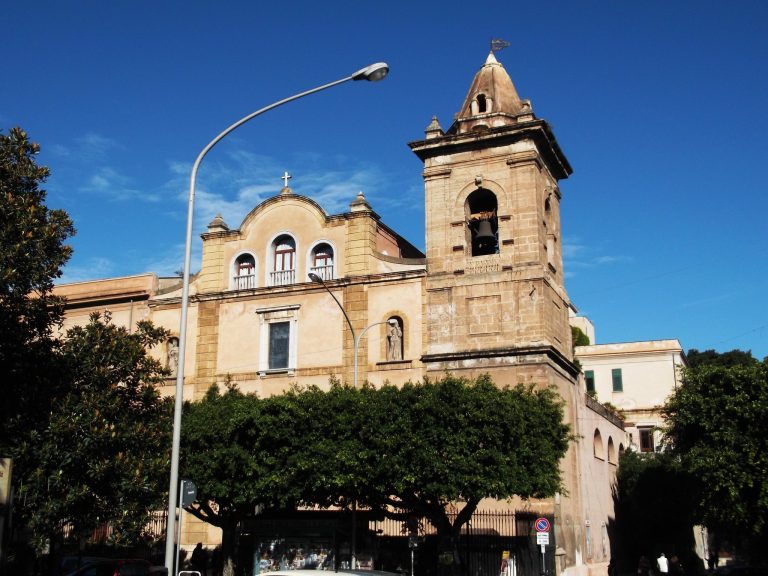
The church was radically renewed and solemnly consecrated on 5 August 1736 by Matteo Trigona, bishop of Syracuse. This rebuilding gave the religious complex its later monumental form beside Via Maqueda and the Teatro Massimo in Palermo’s historic center.
Suppression and continued religious use
State laws of 1866 suppressed numerous religious orders and led to the confiscation of the monastery. The former convent was converted into a barracks and continues to serve as the Giacinto Carini barracks, headquarters of the Provincial Carabinieri Command of Palermo. The Carabinieri are Italy’s national gendarmerie and military police force.
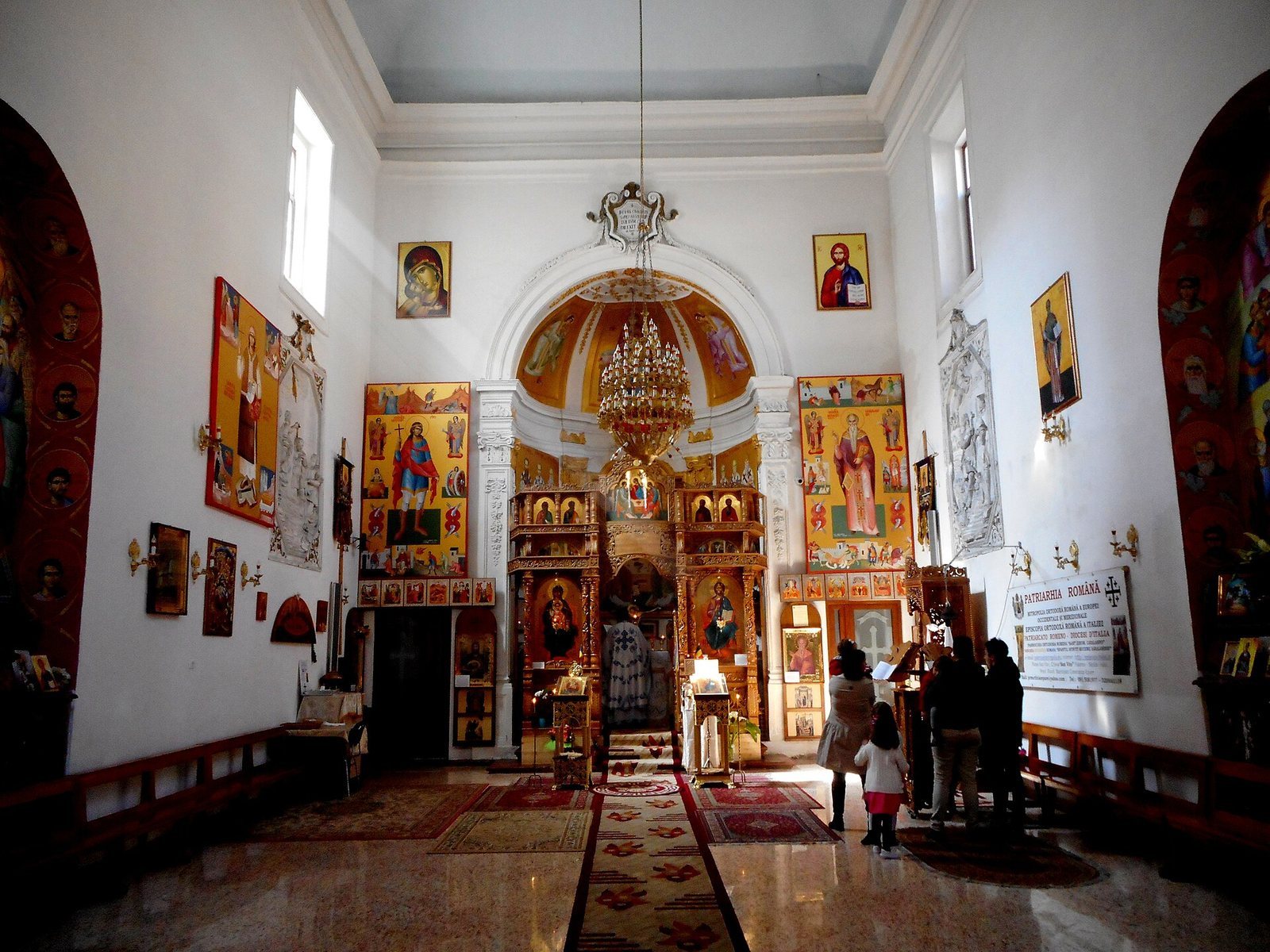
Since 2005, the church has been granted for Romanian Orthodox worship under the Romanian Orthodox Diocese of Italy. This later use preserves the building’s function as a place of Christian worship while the former monastery serves an institutional role.
Remains
The surviving complex includes the church, the Oratory of San Vito, the former monastery with its cloisters and gardens, and the nearby San Vito Bastion. The buildings occupy a substantial historic-center setting adjoining Via Maqueda and the Teatro Massimo. Their features combine basilical planning, columned interiors, stucco decoration, paintings, cloistered spaces, and elements connected with the former defensive works.
Church and oratory
Church of San Vito
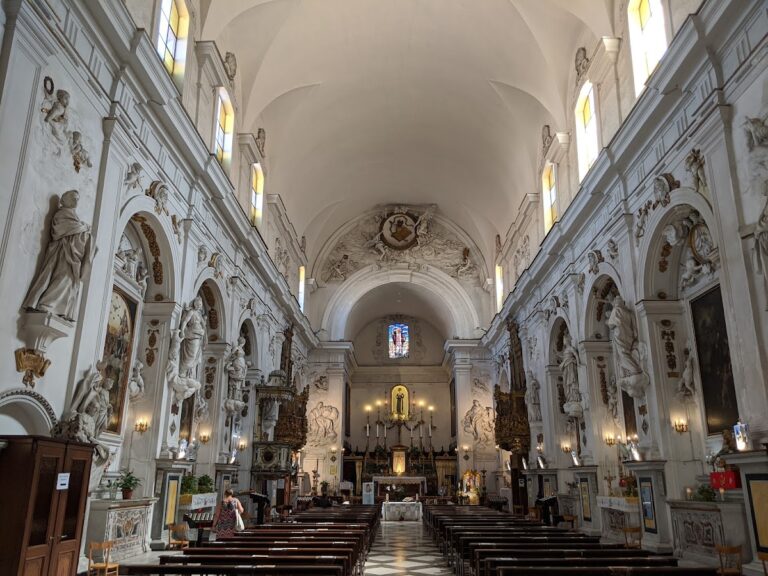
The church has a west-facing facade and a basilical plan with three naves divided by eight columns. A choir is supported by columns, while the interior is enriched with stucco, gilding, and paintings. The plan includes one large chapel and two chapels in each lateral nave. A small statue of San Vito is set into the facade, and another statue stands on the high altar.
The Chapel of Madonna della Grazia occupies the second bay of the left nave. Its altar contained Pietro Novelli’s painting of the Madonna della Grazia, which provided the monastery’s title. Between the chapels is Rosalia Novelli’s Annunciation, while Pietro Novelli’s Madonna of the Rosary is kept in the sacristy. Pietro Novelli, a seventeenth-century Sicilian painter, also created the Holy Family located between the chapels of the right nave.
In front of the large chapel are the documented burials of the Zummo brothers. Giacomo died in 1642 and Nicola in 1649, and both are identified as Knights of Jerusalem.
Oratory of San Vito
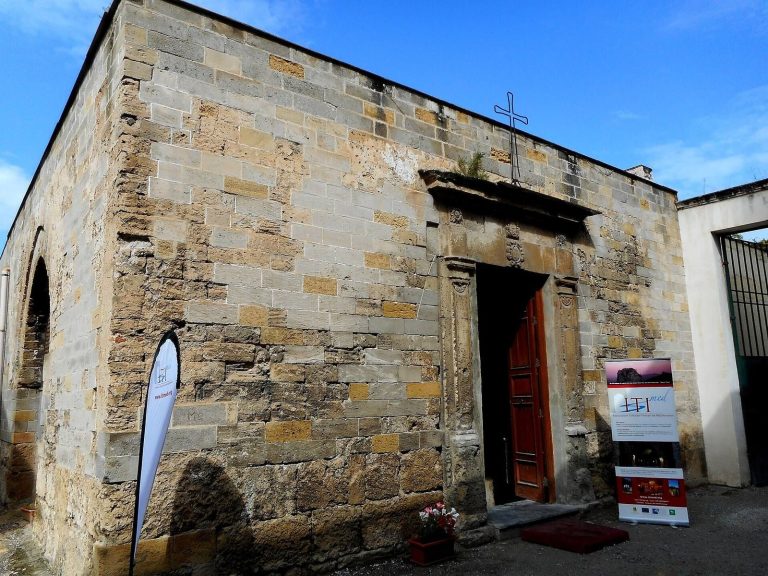
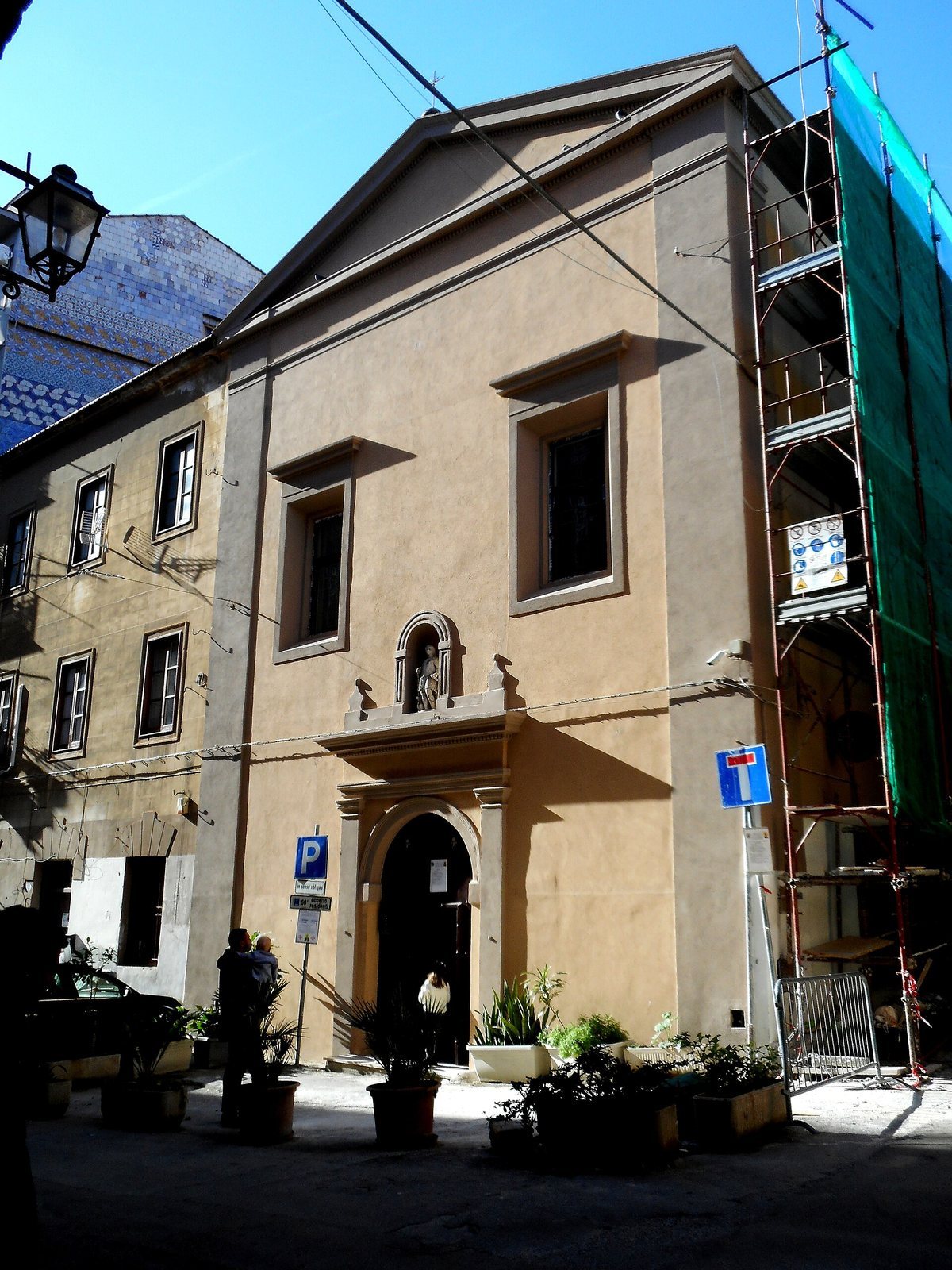
The Oratory of San Vito has a gabled facade and a classical portal with a small niche containing a statue of the saint. A second statue of San Vito stands on the high altar. Four nineteenth-century stucco panels on the walls depict episodes from the martyr’s life. San Vito is a Christian martyr and saint to whom the church is dedicated.
A Renaissance wooden sculpture of San Vito, dated 1542, was made by Giovanni Gili and reflects the influence of Antonello Gagini, a major Renaissance sculptor active in Sicily. The sculpture formerly stood on one of the paired small marble altars along the long sides of the oratory and is now held in the Diocesan Museum.
Monastery and defensive works
Monastery cloisters and gardens
The monastery contains two large colonnaded cloisters surrounded by several gardens. One garden, beside the Porta Carini bastion, was granted by the Palermo Senate in 1781. These colonnaded and planted spaces form the principal surviving elements of the former convent’s internal organization.
San Vito Bastion
A narrow covered passage connects the monastery with the San Vito Bastion. After the bastion ceased to have a defensive function, the nuns established a roof garden on the passage. The bastion, also known as the Gonzaga Bastion, was built in 1537 on the orders of Ferrante I Gonzaga, viceroy of Sicily.