San Giuseppe Church in Brescia: A Franciscan Church and Monastery
Site at a Glance
- Popularity
- Medium
- Country
- Italy
- Primary era
- Early Modern
- Eras represented
- Early Modern, Modern
- Civilizations
- Italian, Venetian
- Site type
- Religious
- Remains
- Church
On this page16 sections
History
Franciscan foundation and construction
The Church of San Giuseppe is a Roman Catholic church in Brescia, Italy, built for Observant Franciscan friars, a branch of the Franciscan order committed to stricter observance of its rule. Construction began in 1519, and the church combines Renaissance design with late Gothic influences. Together with its monastery, it later became an important center of religious, cultural, and social life in Brescia.
On 22 February 1515, the friars acquired two houses in the Curia dei Fabii, in the city’s artisan and commercial district. The property included deteriorated houses, gardens, hospices, and a public brothel. Their presence was intended to support social order and displace prostitution and other illicit activity from the city center. The friars’ preaching against usury also suited the municipality’s interest in the Monte di Pietà, a charitable institution founded in 1490 that lent money against pledged goods as an alternative to usurious loans.
The acquisition came during urban renewal promoted by Brescia and Venice, including the creation of the nearby Piazza Grande and its surrounding buildings. In 1516, Venice ordered a military clearance zone around the city walls, requiring the removal of buildings within 1.5 kilometers. The order affected several religious sites, including the Observants’ first Brescia convent at Sant’Apollonio. Venice compensated the friars for buildings lost to the clearance, helping fund the new church and convent at San Giuseppe. The new complex also provided a central meeting place intended to counter the influence of the convents of San Francesco.
Canon Mattia Ugoni laid the church’s first stone in 1519. The roof was in place by 1521, while the sacristy was built and work on the cloister began between 1531 and 1534. By the end of 1534, construction had started on the upper part of the complex intended for the novitiate, where people preparing to join the order were formed. Most of the building work was complete by 1541.
Expansion and religious life
From 1557, the friars bought additional houses and courtyards for further expansion. The third cloister was completed in 1610, and a large library was built in 1757 in the crosswise building between the first and second cloisters. The chapels also connected the church with the city’s trades. Cheese and salami makers were associated with Saint Lucius; stonemasons with Saints James, Louis, and Gotthard; barbers and hairdressers with Saint Martin de Porres; shoemakers and leatherworkers with Saints Crispin and Crispinian; carpenters and artisans with Saint Joseph; fruit sellers with Saint Charles Borromeo; bakers with Saint William; and tailors with Saint Homobonus.
The Avogadro Chapel served as a family chapel from 1531. Built in 1530, the Chapel of Saint Homobonus was first dedicated to Saint Francis. From 1628, an altar in the chapel of the Franciscan Martyrs in Japan commemorated Franciscans who had died while preaching there. The Chapel of Saint Martin de Porres received its dedication after Pope Paul VI canonized the saint in 1966.
Suppression and later use
A 1797 decree suppressed religious corporations, confraternities, and similar organizations. San Giuseppe faced closure, but its church was permitted to continue worship because it remained well attended. In 1810, the Order of Friars Minor was abolished in the region and the complex passed into state ownership, while the church stayed open for worship.
A suppression law passed in 1866 also applied to San Giuseppe, following a legislative proposal made two years earlier. The church returned to worship in 1896 after a legal dispute between the Brescia tax authority and the diocese. In 1973, the Diocese of Brescia acquired the third cloister on the condition that it be used as a diocesan museum. The former monastery now houses the Diocesan Museum of Sacred Art, whose collection includes paintings, vessels used in worship, and furnishings from the fifteenth to nineteenth centuries, entrusted to the museum or recovered from churches in the diocese.
Remains
Exterior and monastic precinct
Church exterior
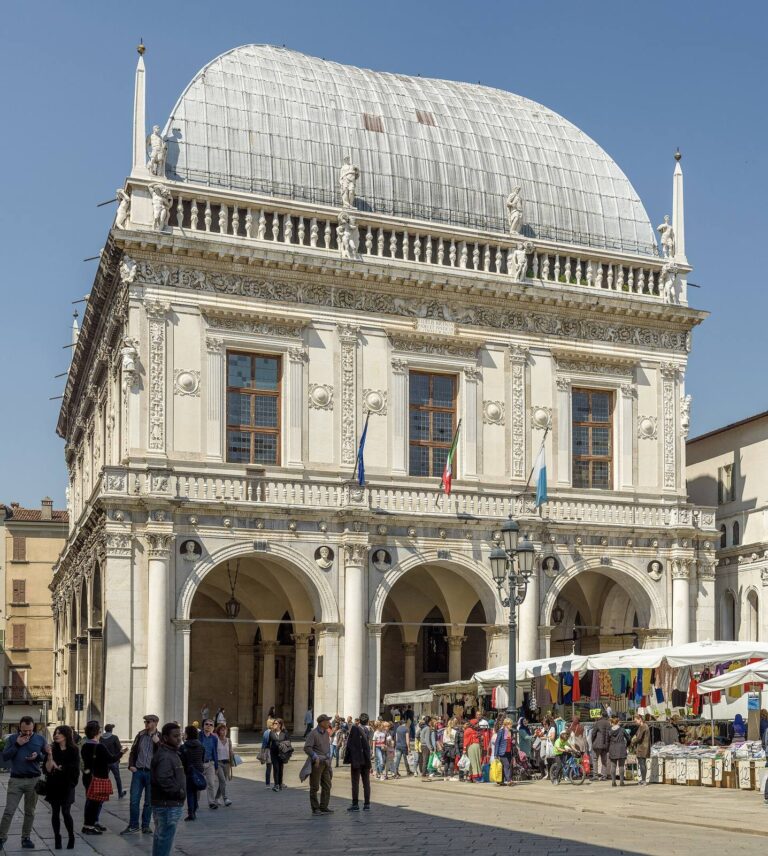
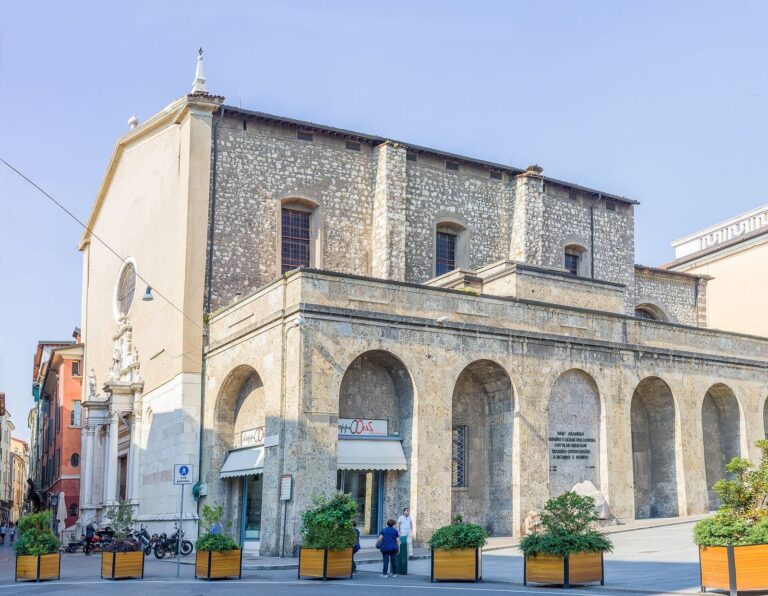
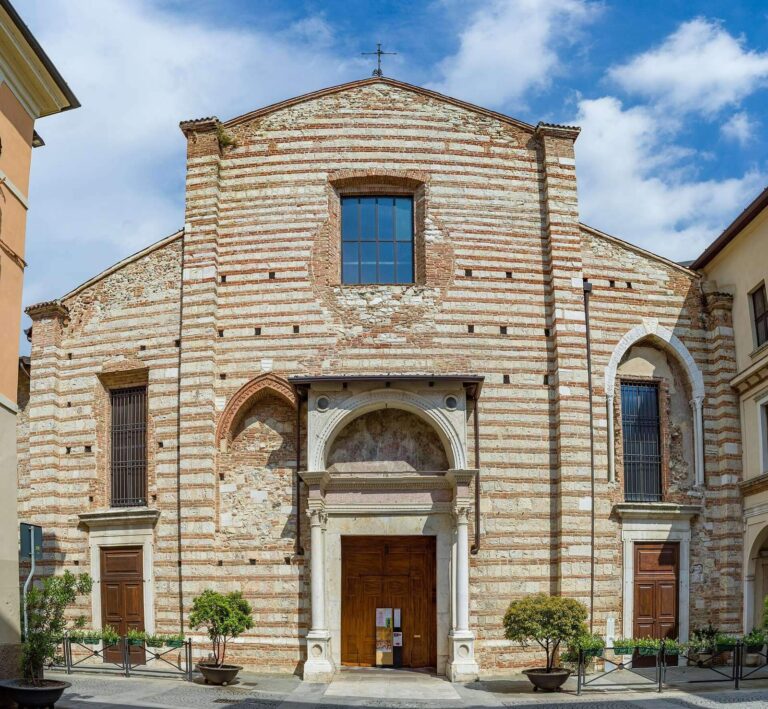
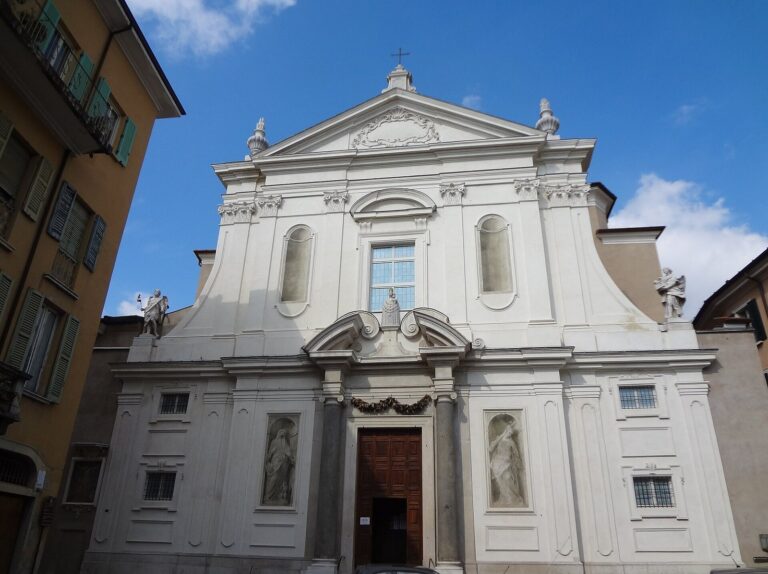
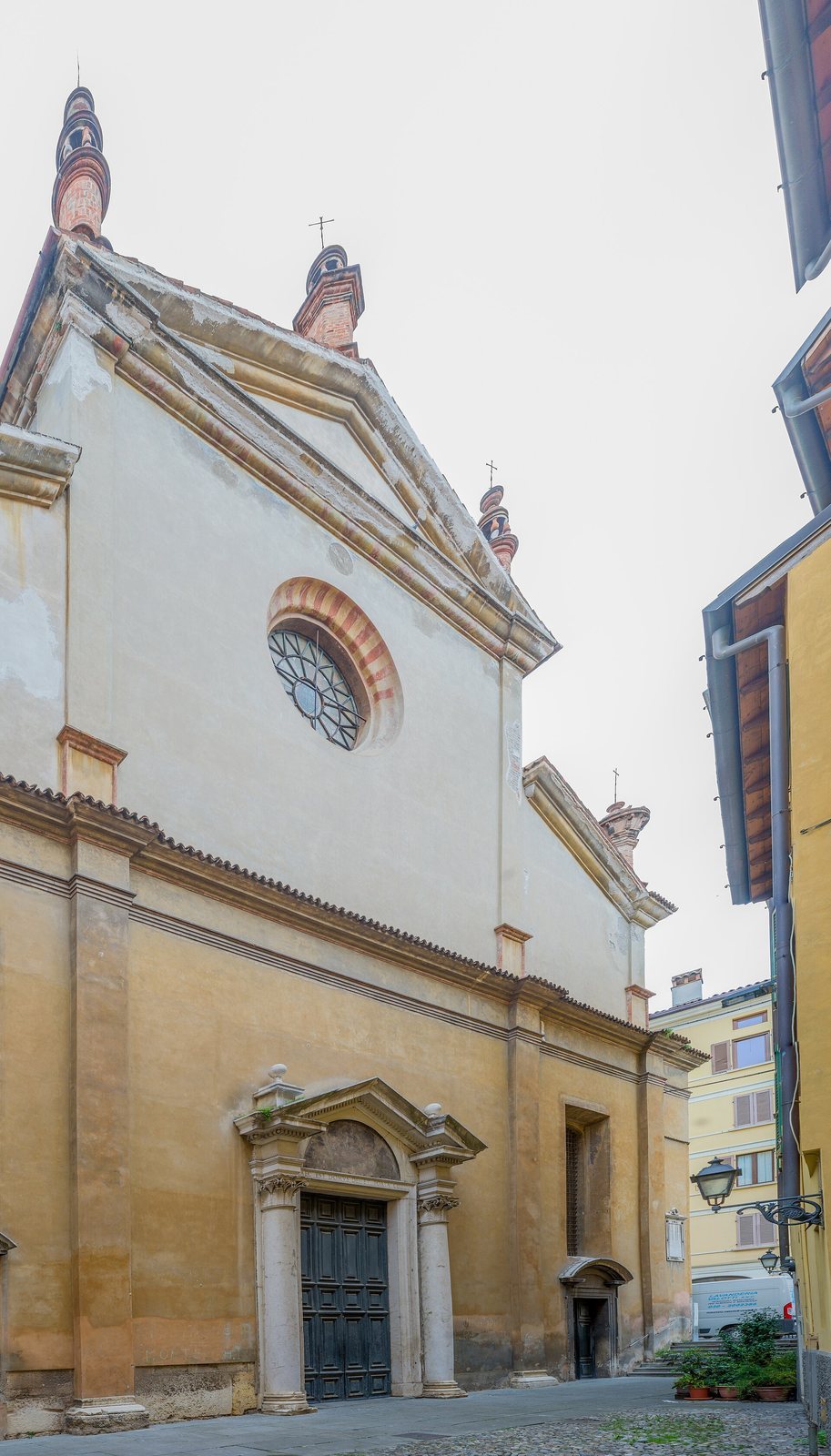
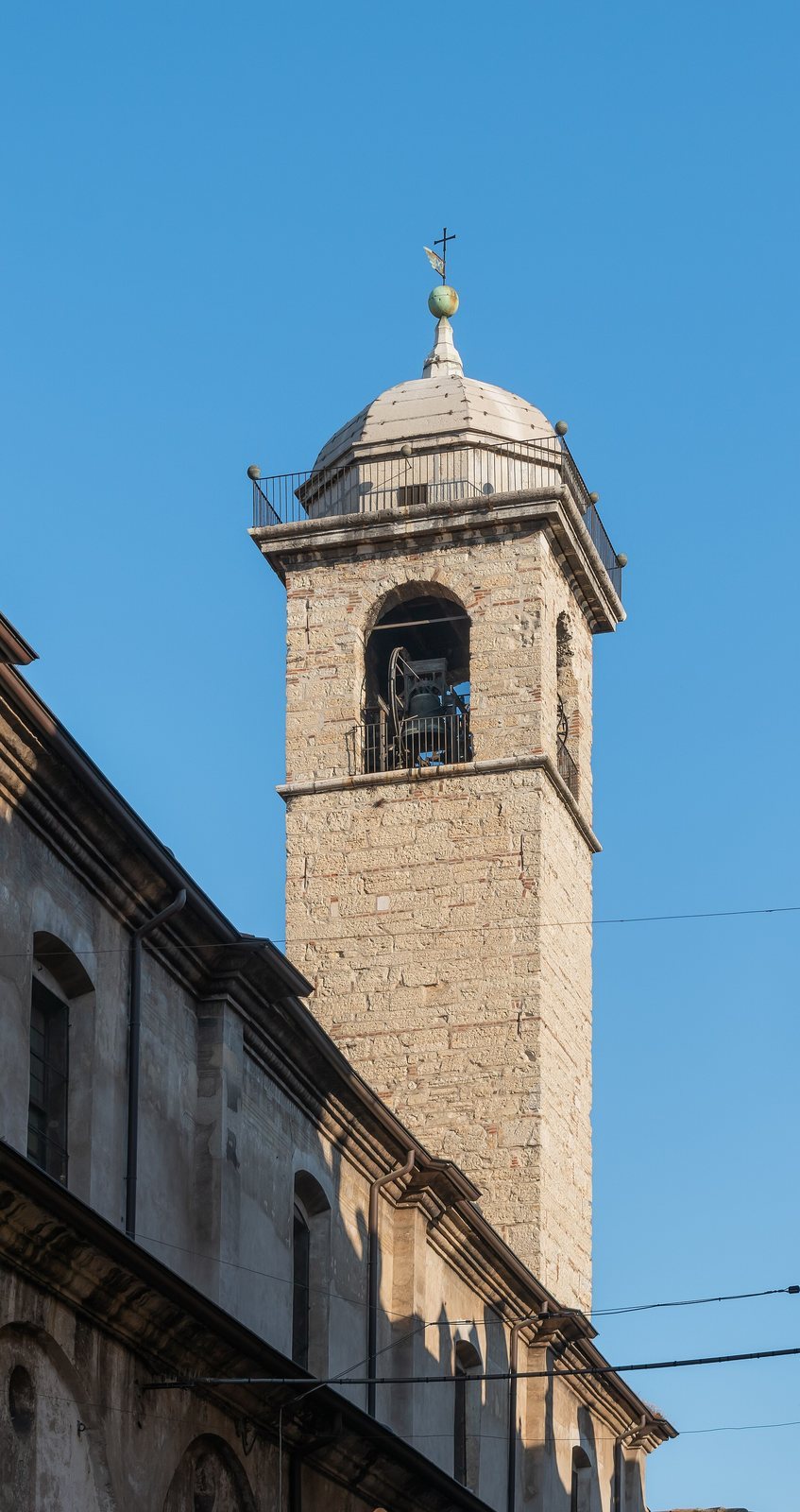
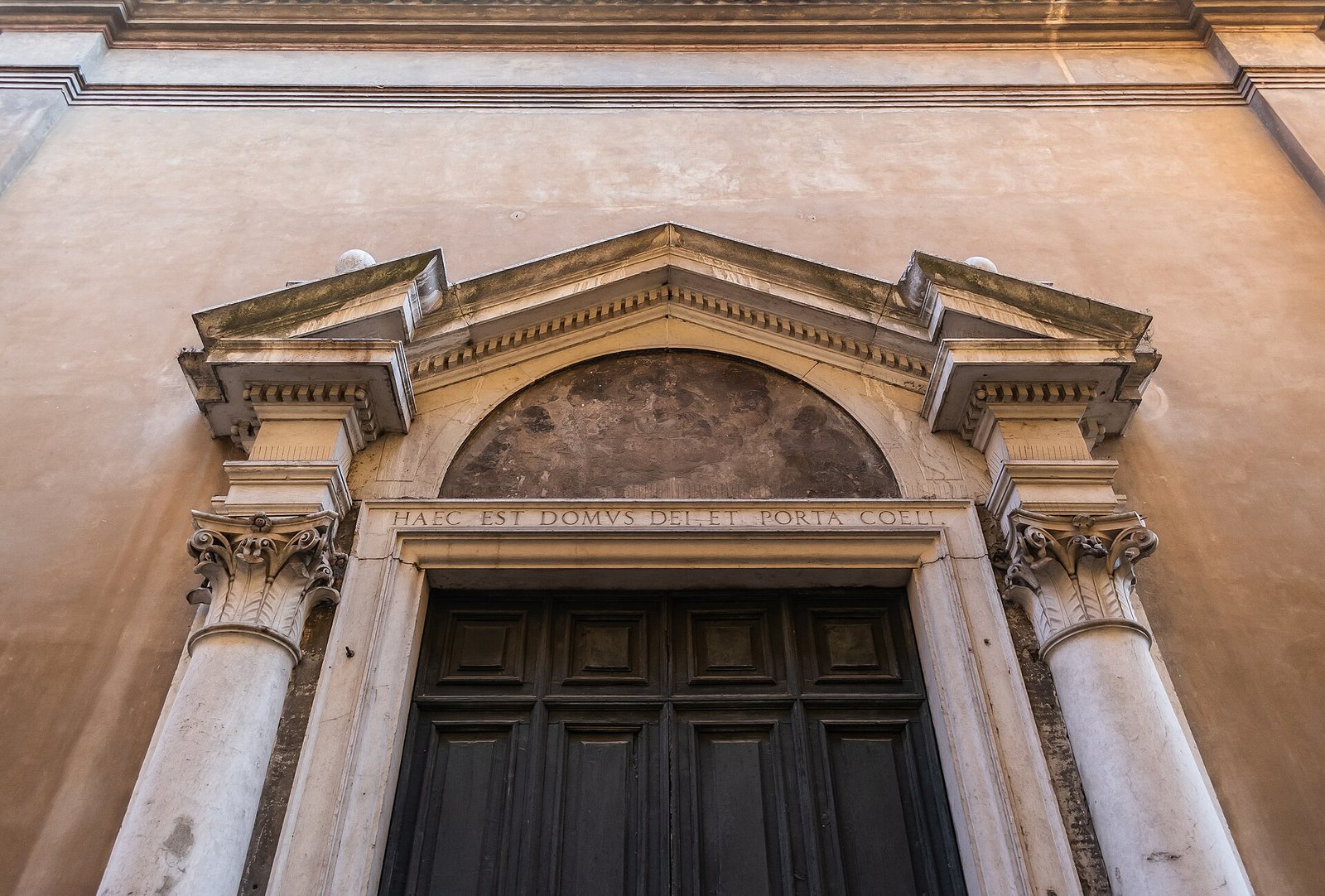
The church preserves a Renaissance urban setting that is unusual in this quarter. Tall houses in the medieval neighborhood closely enclose its façade, limiting the view of the whole front. Three sixteenth-century terracotta pinnacles with Gothic-inspired forms crown it and can be seen from Piazza della Loggia. The sixteenth-century entrance portal was made by sculptor Stefano Lamberti. The bell tower, built in the early seventeenth century by Pier Maria Bagnadore, stands along the church’s side on Via Gasparo da Salò.
Cloisters
Frescoes in the smaller north cloister depict monasteries and convents that once stood in the Brescia territory. These painted views provide evidence for reconstructing buildings that have since been changed or demolished. In the smaller south cloister, brief scenes with captions show sins being punished and virtuous deeds.
Interior layout and furnishings
Nave and side aisles
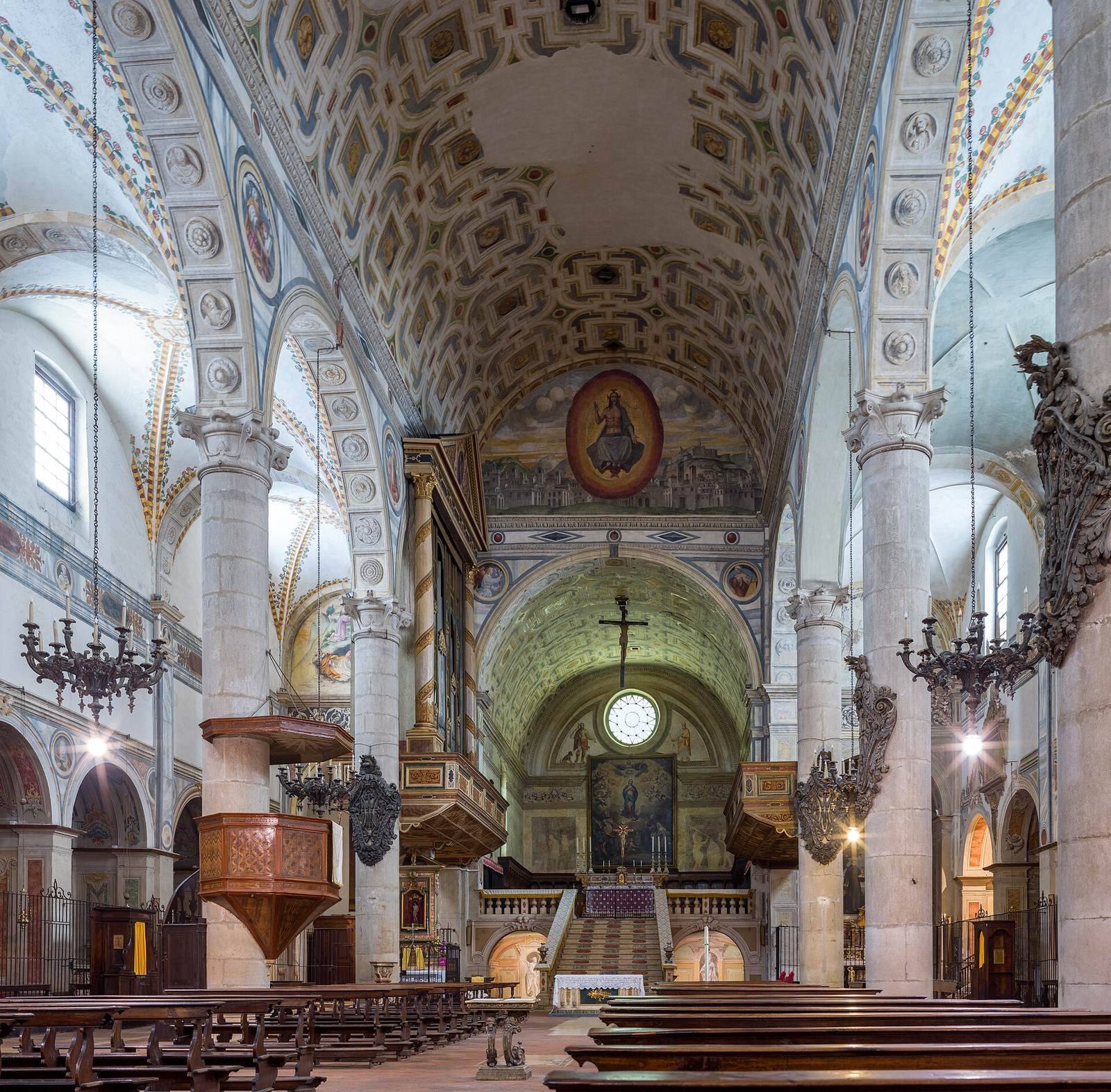
The church has a long, three-aisled plan without a transept. Its central nave rises well above the two side aisles. A continuous pattern of square panels decorates the nave’s barrel-vaulted ceiling, while the narrower aisles have Gothic cross-vaults whose projecting ribs and central stones are picked out in contrasting colors. Rows of side chapels line both aisles, and several also contain burials.
Raised apse
The altar end of the church is raised above a crypt and reached by steps. This unusual arrangement allowed the church to retain its intended length despite a private lane crossing the planned site of the apse. The landowner apparently refused permission to build across the lane, so the apse was elevated and the crypt shortened; a small passage ran beneath the church. The lane has since disappeared, while the raised altar end and shortened crypt remain.
Right-aisle chapels
The Chapel of Saint Lucius contains Francesco Paglia’s painting The Charity of Saint Lucius and a multicolored marble altar dated 1717. In the Chapel of Our Lady of Sorrows, varied-colored stucco decorates the arch, and a fresco of the Virgin stands between pink-marble columns. Pietro Cazzago commissioned the chapel; the fresco was moved there from the corridor below the library. Romanino’s Pietà, once kept in this chapel, was transferred to the Pinacoteca Tosio Martinengo in 1868.
A complete fresco cycle by Floriano Ferramola fills the Chapel of Saints James, Louis, and Gotthard. Saint John of Capestrano appears on one side wall, Saint Bernardino of Siena on the other, and the three chapel saints on the rear wall. Pietro Avogadro’s Four Crowned Saints, now in the Diocesan Museum of Brescia, covered the cycle in 1716, but the earlier paintings remained intact. Other chapels contain Roberto Galperti’s nineteenth-century painting in the Chapel of Our Lady of Pompeii, Pietro Scalvini’s Saint Apollonia Altarpiece of 1761, and a seventeenth-century depiction of Saints Dominic and Francis meeting, above a simply designed marble altar.
In the Chapel of Saint Martin de Porres, Mario Pescatori’s 1905 painting of the saint hangs on the right wall. Above the eighteenth-century altar is an altarpiece of Saint Didacus attributed to Orazio Pilati. Camillo Rama painted the altarpiece for the Chapel of the Franciscan Martyrs in Japan. The Chapel of Saints Crispin and Crispinian holds Pietro Avogadro’s Martyrdom of Saints Crispin and Crispinian, commissioned in 1706 and regarded as his masterpiece; its altar has an elegant eighteenth-century front panel.
The Avogadro Chapel has a funerary monument to Matteo Avogadro above its arch, dating to 1547, the year he died. Romanino’s Avogadro Altarpiece, formerly at the chapel altar, was transferred to the Pinacoteca Tosio Martinengo in 1868. The altar was removed in 1954 when a side entrance was made. At the head of the aisle, the Chapel of Saints Anthony of Padua and Anthony Abbot has a canvas of its two patron saints attributed to Palma il Giovane and an altar dated 1630. Its candle stand is attributed to the Corbarelli workshop. A small gallery above it rests on four slender columns and contains three black-marble niches with an oil-painted Annunciation. Bishop Mattia Ugoni’s tomb lies before the altar; the chapel was once dedicated to him.
Left-aisle chapels
A small shrine against the next-to-last column of the left nave contains a wooden Ecce Homo, an image of Christ presented before his crucifixion. Nearby is a seventeenth-century altar front made from black, white, and red stone in the Mannerist style, a European style following Renaissance forms. The Chapel of the Crucifix contains a large wooden crucifix and a painting of Blessed Francesco d’Aragona, protector of students. Its silver candle stand is set against red satin. The Chapel of Saints Francis and Firmus has a painting of the Madonna and Child with the two saints, dating to the second half of the eighteenth century.
In the Chapel of the Coronation of Mary, Antonio Gandino’s altarpiece shows the Virgin crowned with Saints Stephen and Lawrence. Its original gilded wooden frame has twisted columns; the altar front is a late-sixteenth- or early-seventeenth-century Mannerist work. Francesco Bernardi’s seventeenth-century painting in the Chapel of the Holy Name of Jesus shows the monogram of Jesus with Saints John of Capestrano and Bernardino of Siena. The altar is also from the seventeenth century, while its candle stand was later remodeled in the Neoclassical style. The Chapel of Saints Catherine of Bologna and Margaret of Cortona contains Ferdinando del Cairo’s painting of Jesus with the two saints and a seventeenth-century altar of colored marble.
Luca Mombello’s 1580 painting of the Madonna and Child with Saints Sebastian, Roch, and Joseph is in the Chapel of Saint Joseph. Pietro Scalvini painted the altarpiece of Saints Peter Regalado and Peter of Alcantara. In the Chapel of Saint Charles Borromeo, Antonio Dusi’s 1751 painting shows Saint Charles with the Archangel Michael and Saint Gaetano; eighteenth-century frescoes also cover the walls. Francesco Savanni’s Bakers’ Altarpiece, dated 1753, is in the Chapel of Saint William, with eighteenth-century stucco around it and a late-sixteenth-century altar front. Costanzo Antegnati’s tombstone lies opposite the altar. Giacomo Zanetti’s 1737 canvas of Saint Homobonus hangs in that chapel; its altar, made in the 1950s, translates the design of an earlier wooden altar into marble.
Main altar and choir
Giovanni Antonio Cappello’s monumental Saint Joseph Altarpiece, dated 1719, dominates the main altar. The inlaid choir stalls were made by Clemente Zamara in 1500 for the church of San Rocco sui Ronchi, which was later destroyed. They were subsequently brought to San Giuseppe.
Crypt of Saint Roch
The crypt is dedicated to Saint Roch and took shape after a passage was made between the third cloister and the church. Its low ceiling spans three arches, and two columns support the central aisle. Reused column tops bear the heraldic arms of Bishop Giovanni Ducco. In the late eighteenth century, Sante Cattaneo covered the crypt with frescoes of Saints Roch and Ursicinus, co-patrons of the church. Pietro Melchiorre Ferrari painted the ceiling, while the Calegari workshop made stucco angel heads and childlike figures for the arches. Beneath the plain altar table is an altar front of Botticino marble, dated 1778, which contains relics of Saint Ursicinus.
Organ and burials
Graziadio Antegnati made the large organ in 1581 with the help of his son Costanzo; their joint signature is inside its largest pipe. Zaccaria Respini altered it in 1804, adding low pedal pipes. De Lorenzi raised its pitch by more than a semitone in 1857, and Porro changed its arrangement of stops in 1902, both removing and adding them. Armando Maccarinelli restored the instrument and reinstated its earlier arrangement in 1955. It has one keyboard and a pedalboard permanently coupled to it, and is among the oldest organs in Lombardy.
Musician Costanzo Antegnati is buried near the beginning of the left nave. Composer Benedetto Marcello’s burial lies at the far end of the central nave, just before the steps to the altar.