San Gennaro dei Poveri: A Church and Hospital Complex in Naples
Site at a Glance
- Popularity
- High
- Country
- Italy
- Primary era
- Early Modern
- Eras represented
- Classical, Early Modern
- Civilizations
- Habsburg, Habsburg Spain, Kingdom of Naples, Spanish
- Site type
- Civic
- Remains
- Hospital
On this page8 sections
History
San Gennaro dei Poveri is a church and hospital complex in Naples, Italy, on a site where a Christian church stood in the fifth century. It later became Naples’s first hospice for poor people and served as the city’s principal institution of this kind until the Royal Hospice for the Poor was built in the 1750s.
Early church and monastery
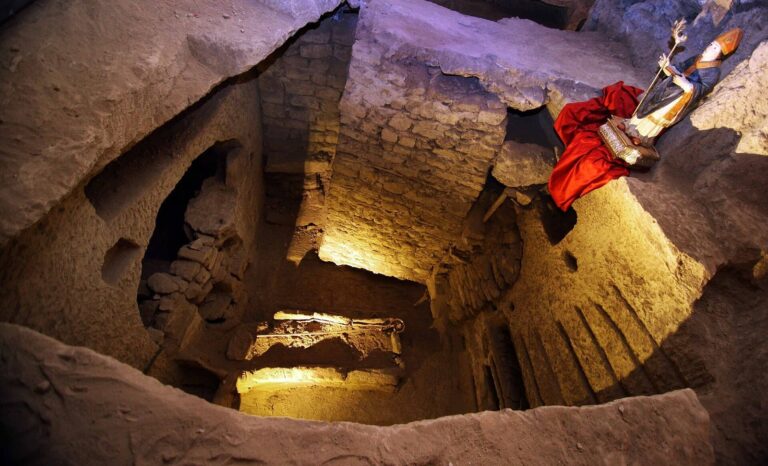
A Roman temple dedicated to Vulcan may have stood beneath the church. Tradition attributes the arrival of Saint Januarius’s relics, remains or objects revered for their association with a saint, to Severus, bishop of Naples, who died in 409. Januarius was an early Christian bishop and martyr venerated as Naples’s patron saint. The relics were later moved in stages, including a transfer to Benevento between 817 and 832, and were eventually gathered at Naples Cathedral. The church fell into ruin after the move to Benevento.
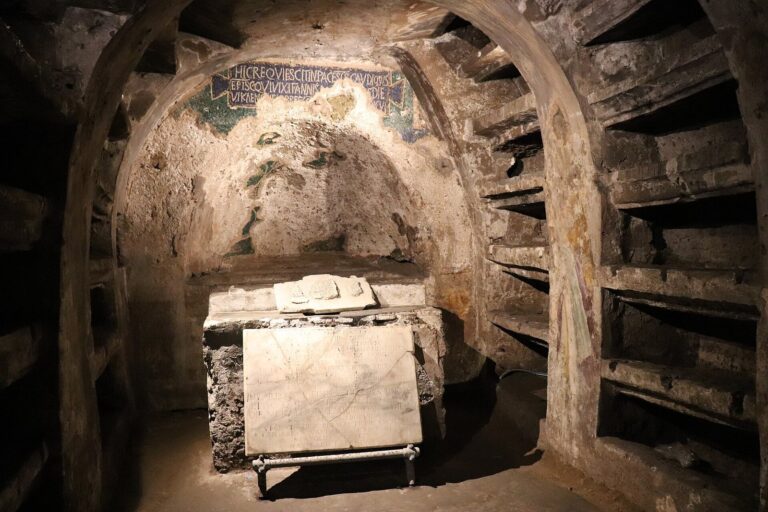
By the early ninth century, a Benedictine monastery and an attached hospital had been established under Archbishop Athanasius I. Benedictine monks follow the Rule of Saint Benedict. In 872, Bishop Athanasius of Naples restored the church and attached it to the monastery of Saints Januarius and Agrippinus. Later in the ninth century, Athanasius of Naples, then both archbishop and duke, transferred the body of his uncle and namesake from Montecassino Abbey to the church.
Hospital and hospice
Dissension within the monastery led to its dissolution and abandonment in the fifteenth century. In 1468, Cardinal Oliviero Carafa, a senior official of the Catholic Church, put the complex to use as a hospital for plague victims, supported by contributions from several neighborhoods. After the plague of 1656, the hospital was enlarged and provided with a hospice dedicated to Saints Peter and Januarius. In 1669, Viceroy Pietro Antonio of Aragon, a governor acting on behalf of a monarch, converted it into a hospice for poor people, with the aim of moving indigent disabled people out of the city center.
After later financial difficulties, King Joachim Murat intervened to support the institution. San Gennaro dei Poveri continues to function as a hospital.
Remains
The elongated complex rises toward Capodimonte, just south of the Basilica dell’Incoronata Madre del Buon Consiglio. Its buildings are arranged along an extended axis, with an entrance front and courtyard leading toward the former church and a stairway at the far end.
Principal architectural features
Entrance and courtyard
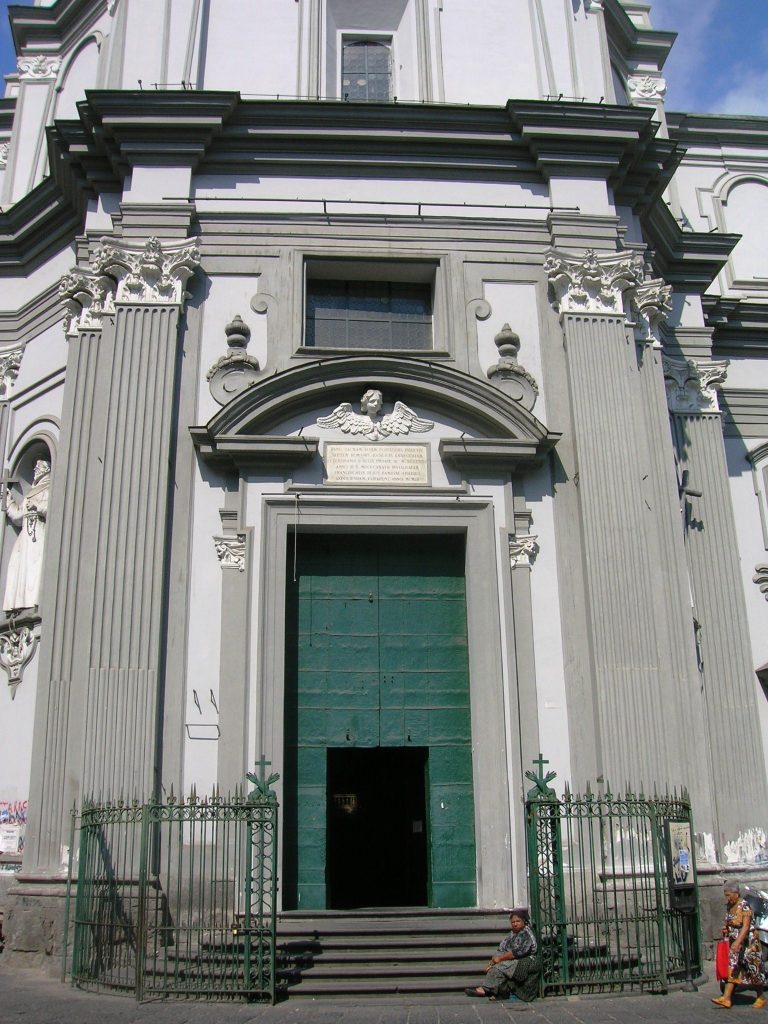
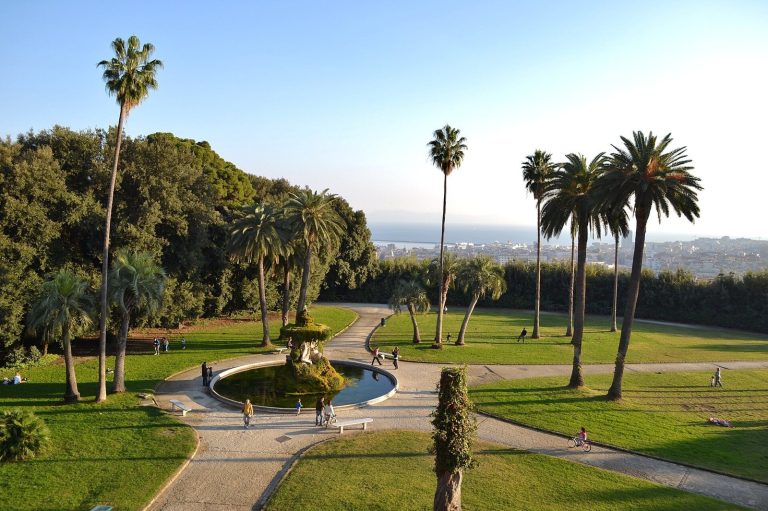
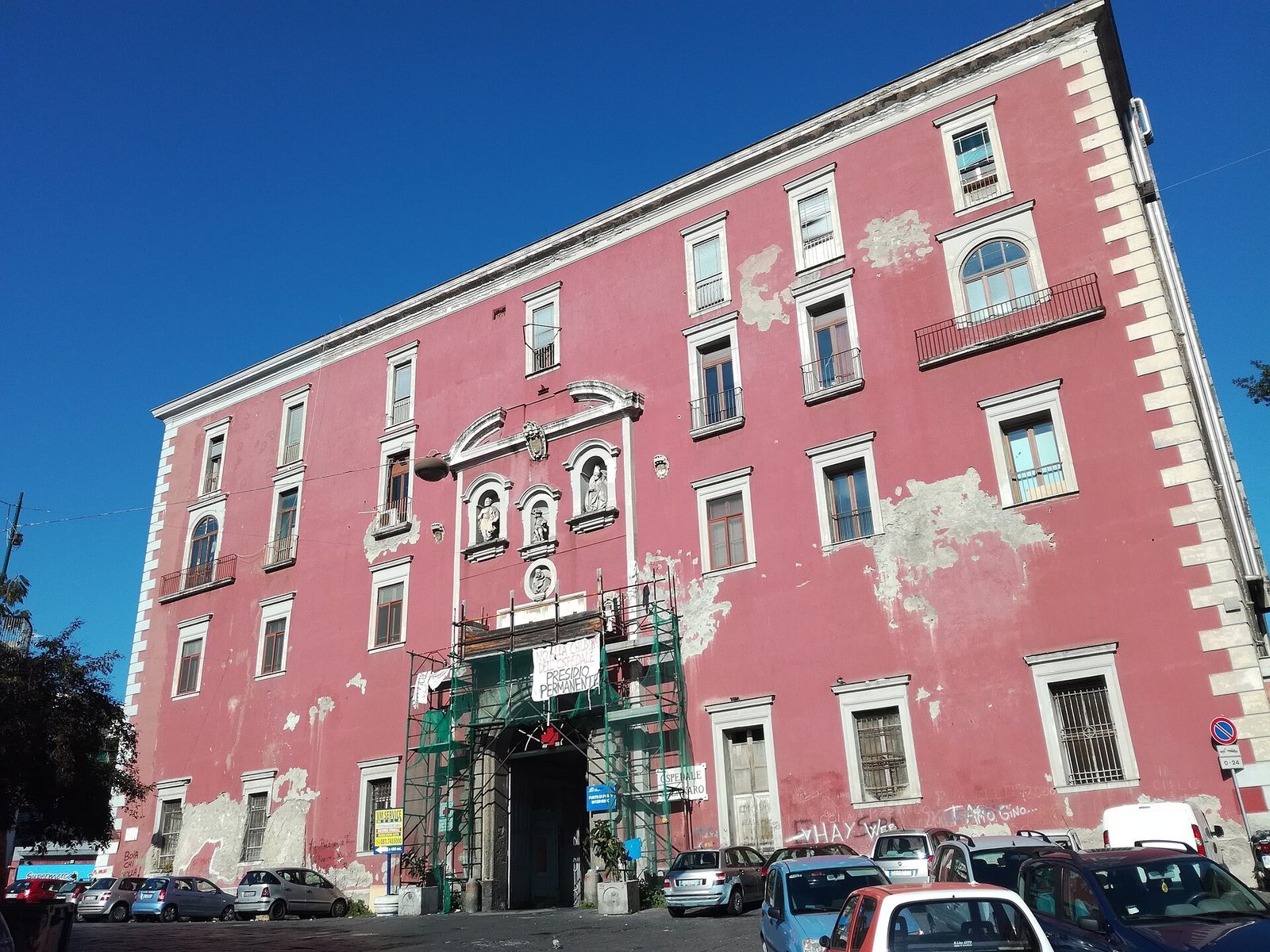
The narrow, four-storey façade faces the Parco di San Gennaro. A large rounded portal beneath niches containing statues opens into an elongated courtyard flanked by parallel wings. The statues include Saint Peter and Saint Januarius, sculpted by the architect and sculptor Cosimo Fanzago.
Former church
The former church of San Gennaro extra Moenia, meaning outside the walls, stands at the north end of the courtyard. It is now used for exhibitions.
Staircase and vestibule
At the far end of the courtyard, a staircase with two flights is aligned with a bell gable, a wall with openings for bells, and leads to a vestibule, or entrance hall. Its walls include sixteenth-century paintings by Agostino Tesauro and coats of arms belonging to the city of Naples.