Sakurai Chausuyama Kofun: An Early Kofun-Period Royal Burial Mound
Site at a Glance
- Rating
- 3.8
- Popularity
- Very Low
- Country
- Japan
- Primary era
- Classical
- External website
- Open
- Eras represented
- Classical
- Civilizations
- Unclassified
- Site type
- Burial
- Remains
- Burial Mound
On this page12 sections
History
Sakurai Chausuyama Kofun is a Japanese burial mound in Sakurai, Nara, built during the latter part of the third century in the early Kofun period, an era of monumental mound construction from the third to the sixth centuries. Associated with the developing early Yamato polity, it was probably constructed after Hashihaka Kofun and became one of the largest burial mounds of its time. Its size, rich burial assemblage, and influence on later royal tombs have made it central to discussions of early political authority in the Nara region.
Construction in the Early Kofun Period
The mound is also known as Tobiyama Chausuyama Kofun. It stands in Tobiyama beside the Iware area and is ranked thirty-second in size nationally. The person buried within it has not been identified. Proposed candidates include Ohiko no Mikoto, who is associated in the chronicles with the Four Way Generals; Prince Akodate, a figure in imperial genealogical tradition; and Iwarehiko, the legendary ruler later known as Emperor Jimmu.
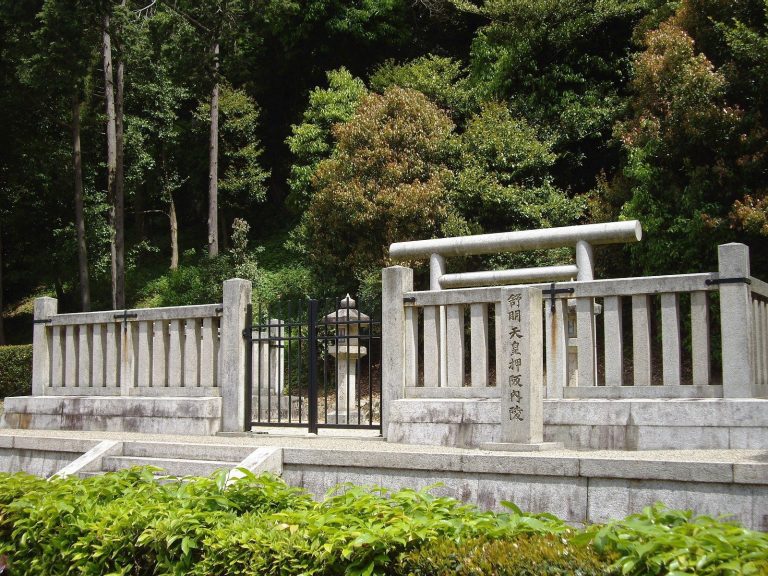
The mound does not appear in the Kojiki or Nihon Shoki, and it is outside the imperial-tomb designation. One interpretation identifies it with a king ruling from the Iware region. Another sees it as the burial place of a political ruler whose authority was paired with that of a ritual ruler buried at Nishitonozuka Kofun. A further proposal connects the tomb with a ruling lineage that sought to distance itself from the political system associated with Yamatai after the death of Himiko, a third-century female ruler known from the Chinese Account of the Wa People.
Debate over the Burial’s Status
The mound and nearby Mesuriyama Kofun are relatively separate from the Makimuku site and lack the documentary traditions associated with some other early royal tombs. These circumstances have been used to question a royal identification. Its exceptional dimensions, the quantity and quality of its grave goods, and its apparent influence on the shape and measurements of later royal tombs have supported the opposing view that it belonged to an authority comparable to an early Yamato king. These interpretations remain proposals rather than secure identifications.
Archaeological Investigation and Protection
Excavation of the rear circular section took place in 1949 and 1950, followed by surveys of the surrounding area. A radar investigation in 2007 confirmed an underground stone drainage channel beneath the mound, and the burial chamber was examined again during excavations in 2009. In 2023, research by the Nara Prefectural Kashihara Archaeological Institute revised the estimated number of bronze mirrors represented among the finds to at least 103, strengthening interpretations of the burial as one associated with exceptionally powerful royal authority.
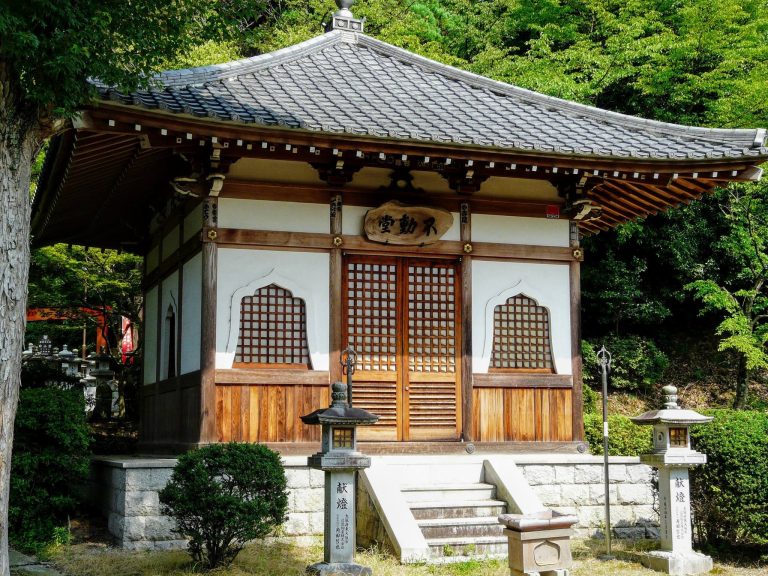
Sakurai Chausuyama Kofun became a National Historic Site in 1973. Its protected area was enlarged in 1981, 2004, and 2016. Munakata Shrine stands beyond the dry moat at the rear of the mound. It is identified with the Munakata Shrine of Munakata District in Chikuzen, although the date when the shrine was established at this location and the date of its buildings are unknown.
Remains
Mound Form and Setting
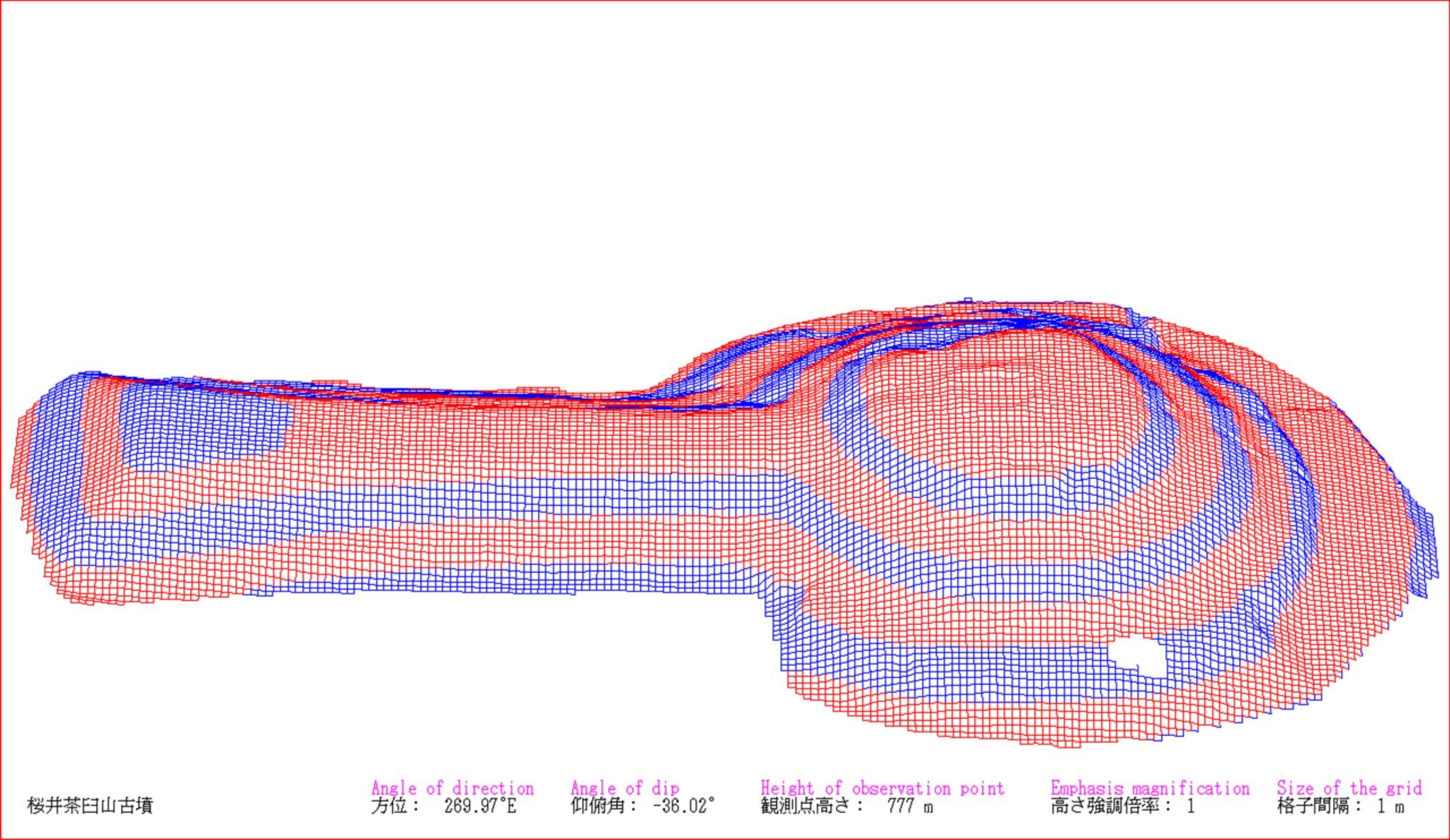
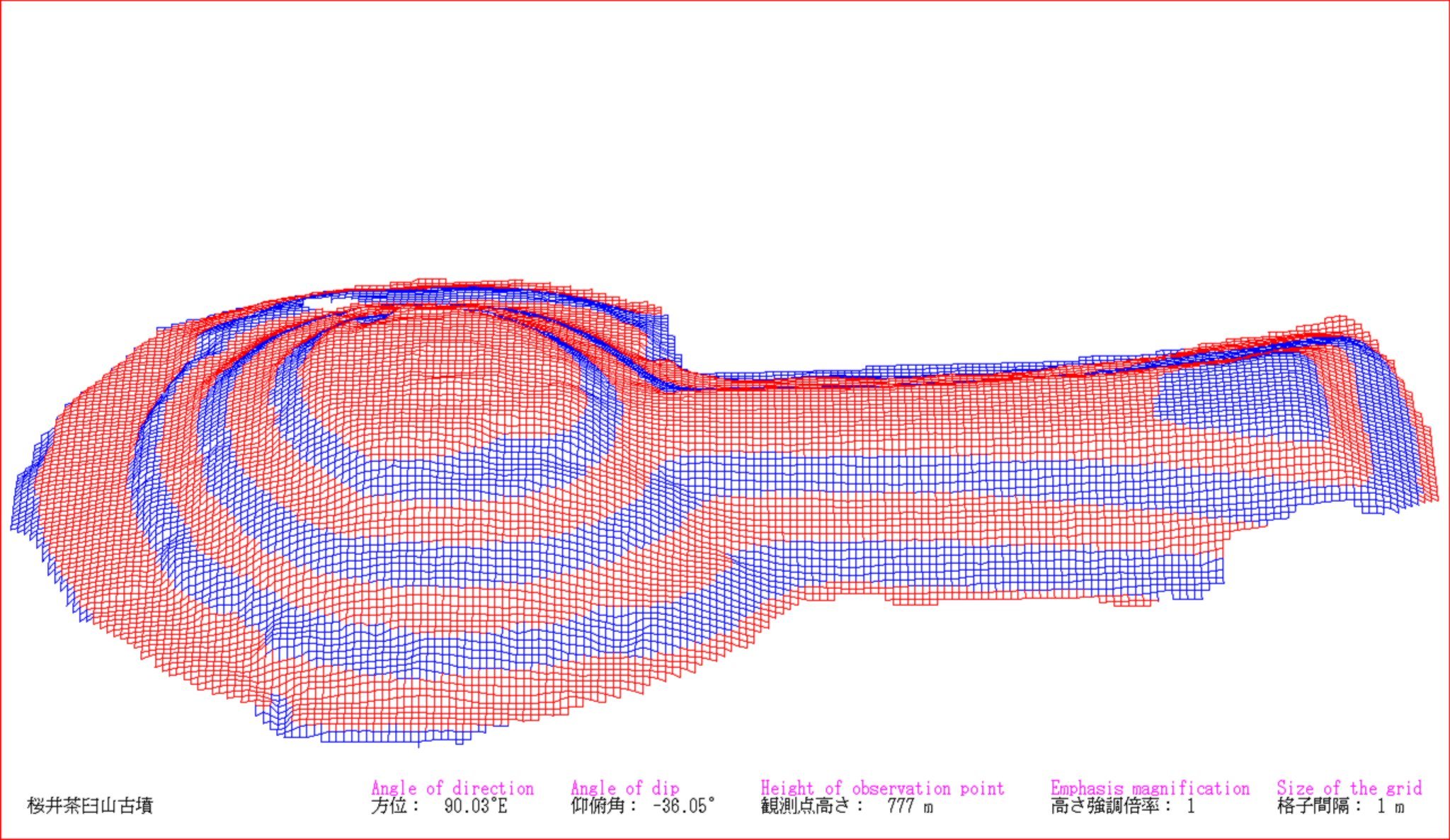
Sakurai Chausuyama Kofun occupies a natural hill on the left bank of the Hatsuse River, adjoining the Iware area. It is a zenpo-koen-fun, a keyhole-shaped mound with a rounded rear section joined to a roughly rectangular or trapezoidal front, measuring about 207 metres long and approximately 23 metres high. The anterior section is long and narrow. Once described as mirror-handle-shaped, it was later understood to widen outward in a fan shape.
The mound was formed partly by cutting and shaping the bedrock at the hilltop. Its rear section has three stepped tiers, while the anterior section has two. The stepped surfaces are covered with fukiishi, or roofing stones laid over a mound to protect and finish it. A dry moat surrounds the rear circular section, and a large rectangular area was created around the mound.
Burial Installation
Stone-Faced Platform
A rectangular platform faced with stone stands at the top of the rear circular section. It is slightly less than 2 metres high and measures approximately 9.75 by 12.5 metres. Double-rimmed jar-shaped vessels were placed around its base in a square arrangement, creating a distinct feature above the main burial chamber.
Burial Chamber and Coffin
Below the platform is a vertical-entry pit-style stone chamber that held a wooden coffin 6.7 metres long. The chamber measures approximately 1.2 metres wide and 1.7 metres high. Slab-like stones, each about 30 to 40 centimetres wide, were stacked in courses resembling brickwork, while twelve large stones closed the roof.
The chamber was coated throughout with cinnabar, a red mercury sulfide mineral used as a pigment. Square post remains around the chamber are interpreted as the remains of a surrounding fence. The chamber had been looted before it was investigated, but the surviving construction preserves evidence of substantial technical and logistical investment. The stone came from Numashima, south of Awaji Island, and the coffin was made from Japanese umbrella pine.
Grave Goods
Mirrors, Beads, and Weapons
The burial contained bronze mirrors, beads, and weapons, including swords and blades. Together, these objects form a combination characteristic of early Kofun-period burials. At least 103 bronze mirrors are now estimated to be represented among the recovered fragments. An earlier reconstruction identified at least 81 mirrors, then the largest number known from a Japanese tomb.
Mirror Types and the Himiko Hypothesis
The mirrors include a slant-edged two-deity-and-two-beast mirror, a square-patterned mirror with four deities, a beast-band mirror, and a plain-rimmed deity-and-beast mirror. The assemblage also includes three inner-flower-pattern mirrors and six mirrors belonging to four types of triangular-rimmed deity-and-beast mirrors. Earlier reconstruction identified at least thirteen mirrors in nine types.
One fragment bears characters and measurements corresponding to a triangular-rimmed deity-and-beast mirror inscribed with a date equivalent to AD 240. A matching mirror was excavated from Kanisawa Kofun in Gunma. This resemblance has contributed to the theory that some of the Sakurai mirrors came from the approximately one hundred mirrors traditionally said to have been presented by the Wei emperor to Himiko. Wei was a Chinese state of the Three Kingdoms period, but the proposed connection between those gifts and the Sakurai finds remains debated.