Saints Peter and Paul Church in Obórki: A Sixteenth-Century Wooden Church
Site at a Glance
- Popularity
- Very Low
- Country
- Poland
- Primary era
- Early Modern
- Eras represented
- Medieval, Early Modern
- Civilizations
- Habsburg, Holy Roman Empire, Kingdom of Prussia
- Site type
- Religious
- Remains
- Church
On this page9 sections
History
Sixteenth-century origins and later alterations
Saints Peter and Paul Church in Obórki, Poland, is a wooden church built in the sixteenth century and completed before 1534. From 1534, it served as a Lutheran church. Lutheranism is a Protestant Christian tradition, and the church remained Lutheran until it closed in 1945.
The building was remodeled in 1685 and underwent a major renovation in 1865. These changes preceded its closure at the end of its Lutheran period.
Reactivation and continuing use
The church was reactivated in 1967 and consecrated on 21 September that year. It has belonged since then to the Polish Catholic Church, an Old Catholic tradition distinct from the Roman Catholic Church. It is an Old Catholic parish church in the Lower Silesian deanery, a regional grouping of parishes, within the Wrocław diocese, and is associated with the parish of the Nativity of the Blessed Virgin Mary in Obórki. Poland added the church to its register of monuments on 29 April 1963. Its annual observances include Saints Peter and Paul, early Christian apostles, on 29 June, and the Nativity of the Blessed Virgin Mary on 8 September.
Remains
Layout and construction
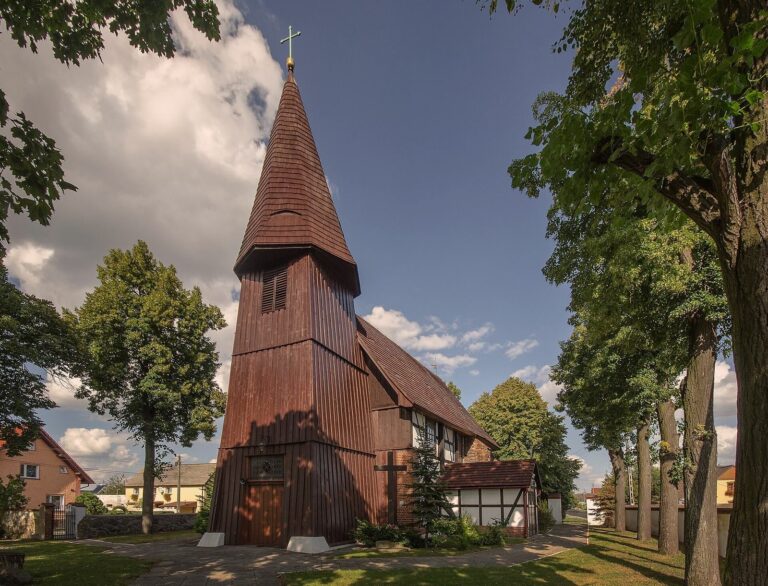
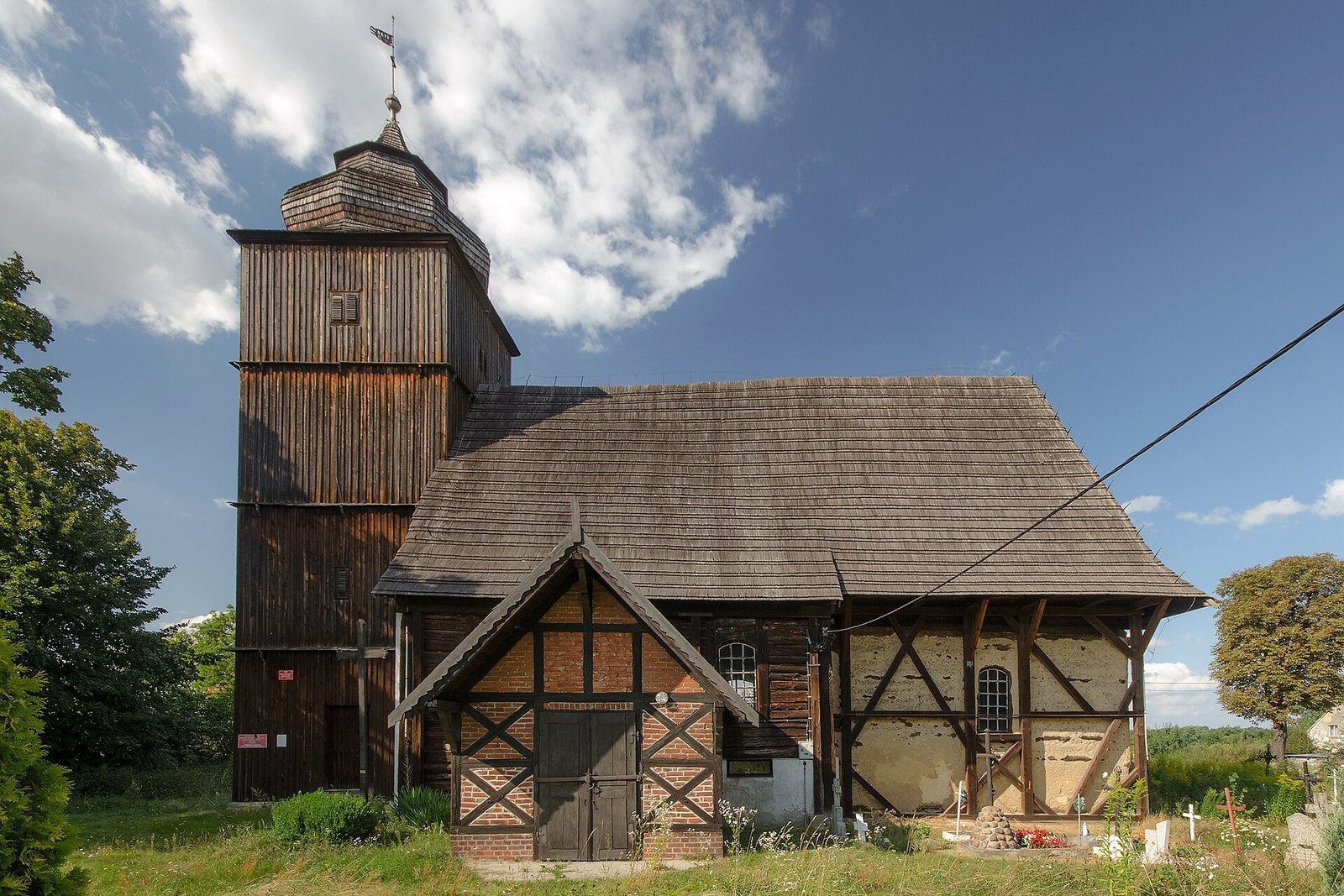
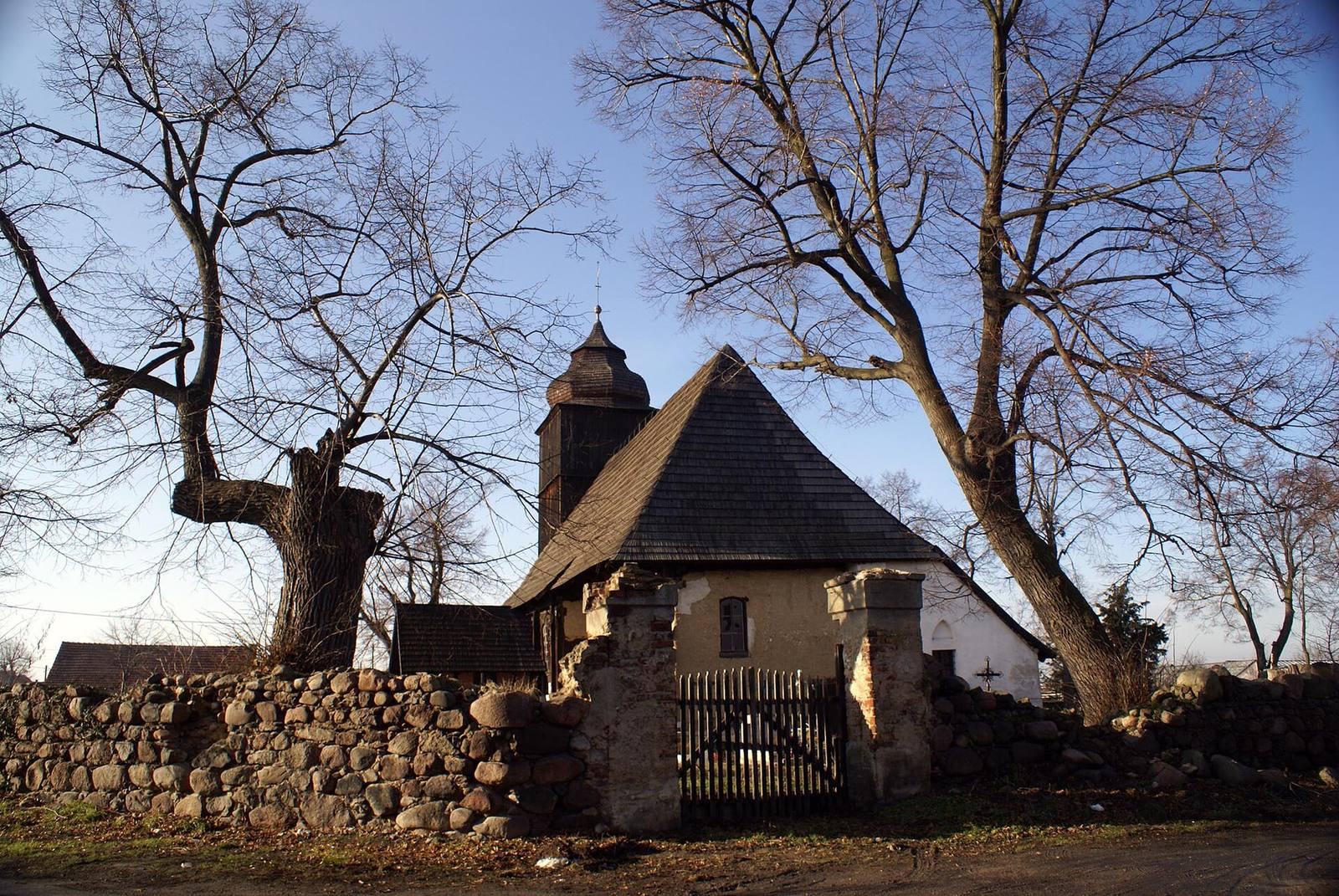
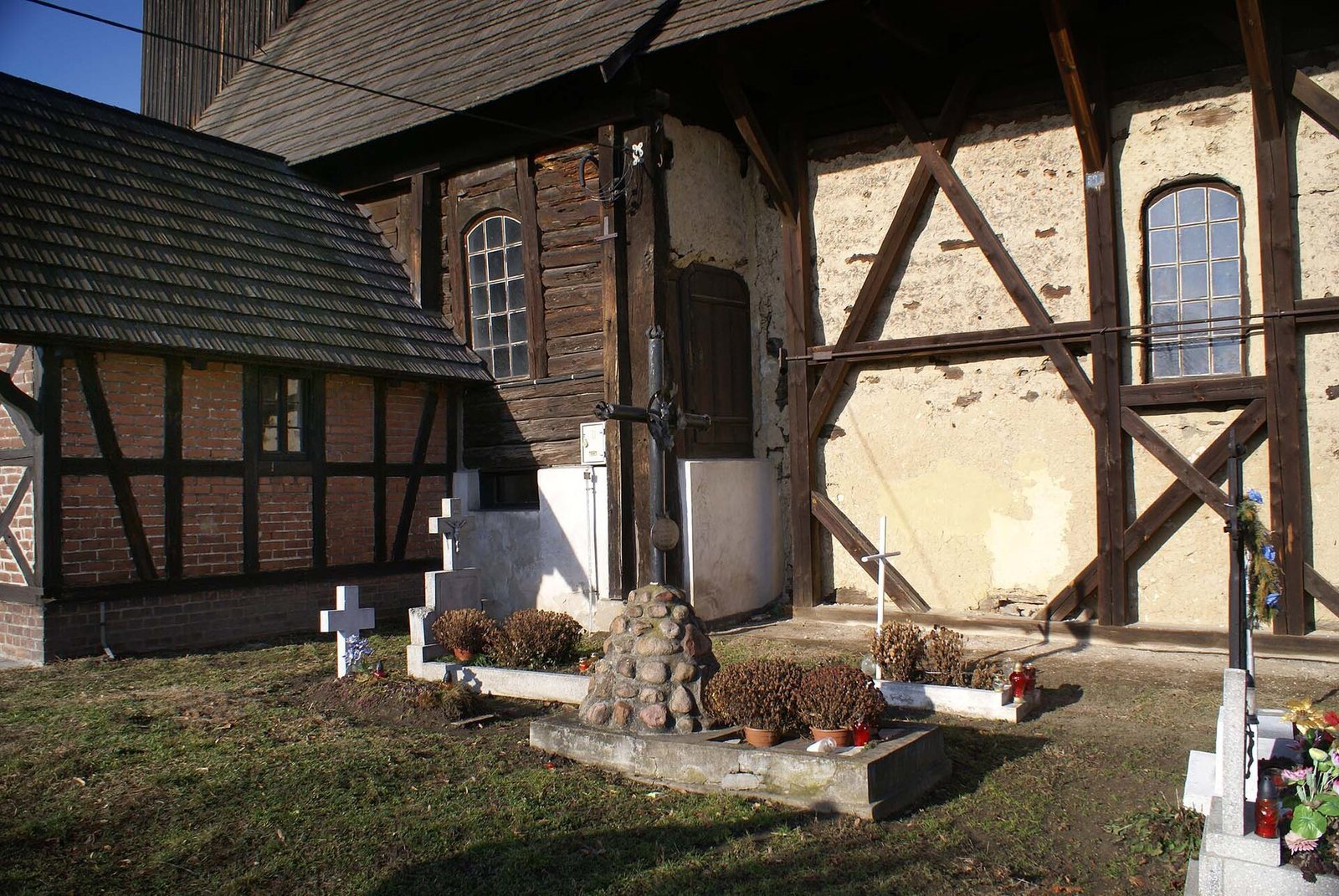
The church has a single nave (the main body of the church), one tower, one dome, and one altar. Its construction combines wood and brick. The nave is made of horizontal logs, has a side porch, and is covered by a shingle roof with a single ridge. The square tower has a wooden supporting frame and a bulb-shaped, shingle-covered roof topped by a weather vane. A wooden-framed chancel (the area around the altar) ends in a rectangular form, with a masonry sacristy attached at the side. A fieldstone wall dating to the late fifteenth or early sixteenth century surrounds the church.
Interior and furnishings
Painted ceiling
The plastered interior includes ceiling decoration dated to 1685. Its painted design features recessed panels, rosettes, and plant motifs.
Pulpit and baptismal font
The seventeenth-century pulpit bears painted figures of the four evangelists, traditionally associated with the biblical Gospels. A sixteenth-century stone baptismal font has a chalice-like shape.
Triptych
A fifteenth-century triptych, a three-panel artwork that originally belonged to the church, is now in the museum in Brzeg.