Sacred Heart Church in Pogorzela: A Gothic Parish Church in Poland
Site at a Glance
- Popularity
- Very Low
- Country
- Poland
- Primary era
- Medieval
- Eras represented
- Medieval, Early Modern, Modern
- Civilizations
- Habsburg, Holy Roman Empire, Kingdom of Bohemia, Kingdom of Prussia
- Site type
- Religious
- Remains
- Church
On this page8 sections
History
Foundation and religious use
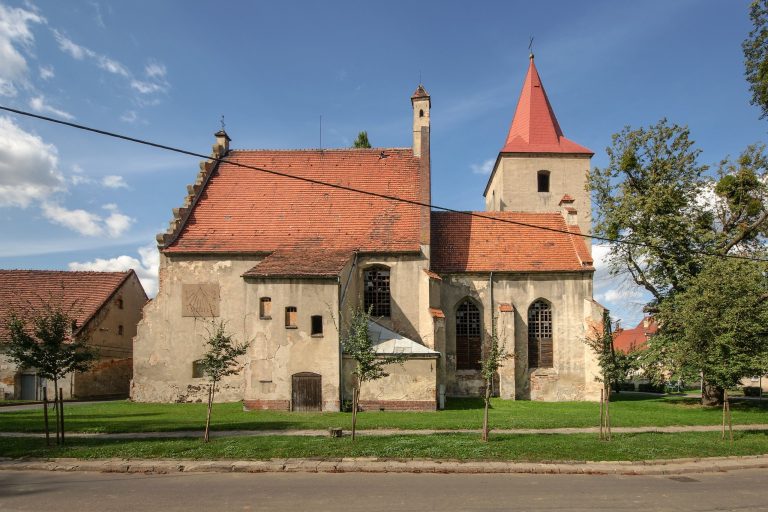
The Sacred Heart Church in Pogorzela, Poland, is a Gothic parish church built in the first half of the fourteenth century on the site of an earlier religious building. The earliest recorded information about the church dates to 1273. From 1545 to 1945 it belonged to an Evangelical congregation, a Protestant community. It now serves as a Roman Catholic parish church dedicated to the Sacred Heart of Jesus.
Alterations and modern history
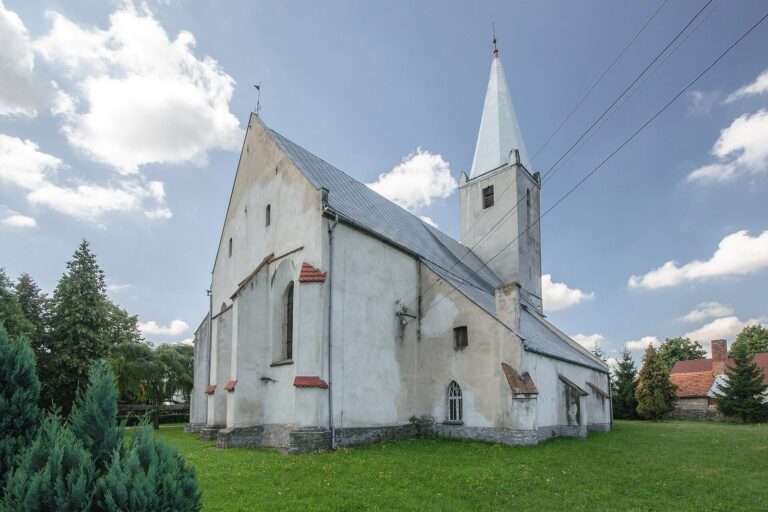
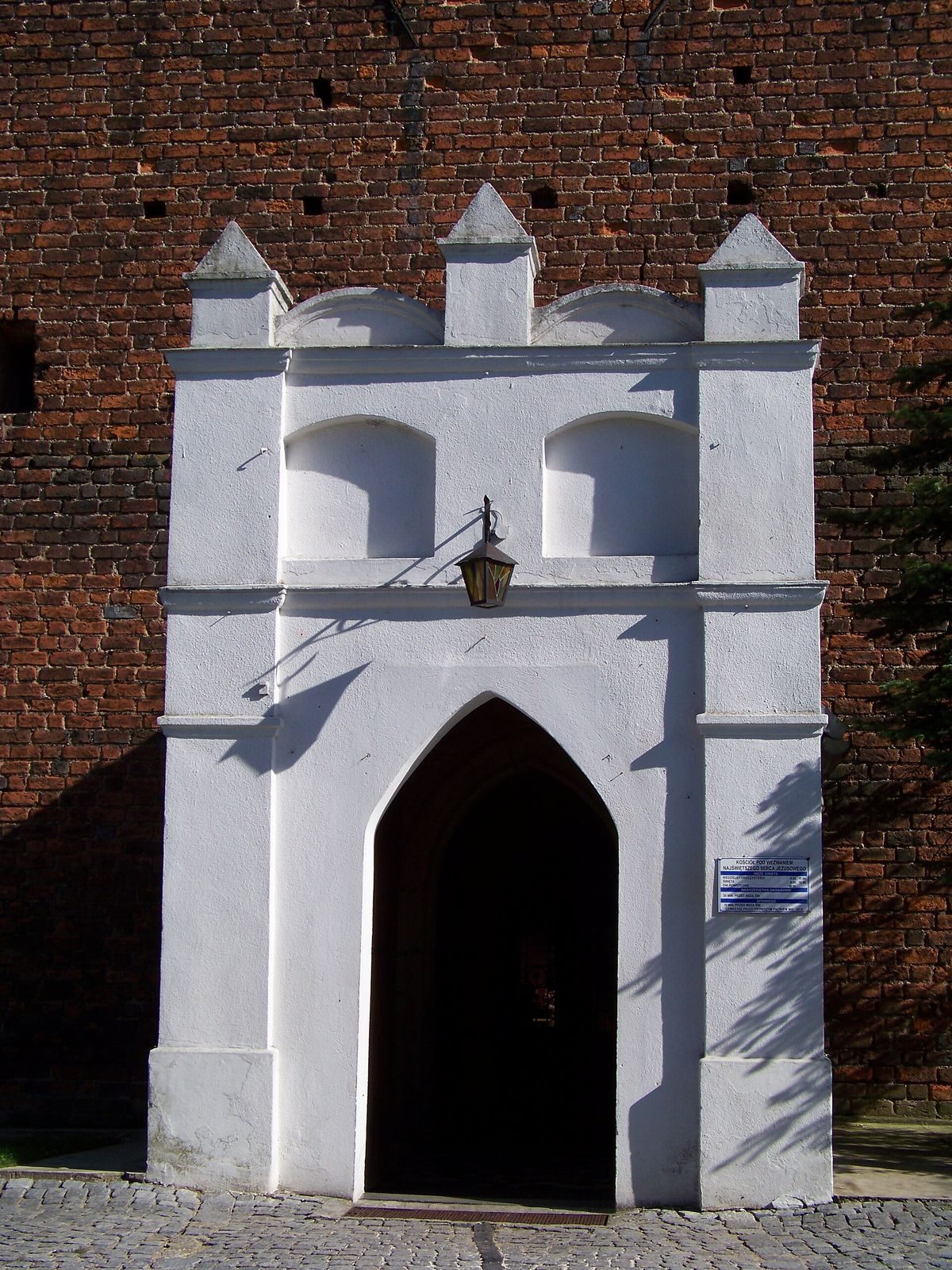
A tower was added around 1600. The church’s porches received Neo-Gothic finishes, a later revival of Gothic design, in 1830 and 1850, and further building work followed in 1870.
Wall paintings came to light in 1964. Later research dated the paintings in the chancel and porch to after 1450 and identified their creator as Gregorros Alrat, a painter from Opole. The church entered the register of immovable monuments of Opole Voivodeship on 10 January 1964. Its stone epitaphs were conserved in 2008.
Remains
Building and layout
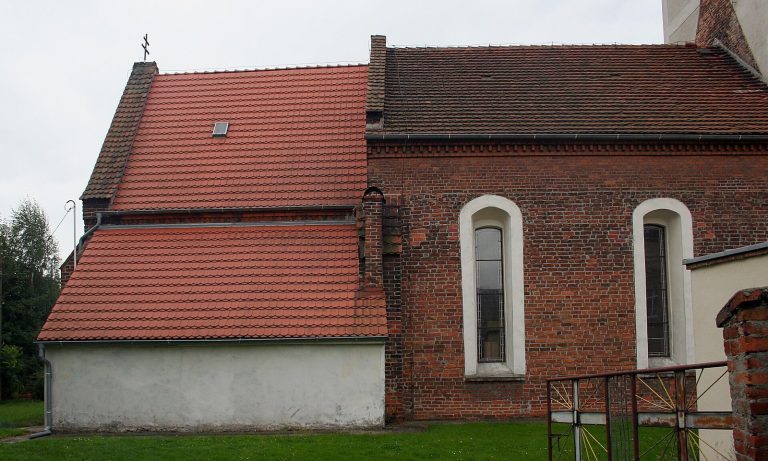
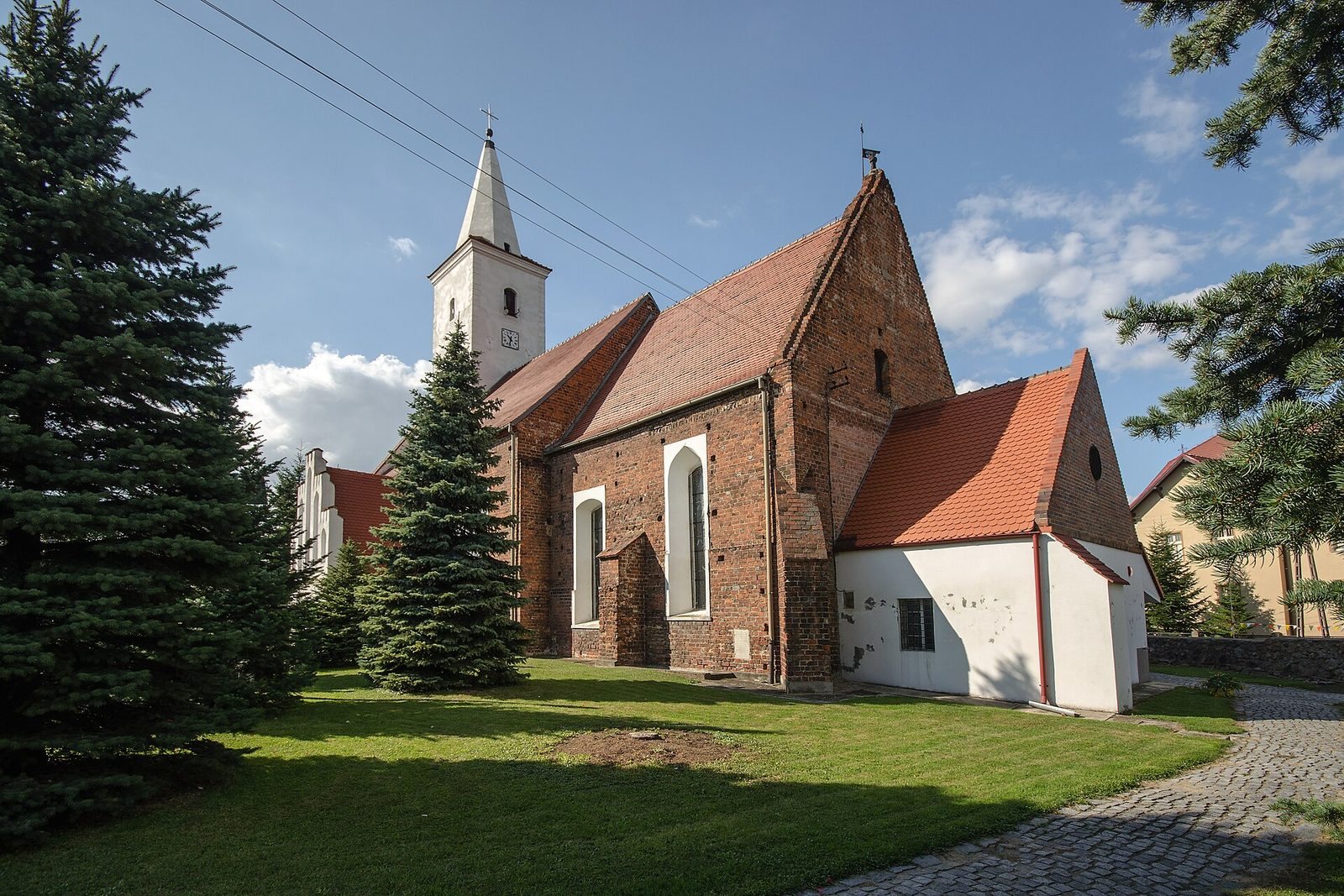
The Gothic church has a rectangular plan and brick walls supported by buttresses. A fieldstone wall encloses the building. At its western end, a single tower rises to a spire. The roof is pitched, while the chancel, the area around the altar, has a cross-rib vault whose intersecting ribs rest on stone supports called corbels. Both porches have Neo-Gothic, or Gothic Revival, finishes.
Painted decoration
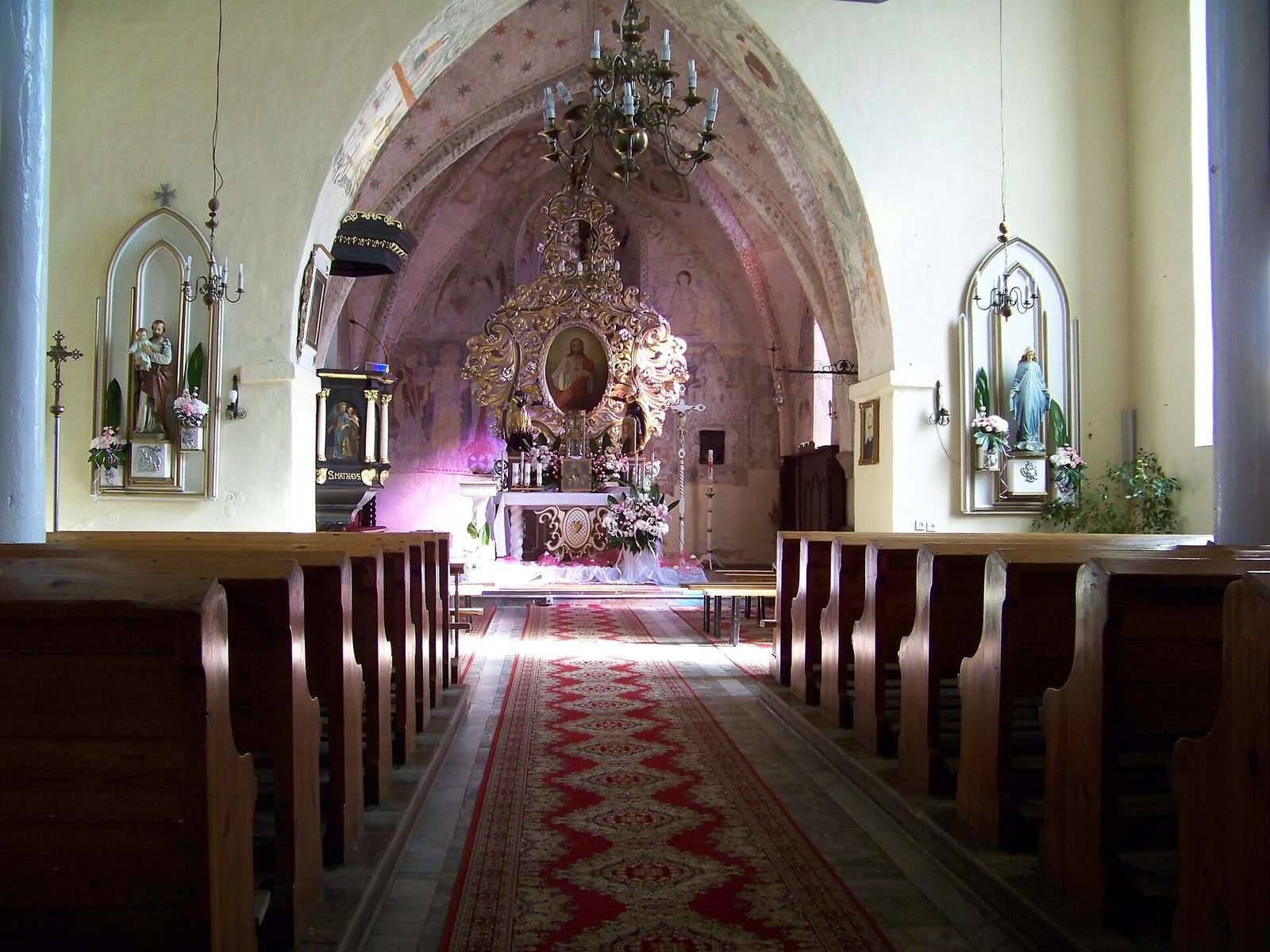
Wall paintings cover the vault and chancel, with further paintings in a porch. Their subjects include Christ Pantocrator, Christ shown as ruler of all, the Coronation of the Virgin Mary, the four Evangelists associated with the canonical Gospels, and scenes of the Annunciation and Visitation. Other images show Saint Barbara, Saint Hedwig, Blessed Przecław, a beatified person approved for veneration but not canonized, and Saints John the Baptist, John the Evangelist, Gregory, and George. The paintings also depict Christ blessing a globe, the Annunciation to Saint Anne, the Presentation of the Virgin Mary, the Nativity, the Massacre of the Innocents, the Transfiguration, and the Crucifixion.
Galleries and furnishings
A music gallery from the second half of the seventeenth century and another gallery are supported on columns. The music gallery’s front barrier is painted with angels and the biblical King David, traditionally associated with the Psalms. The church also has a medieval baptismal font and a predella, the lower part of an altarpiece, from a late Gothic triptych dating to around 1500. Its images show the Man of Sorrows, Our Lady of Sorrows, and Saint John the Evangelist. A pulpit dated 1681 and a main altar dated 1724 are also among the furnishings.
Memorials and organ
Stone Mannerist epitaphs, funerary memorials framed in architectural form and styled after the late Renaissance, were enlarged by Hans von Panwitz, a Silesian nobleman. A separate slab depicts his wife, Krysolda von Pogarell. The organ has 16 stops, which select sets of pipes, two hand-operated keyboards, and a foot-operated keyboard.