Saint Nicholas Church in Kruszyny: A Gothic Parish Church in Poland
Site at a Glance
- Popularity
- Very Low
- Country
- Poland
- Primary era
- Modern
- Eras represented
- Modern
- Civilizations
- Kingdom of Prussia
- Site type
- Religious
- Remains
- Church
On this page5 sections
History
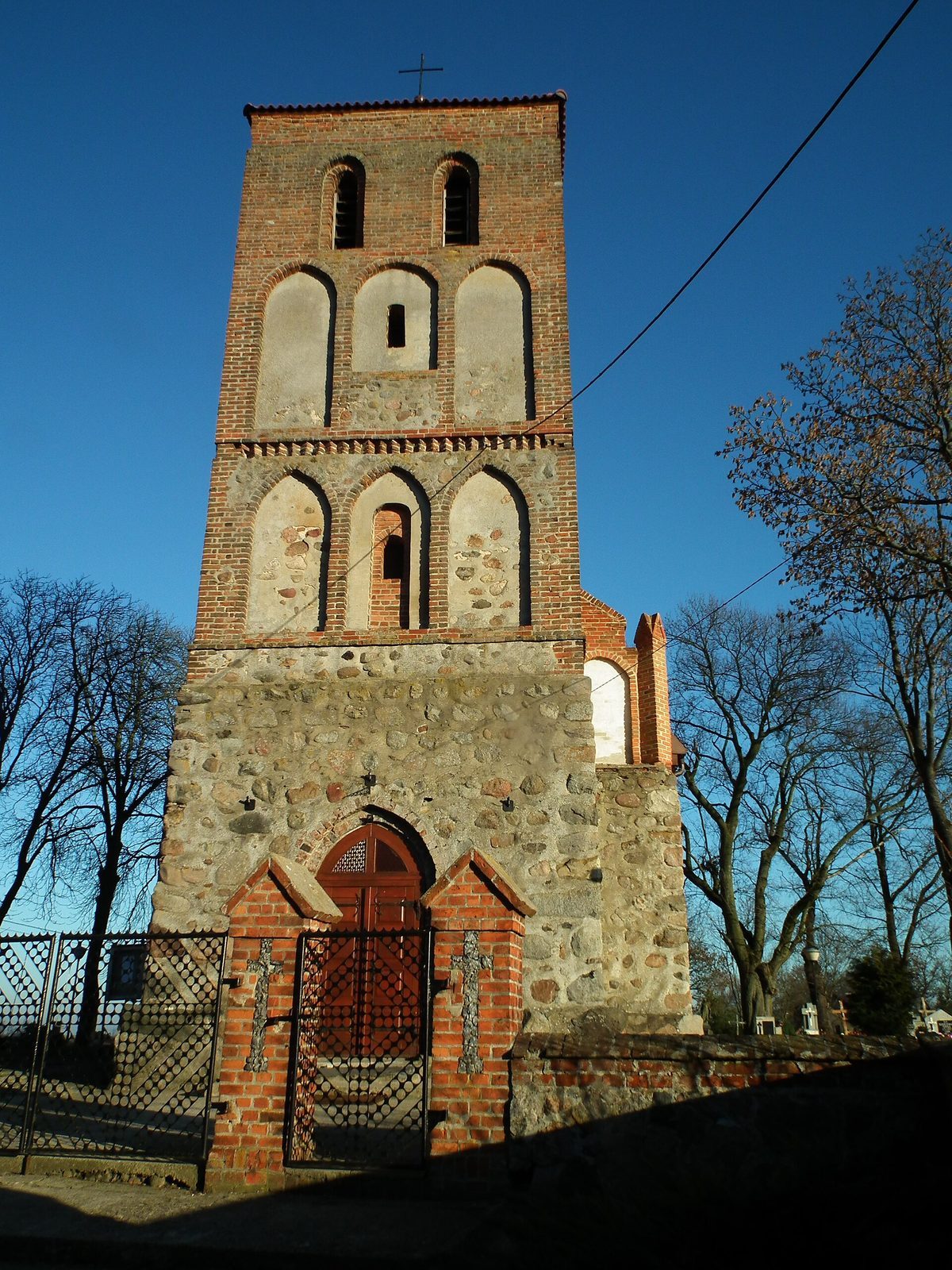
Saint Nicholas Church in Kruszyny, Poland, is a Roman Catholic parish church built in the first half of the 14th century in the Gothic style, a medieval European architectural tradition. Dedicated to Saint Nicholas of Myra, an early Christian bishop venerated as a saint, it continues to serve its parish.
Foundation and destruction
When the parish and church were established, Kruszyny was ruled by the Teutonic Order, a medieval Catholic military order that governed territories in the Baltic region. The village belonged to the Order’s Brodnica commandery, an administrative district. In 1414, Polish-Lithuanian forces destroyed the church during the Hunger War, a conflict between those forces and the Teutonic Order.
Parish changes and repairs
From 1590 until the middle of the 18th century, the church was a branch of the parish at Lembarg. It was later affiliated with the parish at Nowa Wieś. Renovations in 1845 raised the ceiling and covered Baroque painted decoration on the vault. Further repairs followed in 1900.
Occupation and restoration
During the German occupation, the Gestapo, Nazi Germany’s secret state police, seized parish registers covering baptisms, marriages, and burials from 1774 onward. The oldest volumes disappeared, while newer ones were returned. Restoration work in 2016 treated an altar and a painting of Saint Anne, regarded in Christian tradition as the mother of Mary, mother of Jesus. Work on the north side altar followed in 2018.
Remains
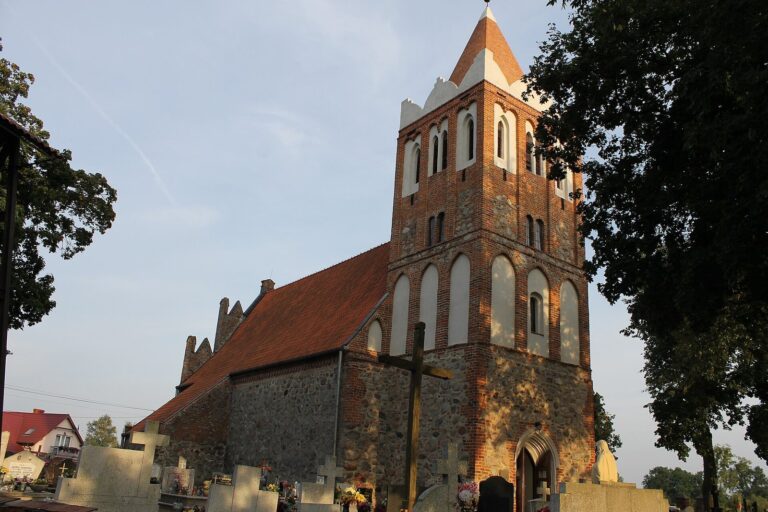
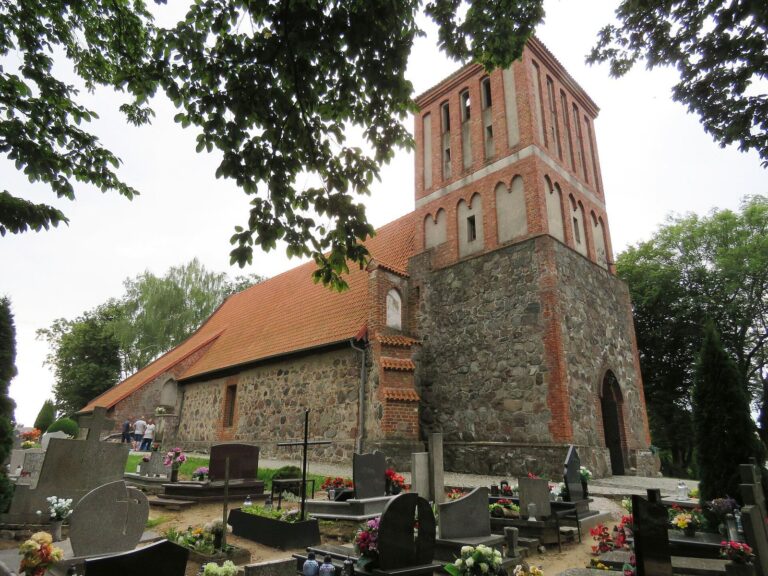
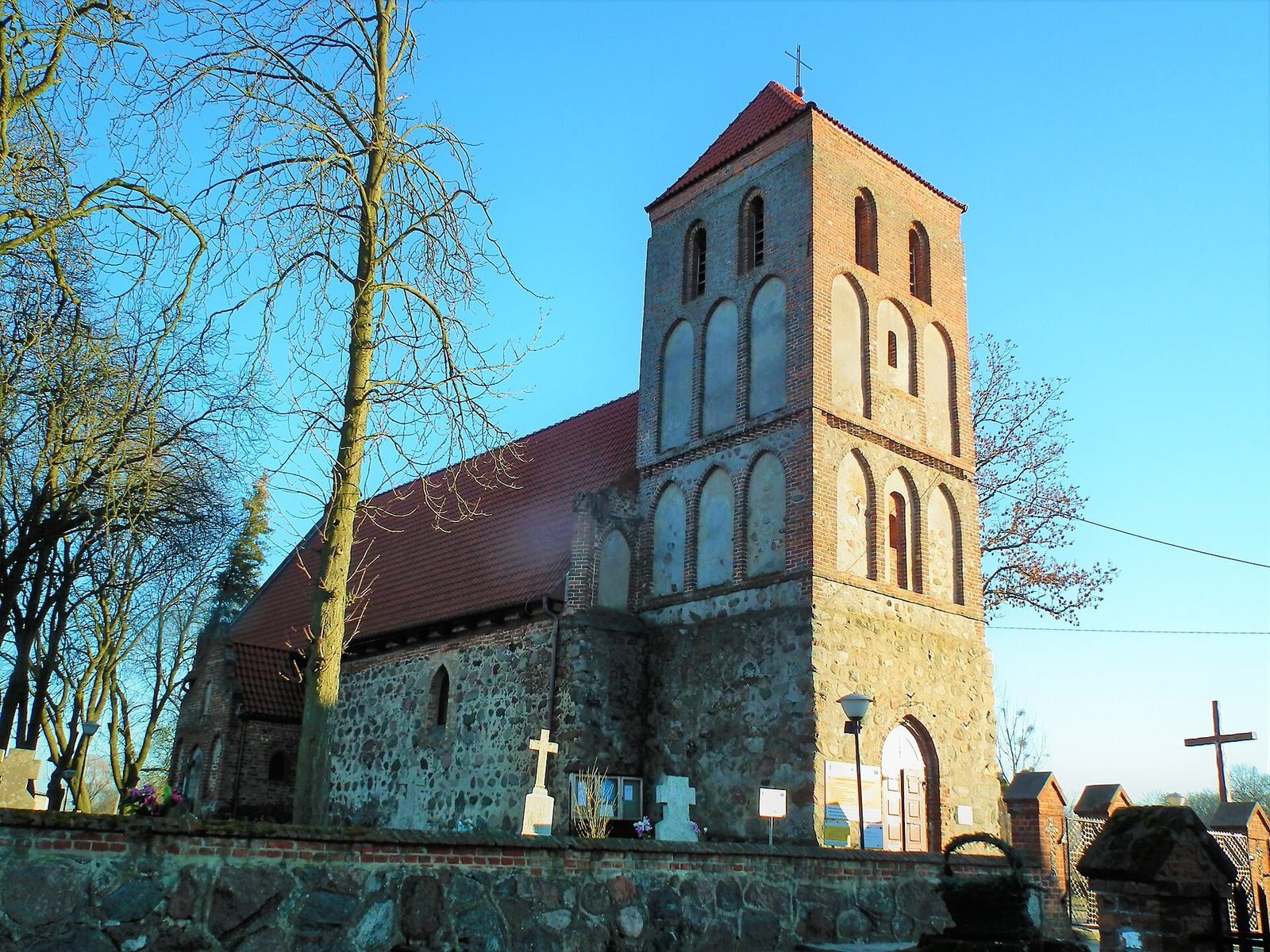
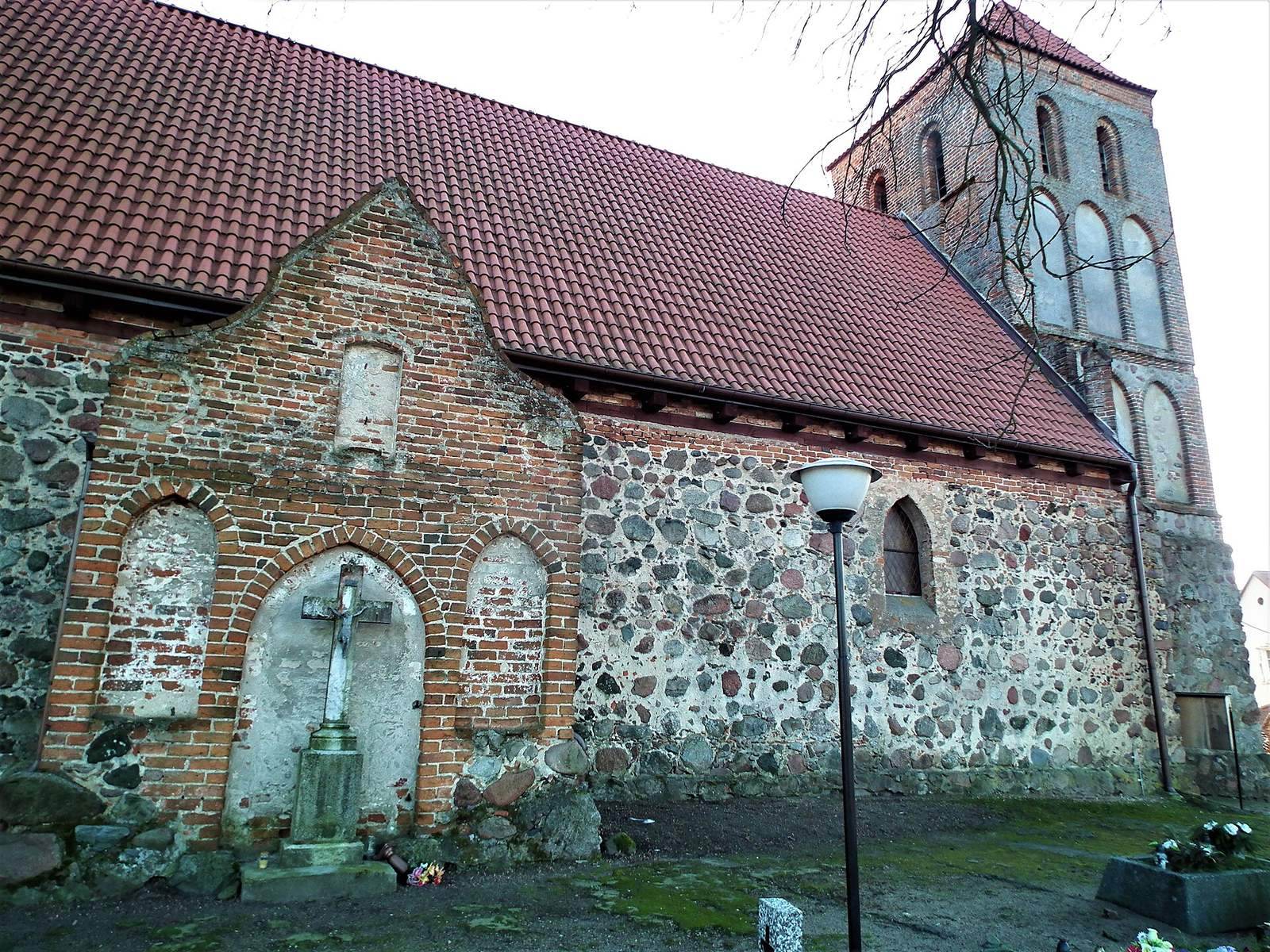
The church is a Gothic masonry building with a single main worship hall and one tower. Large boulders form much of the structure, while brick appears in its upper sections, gables, and the tower’s highest storey. A parish cemetery occupies the churchyard. Most of the furnishings date from the 18th and 19th centuries; the main altar was made in the second half of the 18th century.