Saint Paraskevi Church in Veria: A Fourteenth-Century Orthodox Church
Site at a Glance
- Rating
- 4.7
- Popularity
- Very Low
- Country
- Greece
- Primary era
- Medieval
- Eras represented
- Medieval, Early Modern
- Civilizations
- Byzantine, Ottoman
- Site type
- Religious
- Remains
- Church
On this page6 sections
History
Saint Paraskevi Church is a fourteenth-century medieval Orthodox church in Veria, Greece. Dedicated to Saint Paraskevi, an early Christian martyr venerated in Eastern Christianity, it belongs to the Diocese of Veria, Naousa and Kampania under the Ecumenical Patriarchate, the senior patriarchate of the Eastern Orthodox communion. The church forms part of the parish of Saint John the Merciful, named for the seventh-century patriarch of Alexandria known for his charitable work.
Medieval Foundation and Later Alterations
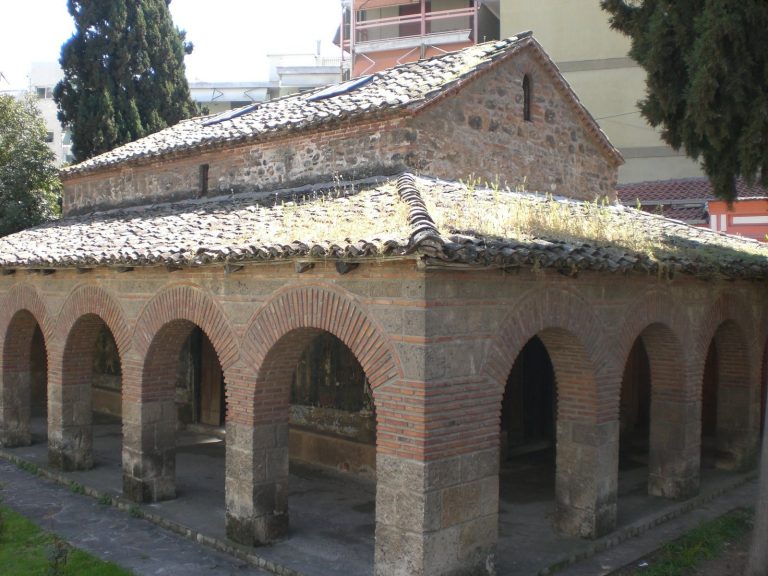
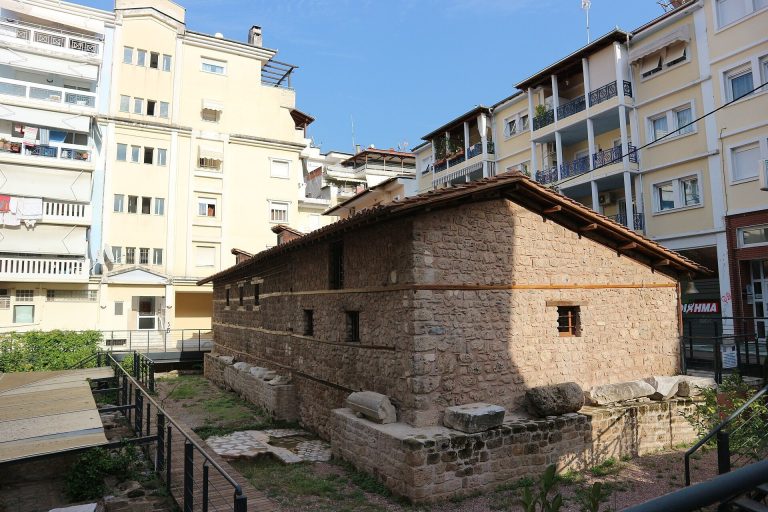
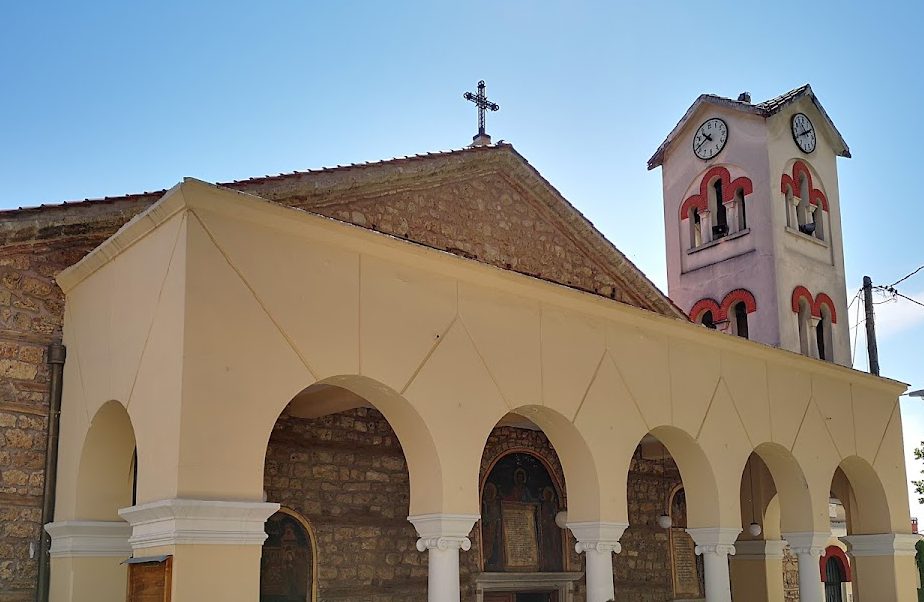
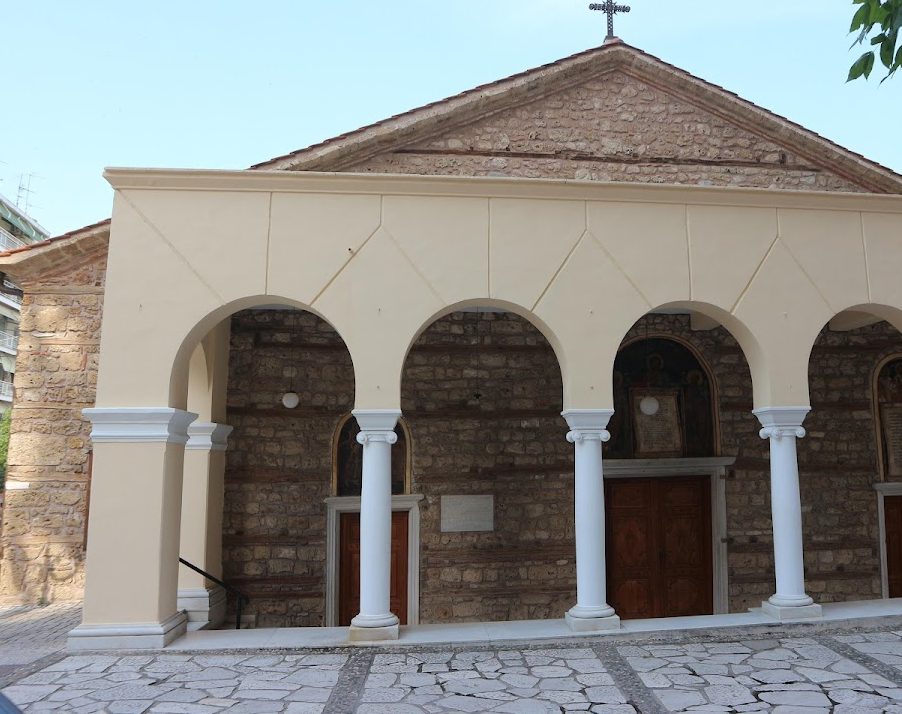
The church was originally built as a single-aisled structure with a wooden roof. Between the fifteenth and eighteenth centuries, successive building interventions substantially changed its form and dimensions. These alterations transformed the building into a three-aisled basilica, a church with a central nave and two side aisles separated by rows of supports.
Modern Status
Saint Paraskevi Church was declared a cultural monument in 1924. It is currently inactive.
Remains
Church Structure
The surviving building reflects the contrast between its original medieval design and its later expansion. It began as a single-aisled church covered by a wooden roof, but the interventions carried out from the fifteenth through the eighteenth century produced a three-aisled basilica and altered the church’s dimensions.
Frescoes and Icons
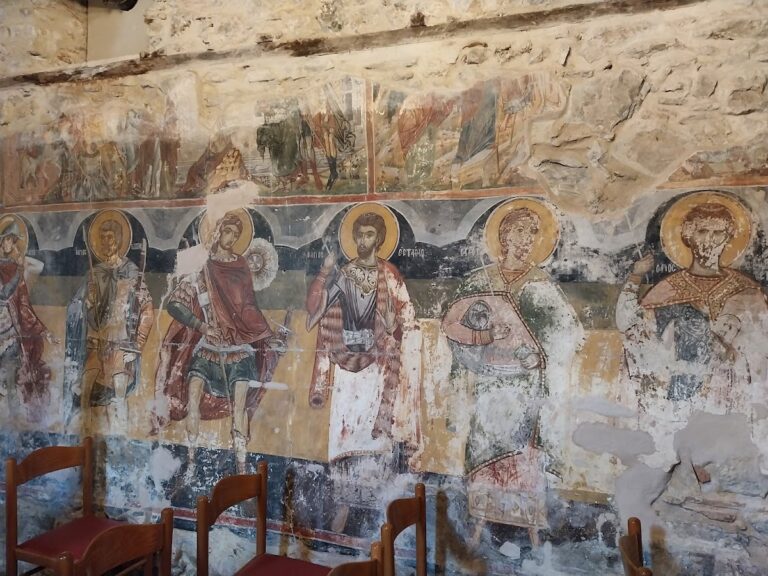
The interior retains wall paintings made directly on plaster from several periods between the fourteenth and eighteenth centuries. It also preserves icons, sacred images used in Eastern Christian worship and devotion, whose original expressive character is conveyed through vivid colors.