Saint Patapios Church: A Late-Medieval Orthodox Church in Veria
Site at a Glance
- Rating
- 4.6
- Popularity
- Very Low
- Country
- Greece
- Primary era
- Medieval
- External website
- Open
- Eras represented
- Medieval, Early Modern
- Civilizations
- Ottoman
- Site type
- Religious
- Remains
- Church
On this page4 sections
History
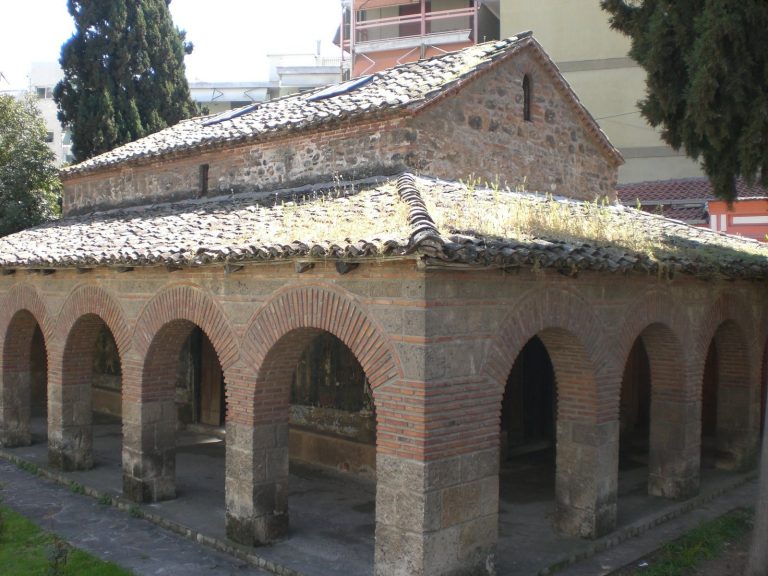
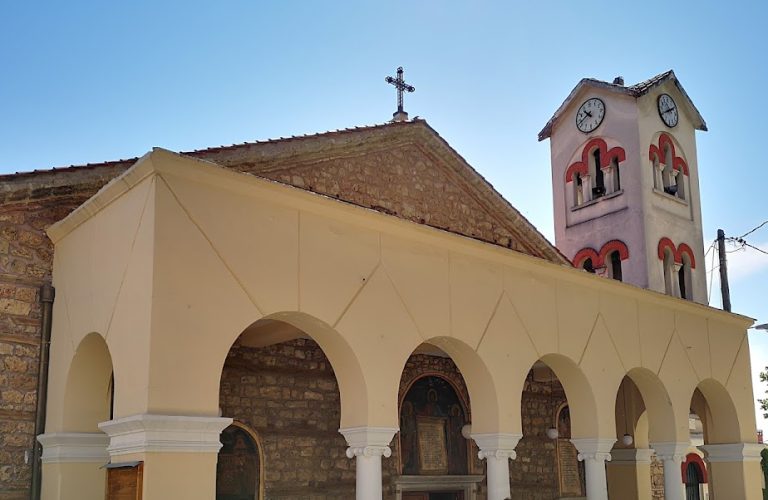
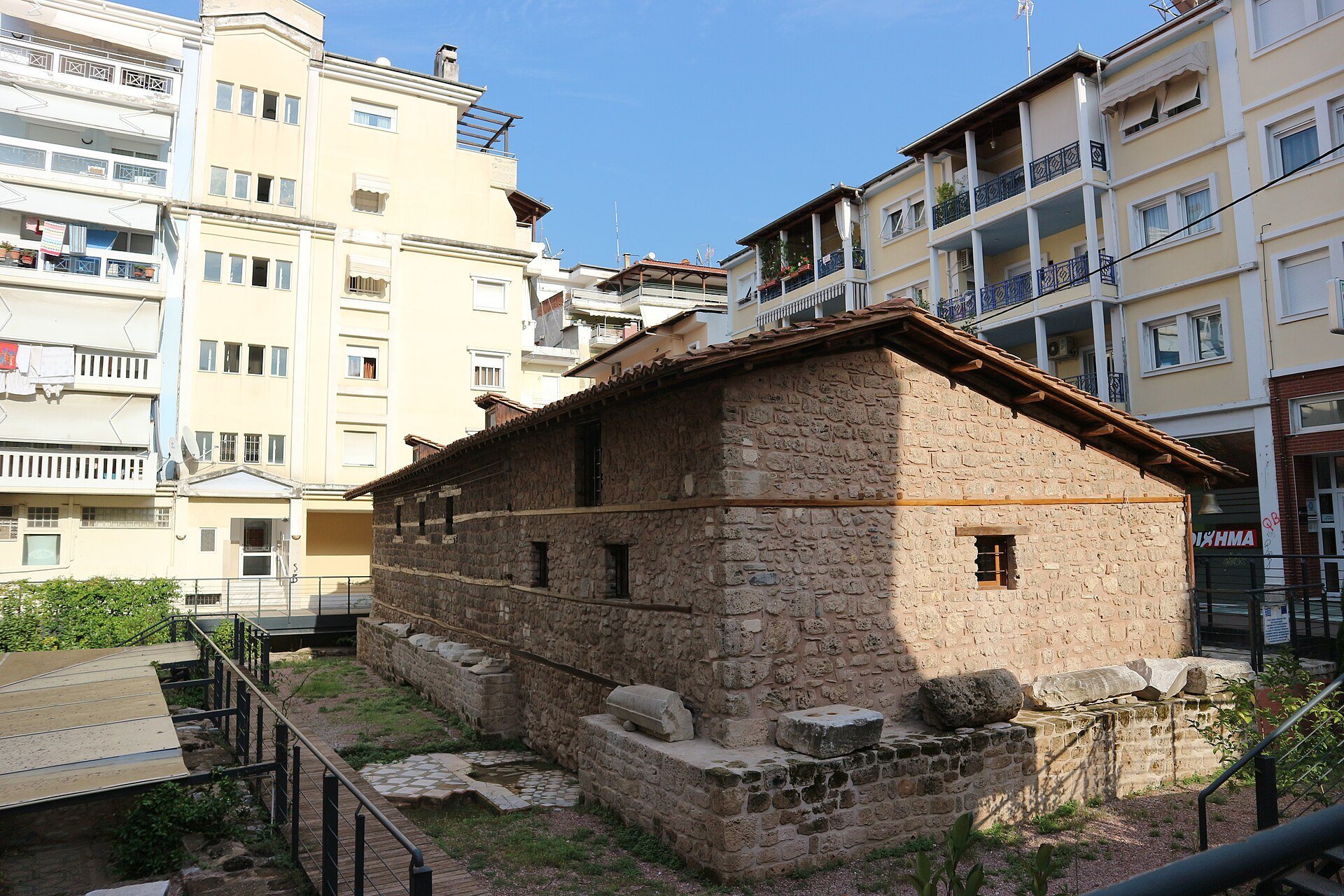
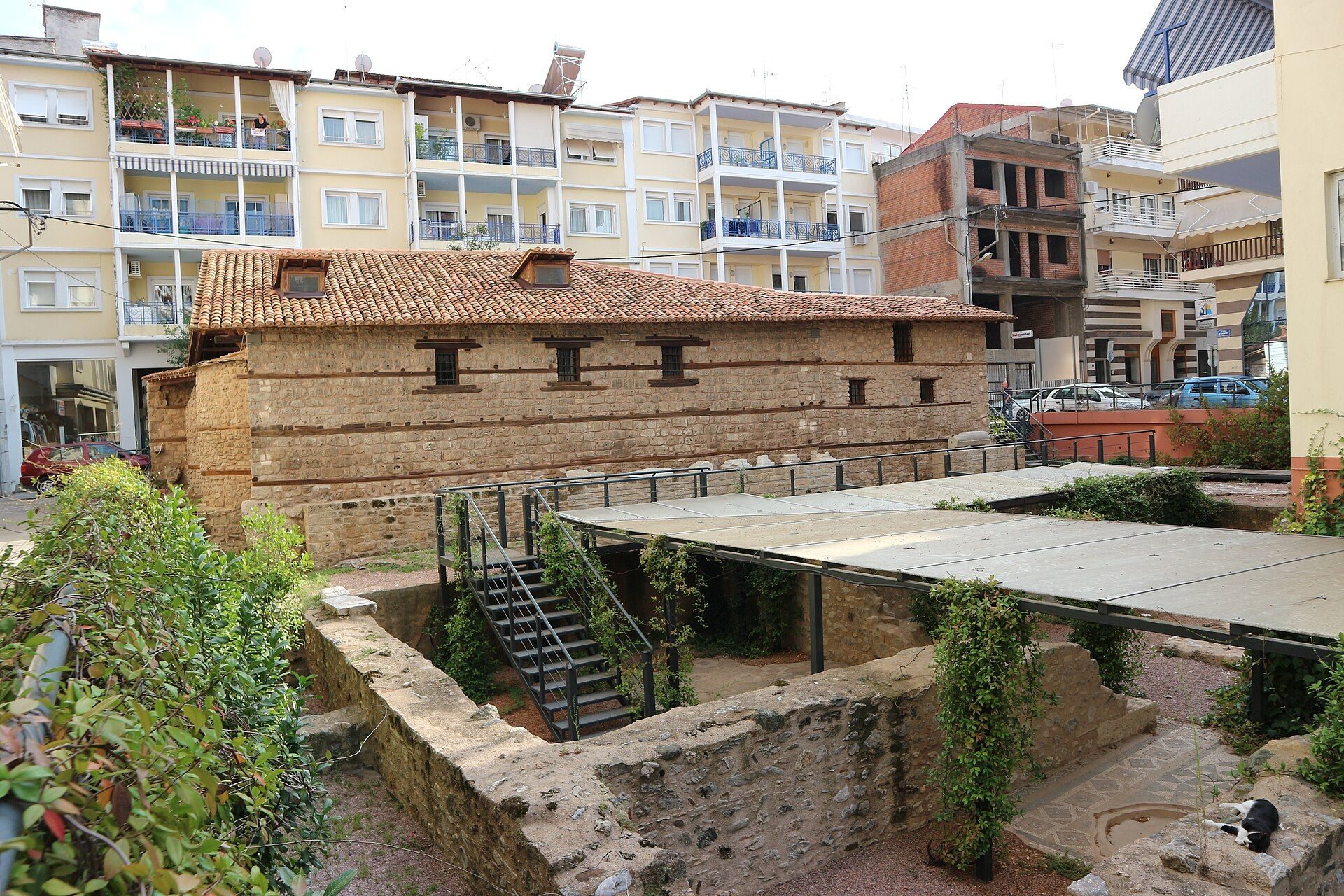
Saint Patapios Church is a late-medieval Orthodox church in Veria, Greece, built in the fifteenth century over the ruins of a fourth-century Early Christian baptistery and a large fifth-century basilica. It belongs to the Veria, Naousa and Kampania Diocese of the Ecumenical Patriarchate, one of the principal patriarchates of the Eastern Orthodox Church, and to the parish of the Great Unmercenaries.
At the beginning of the sixteenth century, the church was enlarged. Only the sanctuary of the earlier church was retained, and it was converted into a diakonikon, a chamber used for vestments, liturgical objects, and preparations for worship. Saint Patapios Church remains an active place of worship.
Remains
Layout and Earlier Fabric
The fifteenth-century church was a three-aisled basilica, with its interior divided lengthwise into a central nave and two side aisles by rows of supports. It had a wooden roof. The sanctuary from this earlier building survives in altered form as the church’s diakonikon, following the enlargement carried out at the beginning of the sixteenth century.
Frescoes
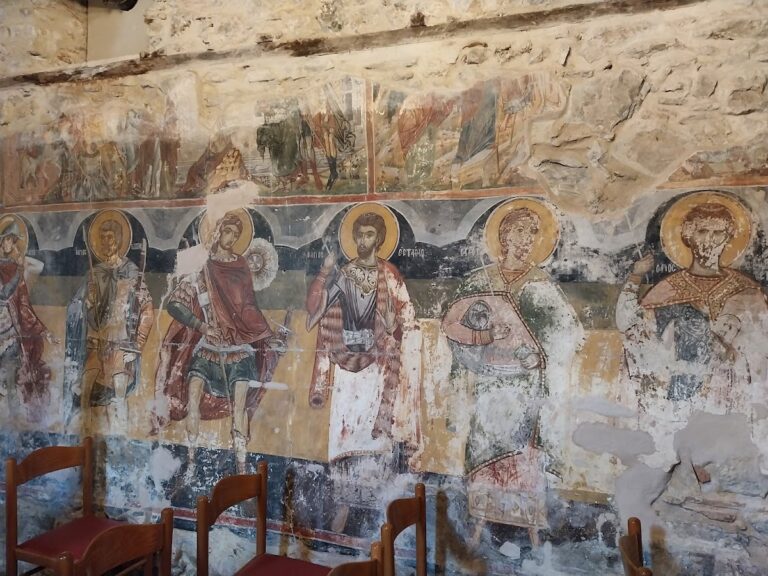
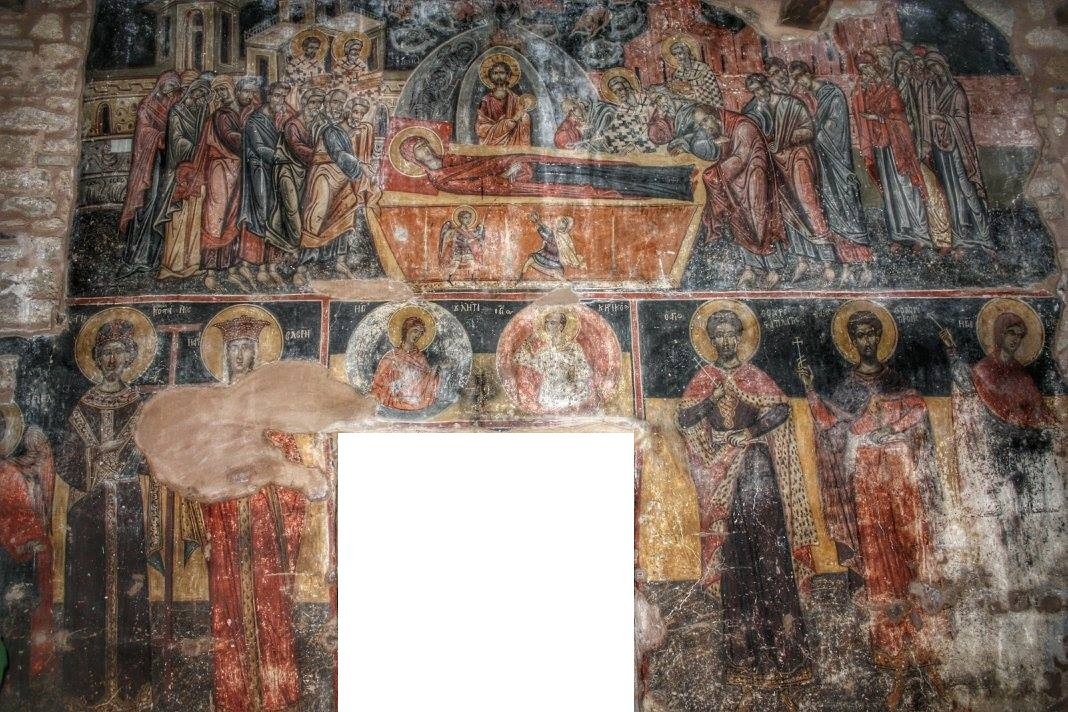
Fifteenth-century frescoes remain in the northern part of the original church. They show the Virgin Mary, the Annunciation, the Christian account of the angel Gabriel announcing Christ’s birth to Mary, and the Crucifixion, which represents Christ’s execution on the cross. Other surviving frescoes date from the beginning of the seventeenth century and depict John the Baptist and Saint Patapios with the Virgin Mary and Christ. Saint Patapios was an early Christian ascetic and saint associated with Byzantine Orthodox devotion.