Kirche Stapelage: A Reformed Parish Church in Germany
Site at a Glance
- Rating
- 4.5
- Popularity
- Very Low
- Country
- Germany
- Primary era
- Early Modern
- External website
- Open
- Eras represented
- Medieval, Early Modern
- Civilizations
- Holy Roman Empire
- Site type
- Religious
- Remains
- Church
On this page13 sections
History
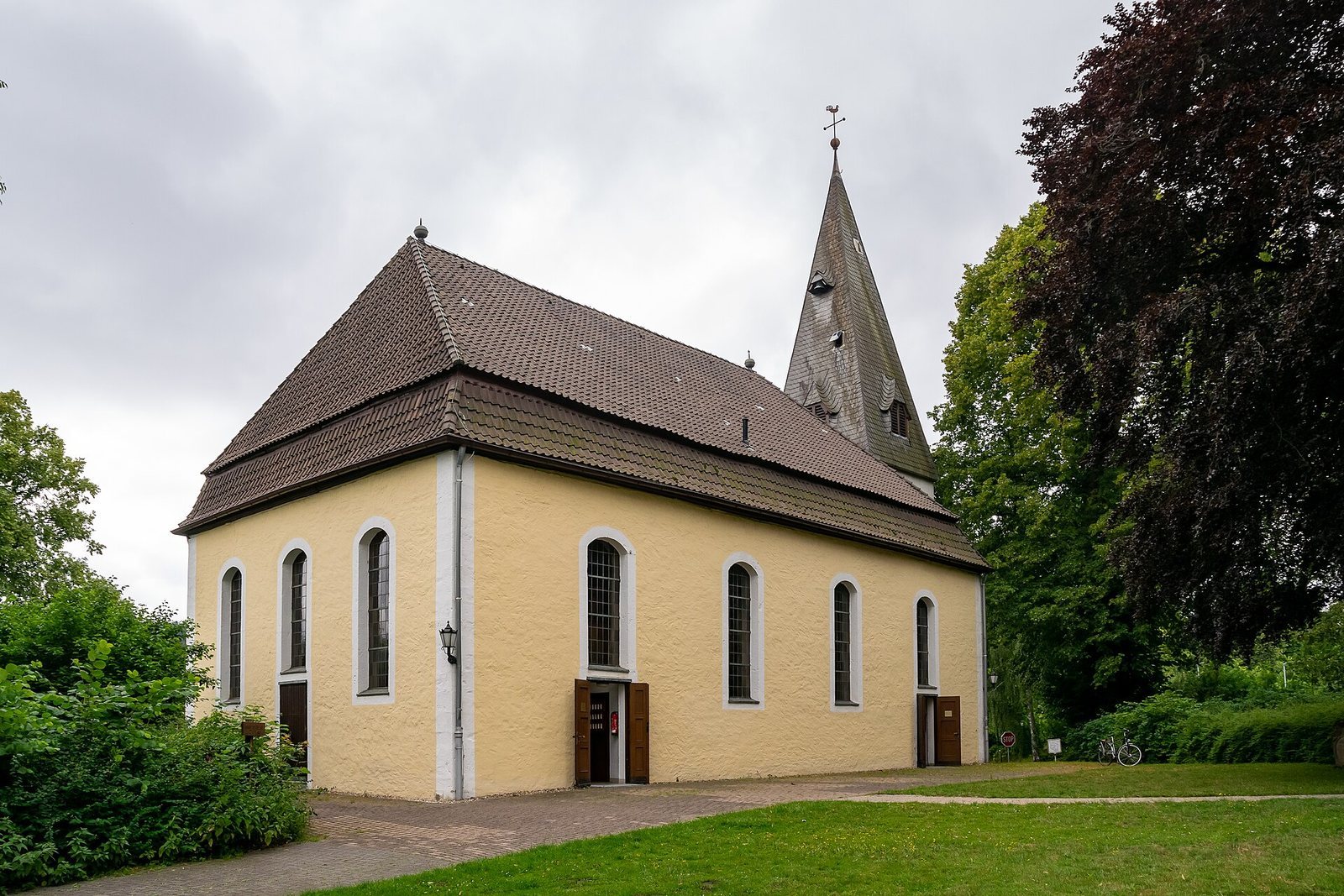
Kirche Stapelage is a Reformed parish church in Germany, located in the Hörste district of Lage at the Stapelager Schlucht, a passage through the Teutoburg Forest. A stone church stood here by the mid-eighth century, and the early church was dedicated to Saint Mary, Saint Peter, and Saint Urban. The first written mention of the church and the Stapelage estate dates from 1185.
Early church and Marienfeld Monastery
In 1185, Wittekind III of Waldeck and Schwalenberg and his brothers Hermann, Heinrich, and Volkwin donated the Stapelage estate for the foundation of Marienfeld Monastery. Heinrich I of Schwalenberg later reclaimed the property, but Archbishop Adolf of Cologne persuaded him to renounce it again in 1194. Cardinal de Monte Celio confirmed the monastery’s possession in a protective charter of 1196. Heinrich’s son, Volkwin IV of Schwalenberg, subsequently seized the estate, and Archbishop Engelbert I of Cologne returned it formally to Marienfeld Monastery in 1221.
From the foundation of Marienfeld Monastery, its monks held the right to appoint the pastor of Stapelage. Secular clergy initially provided pastoral care, while monks later served directly as pastors. This arrangement connected the parish to the monastery’s ecclesiastical administration for several centuries.
Reformation and rebuilding
The Reformation, the sixteenth-century movement that transformed Western Christianity, reached Stapelage between 1539 and 1542. The monks then had to leave the church, and its relics were transferred to Marienfeld Monastery. Abbot Johannes Stades placed the scattered sacred remains from Stapelage in four large reliquaries, containers made to hold or display religious relics.
The church was extensively rebuilt in 1762 and acquired its present form. Its old vicarage had burned down and was replaced by a new building recorded in 1678. A further vicarage was completed in 1866. Repairs carried out from 1875 to 1878 renewed the roof, added a boarded vault, painted the interior and exterior walls, and paved the aisles and choir with slabs.
Modern parish and archaeological research
In 1881, the congregation numbered approximately 3,600 people. Around 140 children were born and 78 were confirmed there each year. Excavations during the 1960s revealed that five earlier buildings had preceded the present church. The work was led by Lage mayor Leopold Möller and was later set out in architectural-historical studies. A Gustav Steinmann organ from Vlotho was installed in 1968. In 1995, the church choir and brass band took part in recording the CD Music in the Church Year – Sing and Play to the Lord.
Remains
Church building and earlier structures
Present hall church
The present church is a rectangular hall church, a building whose main interior forms one unified hall rather than a taller central nave with lower side aisles. It has no separate choir and dates from the extensive rebuilding of 1762. The later repairs of 1875–1878 shaped its surviving fabric through a renewed roof, a boarded vault, painted walls, and slab paving in the aisles and choir.
Western tower
The western tower survives from approximately 1100–1120. It therefore belongs to a medieval phase of the church that predates the present rectangular hall and remains part of the building’s architectural fabric.
Earlier church buildings
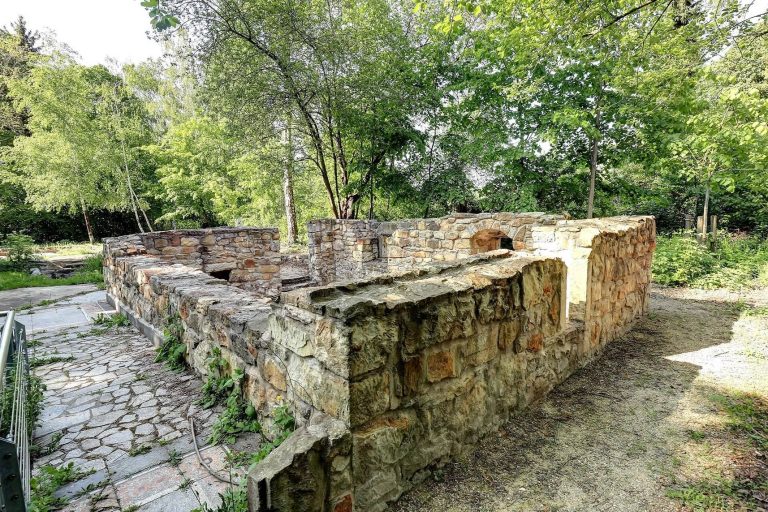
Archaeological excavation identified five predecessor buildings beneath or associated with the present church. The oldest surviving complex is a small hall structure dating from the ninth or tenth century. These remains show that the site developed through successive church buildings before the structure created by the eighteenth-century rebuilding.
Interior furnishings and musical remains
Medieval baptismal font
A baptismal font from the twelfth century survives inside the church. This stone basin was used for the Christian rite of baptism and represents an interior furnishing from the medieval history of the site.
Bells
The church’s eighteenth-century bells included an older bell dated 1658 and a second bell made in 1732. The earlier bell names the pastor, church wardens, and founder, and carries the Latin inscription Inservio vivis et mortuis, meaning “I serve the living and the dead.”
Organ
The organ installed in 1968 was built by the Gustav Steinmann company of Vlotho. It belongs to the modern phase of the church’s interior and continues the building’s association with congregational music.