Saint Nicholas church in Kozłów: A Late-Gothic Roman Catholic Parish Church


Site at a Glance
- Rating
- 4.8
- Popularity
- Very Low
- Country
- Poland
- Primary era
- Early Modern
- External website
- Open
- Eras represented
- Early Modern, Modern
- Civilizations
- German, Habsburg, Holy Roman Empire
- Site type
- Religious
- Remains
- Church
On this page10 sections
History
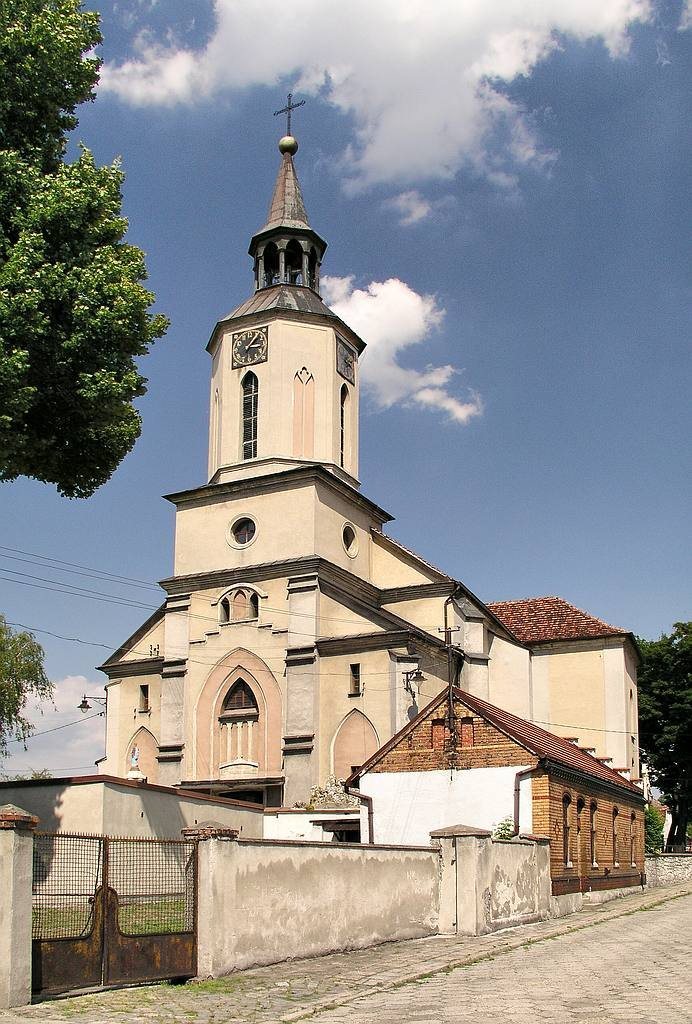
Saint Nicholas church in Kozłów is a Roman Catholic parish church in Poland, completed around 1500 as a late-Gothic building. A church may have stood at Kozłów as early as 1279, and part of an earlier Romanesque church may survive in the present chancel, although this possibility is not certain. The dedication is to Saint Nicholas, a Christian saint traditionally associated with charity, protection, and care for travelers and children.
Medieval and early modern origins
The present church was enlarged between 1540 and 1545. Around 1600, it was converted for Protestant worship and remained in Protestant use during the first half of the seventeenth century. From the middle of that century, it served as a filial church, meaning a secondary church dependent on a parish church, at Brzezinka. That parish had previously belonged to the parish of Saint Hedwig in Gliwice-Brzezinka.
An inscription formerly placed on a now-lost rood beam stated that the church was repaired or rebuilt in 1671. The rood beam was a prominent timber associated with the division between the chancel, the part of a church reserved for the altar and clergy, and the nave. The crypt beneath the chancel later collapsed, bringing down the chancel vault during the eighteenth or nineteenth century.
Return to Catholic use and twentieth-century changes
The church returned to Catholic use late in the nineteenth century. By then it was in very poor condition, and demolition was considered. A major remodelling and enlargement followed in 1928 under the design of the Wrocław architect Hans Schlicht. The work altered the tower and the western part of the nave, or main body of the church, and included new plastering. A proposed tower height of 38 metres was not reached because of financial difficulties.
After the Second World War, Saint Nicholas church again belonged to the parish in Brzezinka. It was entered in the Silesian provincial register of immovable monuments on 10 March 1960 under registration number A/1176/23. Repairs followed in 1963 and 1978. The parish of Saint Nicholas in Kozłów was re-established in 1980 by decree of Alfons Nossol, the Roman Catholic bishop associated with the Diocese of Opole, which includes the Kozłów area.
Remains
Layout and construction
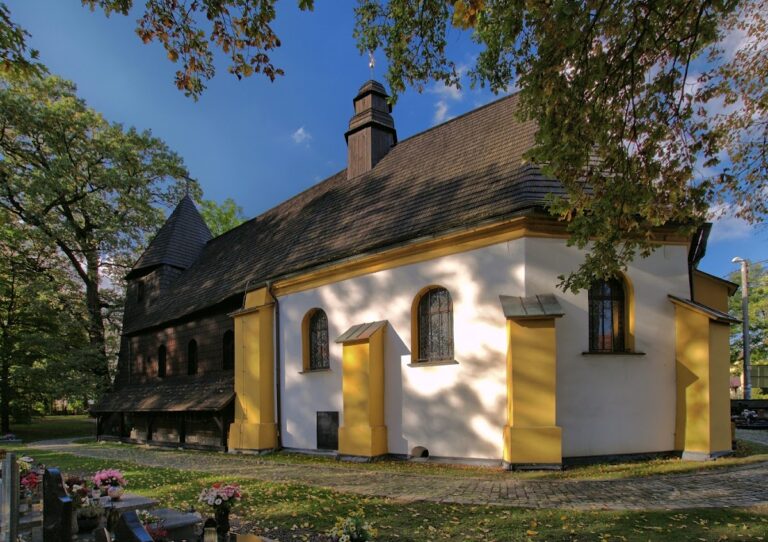
The church stands on a hill and follows an east-west alignment, with the chancel toward the east. It is a single-nave, late-Gothic building made of fieldstone and brick. Most of the exterior is plastered, while the eastern wall of the chancel remains unplastered. The chancel is narrower than the nave and ends in an irregular three-sided form. A sacristy, used for storing liturgical objects and vestments, adjoins the chancel on the north side.
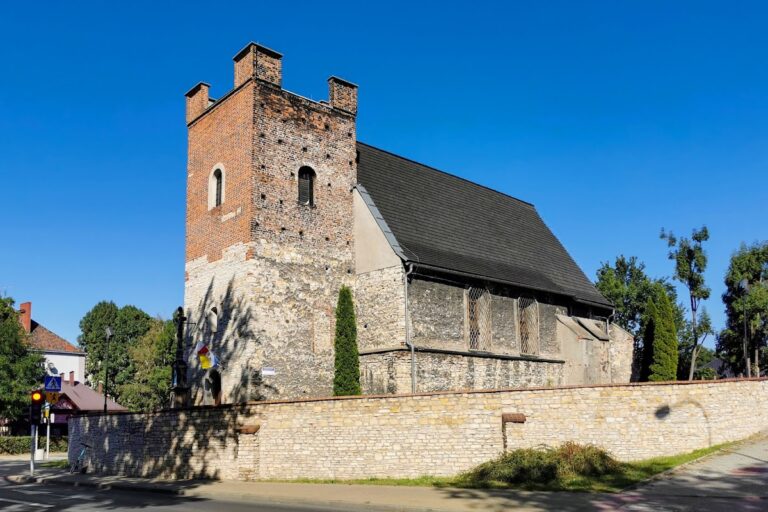
A porch projects from the southern side of the nave. Its pointed-arch portal may date from the early sixteenth century. The chancel carries a multi-pitched roof, while the main body has a gabled roof with a small roof turret. The church is enclosed by a rubble-stone wall, which was restored in 1928 and 1963.
West tower and historic bell
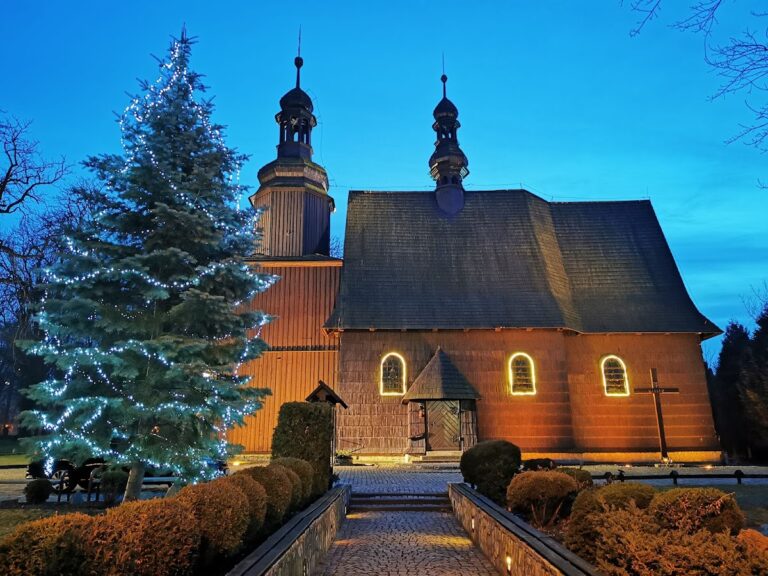
The single tower stands at the western end of the church on the site of an earlier tower. Its lower section is built in masonry and forms part of the church body, while its upper section is wooden. The tower contains a Gothic bronze bell weighing approximately 600 kilograms. Known as Urban, the bell bears an inscription in minuscule lettering, a medieval lowercase script, and dates either to 1417 or 1414. Koslowski commissioned it, and he is described as a knight serving King Władysław Jagiełło, the medieval ruler of Poland and Lithuania who was King of Poland from 1386 to 1434. Koslowski was also the first owner of Kozłów and the founder of a fortified settlement there. The bell is probably the oldest surviving bell in Silesia.
Interior furnishings and decoration
Ceilings and furnishings
The interior has wooden flat ceilings installed in 1928. They replaced earlier ceilings that were lower. Most of the furnishings date from the eighteenth and nineteenth centuries, reflecting the church’s later Catholic period and continued liturgical use.
Tomb slab and baptismal equipment
A late-Renaissance full-length tomb slab for Piotr Kozłowski is set into an interior wall. Piotr Kozłowski may have died in 1618. The slab carries two coats of arms, including the Wieże arms of the Kozłowski family and possibly those of the Hunter von Grandon family.
The church also contains a wooden Baroque baptismal font from the third quarter of the eighteenth century. A stone holy-water stoup may date from the sixteenth century. These furnishings belong to different artistic periods: Renaissance forms drew on classical models, while Baroque works commonly emphasized elaborate and dramatic decoration.
Organ and polychrome decoration
Polychrome decoration was added to the interior in 1952 and 1953. Above the main entrance, a gallery holds a two-manual organ with a pedal keyboard. Gebrüder Rieger of Krnov built the instrument in 1929. It has 12 stops and pneumatic action, a system that transfers the movement of the keys through compressed air rather than direct mechanical linkages.