Church of Saint Nicholas in Pyskowice: A Historic Roman Catholic Parish Church
Site at a Glance
- Rating
- 4.5
- Popularity
- Low
- Country
- Poland
- Primary era
- Medieval
- External website
- Open
- Eras represented
- Medieval, Early Modern, Modern
- Civilizations
- German, Holy Roman Empire, Kingdom of Bohemia, Kingdom of Prussia
- Site type
- Religious
- Remains
- Church
On this page9 sections
History
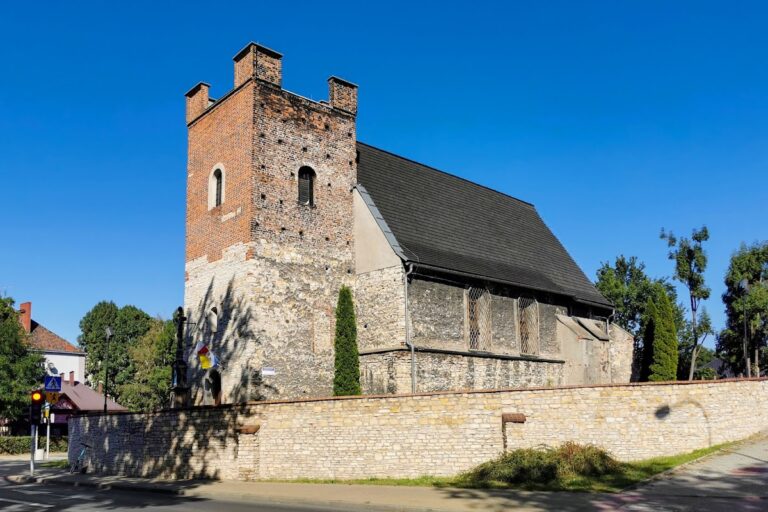
The Church of Saint Nicholas in Pyskowice, Poland, is the city’s oldest church and its Roman Catholic parish church. Dedicated to Saint Nicholas of Myra, a fourth-century bishop widely venerated by Christian communities, it developed from a medieval foundation into a building with Gothic, Baroque, and Neo-Gothic elements. The parish feast of its patron is celebrated on 6 December.
Medieval origins and religious change
Pyskowice was first mentioned in 1256, when a church dedicated to Saint Paul already stood in the town. Tradition attributes the original wooden church to the brothers Lutozat and Lonek, sons of Pisco. In 1412 the church was placed under the dedication of Saint Nicholas. Around 1450, the wooden structure was replaced by a stone church, establishing the medieval core of the present building.
The church burned in 1622 and was rebuilt afterward. During the Reformation, the sixteenth-century movement that brought Protestant forms of Christianity to parts of central and western Europe, the building served as a Protestant church until 1629. It then returned to Roman Catholic worship during the Counter-Reformation, the Catholic response that restored and strengthened Catholic institutions and practices.
Expansion and nineteenth-century rebuilding
The church was enlarged in 1727 and 1728, when two side chapels were added beside the nave. A major fire in Pyskowice in 1822 damaged the church, destroyed much of its interior furnishings, and consumed the wooden tower. Restoration and remodelling followed in 1823 and 1824 according to plans by the architect Deschner. The present construction phase began in 1822, the church was consecrated on 11 September 1823, and a stone tower was completed in 1824.
Repairs and parish heritage
Further repairs took place during the second half of the nineteenth century and in the twentieth century. The tower was renovated in 1913, with specially designed bricks sold as donations to finance the work. Their images included the church, the Virgin Mary with the infant Jesus, and Saint Nicholas. The church is included in the monument register of the Silesian Voivodeship, with entries recorded in 1960 and 2023. The Saint Nicholas parish also includes the cemetery church of Saint Stanislaus and cemeteries on Cmentarna Street and Cicha Street.
Remains
Building form and architectural layers
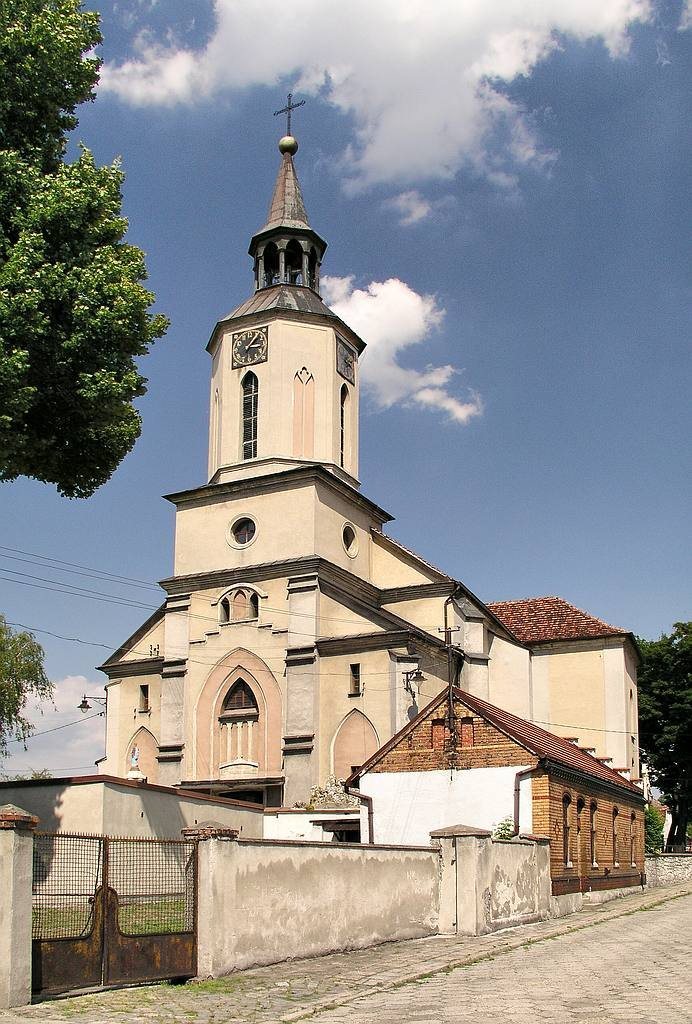
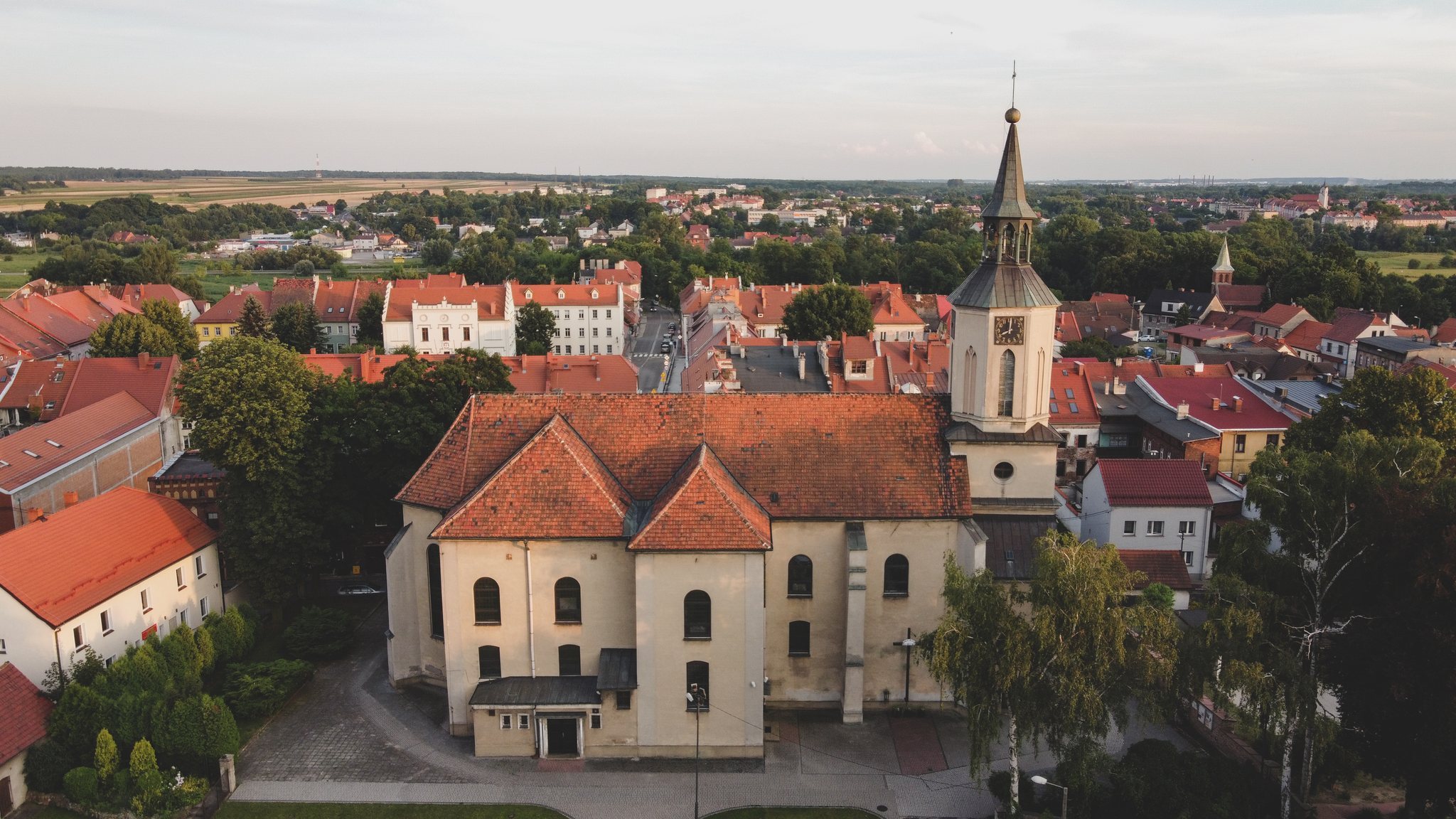
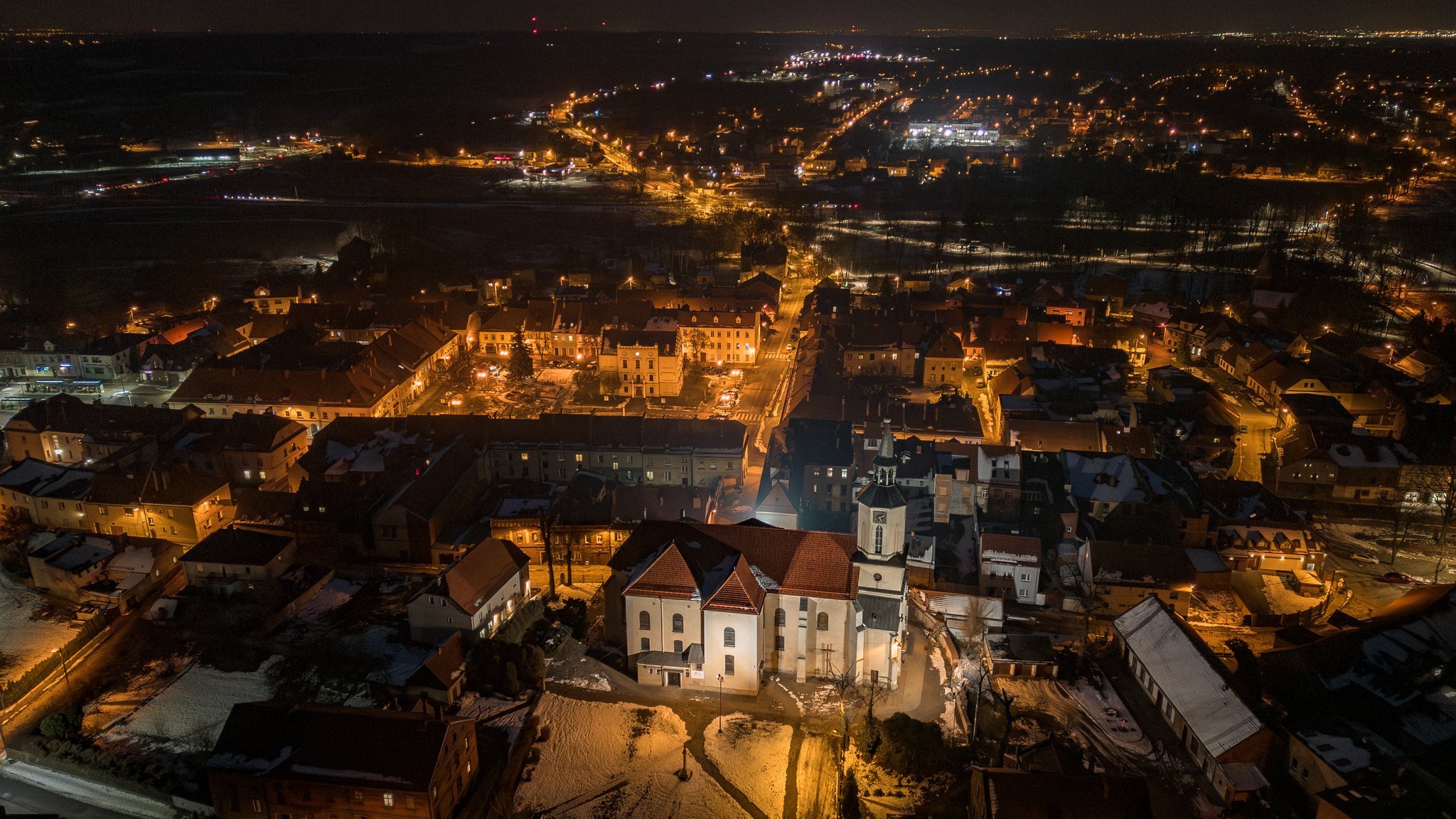
The church is an east-oriented, plastered masonry building with a single nave, a narrower three-sided-ended chancel, recessed chapels, galleries, buttresses, and gabled roofs. The chancel is flanked by a chapel and a sacristy, while the two opposing side chapels added in 1727 and 1728 adjoin the nave on its north and south sides. A single tower rises at the west end. The medieval Gothic core is combined with later Baroque and Neo-Gothic work. The front facade is Neo-Gothic and arranged with pointed-arch arcades.
Interior structure
The interior has a Baroque character and is covered by a barrel-and-cross vault carried on transverse arches. In the nave, the vault springs descend onto wall pillars, which are linked by semicircular arcades. Galleries occupy the upper level, adding a distinct horizontal element to the otherwise vertically organized interior.
Altars and surviving furnishings
Five altars remain in the church. The high altar contains an image of Saint Nicholas, while the side altars are dedicated to the Sacred Heart of Jesus, the Immaculate Heart of Mary, Saint John of Nepomuk, and Saint Anne. A seventeenth-century altar dedicated to Saint John of Nepomuk is among the few furnishings that survived the 1822 town fire.
The church also preserves medieval liturgical objects, including a metal cross on a stand dated 1370 and chalices dated 1510 and 1515. Its organ was built by Ernst Kurzer in 1897. The instrument has 18 stops, two manuals, and pedals, with pneumatic action, a system in which air pressure transfers the movement of the keys and stops to the organ’s mechanisms.
Church grounds
The grounds contain Stations of the Cross, several grottoes, a Marian grotto dating from 1909, and a Marian column.