Gliwice Castle: A Medieval Defensive and Museum Building in Poland



Site at a Glance
- Rating
- 4.5
- Popularity
- Low
- Country
- Poland
- Primary era
- Medieval
- External website
- Open
- Eras represented
- Medieval, Early Modern, Modern
- Civilizations
- Habsburg, Holy Roman Empire
- Site type
- Military
- Remains
- Castle
On this page7 sections
History
Gliwice Castle, also known as the Piast Castle, is a historic building in Gliwice, Poland, originating in the mid-fourteenth century and combining Gothic and Renaissance elements. Its original purpose is unknown, and the modern Piast name refers to the Polish ruling dynasty rather than establishing that the building was a ducal residence.
Medieval origins
The building probably grew from two defensive towers incorporated into Gliwice’s city walls. These towers were connected by defensive walls, creating the medieval core of the structure. The castle was not a ducal castle and probably did not stand on the site of the residence used by the dukes of Gliwice.
Expansion and changing uses
In 1561, Friedrich von Zetritz became the owner and enlarged the building, combining its original Gothic character with Renaissance elements. Over the following centuries, it served as an arsenal, prison, and farm estate. Its use as a prison is documented from the beginning of the sixteenth century until the end of the second decade of the twentieth century, and it may also have served that purpose during the medieval period.
Before 1945, the building was known as Zetritzhof, or Zetritz Court, and as a prison building. After 1945, the diminutive name “little castle” came into use. The name “Piast Castle” was adopted in 1983.
Restoration and museum use
The castle underwent extensive restoration in 1959 and became part of the Gliwice Museum. It was entered in Poland’s heritage register as monument A/320/60 on 7 March 1960. A further major renovation took place between 2005 and 2008. Since 2008, the building has housed exhibitions devoted to archaeology, history, and ethnography, including displays on the prehistory of the Gliwice region, the history of Gliwice, and the city’s industry around the turn of the nineteenth and twentieth centuries. Most of the archaeological objects on display were recovered during excavations in Gliwice County.
A monument to Stefan Batory was unveiled in the square beside the castle on 30 September 2014. Batory was a sixteenth-century ruler who became King of Poland and Grand Duke of Lithuania. The monument was presented to Gliwice by the Hungarian city of Salgótarján.
Remains
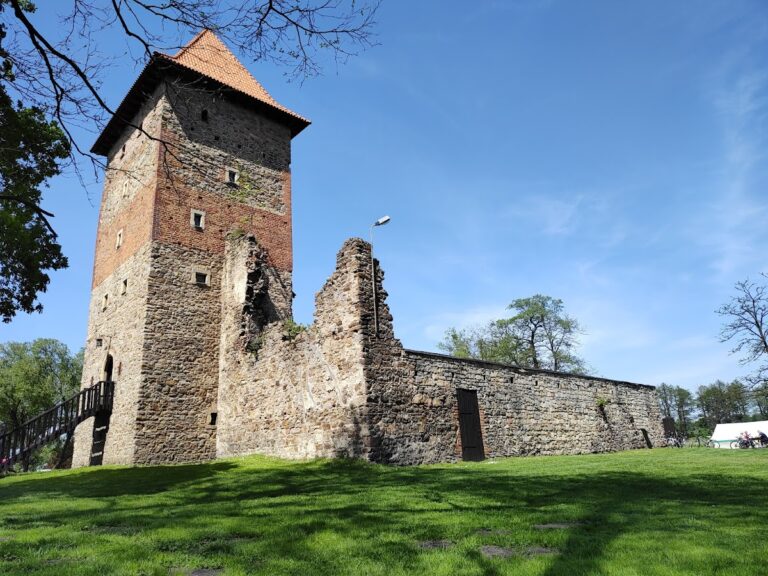
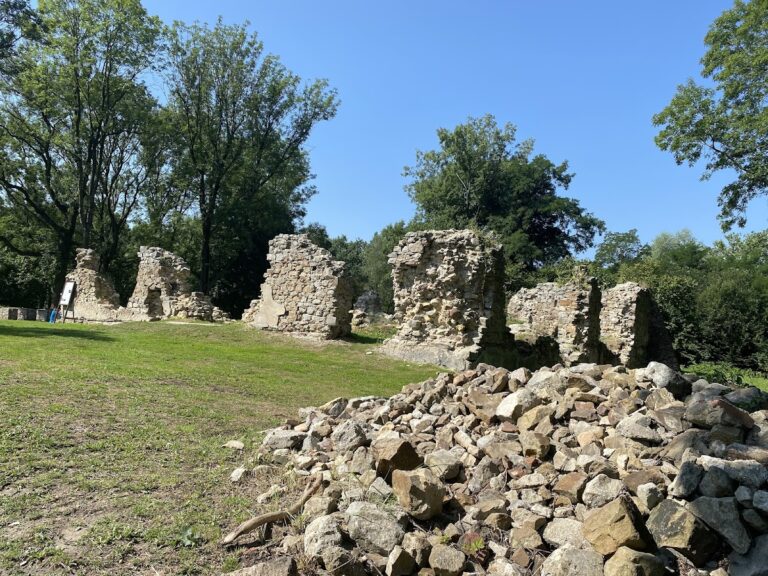
Gliwice Castle stands in central Gliwice, at the edge of the historic Old Town on Pod Murami Street. Its surviving form combines stone and brick construction with Gothic and Renaissance architectural elements. The building incorporates a recognizable section of the medieval city wall, preserving part of the defensive setting from which it developed.
Medieval defensive structure
The mid-fourteenth-century structure consisted of two interconnected towers joined by defensive walls. A surviving section of the medieval wall remains integrated into the building, linking the present monument to Gliwice’s earlier fortifications.
Later building work
The sixteenth-century expansion retained the building’s Gothic character while introducing Renaissance elements. A tower was added during the renovation and rebuilding carried out in the late 1950s, contributing to the structure’s present appearance. The square beside the castle contains the monument to Stefan Batory.
Nearby sites