Saint James Church in Obra: A Former Cistercian Abbey Church
Site at a Glance
- Popularity
- Medium
- Country
- Poland
- Primary era
- Early Modern
- Eras represented
- Early Modern, Modern
- Civilizations
- Polish–Lithuanian Commonwealth
- Site type
- Religious
- Remains
- Monastery
On this page10 sections
History
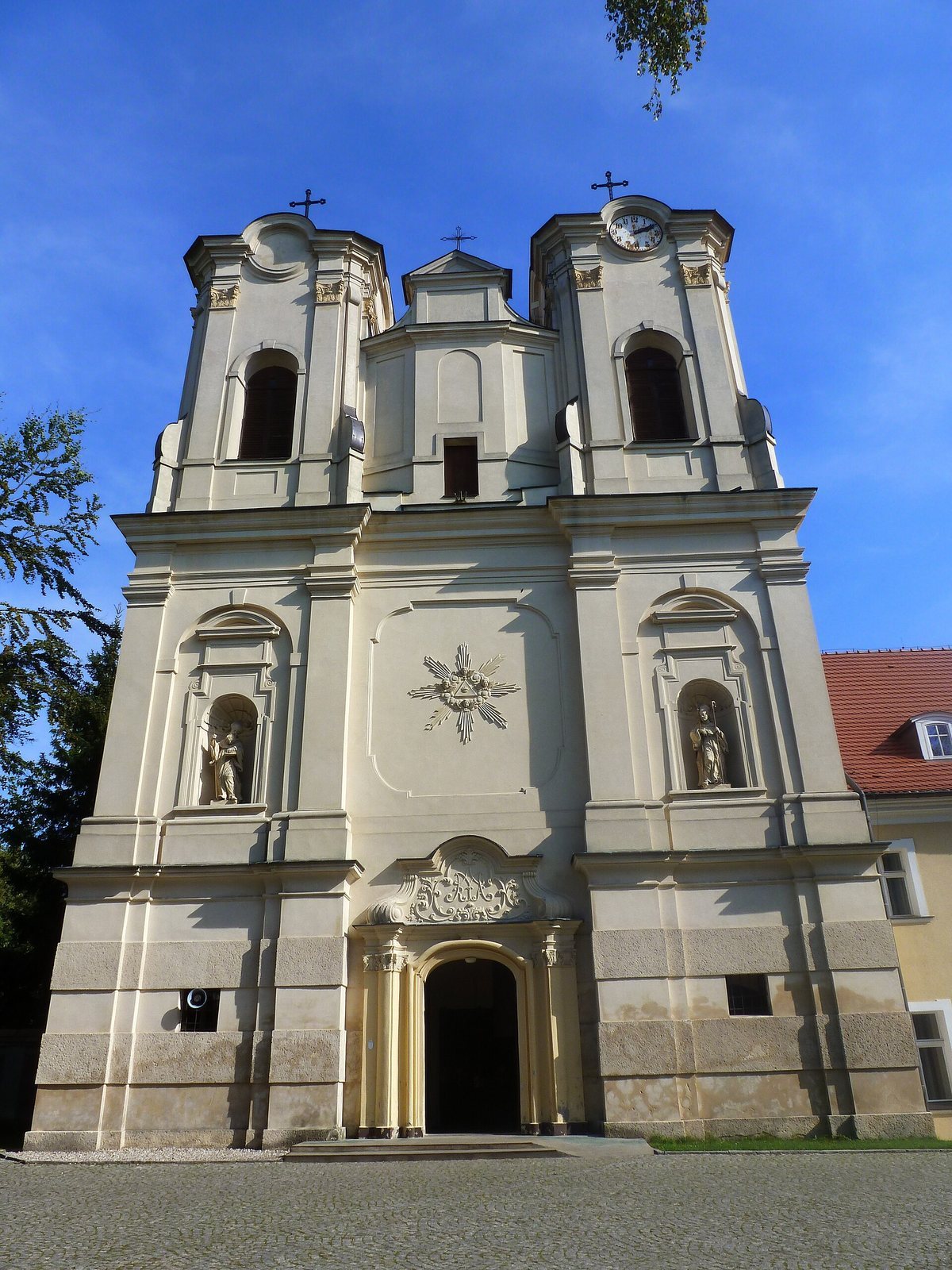
Saint James Church in Obra is a late-Baroque church in the village of Obra, Poland, whose present form reflects an eighteenth-century rebuilding between 1722 and 1757. The Cistercians, a Catholic monastic order, founded the abbey here in 1237, making it part of a network of monasteries that shaped the church’s early history.
Foundation and Cistercian connections
The founder was Sandivius, also known as Sendziwoj, a cantor responsible for liturgical singing at Gniezno Cathedral and a member of the Jelenczyk family. Obra was a male Cistercian abbey and a daughter house, meaning a foundation linked to a parent abbey, of Łekno, later known as Wągrowiec. It belonged to the Altenberg branch of the Cistercian network, which traced its line to Morimond. Obra, Wągrowiec, and Ląd were described as the “Cologne monasteries,” a label reflecting their Rhineland connections. Monks from the Rhineland formed Obra’s community until 1553. In the seventeenth century, the abbot also served as the Cistercian order’s vicar general for Poland and Prussia, an official with delegated authority within the order.
Church and monastery rebuilding
A 1580 visitation gives the earliest detailed account of the abbey’s buildings. The church was consecrated in 1596, and a brick nave was added to its masonry chancel shortly before 1600. A new brick monastery was built between 1618 and 1633, but much of it was destroyed during the second half of the seventeenth century.
The church underwent a late-Baroque rebuilding from 1722 to 1757, designed by the Italian architect Giovanni Catenazzi. It was reconsecrated in 1787. The rebuilt church and monastery later became the centre of a religious community that continued through major changes in the nineteenth and twentieth centuries.
Parish church and Oblate seminary
The abbey was dissolved in 1835, and its church became a parish church. In 1926, Cardinal Edmund Dalbor transferred the complex to the Missionary Oblates of Mary Immaculate, a Catholic missionary congregation founded by Eugène de Mazenod. The Oblates established a seminary to prepare priests for missionary work.
During the Second World War, German soldiers expelled the Oblates and occupied the monastery, where they established a police school. From 1941 until the war’s end, the grounds served as a hospital for people with tuberculosis, and many patients died there. The Oblates returned in spring 1945. The seminary continues to train priests for missionary service, with African seminarians outnumbering Polish seminarians. The church and monastery entered the historic register in 1932, and the monastery commemorates Oblate priest Józef Cebula, murdered at Mauthausen and recognized by the Catholic Church as a martyr.
Remains
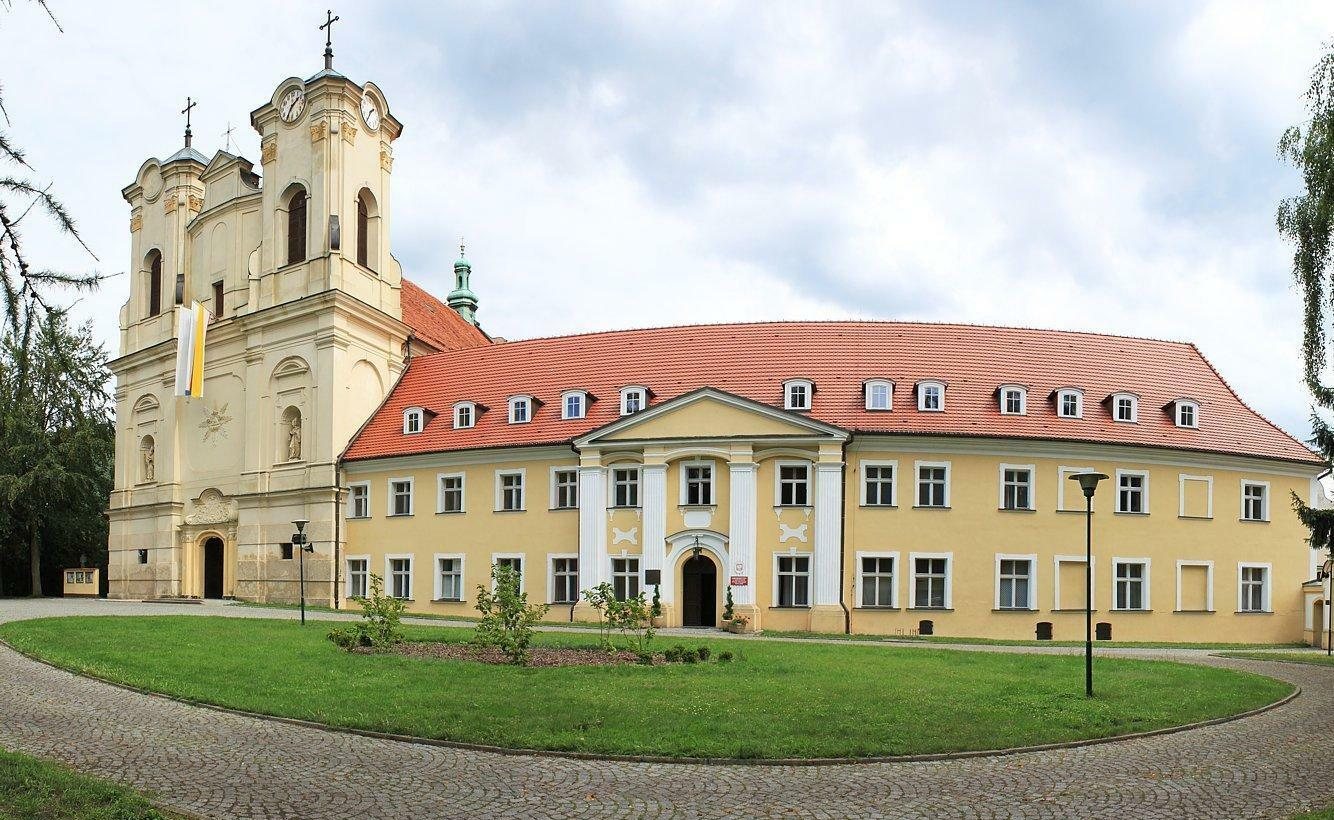
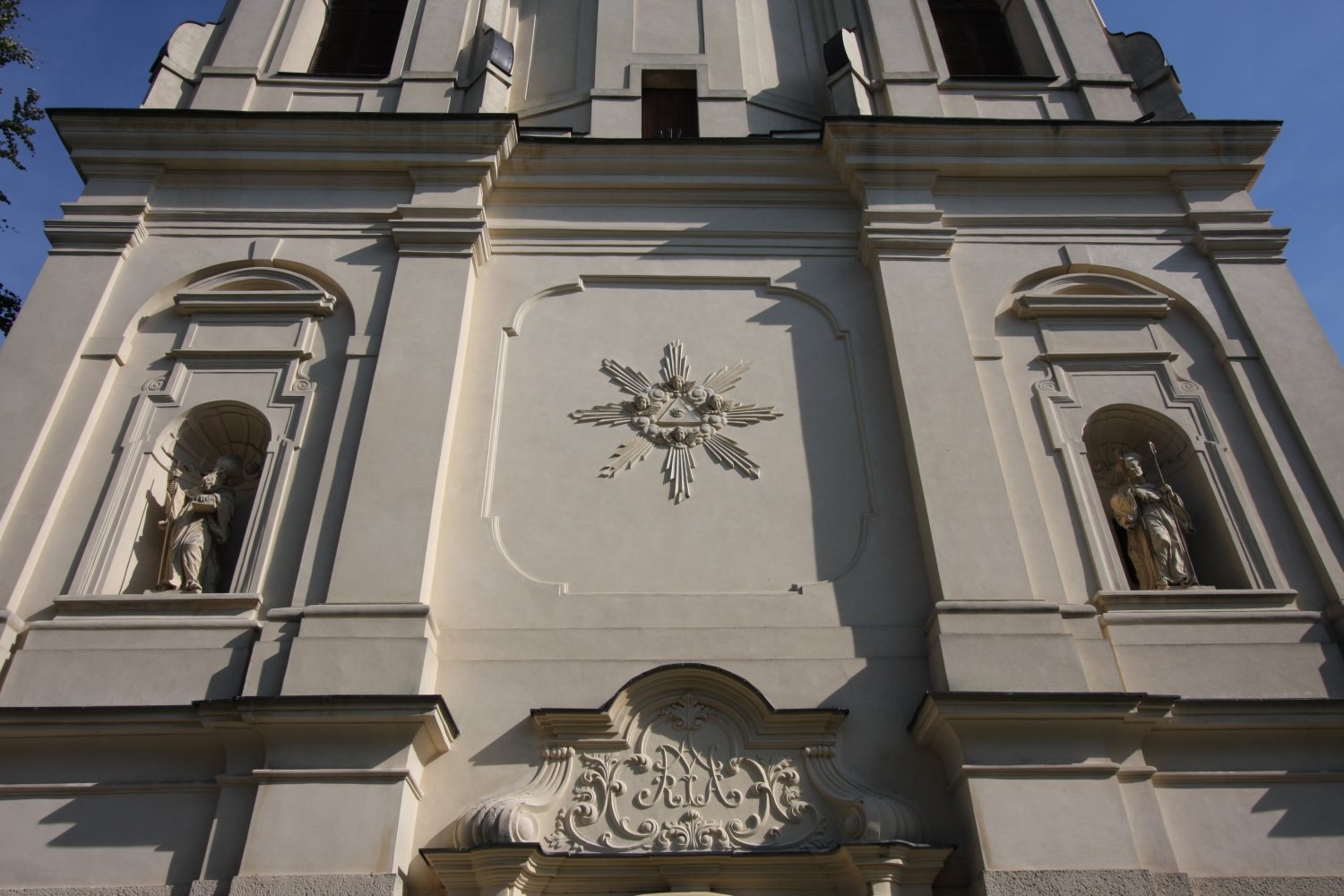
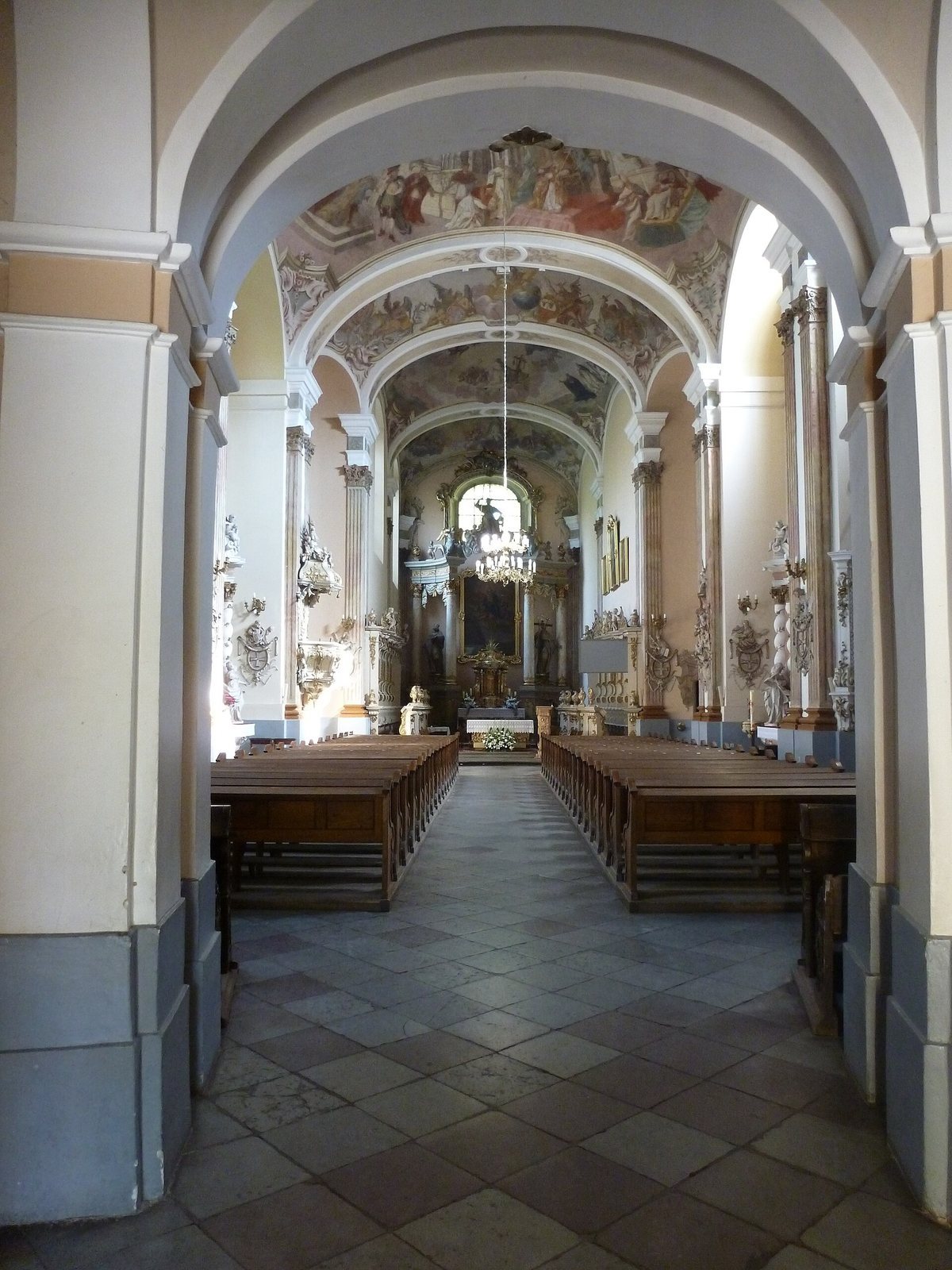
The complex centres on a single-nave, vaulted church, with a late-Baroque monastery attached on its right. The church has a Rococo character, while the furnishings combine Rococo ornament with early Classical forms, which drew on more restrained classical designs.
Church
The main altar contains a 1756 painting of the Assumption of the Blessed Virgin Mary by Szymon Czechowicz. The interior also holds a crucifix dated to 1500, side altars carved by Augustyn Schöps between 1762 and 1764, and frescoes painted by Stanisław Brzozowski in 1753–1754. Epitaphs commemorate Ludwika and Rafał Gurowski. In front of the church stands a sandstone statue of Saint John of Nepomuk, a fourteenth-century Bohemian priest and martyr.
Monastery and grounds
Monastery building
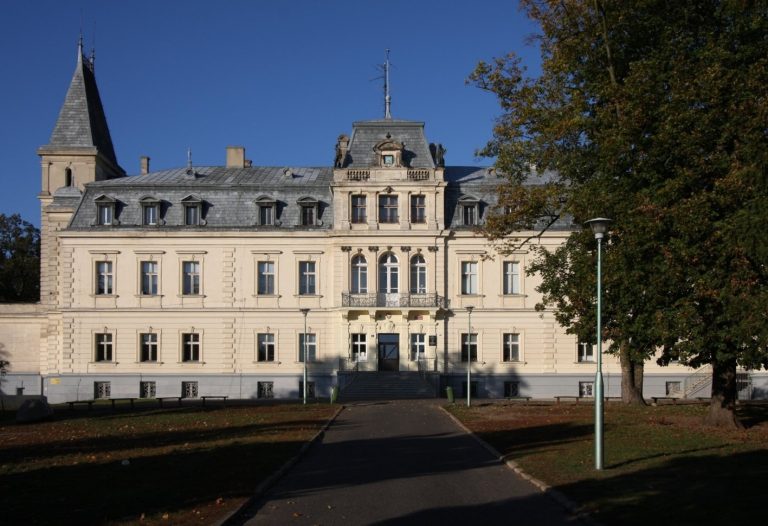
The brick monastery is a late-Baroque building altered between 1753 and 1755. An additional storey was added after 1920. Cloister walks, covered passages around a central courtyard, enclose the courtyard within the building.
Other buildings and park
The grounds include an abbot’s residence built in 1724, a cowshed dating to the second half of the eighteenth century, and an organist’s house from the late eighteenth century. A landscape park established in the second half of the eighteenth century covers 10.9 hectares.
Memorials and collections
A monument to Eugène de Mazenod stands in the monastery garden. The monastery also contains an extensive library and a museum of folk and religious art from Africa and Madagascar. Building and renovation work in recent decades has included the creation of the library.