Palace in Wolsztyn: A Nineteenth-Century Residence beside Lake Wolsztyńskie
Site at a Glance
- Popularity
- Medium
- Country
- Poland
- Primary era
- Modern
- Eras represented
- Early Modern, Modern
- Civilizations
- German, Kingdom of Prussia, Polish–Lithuanian Commonwealth
- Site type
- Domestic
- Remains
- Elite Residence
On this page9 sections
History
Park development
The palace park was established around the turn of the 17th and 18th centuries. In the 17th century, its tree cover served for recreation and was intended to draw attention to the palace’s owner. Linden and hornbeam avenues were added around the turn of the 18th and 19th centuries, with landowner Aleksander Gajewski contributing to the work. Later owners kept the park’s layout, adding ornamental trees and shrubs.
Palace construction and remodeling
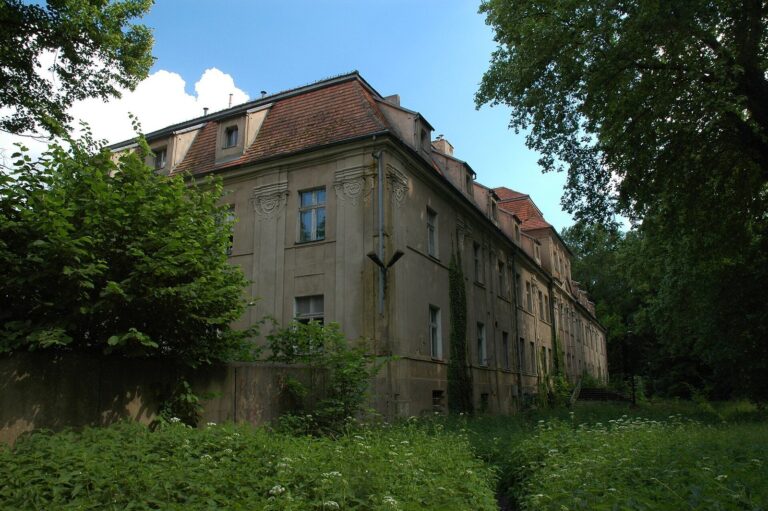
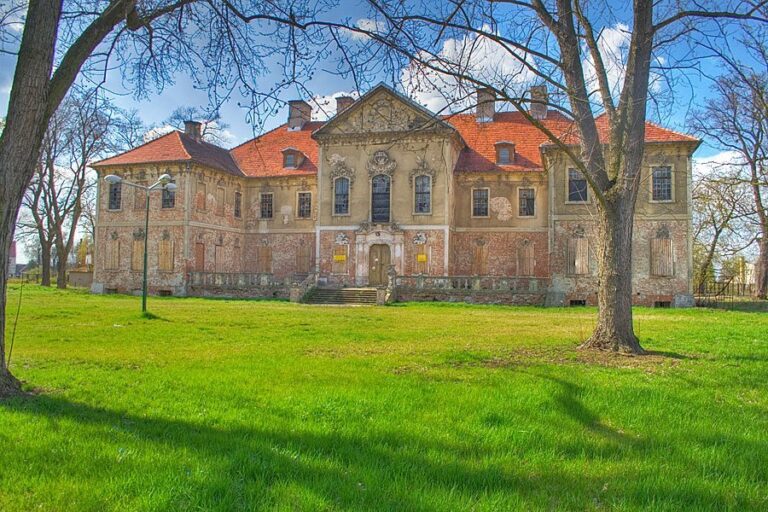
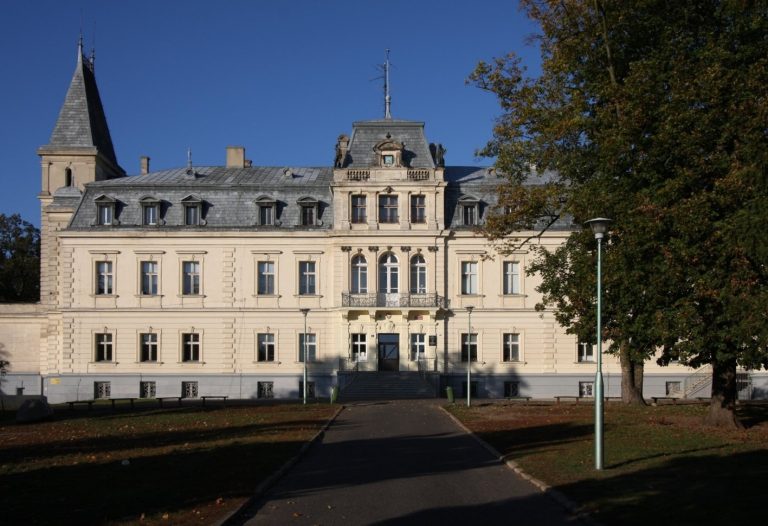
The Palace in Wolsztyn is a restored residence in central Wolsztyn, Poland, beside Lake Wolsztyńskie. Built in 1845 for Polish landowner Apolinary Gajewski, it originally had a neo-Renaissance character, reviving forms associated with Renaissance buildings. Count Stefan Mycielski became Wolsztyn’s owner in 1890. In 1911, architect Roger Sławski remodeled the palace for its then owner, giving it a neoclassical character inspired by ancient Greek and Roman architecture.
Fire and postwar changes
A fire destroyed the palace in 1945. It was reconstructed in 1960–62, without recreating its historic interiors, and later served as a tourist hostel. After the war, park maintenance concentrated on the area beside the palace, and some tree varieties died. A programme of tree management began in 1993, including work to address damage caused by ill-considered planting.
Remains
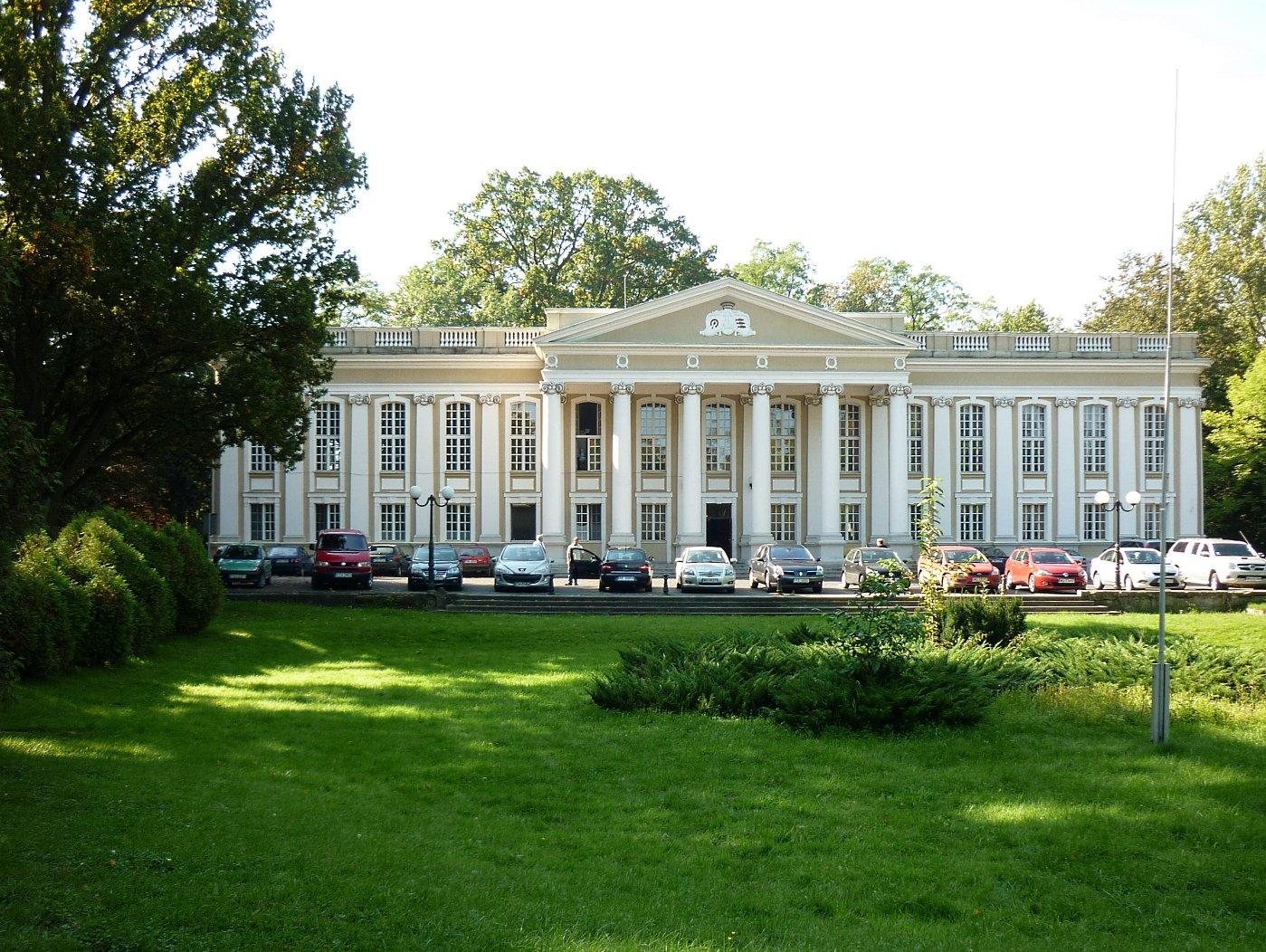
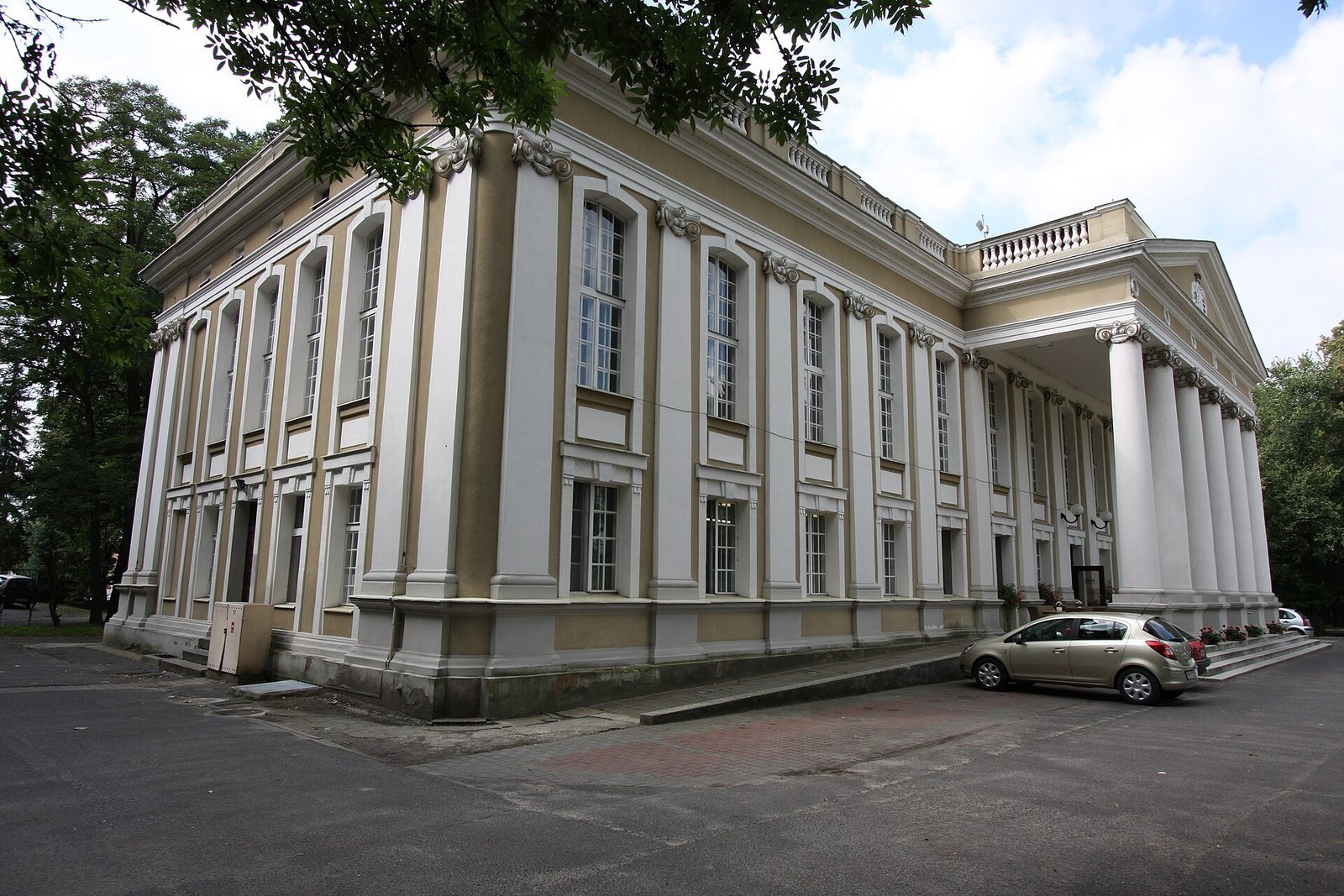
The restored palace and its park stand beside Lake Wolsztyńskie. The palace has an elongated rectangular plan, a low gabled roof and an attic level with a balustrade.
Palace facade
A six-columned portico, or entrance porch, marks the front facade. Its columns imitate the Ionic style, a classical column form. Above them, a triangular roof-front bears shields with the Dołęga and Korzbok coats of arms, heraldic emblems associated respectively with Stefan Mycielski and his wife, Irena Łącka.
Park and lakeshore
Avenues and notable trees
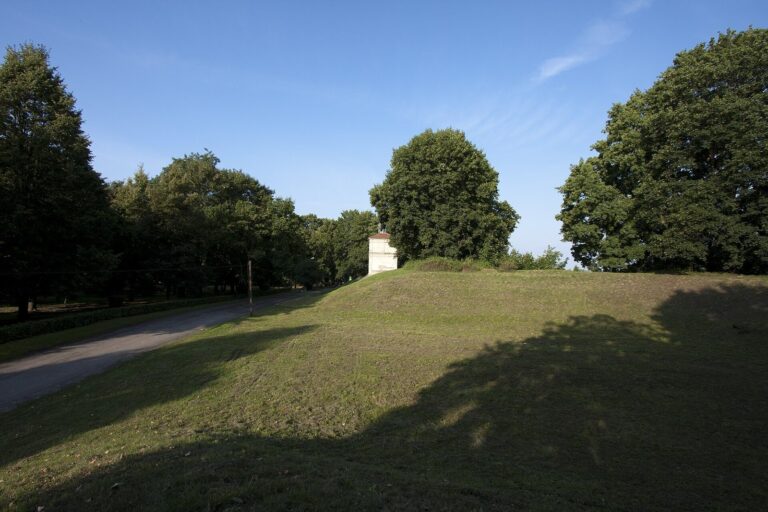
Linden and hornbeam avenues form part of the park’s layout, alongside ornamental trees and shrubs. Notable specimens include oaks with trunk circumferences of up to 4.6 metres, beeches up to 3.6 metres and ash trees up to 3.5 metres. A Canadian poplar measures 5.2 metres, and a Japanese ginkgo measures 1.6 metres. One oak bears carved heads of Medusa, a figure from Greek mythology often shown with snakes for hair, and a faun, a woodland figure from Roman mythology. In 1994, the original carvings were moved to a museum dedicated to sculptor Marcin Rożek and replaced on the tree with copies.
Lake Wolsztyńskie
The park reaches the lakeshore, where it includes a beach, bathing area and pier. Lake Wolsztyńskie covers 124.4 hectares and is shallow, elongated and relatively even-bottomed, with marshy shores. It belongs to the Wolsztyn tunnel-valley system, a long, narrow depression associated with glacial meltwater; lakes in the system connect through the Dojca River. The 1.3-hectare island of Tumidaj lies in the lake’s middle. Its northern shore provides nesting habitat for rare and endangered birds, including black terns, black-necked grebes, Eurasian penduline tits, tufted ducks and mute swans.