Saint Ignatios Monastery: A Greek Orthodox Monastic Centre on Lesbos
Site at a Glance
- Rating
- 4.7
- Popularity
- Medium
- Country
- Greece
- Primary era
- Early Modern
- Eras represented
- Early Modern, Modern
- Civilizations
- Greek, Ottoman
- Site type
- Religious
- Remains
- Monastery
On this page13 sections
History
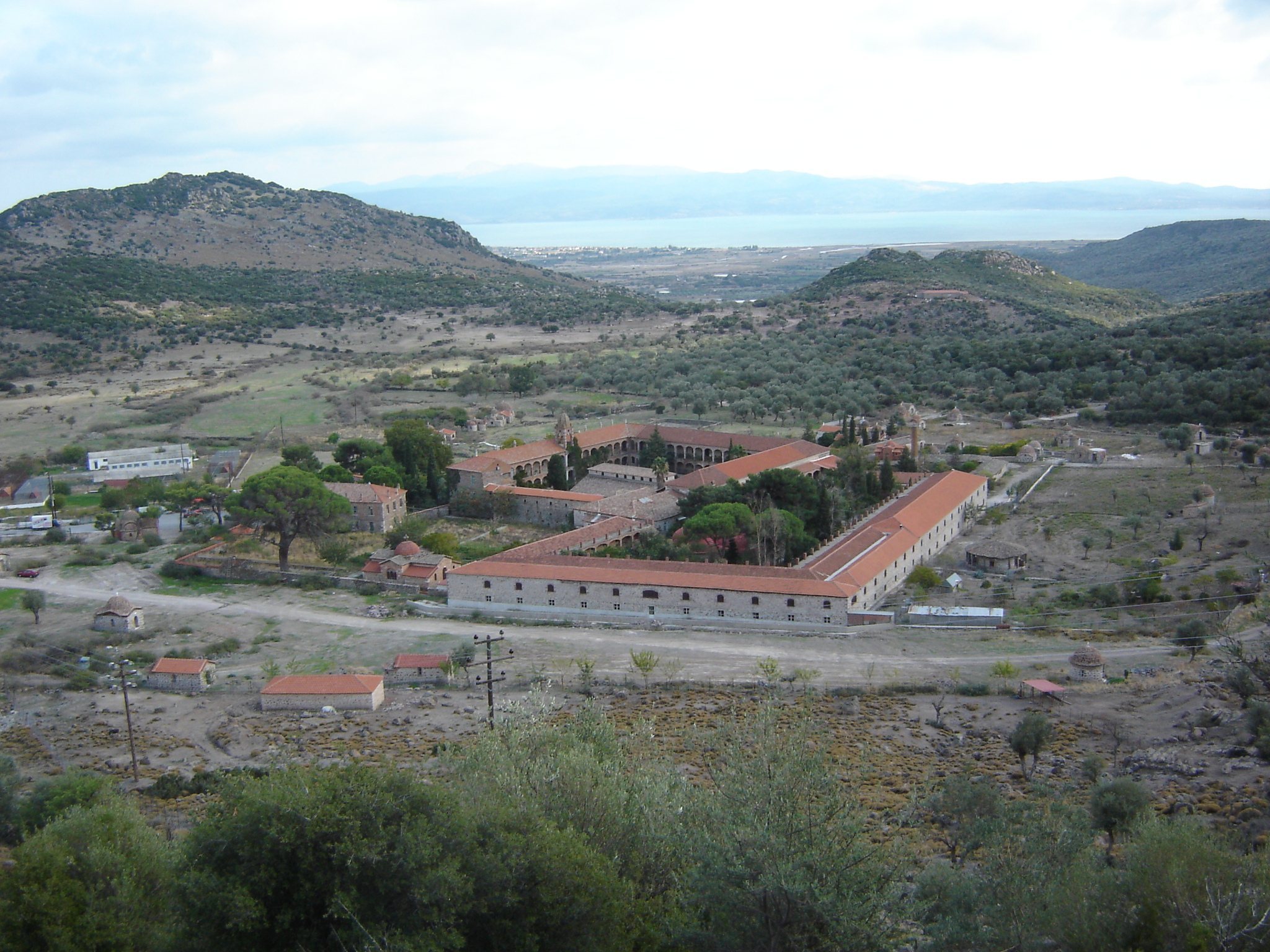
Saint Ignatios Monastery is a Greek Orthodox men’s monastery near Kalloni on Lesbos, Greece, founded in 1526 by Saint Ignatios Agallianos, bishop of Mithymna. It stands on the site of an earlier, reportedly ruined Byzantine monastery and has patriarchal stavropegic status, meaning that it is placed directly under patriarchal authority rather than the ordinary jurisdiction of a local bishop. The monastery’s principal church was dedicated to the Archangel Michael, while the name Limonos, or Limonas, refers to its position in a meadow.
Foundation and religious life
Saint Ignatios became the monastery’s first abbot and was succeeded by his son Matthaios. Over the following centuries, the monastery acquired extensive landed property and operated an olive press. Its religious importance also brought connections with the wider Orthodox church. Paisios, the former metropolitan of Mytilene, retired there after resigning his office in 1603. A metropolis in Eastern Orthodox usage is a diocese headed by a metropolitan.
Education and community affairs
The monastery established a school where Benjamin of Lesbos taught. He was a prominent Greek educator and scholar associated with the intellectual movement of the late Ottoman Greek world. From 1866 to 1886, the community of Kalloni sought monastery funding for a district school. The dispute became known as the Limonos Question, and the monastery eventually agreed to provide the money. A monastery school continued in one of the complex’s buildings until 1923.
Efthymios Agritelis
Efthymios Agritelis entered the monastery as a monk in 1876. He studied at its school, graduated with distinction in 1892, and returned after completing theological studies at the Halki Theological School, an Orthodox theological institution on Halki, one of the Princes’ Islands near Constantinople. He later became a preacher and chief cleric of the Metropolis of Mithymna before serving as auxiliary bishop to Germanos Karavangelis under the title Bishop of Zela in Pontus in 1912.
During the persecution of Pontic Greeks, Efthymios supported Christian communities and helped establish schools and churches. He remained in his see despite an order requiring metropolitans to leave, and was imprisoned as a result. He died from illness and mistreatment on 29 May 1921. A commemorative bust was installed at the monastery in 1936, and he was canonized in 1992. A chapel dedicated to him was consecrated at the monastery in 1998.
War, occupation, and restoration
Dionysios Charalambous became abbot in 1940. During the Greco-Italian War, he sent raw wool from the monastery’s mattresses and pillows to the military service in Mytilene, where it was used to make warm clothing for soldiers fighting in Pindus. He also prepared one of the monastery buildings for use as an orphanage, but the Nazi occupation interrupted the project.
After sheltering a British soldier, Dionysios was arrested and tortured by German forces. He was held in Thessaloniki, then in the Stone and Bernau concentration camps, and finally in a prison near Munich, where American troops liberated him. He later served as metropolitan of Lemnos from 1951 to 1959 and of Trikki and Stagoi from 1959 to 1970.
Archimandrite Nikodemos Pavlopoulos served as abbot from 1969 to 2016. An archimandrite is a senior Orthodox monastic cleric who may head a monastery. During his tenure, the old cell wing and principal church were restored, while new buildings and museums were added. The monastery’s relics and cultural holdings have made it a pilgrimage destination, and its historical and architectural importance is reflected in its status as an archaeological site and protected building in Greece.
Remains
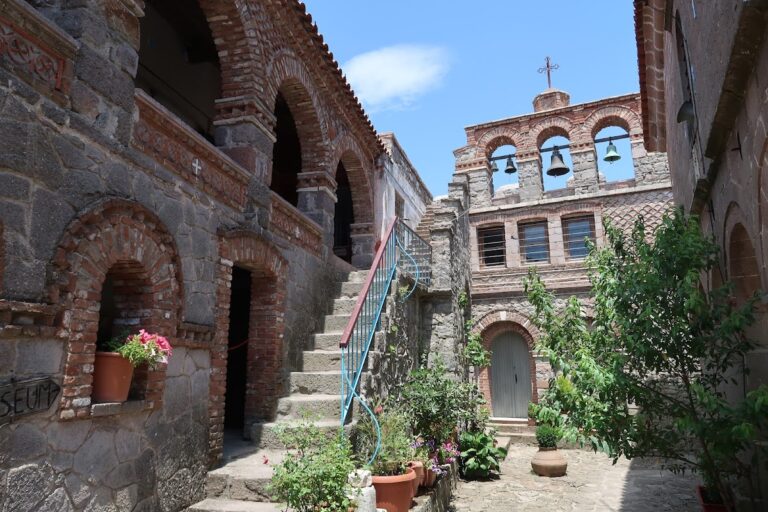
The monastery occupies a meadow outside Kalloni and forms a substantial complex of religious, residential, service, educational, and museum buildings. Its principal church, cell wings, chapels, exhibition spaces, and collections preserve the institution’s development from its sixteenth-century foundation through later restoration and expansion.
Churches and monastic buildings
Principal church
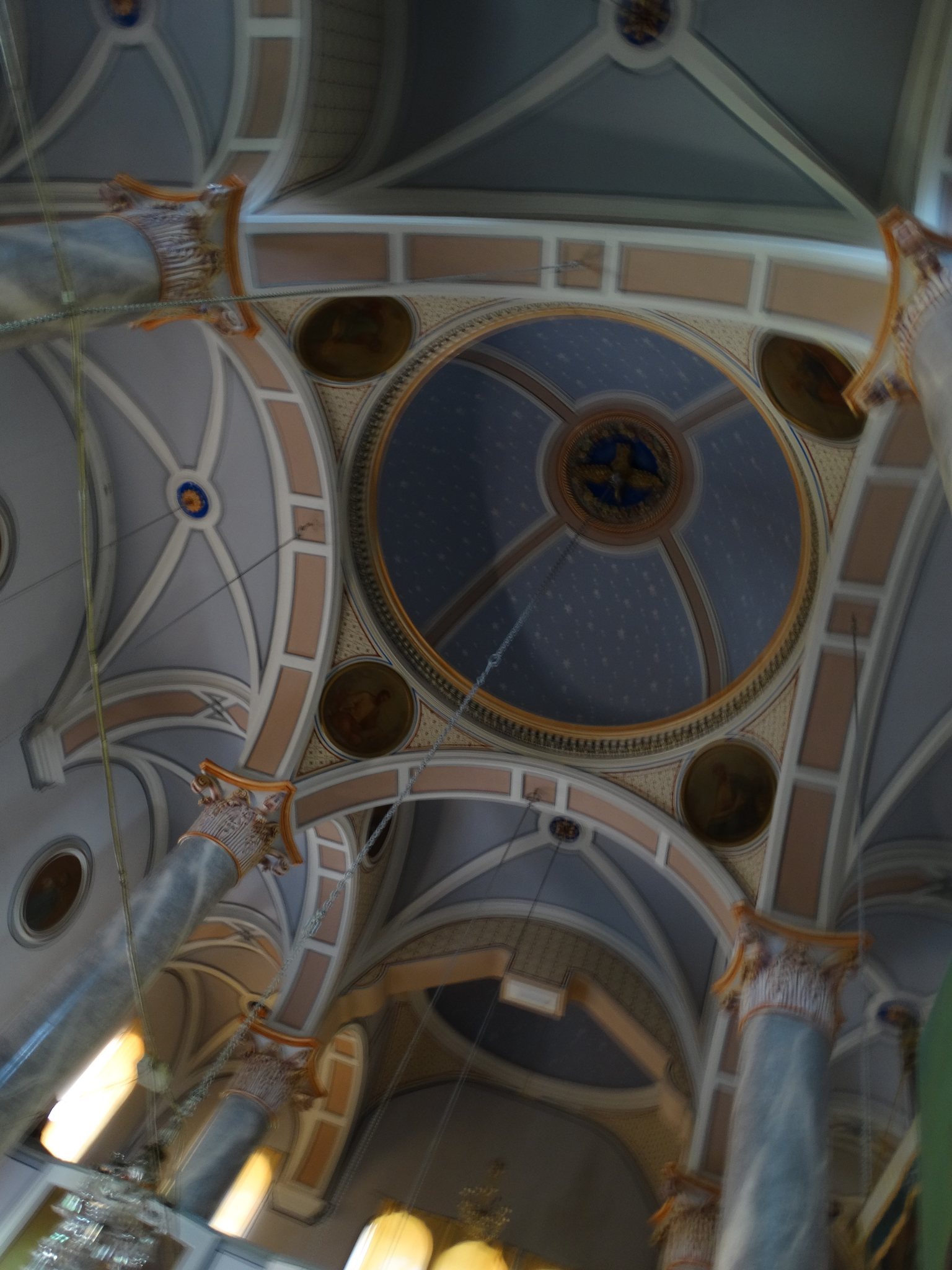
The principal church was built in the second quarter of the sixteenth century and is dedicated to the Archangel Michael. It forms the central religious building of the complex and was restored during the abbacy of Nikodemos Pavlopoulos.
Cells and service buildings
The old cell wing was restored as part of the monastery’s modern building programme. A new cell wing, a home for the elderly, a guesthouse, and a dining hall were also constructed. Numerous chapels were built around the monastery, adding further religious spaces to the complex.
Museums and collections
Exhibition spaces and museums
An exhibition space houses liturgical vessels, icons, and relics. A relic is a physical object preserved and venerated because of its connection with a saint or other sacred person. The monastery also contains a folklore museum and a geological museum, reflecting the broad range of material gathered and preserved there.
Library
The library contains 516 handwritten codices dating from the ninth century onward. Fifty-nine are parchment codices, while the remainder are described as paper or bombycine, a writing material based on cotton or silk. The library also holds approximately 20,000 books, the oldest dating from 1498, together with manuscripts, icons, and Greek and Ottoman documents.
Relics and sacristy
Numerous relics are preserved in the monastery, whose richly furnished sacristy forms part of its sacred collections. The wider material holdings include objects accumulated throughout the monastery’s history, linking its religious functions with its long role as a centre of learning and preservation.