Ipsilou Monastery: A Byzantine-Period Orthodox Monastery in Greece


Site at a Glance
- Rating
- 4.9
- Popularity
- Low
- Country
- Greece
- Primary era
- Modern
- External website
- Open
- Eras represented
- Medieval, Early Modern, Modern
- Civilizations
- Byzantine, Ottoman
- Site type
- Religious
- Remains
- Monastery
On this page8 sections
History
Byzantine origins
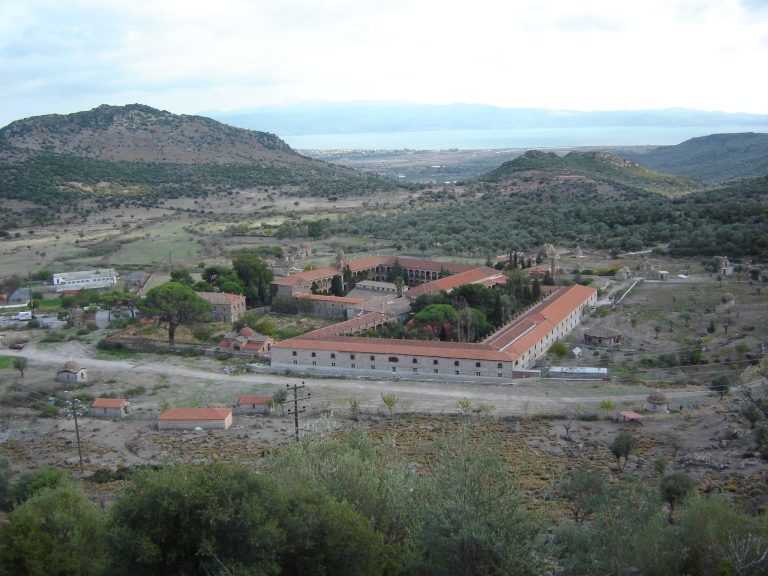
Ipsilou Monastery is an Orthodox male monastery in western Lesbos, Greece, traditionally regarded as the island’s oldest monastery. Tradition places its foundation before AD 800, during the Byzantine period, by Theophanes of Sigriane, a Byzantine monk and religious writer associated with the region of Sigriane. A patriarchal letter of 1331 preserves this foundation tradition.
The monastery’s early history remains only partly known. During the late Byzantine period, it was probably abandoned and fell into ruin. Only limited elements of its Byzantine phase survive, leaving the institution’s early development difficult to reconstruct.
Revival and changing names
Ipsilou was revived during the post-Byzantine period, the centuries after the Byzantine Empire ended, particularly under Ottoman rule in the Greek world. The monastery was later destroyed by fire. It was formerly called the Monastery of Korakas, while tradition associates the Ottoman period with the name Monastery of Zisyra.
The name Ypsilou, referring to the monastery’s elevated position, came into use during the eighteenth century. The monastery was officially recorded in 1940 as belonging to the then-community of Antissa. In the 2011 census, 19 monks were recorded there.
Religious and heritage status
The monastery is dedicated to Saint John the Theologian, the traditional Christian title of John the Apostle, and his feast is observed on May 8. Since 1964, Ipsilou Monastery has been protected as a historic monument in Greece and is also recognized as an archaeological site.
Remains
Mountain setting and monastic complex
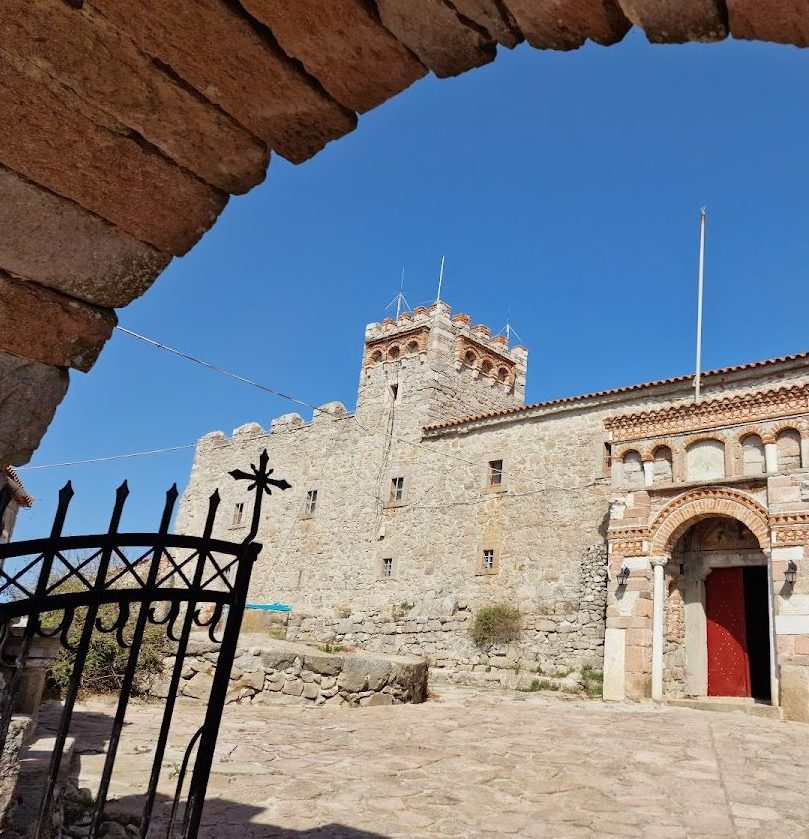
The monastery stands on the summit of Mount Ordymnos at approximately 634 metres above sea level. The mountain is an ancient volcano near the area of the Lesbos Petrified Forest. The church and monastic buildings developed over several centuries, forming a conventional Orthodox complex arranged around the katholikon, the principal church of the monastery.
Katholikon
The present katholikon was built in 1832 and gives the church its current external form. Its interior was decorated with wall paintings in 1684, linking the surviving church to the monastery’s post-Byzantine development.
Treasury and manuscript library
The monastery contains a skevophylakion, a treasury for sacred vessels and other religious objects, together with a manuscript library holding old manuscripts. These collections form part of the monastery’s surviving religious and historical resources.