Rundāle Palace: An 18th-Century Baroque Palace in Latvia
Visitor Information
Google Rating: 4.7
Popularity: High
Official Website: rundale.net
Country: Latvia
Civilization: Early Modern
Site type: Domestic
Remains: Palace
History
Rundāle Palace is situated in Pilsrundāle, within the Bauska Municipality of modern-day Latvia. It was constructed under the direction of Duke Ernst Johann von Biron, the ruler of the Duchy of Courland, a historical Baltic state influenced by various European powers.
The initial construction phase began on May 24, 1736, initiated by Duke Biron, a close confidant of Russian Empress Anna Ivanovna. The palace was designed by the renowned architect Bartolomeo Rastrelli and completed rapidly by 1737 with the labor of around 1,500 workers, many of whom came from Saint Petersburg. Early progress was halted in 1738 when many craftsmen were redirected to another ducal project, the Mitava Palace in Jelgava. This shift caused Biron to reduce the scope of Rundāle’s decoration, leaving some elements unfinished. In 1740, Biron’s political downfall and exile led to a complete pause in construction. During this time, several decorative pieces were removed and transported to Saint Petersburg.
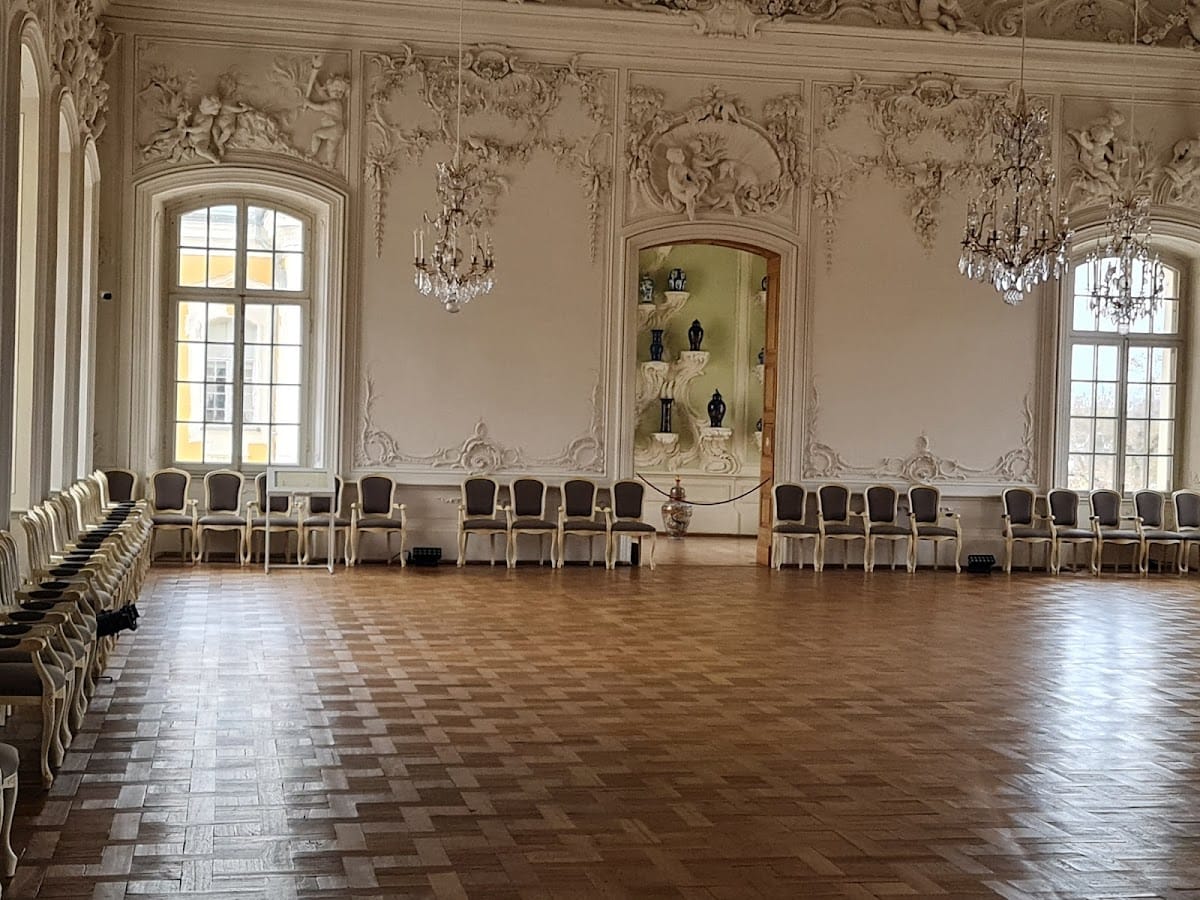
Following Biron’s pardon in 1762 and return a year later, work resumed on the palace from 1764 to 1770. The continuation saw Latvian artisans and a new architect, Severin Jensen, adding stylistic changes. One notable alteration included repurposing the originally planned palace chapel into a ballroom, known today as the White Hall. After Biron’s death, ownership transferred to his son, Peter Biron. Subsequently, in 1795, Empress Catherine II acquired the palace, which she then presented to Count Valerian Zubov. Upon his death, ownership passed to his brother Platon Zubov and later came into the possession of the Shuvalov family through marriage, who held the property until the agrarian reforms of 1920 transferred it into state control.
Throughout the 19th and early 20th centuries, the palace endured several hardships. It suffered damage during the Napoleonic Wars and was repurposed as a military hospital and command post during World War I. In 1919, amid the Latvian civil war, the building experienced partial destruction. Following these turbulent times, the palace served varied roles, including a school and a veterans’ association headquarters. Restoration efforts began in the 1970s, and from that point, the palace has functioned as a museum and a venue for hosting official state guests.
Remains
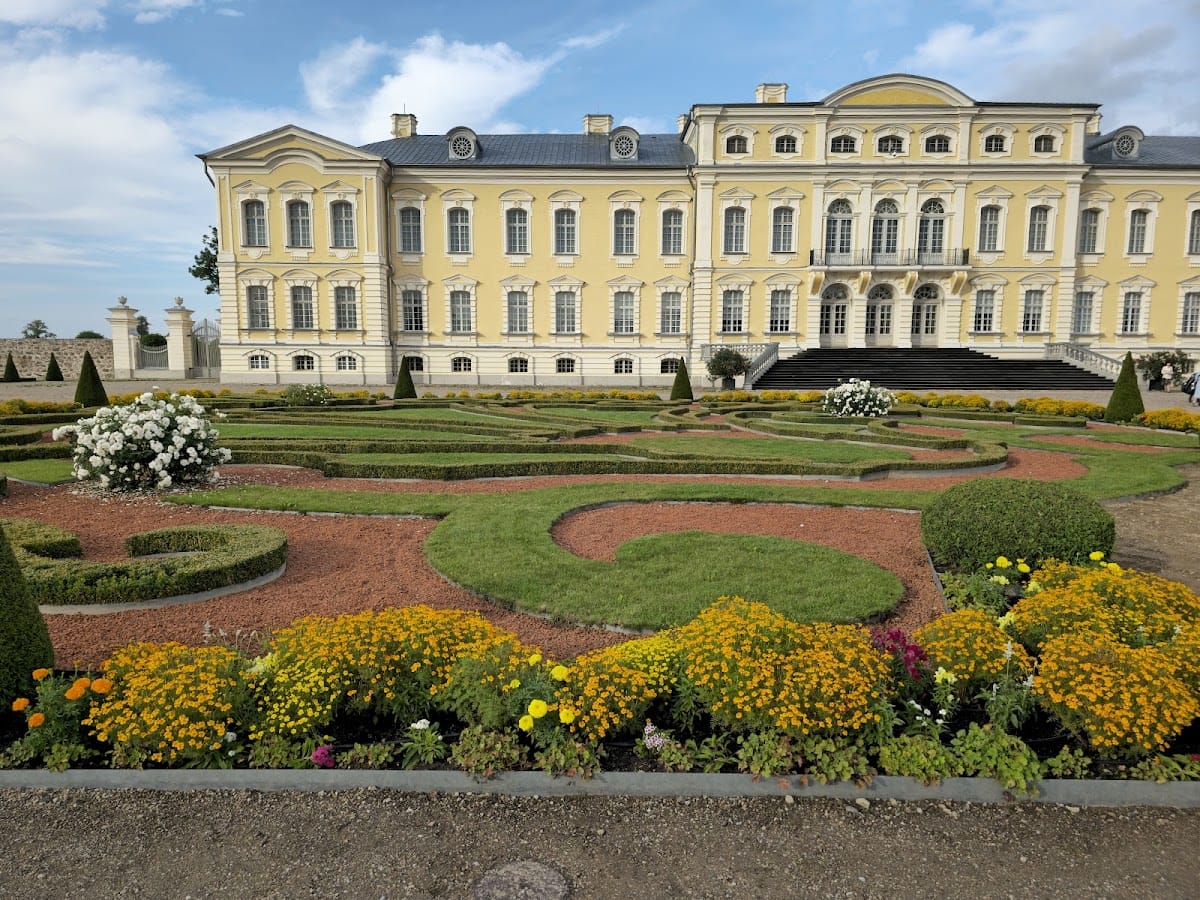
The palace complex spans more than 60 hectares and features a distinctive layout combining grand architecture with carefully designed gardens and auxiliary buildings. Its main structure is a two-story building containing 138 rooms. Built with exceptionally large bricks crafted locally, the palace’s exterior reflects the Baroque style, while its interiors contain elements of Rococo, particularly from the later phase of construction.
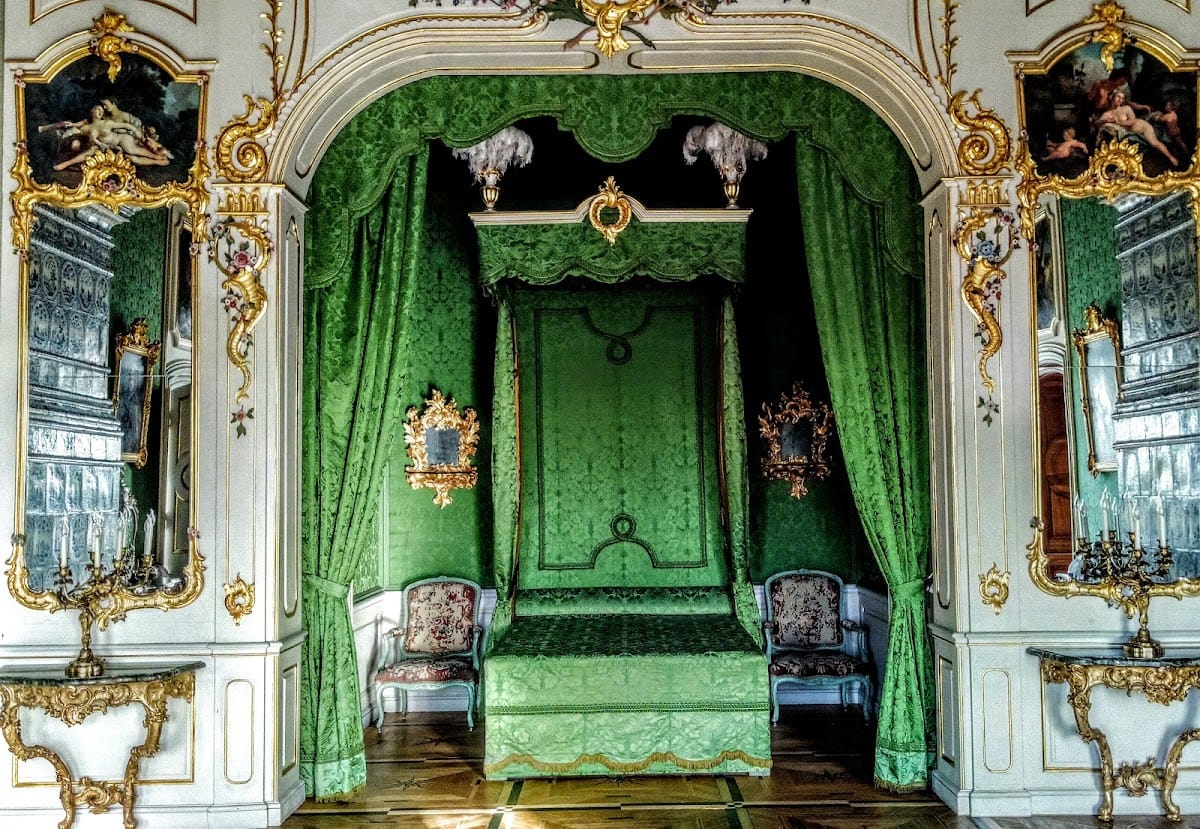
The building is organized into two primary wings. The western wing once held the third ducal residence’s private apartments and has been fully restored to display original features such as parquet flooring, oak paneling, and doors dating back to the earliest building phase. These rooms also show Neoclassical updates made during the 18th century. Furniture pieces like a writing desk by Jean Henri Riesener complement the thematic decorations and restored stoves found in this wing. The duchess’s apartments occupy the western wing and are noted for silk wall coverings, fine furnishings, and collections of porcelain. A prominent element is the boudoir’s uniquely crafted stucco stove by Johann Michael Graff, a Berlin sculptor responsible for much of the palace’s decorative stucco work.
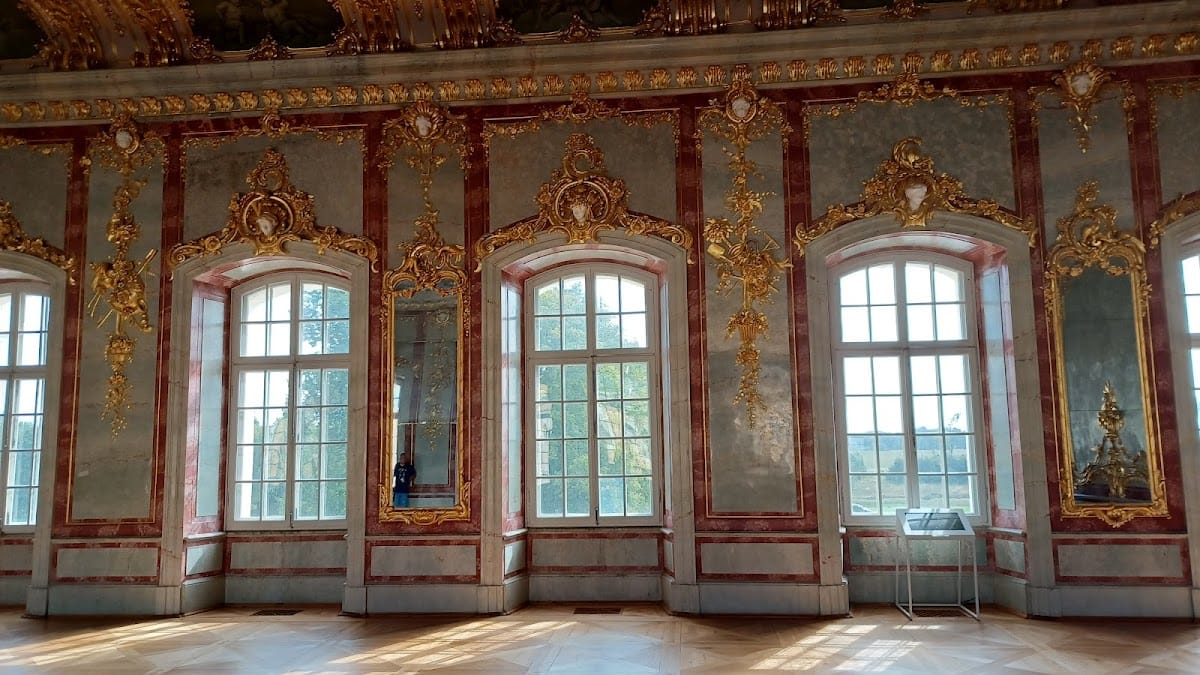
In the eastern wing, visitors find major ceremonial halls, including the Golden Hall, which served as a throne room. It features artificial marble surfaces and gilded stucco reliefs by Graff, as well as ceiling paintings by the Italian artists Francesco Martini and Carlo Zucchi. The White Hall, originally planned as a chapel, was transformed into a ballroom adorned with stucco reliefs representing the four seasons and the classical elements. Other notable interiors from Rastrelli’s initial design that remain include two grand staircases, a small gallery, a number of additional galleries, and the first-floor foyer. Approximately 27 rooms display elaborate stucco work and panels of artificial marble, while some feature painted walls and ceilings.
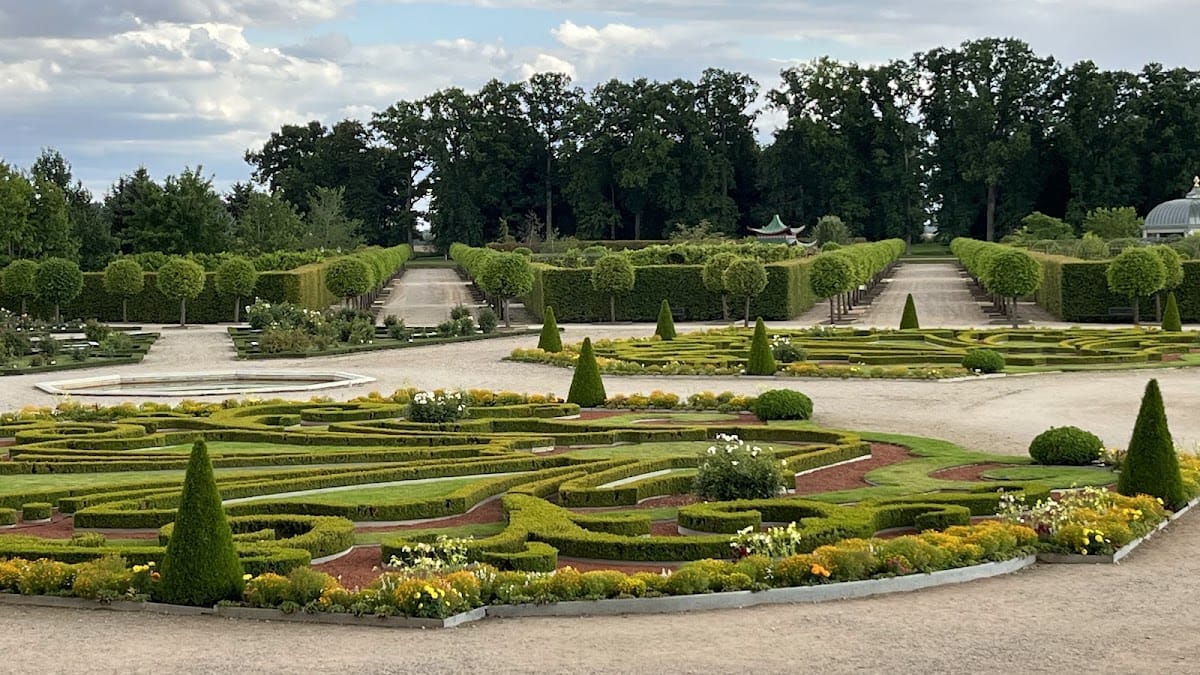
Surrounding the palace, the French formal garden extends across 10 hectares. Designed by Rastrelli, the garden follows geometric patterns typical of the era, including clipped boxwood flower beds and various fountains—now functioning as decorative ponds. The garden incorporates pergolas and several bosquets, or small wooded groves, notably featuring a “green theater,” an amphitheater with seating for 600 that was added in 2004. The grounds also include a large rose garden boasting over 12,000 rose bushes representing a wide variety of historical and modern cultivars.
The palace today operates as a museum focused on restoration and the reconstruction of historical interiors. Although much of the original furniture was lost over time, the museum displays applied arts and paintings sourced from other collections to evoke the palace’s former splendor. It continues to preserve architectural and decorative elements from its various construction and renovation phases, showcasing the craftsmanship of European artisans from the 18th century.
Nearby sites


