Rumkale Fortress: A Historic Stronghold Overlooking the Euphrates in Turkey
Visitor Information
Google Rating: 4.6
Popularity: Medium
Country: Turkey
Civilization: Byzantine
Site type: Military
Remains: Fort
History
Rumkale is a fortress situated in the municipality of Kasaba, Turkey, known for its strategic position overlooking the Euphrates River. The site’s origins extend deep into antiquity, with early records suggesting it corresponds to a location called Shitamrat, which was conquered by the Assyrian king Shalmaneser III in 855 BCE. The fortress as it stands today preserves the legacy of Byzantine builders who constructed the earliest remaining structures, establishing it as a frontier stronghold that guarded the Roman road running along the Euphrates.
By the 5th and 6th centuries, Rumkale had become a religious center, housing a Syriac Orthodox bishopric. In the 11th century, the settlement expanded with an Armenian community developing within its walls. During the turbulent era of the late 11th and early 12th centuries, control of Rumkale shifted from the Byzantines to Armenian lords, before being captured by Crusader forces under Baldwin II of Edessa in 1116. Not long after, between approximately 1148 and 1150, the fortress was acquired by Armenian Catholicos Grigor III Pahlavuni and transformed into the seat of the Armenian Apostolic Church, a status it retained until 1292. Throughout this period, Rumkale also served as a meeting place for various Christian denominations, including Syriac Orthodox and Catholic representatives.
Rumkale’s religious importance is underscored by significant events such as the synods held between 1178 and 1179, which addressed church union efforts. It was home to prominent Armenian Catholicoi, including Nerses IV Schnorhali, who were buried there. The fortress also became a center for the arts, notably manuscript illumination, attracting artists like Toros Roslin in the mid-13th century. Despite its strength, the fortress faced military threats; it withstood a Mamluk siege in 1280 but fell after a prolonged siege in 1292. Upon its capture, it was renamed Qal’at al-Muslimin and repurposed as a Mamluk border fortress guarding against the neighboring Ilkhanate.
The fortress experienced damage during the invasions of Timur’s forces around 1400–1401 but was subsequently restored by the Mamluks. With the Ottoman Empire’s expansion, Rumkale peacefully surrendered in 1516 following the Mamluk defeat at Marj Dabiq and became an Ottoman administrative center known as a sanjak. Over time, its administrative rank was reduced to a district or kaza. By the 19th century, Rumkale’s strategic and administrative importance waned; after a rebellion led by local leader Bekirzade Mehmet Bey in 1831, the fortress was depopulated by order of the Ottoman authorities. The following year, Egyptian general Ibrahim Pasha bombarded the site during the Egyptian–Ottoman War, severely damaging the fortress and leading to its eventual abandonment.
For much of the Ottoman period, Rumkale’s isolated location was utilized by the state as a prison for political exiles. The population diminished, and the regional administrative center shifted to the nearby town of Halfeti. Scholars and explorers of the 18th and 19th centuries documented the ruins, providing valuable descriptions of its remains. Notable visitors included Richard Pococke, Helmut von Moltke, Carl Ritter, as well as Karl Humann and Otto Puchstein in the late 19th century. In more recent history, parts of Rumkale and its adjoining settlements were submerged following the construction of the Birecik Dam in 2000, leaving only the upper sections of the fortress visible today.
Remains
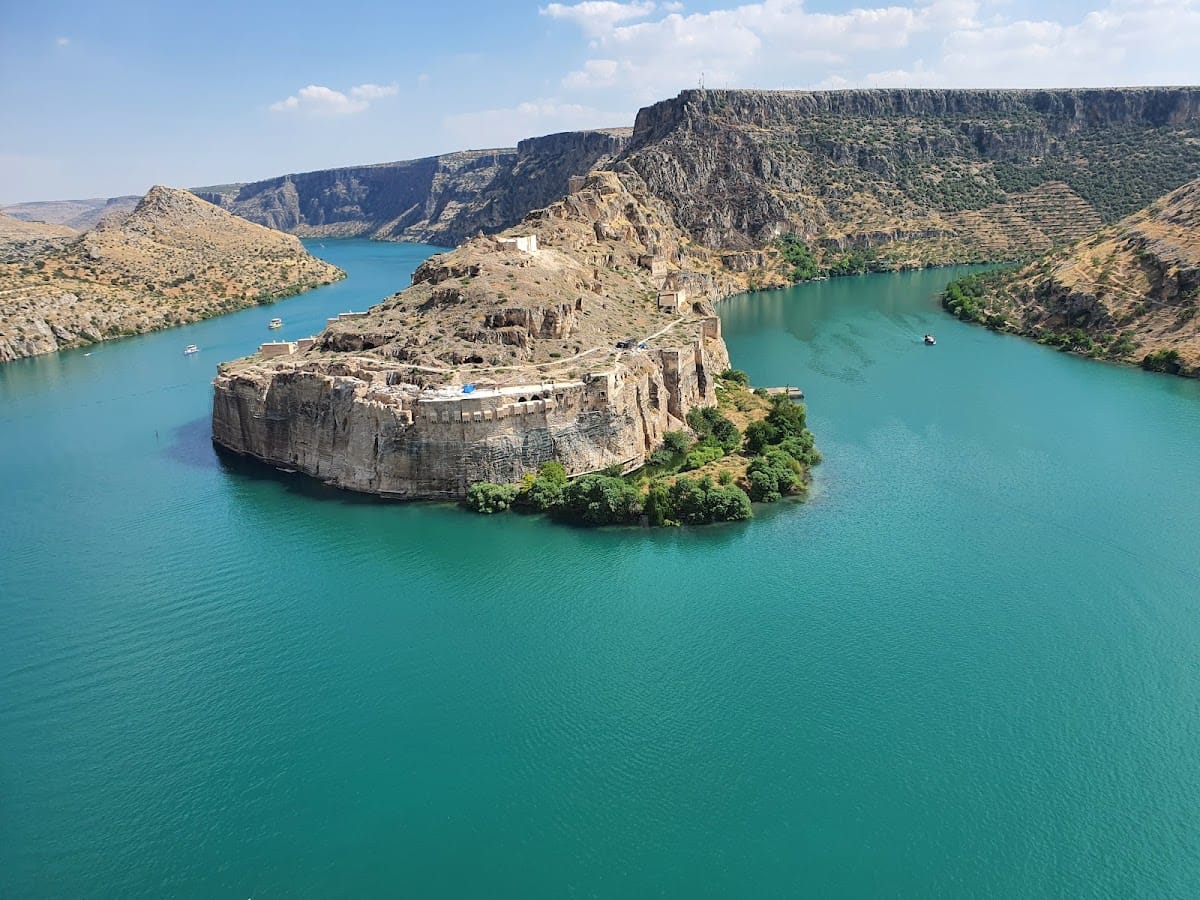
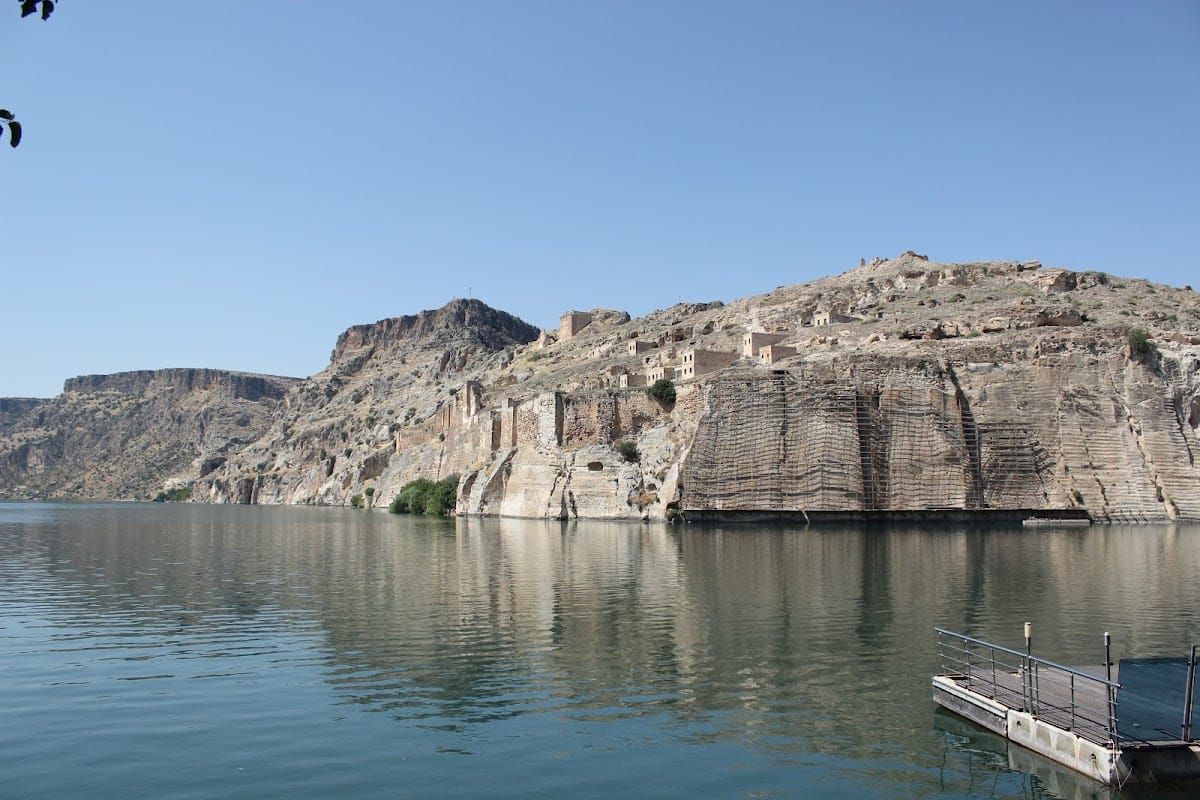
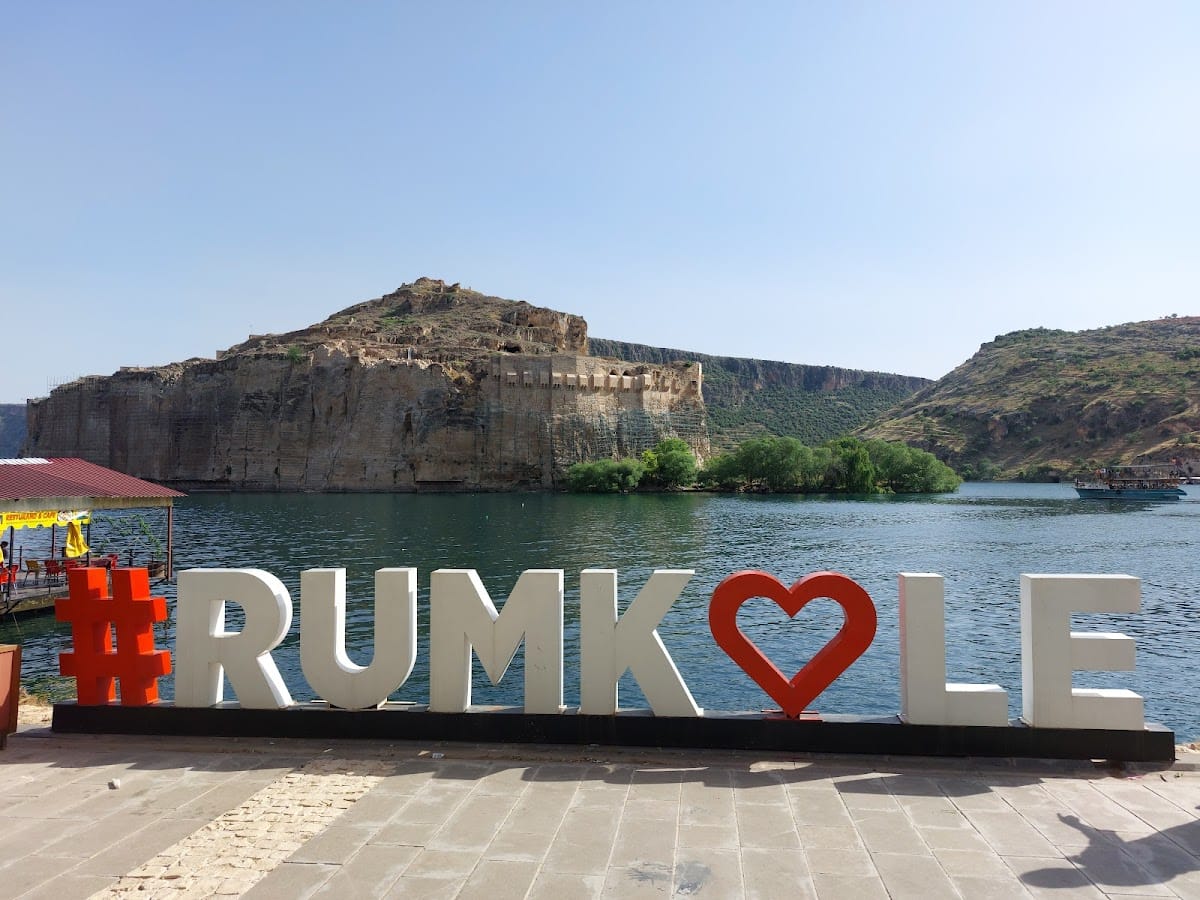
Rumkale occupies a commanding rocky peninsula rising about 50 meters above the Euphrates River, naturally fortified by the river itself and the surrounding Merzimen stream. The fortress is enclosed by massive stone walls constructed from white chalk or limestone blocks. These defensive walls rise to an impressive height of approximately 18 meters (around 60 feet) and feature rectangular towers topped with battlements. Access to the fortress was tightly controlled by a single winding route carved into the rock that passed through six successive gates before reaching the interior.
Within the fortifications, remnants of around forty houses indicate a once-thriving settlement. A deep artificial ditch, hewn from the rock and approximately 24 meters (80 feet) deep and 12 meters (40 feet) wide, isolated the fortress from an adjacent plateau, serving as an additional defensive barrier. A distinctive feature is a large, deep well about 60 meters (200 feet) in depth, with a spiral staircase carved from the rock allowing water to be drawn from the level of the river below. By the late 19th century, this well was partly filled and dry.
Several religious buildings survive in various states of ruin. The largest church in the fortress, constructed in the mid-12th century, was later converted into a mosque during the 13th century but collapsed in the 18th century. Other churches identified within the walls include those dedicated to St. Gregory the Illuminator (Surb Grigor Lusavorich), the Holy Mother of God (Surb Astvatsatsin), and the Holy Savior (Surb Prkich). The site also hosted the Syriac Orthodox monastery of Barshavma, reflecting its long-standing religious diversity.
Additional infrastructure includes several water cisterns and a historic cemetery, underscoring the complex social and religious life within the fortress. Secular buildings are also present, such as an Ottoman-period palace built on the northern slope of the fortress, which replaced an earlier church structure in that location. Ottoman records from the 16th century mention the existence of multiple mosques within the town, including the Grand Mosque (Ulu Camii) and the Castle Mosque (Kal’a Camii), alongside various smaller prayer houses known as masjids, some possibly belonging to nearby villages.
Education and religious instruction were supported by a madrasa complex named Rammahiya Madrasa. This included a primary school and a masjid and was likely situated near a water source within the fortress. Connectivity from the fortress to the west was facilitated by a Roman bridge crossing the Euphrates, leading to a path flanked by guardhouses. On the eastern side, access was provided by a stairway.
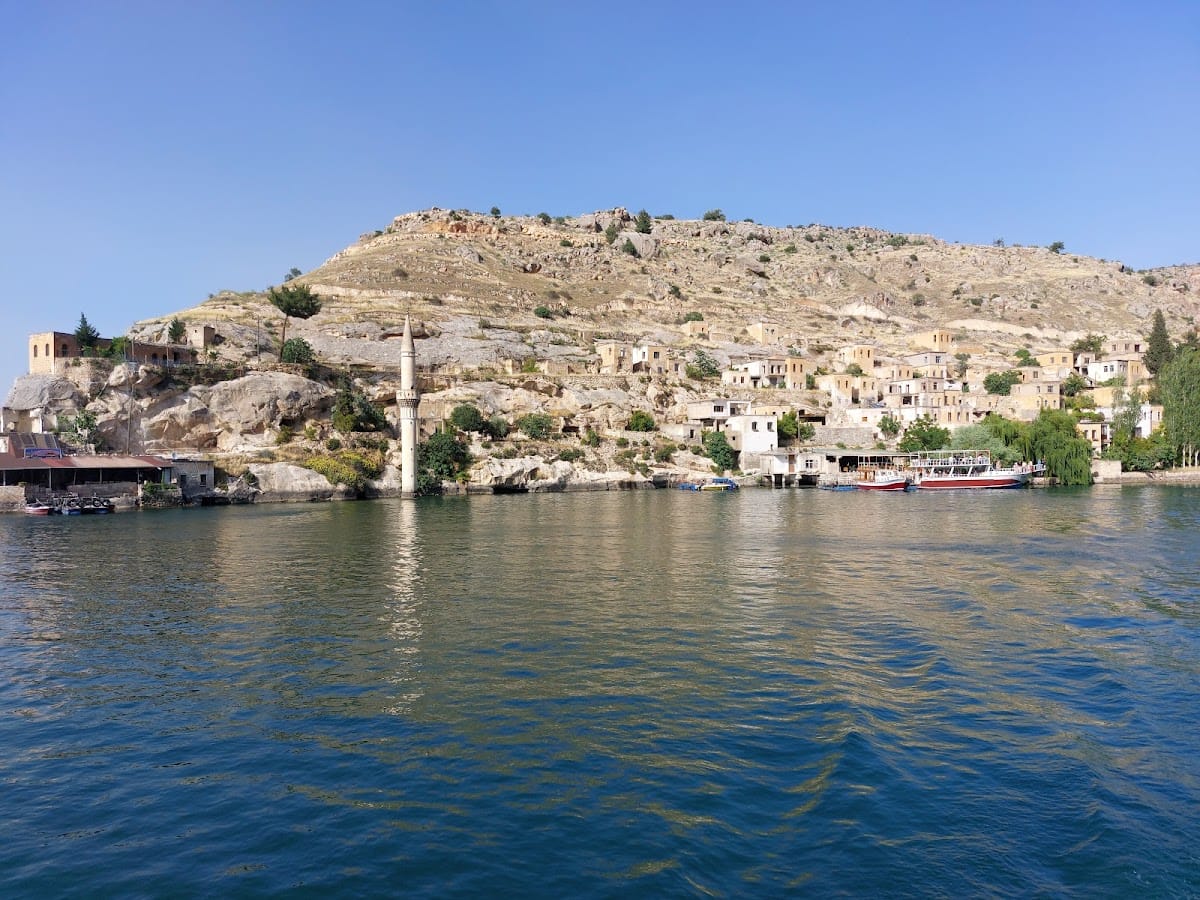
By the 19th century, much of the fortress had fallen into ruin, with collapsed walls and buildings, although the imposing rock formations and fragments of the walls remained visible. The mosque that once occupied the largest church had partially collapsed by the mid-19th century. After flooding caused by the Birecik Dam construction in 2000, the lower portions of the fortress, as well as nearby settlements, were submerged beneath the reservoir’s waters. Today, only the upper ruins stand above water, continuing to offer an imposing testament to the site’s long and varied history.
In 2021, a modern glass viewing terrace was inaugurated on cliffs across the Euphrates from Rumkale. Covering around 270 square meters, this platform allows expansive views of both the river and the fortress remains.