Church Ruins at Rodna: A Medieval Romanesque Basilica in Romania


Site at a Glance
- Rating
- 4.5
- Popularity
- Very Low
- Country
- Romania
- Primary era
- Medieval
- External website
- Open
- Eras represented
- Medieval, Modern
- Civilizations
- Habsburg, Hungarian
- Site type
- Religious
- Remains
- Church
On this page6 sections
History
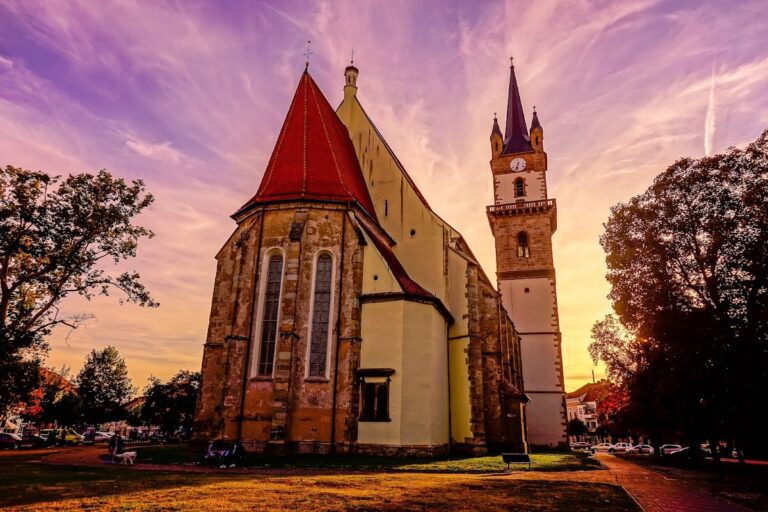
The church ruins at Rodna in Romania are the remains of a medieval basilica built by the Transylvanian Saxons in the late twelfth or early thirteenth century. Located in the village of Rodna, the church was dedicated to Saint Mary and was constructed in the Romanesque period, when churches commonly used massive walls and rounded arches. It formed part of the settlement’s religious and defensive history near routes leading toward Moldavia and Maramureș.
Foundation and destruction in 1241
Rodna suffered a severe attack on 31 March 1241, during the invasion by forces associated with the Mongol conquests. The settlement was destroyed, the church was badly damaged, and the German miners of Rodna were deported to Mongolia. The basilica was later rebuilt and temporarily adapted as a border fortress protecting the pass toward Moldavia and Maramureș County.
Later transformation
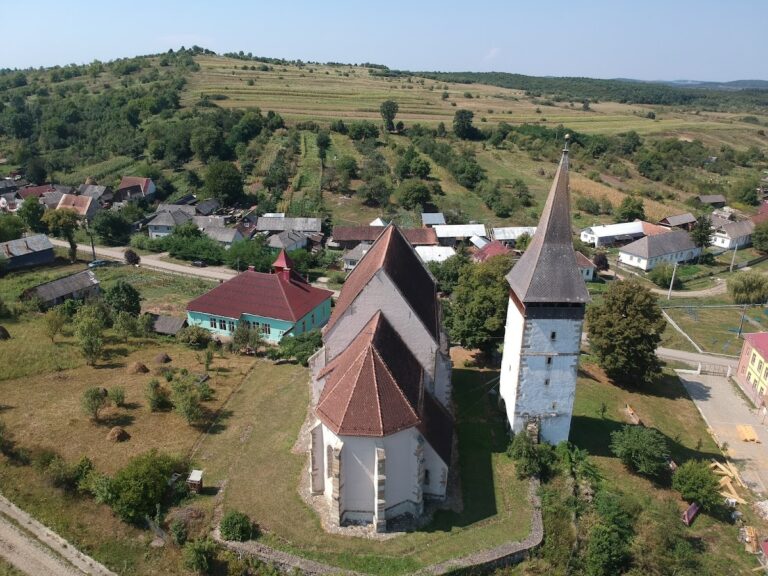
During the second half of the thirteenth century, a west façade with two towers was added to the rebuilt church. This phase introduced Gothic details to the earlier Romanesque structure. After Rodna lost its Saxon population between 1766 and 1812, the medieval church fell into disrepair. From 1812, its choir, the part of a church beyond the nave toward the altar, was adapted for use by the Romanian Greek Catholic community. The present Greek Catholic Church of Saint George was built over the choir’s foundations, either in 1825 or in 1859, and the construction date remains uncertain.
The site now forms a protected historic-monument ensemble listed in Romania’s National Archaeological Register under code 34342.02. The ensemble includes the Greek Catholic Church of Saint George, its bell tower, and the ruins of the medieval church, each carrying a separate listed-monument code.
Remains
Medieval basilica
The medieval church was a towerless Romanesque basilica organized around a central nave, lower side aisles, and a choir at the eastern end. Parts of its original Romanesque fabric survive within the ruins. The later western façade, added in the second half of the thirteenth century, had two towers and incorporated Gothic details, including more vertically articulated forms associated with that architectural period.
Surviving features and later church
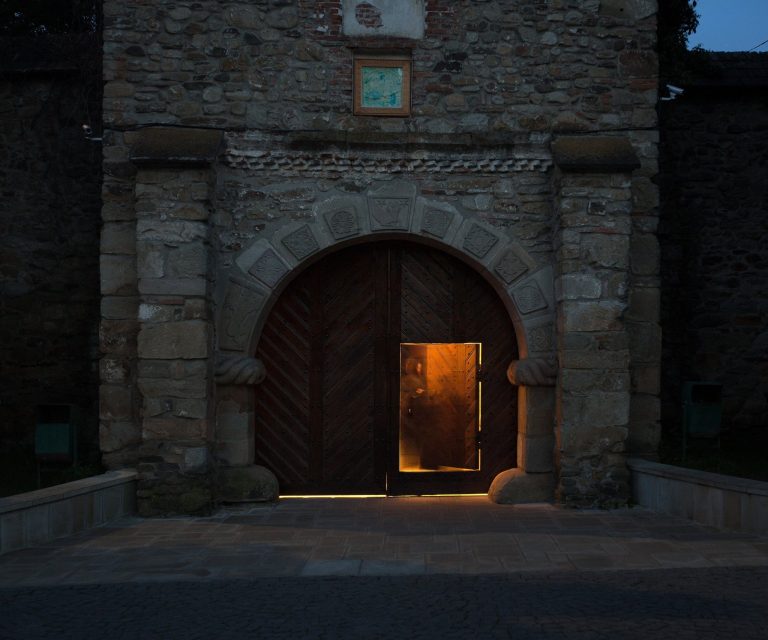
The ruins preserve portions of medieval windows and the old entrance. Part of the medieval choir survives within the present Greek Catholic Church of Saint George, linking the modern building directly to the earlier basilica. The ensemble also contains a bell tower whose medieval form includes openings or surrounds framed in the Gothic manner.